Circle Pendant Necklace Gold: A Budget and Value Assessment
Discover the true value of a circle pendant necklace gold. We break down material grades, pricing tiers, and cost-per-wear to help you buy smart.


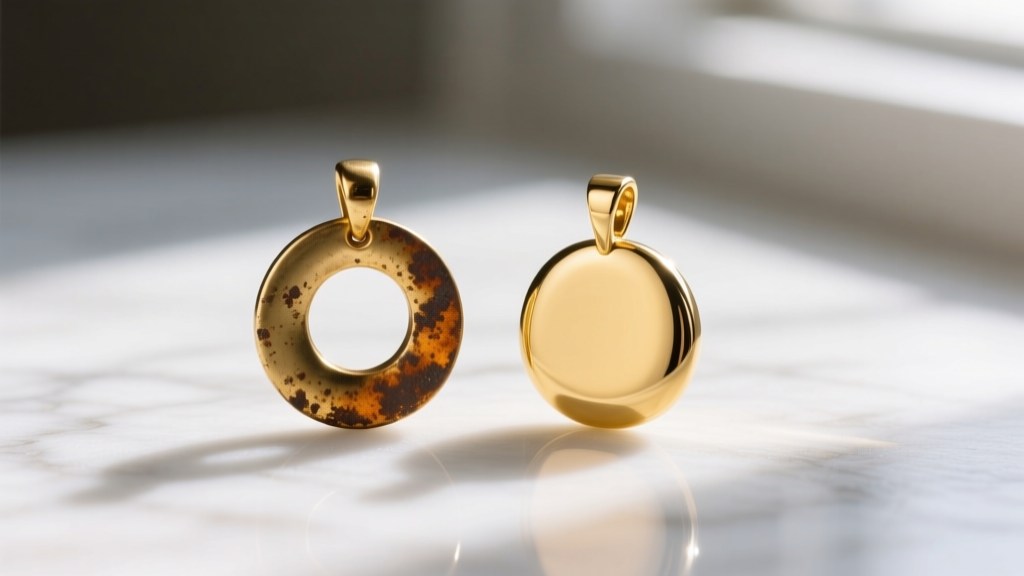
The circle pendant is a geometric staple in modern jewelry, symbolizing eternity, wholeness, and minimalist elegance. However, a quick search for a circle pendant necklace gold reveals a wildly confusing market. You will find nearly identical-looking pieces priced anywhere from $12 at fast-fashion retailers to over $1,200 at luxury boutiques. For the discerning buyer, this massive price gap begs a critical question: what are you actually paying for?
Assessing the true value of gold jewelry requires looking past the aesthetic and diving into metallurgy, manufacturing techniques, and hardware integrity. In this comprehensive budget and value assessment, we deconstruct the gold circle pendant market to help you separate genuine investments from overpriced costume jewelry.
The Material Matrix: Plated vs. Vermeil vs. Solid Gold
The single largest factor dictating the price and longevity of your necklace is the material composition. The term "gold" is frequently abused in marketing, so understanding the exact terminology is your first line of defense against overpaying.
- Flash Gold Plating: This involves a base metal (usually brass or copper) coated with a microscopic layer of gold, typically less than 0.175 microns thick. It offers the look of gold for a few weeks before friction and skin acids wear it away, exposing the reactive base metal.
- Gold Vermeil: According to the Federal Trade Commission Jewelry Guides, vermeil must have a sterling silver base and a gold plating of at least 2.5 microns. This is a massive upgrade from flash plating, offering hypoallergenic properties and a lifespan of several years with proper care.
- Solid 14k or 18k Gold: As detailed by the Gemological Institute of America (GIA), solid 14k gold is an alloy containing 58.5% pure gold, mixed with metals like zinc and copper for durability. It will never tarnish or wear off, making it a lifelong asset.
Price Breakdown: What You Should Actually Pay
When shopping for a circle pendant necklace gold, use this matrix to determine if a retailer's price aligns with the actual material value. Paying $300 for a vermeil piece is a severe overpayment, just as buying a solid 14k pendant for $40 should immediately trigger suspicion regarding its authenticity.
| Material Grade | Base Metal | Gold Thickness | Expected Lifespan | Fair Market Value (14"-18" Chain) |
|---|---|---|---|---|
| Flash Plated | Brass / Copper | < 0.5 microns | 1 - 6 months | $15 - $45 |
| Gold Vermeil | 925 Sterling Silver | 2.5+ microns | 2 - 5 years | $65 - $160 |
| Solid 14k Gold | None (Solid Alloy) | Infinite | Lifetime / Heirloom | $280 - $650+ |
| Solid 18k Gold | None (Solid Alloy) | Infinite | Lifetime / Heirloom | $450 - $900+ |
The "Cost Per Wear" Calculation
Budget-conscious buyers often default to the cheapest option, but this is a mathematical trap. Let us apply a Cost Per Wear (CPW) framework. If you buy a $35 flash-plated circle pendant and wear it daily, the plating will likely rub off the high-friction areas within 90 days. Your CPW is roughly $0.38 per day, after which the piece is unwearable due to green skin discoloration from the exposed brass.
Conversely, if you invest $350 in a solid 14k gold circle pendant and wear it 4 times a week for 10 years, your total wears equal 2,080. Your CPW drops to $0.16 per day, and you retain a piece that can be passed down or resold for its scrap gold value. True value is measured in longevity, not just the initial checkout price.
Hardware and Chain Quality: The Hidden Value Killers
A pendant is only as good as the chain that holds it. Many brands will sell a heavy, high-quality solid gold circle pendant but string it on a hollow, fragile chain to artificially inflate their profit margins. When assessing value, you must scrutinize the hardware.
Clasp Integrity
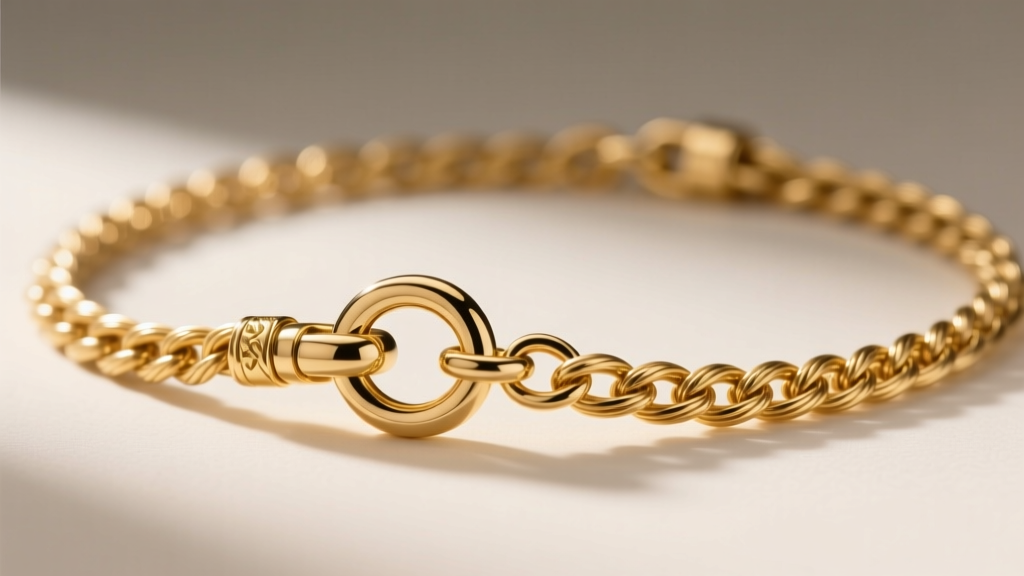
Look closely at the clasp. High-value necklaces utilize sturdy lobster claw clasps with a strong internal spring mechanism. Cheaper alternatives use spring-ring clasps, which are notoriously difficult to operate with one hand and prone to snapping under the weight of a solid metal pendant. Furthermore, check the jump ring (the small loop connecting the clasp to the chain). On premium necklaces, this jump ring will be soldered shut. If it is merely pushed together, a slight snag on a sweater can pull it open, resulting in the loss of your entire necklace.
Chain Construction and Drape
The style of chain drastically affects both the price and the way the circle pendant sits on your collarbone.
- Cable Chains: The most common and affordable. They offer a classic look but can kink if stored improperly.
- Box Chains: Made of square links, these are incredibly durable and provide a modern, geometric backdrop that complements a circle pendant perfectly. They cost roughly 20% more than cable chains due to the complex manufacturing process.
- Rope Chains: These twist together to reflect light brilliantly. However, they are difficult to repair if they snap, which slightly lowers their long-term practical value compared to a box chain.
Red Flags: Spotting Overpriced "Fashion" Gold
When evaluating a circle pendant necklace gold, beware of these common retail traps designed to obscure poor value:
The "Hollow" Trap: Some brands use a process called electroforming to create large, lightweight pendants that appear to be solid gold but are actually hollow shells. While this saves on material costs, hollow pendants dent easily and are nearly impossible for a jeweler to repair if crushed. Always check the weight; a solid 15mm circle pendant should have a satisfying, dense heft.
Another major red flag is the use of the term "Gold Tone" or "Gold Dipped" without specifying the base metal or micron thickness. If a brand refuses to disclose whether the base is brass, stainless steel, or silver, assume it is the cheapest option (brass) and price it accordingly. Additionally, beware of pendants with glued-in accents; prong-set or bezel-set stones indicate a higher level of craftsmanship and justify a higher price point.
Final Verdict: How to Buy Smart
Ultimately, the value of a circle pendant necklace gold depends entirely on your budget and your expectations. If you are buying a trendy piece for a single season or a specific event, a $40 gold vermeil or heavy-plated brass option from a reputable fashion jeweler is a perfectly rational choice.
However, if you are seeking a signature, everyday piece that will withstand showers, workouts, and the passage of time, bypass the plated options entirely. Save your budget and invest in a minimalist solid 14k gold circle pendant on a soldered box chain. By demanding transparency in gold weight, verifying the clasp hardware, and calculating the true cost per wear, you ensure that your jewelry purchase is an asset rather than an expense.


