Spine Necklace Materials: Titanium, Steel, and Silver Compared
Compare titanium, surgical steel, and sterling silver for your next spine necklace. Learn about weight, drape, durability, and skin sensitivity.

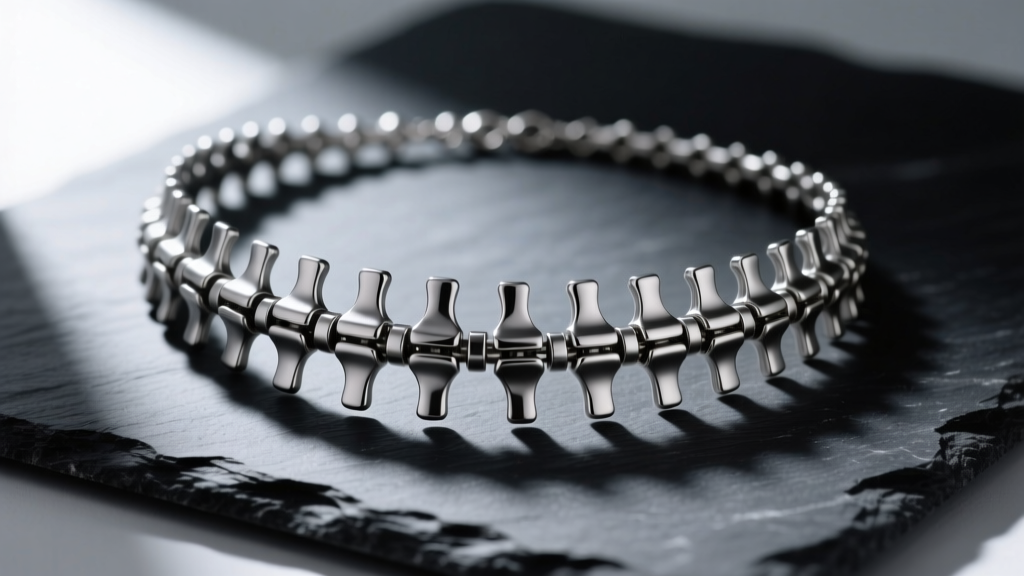
The Biomechanics of a Spine Necklace: Why Material Dictates Drape
A spine necklace is a marvel of micro-engineering. Unlike standard cable chains, a true articulated spine necklace mimics the human vertebral column, typically featuring 24 to 33 interlocking segments. The drape, fluidity, and comfort of these pieces are not merely design choices; they are direct consequences of the metal's density, hardness, and friction coefficient. As of 2026, advancements in CNC micro-milling have allowed for joint tolerances as tight as 0.05mm, but the base material still dictates how the necklace behaves under dynamic movement. Choosing the wrong metal can result in a piece that is either too heavy for daily wear, too soft to maintain its articulated joints, or prone to rapid oxidation in the microscopic crevices between the vertebrae links.
Surgical Stainless Steel (316L): The Heavyweight Champion
Weight, Articulation, and Wearability
316L surgical stainless steel remains the most popular material for spine necklaces due to its excellent balance of durability and cost. With a density of approximately 8.0 g/cm³, an 18-inch articulated steel spine necklace typically weighs between 130 and 170 grams. This substantial weight provides a luxurious, heavy drape that keeps the necklace anchored to the body, preventing the "floating" effect that lighter metals sometimes exhibit. The high tensile strength of 316L steel ensures that the tiny pivot pins (usually 0.8mm to 1.0mm in diameter) connecting the vertebrae will not bend or shear under normal wear.
The Hypoallergenic Reality Check
While marketed as "hypoallergenic," 316L steel contains 8% to 10.5% nickel. However, the nickel is tightly bound within the metal's crystal lattice. According to the EU Nickel Directive (EN 1811:2011+A1:2015), 316L steel typically releases less than 0.5 µg/cm²/week of nickel, making it safe for the vast majority of wearers. However, if you have a severe, clinically diagnosed nickel allergy, prolonged exposure to the sweat-trapping joints of a heavy steel spine necklace may still trigger contact dermatitis.
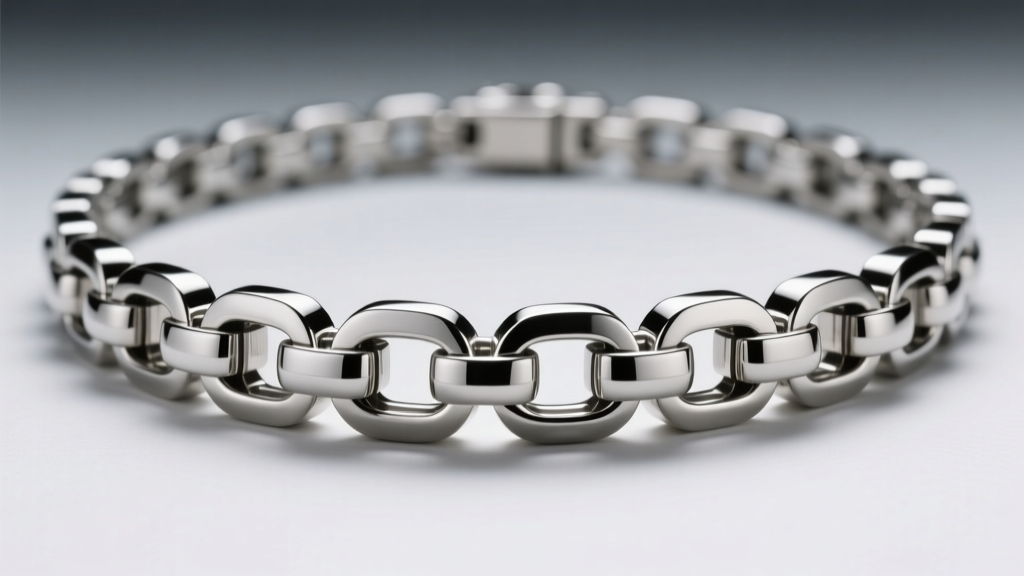
Grade 23 Titanium: The Featherweight Alternative
Tensile Strength and Joint Friction
For those seeking the aesthetic of a spine necklace without the cervical fatigue, Grade 23 Titanium (Ti-6Al-4V ELI) is the ultimate upgrade. With a density of just 4.43 g/cm³, a titanium spine necklace weighs roughly 45% less than its steel counterpart, usually coming in at a mere 65 to 85 grams for an 18-inch length. Grade 23 is an implant-grade alloy certified under ASTM F136 standards, meaning it is entirely nickel-free and biologically inert, making it the undisputed champion for highly sensitive skin.
The Machining Trade-Off
Titanium's immense strength and low thermal conductivity make it notoriously difficult to machine. As a result, the interlocking joints of a titanium spine necklace often have slightly higher friction than steel. While this means the necklace might feel a fraction stiffer right out of the box, it also means the joints will resist wear and tear far longer. Over a decade of daily wear, a steel spine necklace's joints may elongate and become "floppy," whereas titanium will maintain its precise structural integrity.
Sterling Silver (925): The Luxury Standard with a Catch
Oxidation and the "Grime Trap" in Vertebrae Links
Sterling silver (92.5% silver, 7.5% copper) offers an unmatched, luminous white reflectivity that steel and titanium cannot replicate without rhodium plating. However, its density (10.4 g/cm³) makes it the heaviest option on the market; an 18-inch silver spine necklace can easily exceed 190 grams. More critically, silver is highly susceptible to tarnishing (silver sulfide formation). According to the Gemological Institute of America (GIA), the copper alloy in sterling silver accelerates this oxidation. In a spine necklace, the microscopic 0.5mm gaps between the vertebrae act as traps for sweat, lotions, and dead skin cells, creating a micro-environment that accelerates tarnish. Cleaning these crevices requires regular ultrasonic cavitation baths, as polishing cloths cannot reach the internal pivot points.
Material Showdown: Data & Specifications Table
To make an informed decision, it is crucial to look at the raw metallurgical data. The following table compares the three dominant materials used in high-quality spine necklaces as of 2026.
| Material | Density (g/cm³) | Avg. Weight (18") | Mohs Hardness | Nickel Content | Avg. Price Range |
|---|---|---|---|---|---|
| 316L Surgical Steel | 8.00 | 130g - 170g | 5.5 - 6.0 | 8 - 10.5% (Trapped) | $45 - $120 |
| Grade 23 Titanium | 4.43 | 65g - 85g | 6.0 - 6.5 | 0% (Nickel-Free) | $150 - $350 |
| Sterling Silver (925) | 10.40 | 180g - 220g | 2.5 - 3.0 | 0% (Nickel-Free) | $120 - $280 |
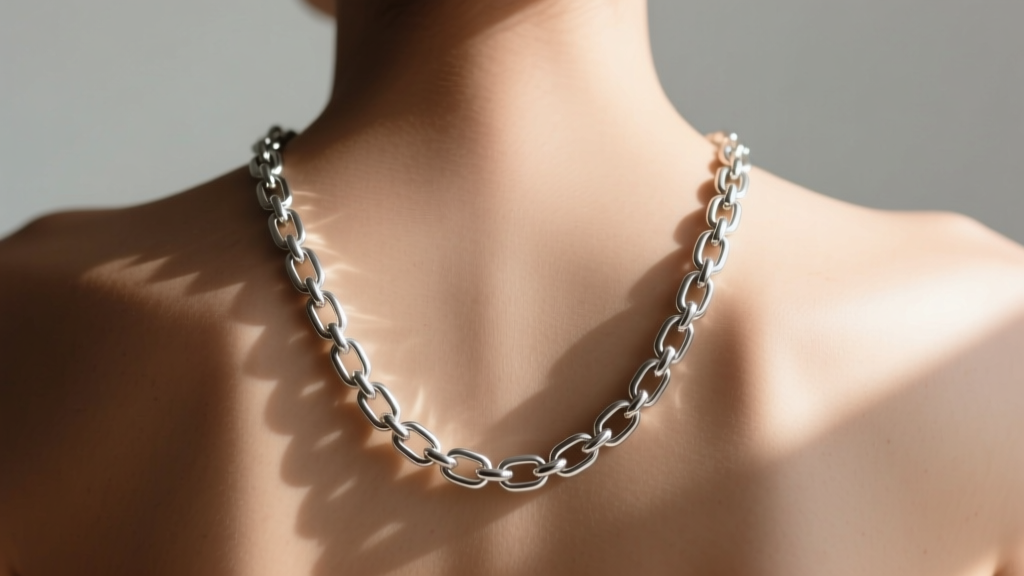
Clasp Engineering: Matching the Hardware to the Chain
A spine necklace is only as strong as its clasp. The dynamic load generated by a 150g articulated chain swinging against the collarbone will easily snap a standard lobster clasp or deform a lightweight spring ring over time. When selecting your material, pay strict attention to the clasp engineering:
- For Steel and Silver (Heavy Pieces): Insist on a heavy-duty magnetic neodymium clasp with a secondary safety chain, or a reinforced box clasp with a figure-eight safety catch. Standard lobster clasps will fail under the sheer stress of a heavy silver spine necklace.
- For Titanium (Lightweight Pieces): A high-quality, solid-cast lobster clasp or a sleek magnetic slide clasp is sufficient, as the reduced weight places significantly less kinetic stress on the closure point.
Maintenance and Ultrasonic Cavitation
Regardless of the metal you choose, the articulated nature of a spine necklace demands specific maintenance. Materials science experts note that metal-on-metal friction in unsealed joints will inevitably generate microscopic metallic dust. For steel and titanium, wiping the piece with a microfiber cloth and a drop of mineral oil every few months will keep the joints silent and fluid. For sterling silver, you must invest in a small ultrasonic jewelry cleaner. The high-frequency cavitation bubbles are the only way to dislodge oxidized grime from deep within the interlocking vertebrae without dismantling the piece.
Final Verdict: Which Metal Should You Choose?
Your ideal spine necklace material depends entirely on your lifestyle, budget, and skin biology:
- Choose 316L Surgical Steel if: You want the most authentic, heavy, and fluid drape on a budget, and you do not have a severe nickel allergy.
- Choose Grade 23 Titanium if: You require a strictly nickel-free, biocompatible metal, prefer a lightweight feel for all-day wear, and are willing to pay a premium for superior joint longevity.
- Choose Sterling Silver if: You prioritize the traditional luxury and high-reflectivity of precious metals, and you are committed to the rigorous ultrasonic cleaning routine required to prevent crevice tarnish.


