Native Beaded Necklace Value Guide: Pricing & Authenticity 2026
Discover how to assess the true value of a native beaded necklace. Learn pricing tiers, material markers, and how to spot authentic Indigenous art.

The Economics of Indigenous Beadwork
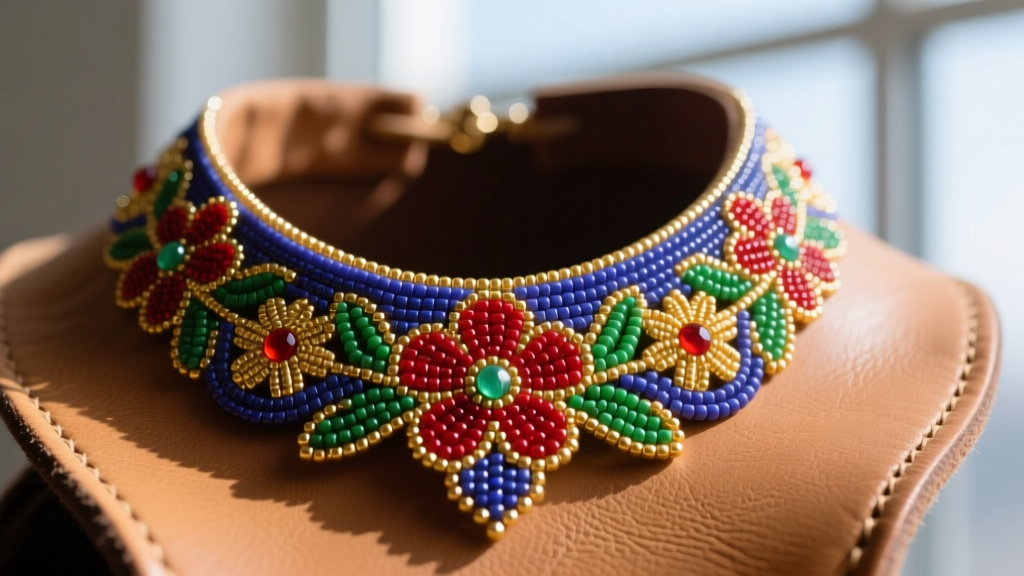
When evaluating a native beaded necklace, buyers are often stunned by the price disparity between a $30 tourist-shop trinket and a $1,200 gallery piece. This gap is not arbitrary; it reflects the profound difference between mass-produced overseas imitations and authentic, handcrafted Indigenous art. Beadwork is a time-intensive discipline. A single 18-inch peyote stitch collar or a fully beaded lazy-stitch breastplate can require anywhere from 40 to 150 hours of meticulous labor. When you purchase an authentic native beaded necklace from a recognized Indigenous artisan, you are compensating them for specialized generational knowledge, premium materials, and dozens of hours of eye-straining precision. Understanding the true cost of this labor is the first step in accurately assessing value and ensuring your budget aligns with ethical purchasing practices.
Material Breakdown: What You Are Actually Paying For
The foundation of any high-quality beaded necklace lies in its raw materials. Master beaders do not use standard craft-store plastics; they source specific grades of glass, thread, and backing to ensure longevity and historical accuracy. Here is a detailed breakdown of the materials that dictate the baseline value of a piece.
Glass Seed Beads vs. Plastic Imitations
Authentic artists predominantly use high-grade glass seed beads. For intricate floral work, size 11/0 or 13/0 Czech Charlotte cut beads (often from the Preciosa brand) are the gold standard. These beads feature a single cut facet that catches the light, giving the necklace a brilliant, gem-like sparkle. Japanese cylinder beads (like Miyuki Delicas) are favored for geometric peyote and loom work due to their uniform shape. Conversely, imported knockoffs frequently use lightweight, easily chipped plastic or acrylic beads that lack depth and degrade under UV exposure.
Thread and Structural Integrity
The unseen skeleton of a native beaded necklace is just as critical as the beads themselves. Traditionalists may use genuine animal sinew or high-quality artificial sinew (waxed braided polyester) for heavy, structural pieces like chokers and breastplates. For delicate peyote or loom work, premium nylon threads like Nymo (Size D or O) or braided polyethylene lines like Fireline (6lb test) are essential. Mass-produced items often use cheap cotton thread or, worse, industrial adhesives to glue beads onto a backing, resulting in a stiff, brittle necklace that will inevitably snap or shed beads within months.
Backing Materials
The backing of the necklace provides the canvas for the art. Premium, investment-grade pieces are backed in brain-tanned deer, elk, or moose hide, which remains supple and durable for decades. Mid-tier authentic pieces might use high-quality commercial suede or soft garment leather. A stiff, synthetic backing like vinyl, pellon, or craft felt is a primary indicator of low-value, mass-produced jewelry.
| Material Component | Authentic / Premium Grade | Mass-Produced / Low Value |
|---|---|---|
| Beads | Czech Charlotte glass (11/0, 13/0), Miyuki Delicas | Plastic, acrylic, dyed wood |
| Thread | Artificial sinew, Nymo nylon, Fireline | Cotton, cheap polyester, glue |
| Backing | Brain-tanned buckskin, premium garment suede | Vinyl, stiff pellon, craft felt |
| Findings/Clasps | Sterling silver, brass, traditional leather ties | Plated base metals, magnetic clasps |
2026 Market Pricing Tiers for Native Beaded Necklaces
To navigate the market effectively, it helps to categorize native beaded necklaces into distinct pricing tiers. These ranges reflect the current 2026 market landscape for Indigenous jewelry, accounting for material inflation and the rising recognition of Indigenous fine art.
| Tier | Price Range | Description & Expectations |
|---|---|---|
| Import / Souvenir | $15 - $45 | Mass-produced overseas. Glued beads, plastic materials, vinyl backing. Zero resale value. |
| Emerging Native Artist | $120 - $350 | Authentic, handmade by enrolled tribal members. Simple loom or peyote patterns, commercial suede backing, glass beads. |
| Mid-Career Artisan | $400 - $950 | Complex floral or geometric designs, premium Czech glass, brain-tanned hide backing, sterling silver findings. |
| Master / Museum Grade | $1,200 - $5,000+ | Historically accurate, award-winning pieces. Rare antique beads, exhaustive lazy-stitch or multi-strand heishi, documented provenance. |
Stitch Techniques and Their Impact on Value
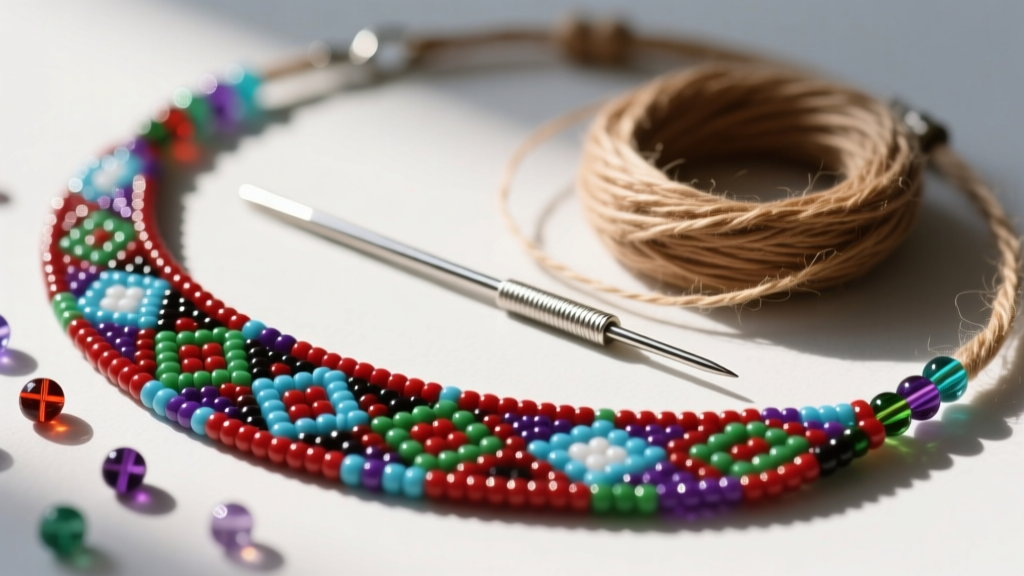
The technique used to construct the necklace heavily influences both its aesthetic and its price point. Different Indigenous nations have historically favored specific stitches, and mastering these techniques takes years of dedicated practice.
Lazy Stitch (Lane Stitch)
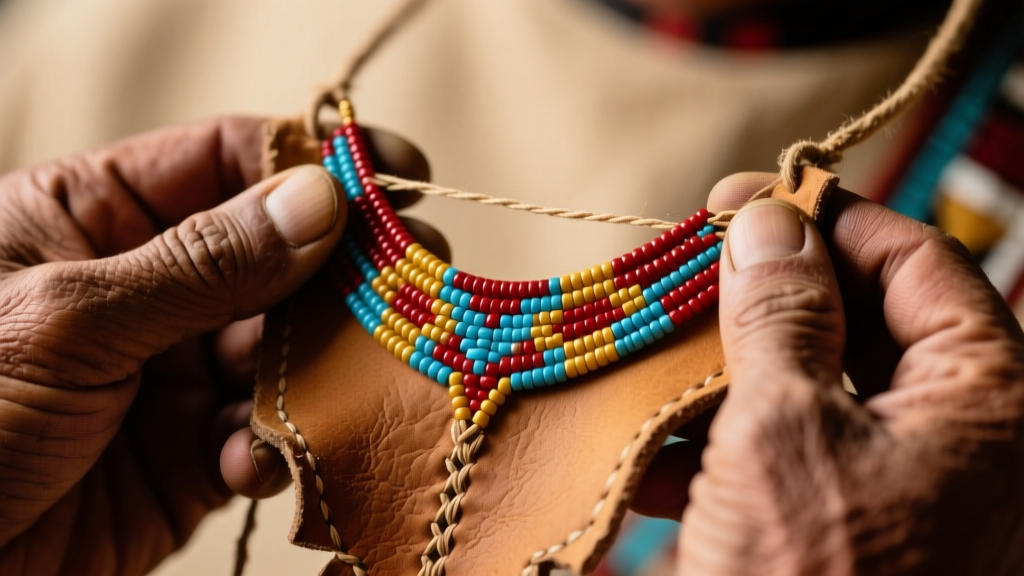
Predominantly used by Plains tribes (such as the Lakota, Cheyenne, and Comanche), the lazy stitch involves threading multiple beads onto a single strand and tacking them down at both edges. It creates distinct, ribbed lanes of color. Because it requires a stiff backing to maintain its structure, high-end lazy stitch necklaces are often backed with thick, premium hide. The value here is dictated by the symmetry of the lanes and the complexity of the geometric patterns.
Peyote Stitch (Comanche Stitch)
This off-loom weaving technique creates a flexible, fabric-like beadwork that drapes beautifully around the neck. It is highly prized for intricate floral motifs (common among Woodlands and Great Lakes tribes like the Ojibwe and Potawatomi) as well as complex geometric shapes. Peyote stitch is incredibly time-consuming; a wide, multi-inch collar can require tens of thousands of individual bead passes, justifying a premium price tag.
Loom Beading
Loom work allows for the creation of long, uniform bands of beadwork. While slightly faster than hand-woven peyote, high-quality loom work requires absolute tension control to prevent warping. The value of a loom-beaded necklace is judged by the crispness of the pattern transitions and the finishing techniques used to secure the warp threads.
Red Flags: Spotting Mass-Produced Imitations
The market is unfortunately saturated with imported items falsely marketed as Native American. Under the Indian Arts and Crafts Act of 1990, it is illegal to sell art in a manner that falsely suggests it is Indian-produced. However, enforcement can be tricky, and vague terms like 'Native style' or 'Tribal inspired' are often used to skirt the law. When assessing a native beaded necklace on a budget, watch out for these critical red flags:
- The Glue Test: Inspect the edges and the back of the beadwork. If you see dried adhesive residue, or if the beads are rigidly locked in place without visible thread paths, it is likely machine-glued.
- Perfect Machine Symmetry: Authentic hand-beaded work has a distinct human element. While master artisans achieve near-perfect symmetry, a complete lack of microscopic variation in thread tension or bead alignment can sometimes indicate computerized embroidery or loom manufacturing.
- Synthetic Backing: Flip the necklace over. If the backing is a shiny vinyl, a stiff plastic mesh, or a brightly colored synthetic craft felt, walk away. Authentic artists invest in leather or hide.
- Vague Origin Stories: If the seller cannot name the specific artist, their tribal affiliation, or the cooperative they represent, the piece is almost certainly an import.
Ethical Sourcing and Verification
Investing in a native beaded necklace is not just a fashion choice; it is a direct economic contribution to Indigenous communities. To ensure your budget is supporting authentic creators, prioritize purchasing directly from the artists via their verified websites, social media pages, or at reputable juried art markets like the Santa Fe Indian Market or the Heard Museum Guild Indian Fair & Market.
When buying from galleries or online retailers, demand transparency. Reputable dealers will provide a certificate of authenticity or a detailed biography of the artist, including their specific tribal enrollment. For further education on identifying genuine Indigenous crafts, the Smithsonian National Museum of the American Indian offers extensive resources on the historical and contemporary contexts of Native beadwork. By prioritizing verified artisans, you ensure that the cultural heritage and economic vitality of Indigenous beadworkers are preserved and respected, turning your jewelry purchase into a meaningful, valuable investment.
Final Thoughts on Value Assessment
Ultimately, the value of a native beaded necklace transcends its physical materials. While the glass beads and buckskin have a calculable market cost, the true worth lies in the cultural continuity and the artist's lived experience. When budgeting for your next piece, shift your perspective from 'buying an accessory' to 'commissioning or acquiring wearable art.' By understanding the material markers, stitch techniques, and ethical sourcing requirements outlined in this guide, you can confidently navigate the market, avoid exploitative imitations, and build a collection that honors the profound legacy of Indigenous beadwork.


