Camera Inside Necklace: 2026 Tech Specs & Style Guide
Explore the best camera inside necklace options for 2026. We break down sensor specs, battery life, metal grades, and stealth styling for wearable tech.

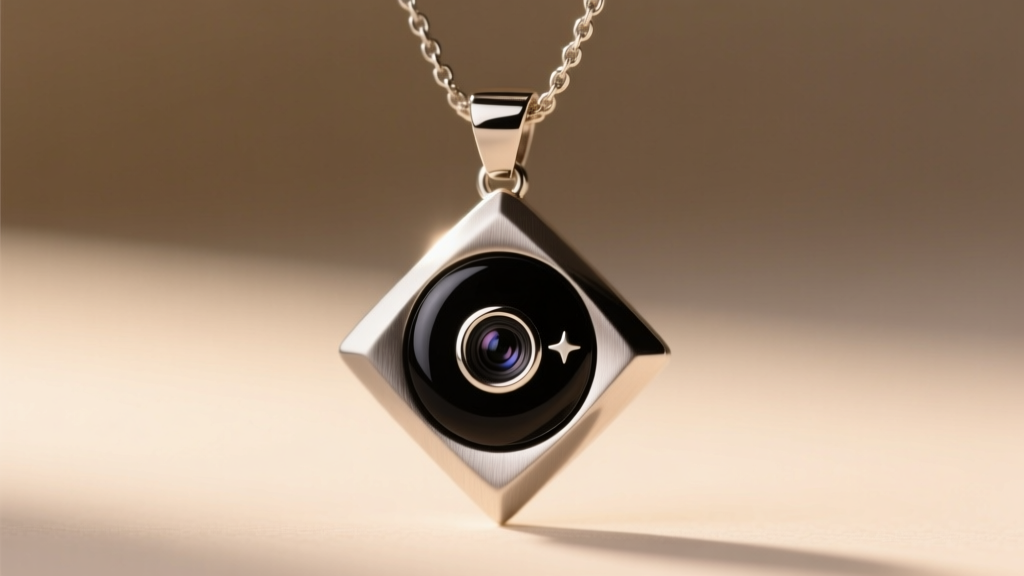
The evolution of wearable surveillance has transformed clunky, obvious novelty items into sophisticated, jewelry-grade accessories. In 2026, the demand for personal security and discreet documentation has driven significant advancements in miniaturized optics and battery chemistry. However, integrating high-definition electronics into a wearable pendant requires a delicate balance of thermal management, acoustic stealth, and aesthetic design. This expert deep dive explores the technical realities of the modern camera inside necklace, providing actionable insights on sensor optics, metallurgy, and ergonomic concealment.
The Anatomy of a Camera Inside Necklace
The physical chassis of a surveillance pendant dictates both its durability and its thermal performance. Early iterations relied on cheap zinc alloys or ABS plastics, which trapped heat and caused skin irritation during extended recording sessions. Today, premium models utilize 316L surgical-grade stainless steel or anodized aerospace-grade aluminum (6061-T6).
Steel offers superior acoustic dampening—preventing the hollow 'clinking' sound associated with cheaper metals—but it acts as a thermal insulator. To counteract this, 2026 designs incorporate internal graphene thermal pads that distribute heat from the processor to the outer casing evenly, preventing localized hot spots against the sternum. Furthermore, the lens cover is a critical failure point. While budget models use scratched-prone acrylic, high-end pendants feature synthetic sapphire crystal windows. According to the Gemological Institute of America (GIA), sapphire ranks at a 9 on the Mohs hardness scale, ensuring the micro-lens remains free of micro-abrasions that would otherwise cause severe light blooming and focus degradation.
Sensor Optics and Video Specifications
The core of any camera inside necklace is the image sensor. The current industry standard for micro-pendants is the 1/2.8-inch CMOS sensor. While marketing materials often boast 4K resolution, recording at 3840x2160 in a 15mm pendant chassis is a thermal trap.
The 4K Thermal Throttling Problem
Processing 4K video at 30fps generates approximately 2.5 watts of heat. In an enclosed steel pendant without active cooling, the internal temperature will hit the safety threshold of 45°C (113°F) within 8 to 12 minutes, triggering an automatic thermal shutdown. For continuous, reliable all-day wear, 1080p at 60fps remains the optimal sweet spot, providing crisp motion capture while keeping power draw under 1.2 watts.
Field of View and IR Stealth
A pendant rests at the sternum, typically 12 to 18 inches below the wearer's eye line and angled slightly upward or outward. Therefore, a 90° to 110° Field of View (FOV) is required to capture a natural perspective without excessive fisheye distortion. For low-light scenarios, avoid pendants utilizing 850nm Infrared (IR) LEDs, which emit a faint, visible red glow that immediately compromises stealth. Instead, specify models with 940nm no-glow IR arrays, which are entirely invisible to the human eye, albeit with a 20% reduction in maximum illumination distance.
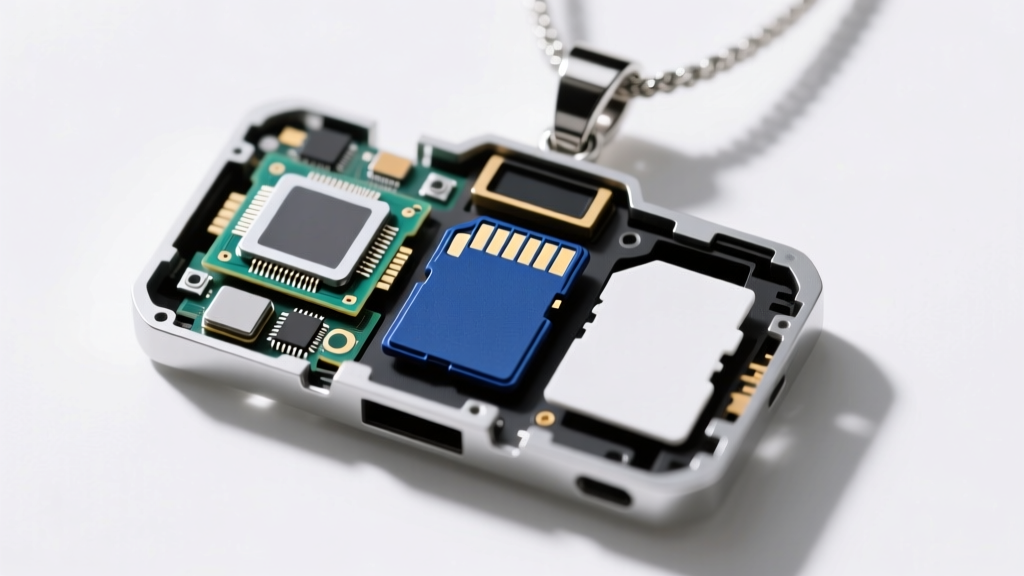
Power, Thermals, and Storage Constraints
Battery chemistry in wearable tech is heavily constrained by volume. Most high-capacity camera necklaces house a 3.7V 450mAh Lithium-Polymer (Li-Po) cell. This yields roughly 90 minutes of continuous 1080p recording. A critical safety consideration is battery swelling; cheap Li-Po cells can expand when exposed to the constant body heat and charging cycles, potentially warping the pendant casing or cracking the sapphire lens. Always look for pendants with integrated pressure-release micro-vents or rigid internal titanium battery cages.
Regarding storage, the industry has largely moved away from external MicroSD slots, which compromise the pendant's water resistance (IPX4 or higher is recommended for daily wear). Instead, 2026 models favor soldered NAND flash memory (typically 64GB or 128GB), sealed within the chassis and accessible only via encrypted USB-C or wireless Wi-Fi offloading.
Chain Mechanics and Concealment Ergonomics
The chain is not merely an aesthetic choice; it is a vital structural and acoustic component. A camera pendant typically weighs between 35g and 55g. Standard lightweight jewelry chains will snap under the dynamic load of walking or running, and they generate excessive metallic noise that ruins audio capture.
| Chain Type | Tensile Strength | Acoustic Profile | Concealment Rating |
|---|---|---|---|
| Solid Box Chain | High (Supports 60g+) | Silent (Links are tight) | Excellent (Looks like standard men's/streetwear jewelry) |
| Wheat (Spiga) Chain | Very High (Woven structure) | Near-Silent | Good (Slightly more ornate, draws minor attention) |
| Cable Chain | Low to Medium | Noisy (Links clink together) | Poor (Too delicate for heavy tech pendants) |
| Paracord / Leather | Extremely High | Completely Silent | Variable (Casual aesthetic, limits formal wardrobe use) |
For optimal audio capture via the pendant's internal MEMS microphone, a Solid Box Chain is highly recommended. Its rigid, interlocking links prevent the metal-on-metal friction noise that plagues cable and rope chains, ensuring your voice memos and environmental recordings remain clean.
Stealth Styling and Wardrobe Integration
Wearing a camera inside necklace requires deliberate wardrobe planning to avoid the 'suspicious bulge' effect. Because the pendant is thicker than standard jewelry (usually 12mm to 16mm deep), it must be layered or framed correctly.
- The V-Neck Framing Technique: A 24-inch box chain allows the pendant to rest in the negative space of a V-neck or unbuttoned collar shirt. This prevents the camera from resting directly on fabric, which can muffle the audio and cause the lens to point at the ground.
- Layering for Distraction: Layer the tech pendant with one or two non-functional, purely aesthetic chains of varying lengths (e.g., an 18-inch thin Cuban link and a 22-inch bead chain). This creates a deliberate 'streetwear stack' that normalizes the bulk of the camera pendant, making it look like a statement piece rather than a standalone gadget.
- Matte Finishes over High Polish: High-polish silver or gold reflects light and draws the eye. Opt for brushed, matte black, or gunmetal PVD (Physical Vapor Deposition) coatings. These finishes absorb ambient light and mimic the aesthetic of high-end tech accessories rather than traditional fine jewelry.

Legal and Ethical Considerations
Deploying wearable surveillance jewelry carries significant legal weight. The American Civil Liberties Union (ACLU) continuously highlights the friction between personal security devices and public privacy rights. Before utilizing a camera necklace, you must understand your local jurisdiction's recording laws.
In the United States, audio recording is governed by wiretapping statutes. While video recording in public spaces where there is no 'reasonable expectation of privacy' is generally protected, audio recording is strictly regulated. Fifteen U.S. states operate under 'two-party consent' (or all-party consent) laws, meaning you must inform and receive consent from all parties before recording a private conversation. A hidden microphone on a necklace does not exempt you from these statutes. Always disable the audio recording feature or utilize a visible recording indicator LED if you are operating in two-party consent states or private corporate environments.
Final Verdict on Wearable Surveillance Jewelry
The modern camera inside necklace is a triumph of micro-engineering, provided the buyer prioritizes thermal reality over marketing gimmicks. By selecting a 316L steel chassis with a sapphire lens cover, opting for 1080p/60fps recording to bypass thermal throttling, and pairing it with an acoustically silent box chain, you secure a reliable, stylish, and highly effective personal documentation tool. As wearable tech continues to blur the line with fine jewelry, mastering both the technical specs and the stylistic integration is essential for the modern, security-conscious consumer.


