Marble Necklace Value Guide: Are They Worth It in 2026?
Is a marble necklace worth the investment? We break down 2026 pricing tiers, stone grades, hardware quality, and durability to help you assess true value.

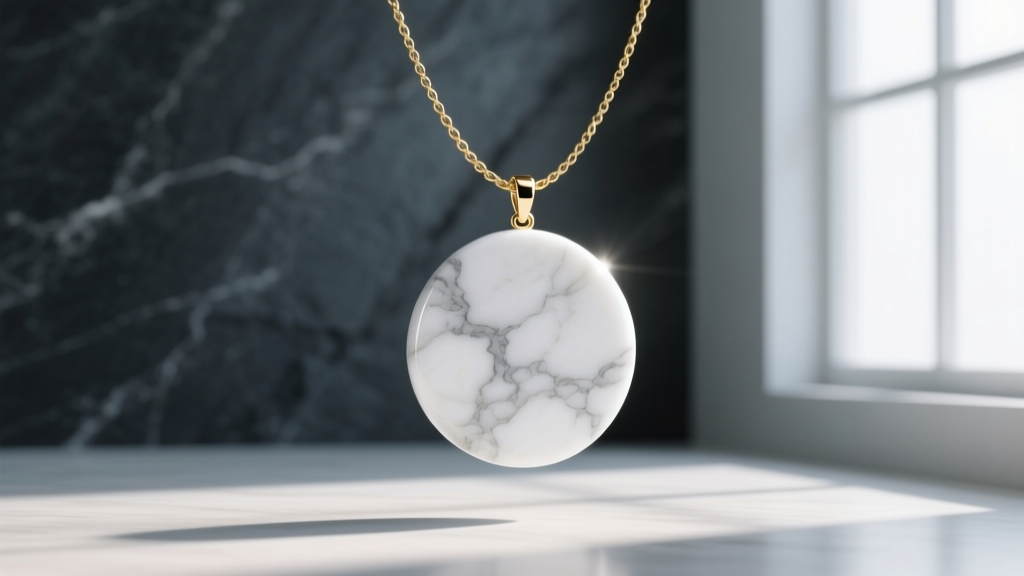
The Mineral Reality: Understanding Marble in Jewelry
Marble has transcended its architectural roots to become a highly sought-after material in contemporary jewelry design. Its organic veining and earthy aesthetic offer a striking alternative to traditional faceted gemstones. However, assessing the true value of a marble necklace requires looking past the surface-level beauty and understanding the mineralogical realities of the stone. Marble is a metamorphic rock composed primarily of recrystallized carbonate minerals, most commonly calcite or dolomite. According to the Mindat Mineralogy Database, marble registers a mere 3 to 4 on the Mohs hardness scale. To put this in perspective, a standard copper penny is a 3.5, and a steel knife blade is a 5.5. This inherent softness means a marble necklace is not a 'wear it in the shower and forget it' piece. The value of a marble pendant is deeply tied to how well the lapidary has mitigated these natural vulnerabilities through precision cutting, high-grit polishing, and advanced chemical sealing.
Decoding Marble Grades and Lapidary Work
Not all marble is created equal, and the market is currently saturated with varying tiers of stone quality. High-value pieces utilize 'A-grade' blocks that are free of structural fissures, chalky inclusions, and artificial dye enhancements. Lower-tier manufacturers frequently use 'B-grade' or 'C-grade' marble that has been heavily treated with epoxy resins and fillers to hold crumbling pieces together. When evaluating a marble necklace, you must also scrutinize the lapidary work. A high-value cabochon will feature a flawless, mirror-like dome with perfectly symmetrical edges. If you notice flat spots, dull patches, or a wavy surface reflection, the stone was likely mass-tumbled rather than hand-cut and polished, drastically reducing its intrinsic value.
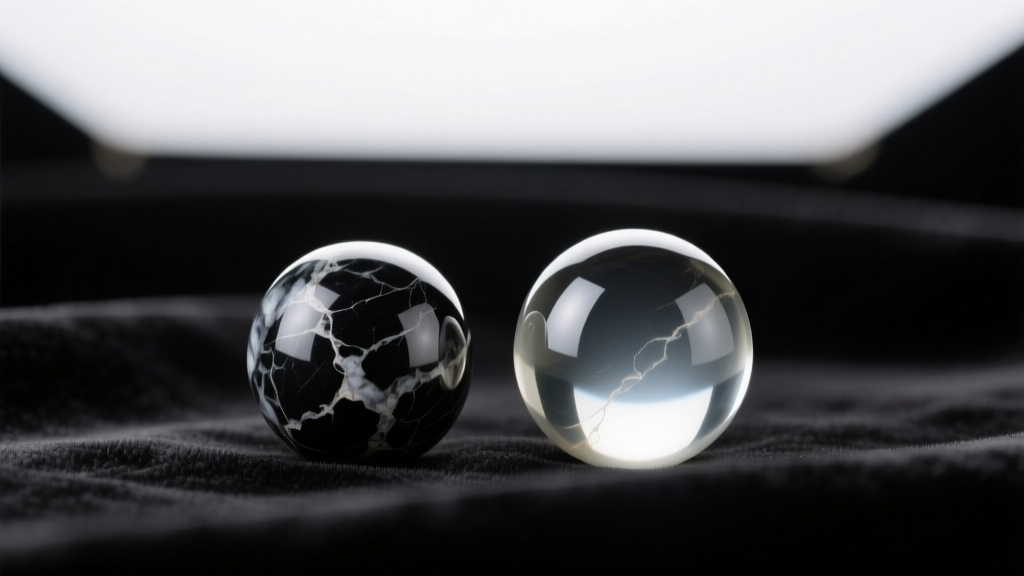
Primary Varieties in the 2026 Market
- Carrara Marble: Sourced from Tuscany, this white to blue-gray stone with soft, feathery veining is the most recognizable. True Carrara commands a premium, but beware of 'marble-look' quartzite or dyed howlite passed off as genuine Italian Carrara.
- Nero Marquina: A dramatic, deep black marble with stark white calcite veining. The value here depends on the contrast; high-value pieces feature sharp, distinct white lightning-strike veins against a pitch-black background, rather than a muddy, gray-washed appearance.
- Emperador Marble: Featuring rich, warm brown tones with golden webbing. This variety is slightly more porous and requires superior sealing to maintain its value and structural integrity over time.
The 2026 Pricing Matrix: What Should You Actually Pay?
Determining whether a marble necklace is priced fairly requires a breakdown of the materials, engineering, and brand overhead. Below is our definitive value assessment matrix for the current market.
| Tier | Price Range | Stone Quality & Treatment | Hardware & Engineering | Value Verdict |
|---|---|---|---|---|
| Mass Market / Fast Fashion | $15 - $45 | C-grade stone, heavy resin fillers, surface wax coating. Often dyed howlite or acrylic. | Brass or plated alloy chains (0.6mm), flimsy spring-ring clasps, glued-in pendants. | Poor. High failure rate. The plating will tarnish, and the stone will degrade or scratch within months. |
| Artisan / Indie Jeweler | $60 - $150 | A-grade natural marble, hand-polished cabochons, treated with penetrating siloxane sealers. | Sterling silver or heavy gold vermeil (1.2mm+ chains), soldered jump rings, custom bezel settings. | Excellent. The sweet spot for value. You are paying for genuine lapidary skill and durable, skin-safe metals. |
| Fine / Designer | $250 - $800+ | Rare, book-matched marble slabs, sometimes paired with diamond mele or sapphire accents. | Solid 14k/18k gold, integrated mechanical bails, micro-pave detailing, proprietary sealants. | Good (for luxury). You are paying a premium for the designer name and solid gold, but the stone itself remains relatively inexpensive. |
Hardware Engineering: Where Cheap Necklaces Fail
One of the most critical, yet frequently overlooked, aspects of marble necklace value is the hardware engineering. Marble is exceptionally dense. A standard 20mm round marble cabochon can weigh anywhere from 8 to 14 grams, which is significantly heavier than a comparably sized piece of agate, quartz, or glass. If a jeweler pairs a heavy marble pendant with a delicate 0.8mm cable chain, the chain will inevitably stretch, kink, and eventually snap under the dynamic load of daily wear.
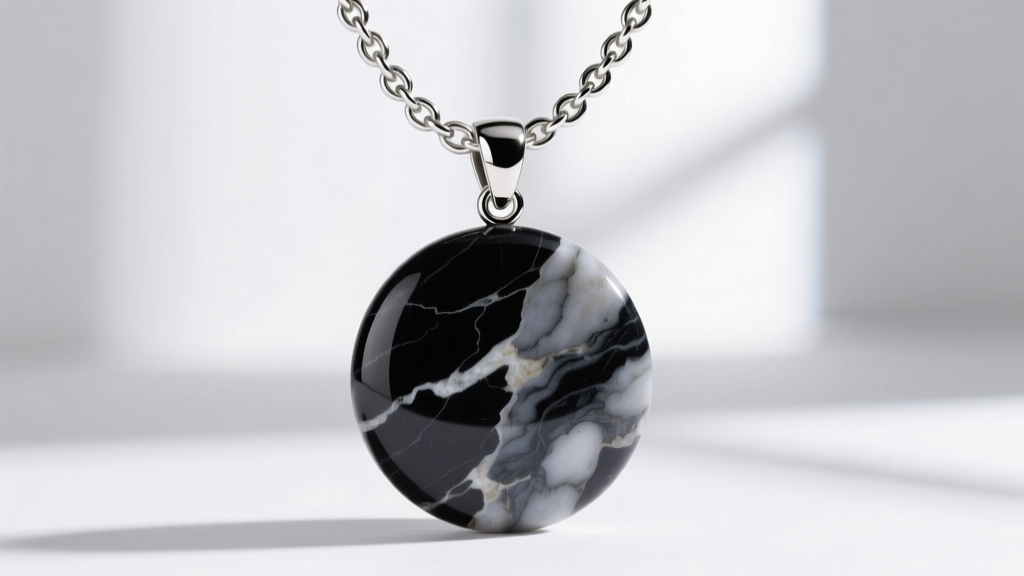
Chain and Clasp Metallurgy
For a marble necklace to be considered a high-value, durable purchase, the chain must be a minimum of 1.2mm in thickness, preferably in a rolo or box chain style that can handle multidirectional stress. The jump ring connecting the pendant to the chain must be at least 18-gauge (1.0mm) thick and, ideally, soldered shut. Open jump rings will slowly pull apart under the pendulum-like swinging motion of a heavy marble stone. Furthermore, the clasp should be a robust lobster claw or a magnetic neodymium lock; cheap spring-ring clasps will fail under the weight.
Setting Mechanics: Bezel vs. Prong
According to guidelines outlined by the GIA Gem Encyclopedia regarding carbonate gems, marble has distinct cleavage planes and high brittleness. Prong settings are a massive red flag in marble jewelry. The point-pressure exerted by metal prongs can easily cause the stone to chip or crack entirely if the necklace is bumped against a hard surface. High-value marble pendants utilize bezel settings or semi-bezel wraps with a protective metal lip that shields the vulnerable edges of the stone from impact damage.
Durability and Failure Modes: The Hidden Costs
When assessing the budget for a marble necklace, you must factor in the long-term maintenance and the stone's chemical vulnerabilities. Because marble is calcium carbonate, it reacts violently with acids. Everyday substances like citrus juice, vinegar, acidic sweat, and even the alcohol and synthetic oils found in commercial perfumes will cause 'etching'—a chemical reaction that literally dissolves the polished surface of the stone, leaving it dull, pitted, and permanently damaged.
A high-value marble necklace is not just about the stone; it is about the invisible chemistry protecting it. A $100 sealed pendant will outlast and outshine a $30 unsealed one every single time.
The Sealant Factor
To combat porosity and etching, reputable jewelers treat their marble with penetrating impregnating sealers, such as fluoropolymer or siloxane-based solutions. These sealers sink deep into the microscopic pores of the stone without altering its optical refractive index, meaning the marble retains its natural, glassy luster while gaining resistance to oils and mild acids. Conversely, budget manufacturers use cheap surface waxes (like carnauba) that simply sit on top of the stone. These waxes wear off within weeks of contact with skin friction, leaving the marble completely exposed to staining and degradation.
Final Verdict: The Buyer's Value Checklist
Before purchasing a marble necklace in 2026, run the piece through this rigorous value-assessment checklist to ensure you are getting what you pay for:
- The Weight Test: Does the chain feel substantial? If the pendant feels heavy but the chain looks like a thin thread, walk away.
- The Edge Inspection: Examine the edges of the marble under good lighting. Are they protected by a metal bezel, or are they exposed and prone to chipping?
- The Temperature Check: Genuine marble is cold to the touch and takes a moment to warm up against the skin. Resin or acrylic imitations will feel room-temperature or warm immediately.
- The Hardware Audit: Check the jump rings. Are they thick and tightly closed? Is the clasp rated for the weight of the stone?
- The Seller Transparency: Does the jeweler explicitly state the type of marble used and the sealing method applied? Vague descriptions like 'natural stone' or 'marble-style' usually indicate dyed howlite or synthetic composites.
Ultimately, a marble necklace is a phenomenal investment when purchased from an artisan who respects the material's limitations and engineers the hardware to support its unique physical properties. By prioritizing structural integrity, proper lapidary work, and high-quality metallurgy over fast-fashion aesthetics, you can secure a piece that remains a staple in your wardrobe for years to come.


