How to Layer and Care for Your Gold Moon and Star Necklace
Master the art of styling your gold moon and star necklace. Learn step-by-step layering techniques, gold purity facts, and expert cleaning methods.

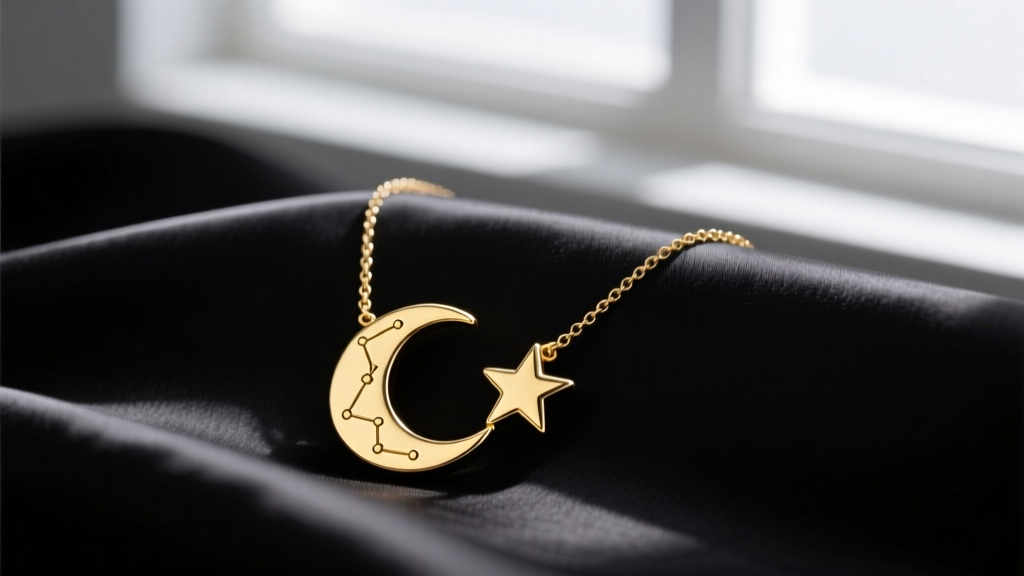
Decoding Gold Purity and Pendant Construction
When investing in a celestial-themed piece, understanding the metallurgy behind your jewelry is the first step to ensuring its longevity. A gold moon and star necklace is typically crafted in either 14k or 18k gold, and the choice between the two drastically affects how the piece wears over time. According to the Gemological Institute of America (GIA), 14k gold contains 58.3% pure gold alloyed with metals like copper, zinc, and silver. This makes it highly resistant to scratching and bending—a crucial factor for star pendants, which feature delicate, protruding points that can easily warp if cast in softer, higher-karat metals.
Conversely, 18k gold (75% pure gold) offers a richer, warmer yellow hue that beautifully mimics the glow of a harvest moon, but it requires more meticulous care. If your star pendant features intricate milgrain edges or micro-pavé diamond accents, 14k gold is the superior choice for everyday wear due to its structural rigidity. Furthermore, pay attention to the manufacturing method. Die-struck celestial pendants are denser and more durable than cast pendants, making them less prone to denting if they swing against a hard surface.
The 2-Inch Rule: Step-by-Step Layering Guide
Layering is where the gold moon and star necklace truly shines, but haphazardly stacking chains leads to severe tangling and clasp damage. The golden rule of necklace layering is maintaining a strict two-inch length differential between each chain. This gap prevents the clasps from sliding down and interlocking with the links of adjacent chains.
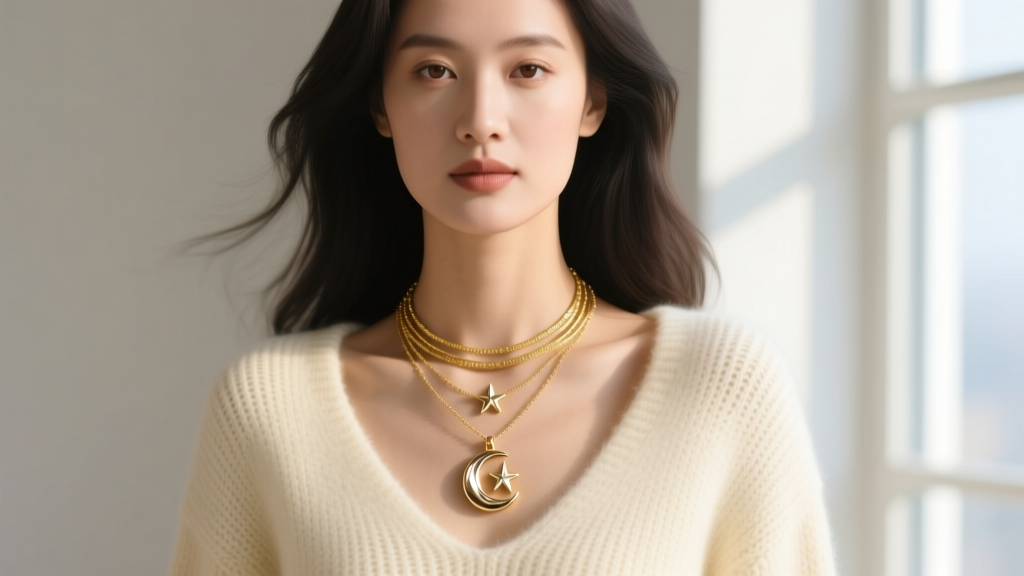
Step 1: Establish the Base Layer (14 to 16 Inches)
Start with a minimalist chain that sits close to the collarbone. A 1.2mm to 1.5mm cable chain or a delicate box chain in 14k gold provides a subtle foundation without competing with your focal pendant. Ensure this chain has a secure lobster clasp, as spring ring clasps on thin chains are notorious for failing under the tension of daily movement.
Step 2: Position the Celestial Focal Point (18 Inches)
Your gold moon and star necklace should serve as the anchor of the arrangement. An 18-inch chain allows the pendant to rest perfectly on the sternum, drawing the eye downward. If the pendant is relatively small (under 15mm), opt for a slightly thicker chain, such as a 2.5mm rope chain, to give the celestial motif visual weight and balance.
Step 3: Add Textural Contrast (20 to 22 Inches)
Finish the stack with a chain that offers a completely different visual texture. A 3mm to 5mm paperclip chain or a flattened curb chain adds a modern, geometric contrast to the organic curves of the moon and star. This final layer should rest gently on the upper chest, framing the entire composition.
| Layer Position | Recommended Length | Chain Style | Width (mm) |
|---|---|---|---|
| Base | 14' - 16' | Cable or Box | 1.2 - 1.5mm |
| Focal (Moon/Star) | 18' | Rope or Bead | 2.0 - 2.5mm |
| Bottom Anchor | 20' - 22' | Paperclip or Curb | 3.0 - 5.0mm |
Neckline Pairing Matrix
The geometry of your clothing dictates how a celestial pendant frames your face and torso. Use this matrix to match your gold moon and star necklace to specific necklines:
- The V-Neck: Follow the natural angle of the fabric. An 18-inch chain with a vertically oriented starburst or a dangling moon charm elongates the neck and mirrors the V-shape perfectly.
- The Scoop Neck: Fill the negative space with a 16-inch choker-style chain featuring a horizontal crescent moon, paired with an 18-inch chain bearing a solitary star.
- The Button-Down Shirt: Unbutton exactly three buttons. Layer a delicate 14-inch chain with a tiny star stud pendant, allowing the 18-inch moon pendant to rest just above the fabric's opening for a sophisticated, peek-a-boo effect.
- The Off-the-Shoulder: Bare shoulders demand visual weight. Opt for a heavier, vintage-inspired 20-inch gold moon and star necklace with oxidized detailing to contrast against the skin.
Professional Cleaning and Maintenance Protocol
Celestial motifs often feature deep crevices, especially around the craters of a moon or the inner angles of a star, where sebum, lotion, and environmental dust accumulate. The GIA Jewelry Care guidelines strongly advise against using ultrasonic cleaners on gold jewelry that features soft gemstones (like turquoise or opal) or epoxy resin enamel, which is frequently used to add dark contrast to moon craters.
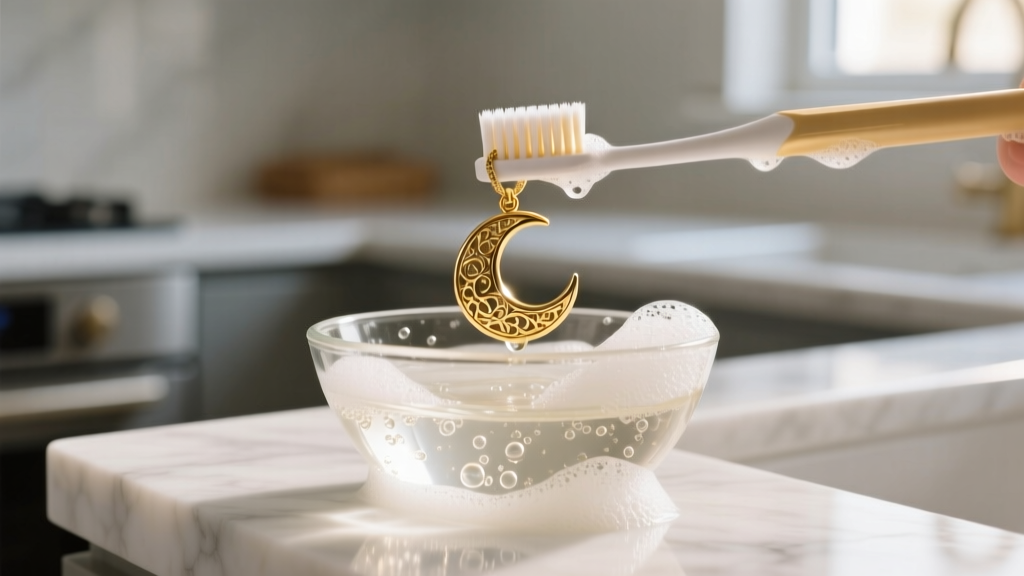
The 4-Step Safe Cleaning Method
- Preparation: Mix three drops of mild, phosphate-free dish soap (such as Dawn) into a bowl of lukewarm distilled water. Avoid tap water, as heavy minerals can leave microscopic spots on high-polish gold.
- Soaking: Submerge the gold moon and star necklace for exactly five minutes. This loosens body oils trapped in the clasp mechanism and pendant bail.
- Agitation: Using a brand-new, extra-soft baby toothbrush, gently sweep the bristles across the surface of the pendant. Pay special attention to the back of the moon and the jump ring connecting the star to the chain. Never use stiff bristles, as they will create micro-scratches on 18k gold.
- Drying: Rinse thoroughly under a gentle stream of distilled water. Pat dry with a lint-free microfiber cloth. Allow the necklace to air-dry completely on a towel before storing to prevent moisture from degrading the internal spring of the clasp.
Expert Warning: Never use baking soda, toothpaste, or abrasive polishing cloths on matte-finished or brushed gold celestial pendants. These abrasives will polish away the intentional matte texture, leaving you with an uneven, patchy shine that requires professional jeweler intervention to restore.
Troubleshooting Tangles and Clasp Failures
Thin gold chains are highly susceptible to knotting, especially when layered or stored improperly during travel. If your gold moon and star necklace becomes tangled, do not pull the chains tight. Instead, lay the necklace flat on a hard, well-lit surface. Apply a tiny pinch of baby powder or cornstarch directly to the knot. The powder acts as a dry lubricant, reducing the friction between the gold links. Use two fine sewing needles to gently tease the center of the knot outward until it loosens.
Regarding clasp failures, the standard spring ring clasp found on many lightweight celestial necklaces is a common point of failure. The internal tension spring can weaken, causing the clasp to slide open unexpectedly. If you notice your clasp failing to snap shut with an audible 'click,' it is time to upgrade. Take the necklace to a local jeweler and request a swap to a 5mm or 6mm lobster clasp. As outlined in the FTC Jewelry Guides regarding durability and consumer expectations, ensuring your findings (clasps and jump rings) are proportionate to the chain's weight is critical for preventing the loss of your valuable gold pendants. A lobster clasp features a stronger internal spring and a wider lever, providing vastly superior security for your favorite celestial stack.
By adhering to these precise layering measurements, pairing geometries, and meticulous cleaning protocols, your gold moon and star necklace will maintain its brilliant luster and structural integrity for decades, serving as a timeless anchor in your evolving jewelry wardrobe.


