Diamond Star Necklace Troubleshooting: Fix Dull Stones & Chains
Is your diamond star necklace losing its sparkle or tangling? Learn expert troubleshooting tips to fix dull stones, loose prongs, and chain knots.

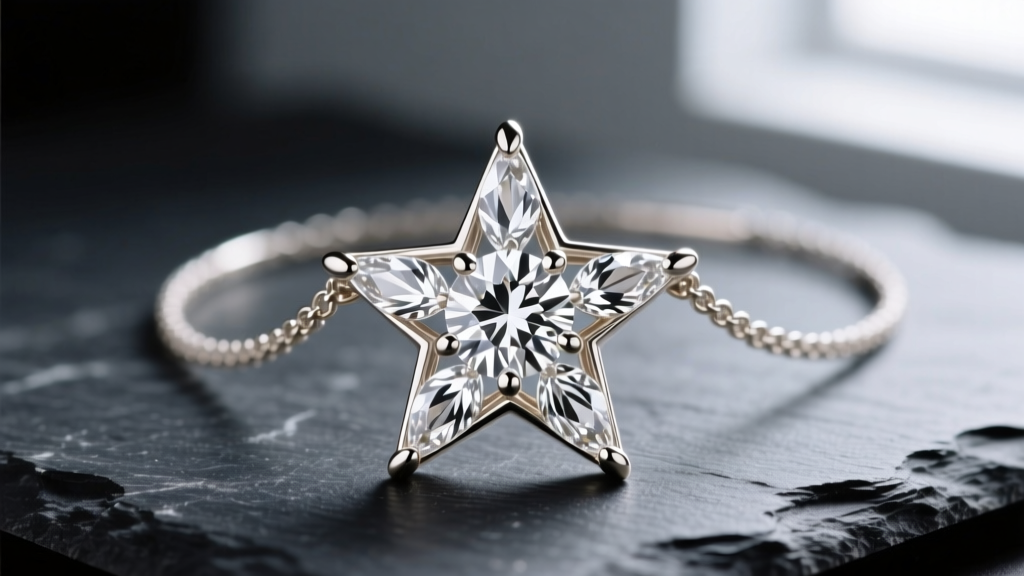
A diamond star necklace is a celestial staple in fine jewelry, but its intricate geometry makes it uniquely prone to specific wear-and-tear issues. Unlike simple solitaire pendants, star-shaped settings feature multiple acute angles, delicate points, and complex light-reflection paths. When a star necklace loses its brilliance, snags on clothing, or constantly slides off-center, it is rarely a defect in the diamond itself. Instead, it is usually a structural or maintenance issue that can be systematically diagnosed and resolved.
In this comprehensive troubleshooting guide, we break down the most common failure points of diamond star necklaces—from lipophilic grime buildup in deep pavilions to structural vulnerabilities in V-prongs—and provide actionable, expert-level solutions to restore your piece to its original condition.
The Anatomy of a Diamond Star Necklace (and Where It Fails)
To troubleshoot effectively, you must understand how a star pendant is constructed. Most high-quality diamond star necklaces utilize a combination of round brilliant melee stones for the center and marquise or pear-cut diamonds for the five radiating points. This combination creates the starburst effect but introduces structural vulnerabilities.
The sharp tips of marquise and pear cuts are the most fragile areas of any diamond. If your star necklace was manufactured with standard round prongs over these sharp tips, the stones are at a high risk of chipping or slipping out of the setting. Furthermore, the open-back gallery (the underside of the pendant) is designed to let light enter, but it also acts as a trap for skin oils, lotions, and hard water minerals. When troubleshooting a dull star necklace, we must look at both the stone's geometry and the setting's architecture.
Troubleshooting Loss of Sparkle: Cloudiness and Grime
Diamonds are highly lipophilic, meaning they naturally attract and hold onto grease and oils. Because a star pendant rests directly against the décolletage, it is constantly exposed to sebum, body lotions, and perfume residue. This buildup rarely occurs on the crown (top) of the stone; instead, it coats the pavilion (the bottom facets), creating a cloudy film that blocks light return and makes the star look lifeless.
The Safe Cleaning Protocol
Many owners mistakenly toss their diamond star necklaces into ultrasonic cleaners. While a 40kHz ultrasonic bath is excellent for dislodging grime, it can be disastrous if your star points feature fracture-filled diamonds or if the setting has microscopic porosity in the casting. According to the Gemological Institute of America (GIA), the safest and most effective routine cleaning method for complex settings involves a chemical and mechanical approach:
- The Solution: Mix warm water with a few drops of degreasing dish soap (like Dawn). Avoid harsh chemicals or chlorine bleach, which can degrade the alloys in 14k or 18k gold settings.
- The Agitation: Submerge the necklace for 15 minutes. Use an ultra-soft baby toothbrush to gently sweep the pavilion (underside) of each star point. Do not scrub the top; focus entirely on the gallery where the grime hides.
- The Rinse: Rinse under lukewarm running water, ensuring the drain is securely covered.
Fixing Loose or Snagging Prongs on Star Points
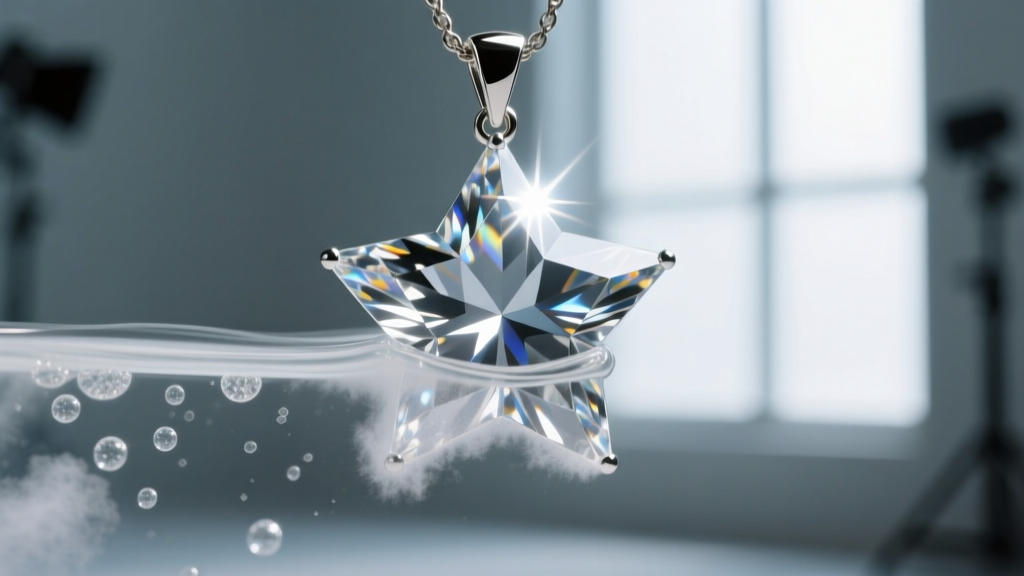
If your diamond star necklace frequently catches on silk blouses or knitwear, the issue lies in the prong work. As mentioned, the acute points of a star require specialized V-prongs. A V-prong wraps around the sharp corner of the diamond, protecting it from impact and preventing snags. If your pendant uses standard prongs, or if the V-prongs have worn flat over time, they will act like tiny hooks on your clothing.
The "Tap Test" for Loose Stones
Before taking your necklace to a bench jeweler, perform the tap test. Hold the pendant close to your ear and gently tap the metal setting with a wooden toothpick. If you hear a faint rattling or clicking sound, a stone is loose within its bezel or prong basket. Stop wearing the necklace immediately. A loose marquise stone in a star point can easily pop out if the prong catches on a sweater thread.
Repair Costs & Expectations: Re-tipping a worn V-prong typically costs between $15 and $35 per point. If the star setting is cast as a single piece and the metal has fatigued, a jeweler may need to laser-weld a new wire tip to the existing prong. Always ask your jeweler to polish the prong heads to a high shine after re-tipping to eliminate any microscopic burrs that cause snagging.
Solving the Chain Tangling and Sliding Clasp Problem
One of the most frustrating issues with diamond star necklaces is the tendency for the pendant to slide to the side of the neck, or for the chain to tangle into a bird's nest in the jewelry box. This is a physics problem related to the center of gravity and chain gauge.
Why Star Pendants Slide and Tangle
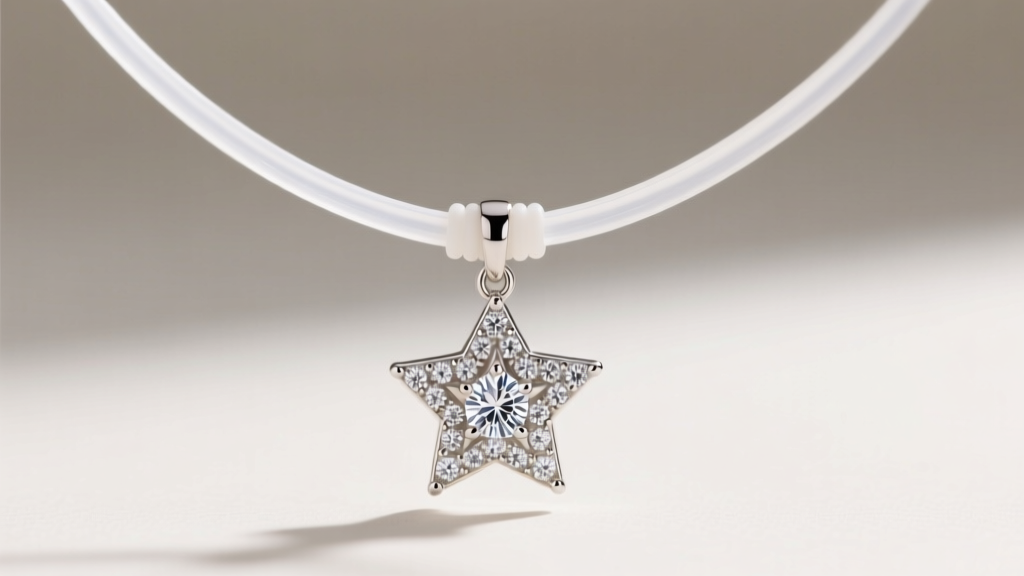
Star pendants are often top-heavy or have wide, asymmetrical bails (the loop that connects the pendant to the chain). If the bail hole is significantly wider than the chain gauge, the pendant will slide freely, eventually pulling the chain's clasp around to the front of your neck. Furthermore, fine chains (under 1.0mm) are highly susceptible to tangling because they lack the structural rigidity to lay flat when stored.
Actionable Fixes for Chain Management
| Symptom | Root Cause | Actionable Fix |
|---|---|---|
| Pendant slides off-center | Bail diameter is too large for the chain gauge. | Add a discreet silicone o-ring stopper or a small metallic "speed bump" bead on the chain to lock the bail in the center. |
| Clasp migrates to the front | The pendant is too heavy for the chain, pulling the back clasp forward. | Upgrade to a heavier chain (e.g., from a 0.8mm cable to a 1.5mm box chain) or add a counterweight charm near the clasp. |
| Severe chain tangling | Storing fine chains loosely; static electricity and lack of rigidity. | Store the necklace threaded through a plastic straw, or clasp it and lay it flat in a microfiber-lined anti-tarnish pouch. |
According to Jewelers of America, matching the chain gauge to the pendant weight is critical for longevity. For a standard 1.5 to 3-carat total weight diamond star pendant, a 1.1mm to 1.3mm cable or box chain provides the ideal balance of delicacy and tensile strength.
Metal Tarnish and Plating Wear on White Gold Stars
If your diamond star necklace is made of white gold, you may notice the metal taking on a yellowish or dull gray tint over time, particularly on the high points of the star where friction occurs against the skin and clothing. This is not tarnish in the traditional sense; it is the wearing away of rhodium plating.
White gold is an alloy of yellow gold and white metals (like nickel or palladium). To achieve a bright, silvery finish, it is electroplated with rhodium, a platinum-group metal. A standard rhodium plating is only 0.75 to 1.0 microns thick. On a star pendant, the sharp outer points experience the most friction, causing the plating to wear off faster than on a smooth, domed ring.
The Fix: You cannot polish white gold back to a bright white; polishing will only remove more of the rhodium. The necklace must be professionally re-plated. Expect to pay between $35 and $75 for a professional rhodium dip. To extend the life of the plating, avoid wearing your star necklace in chlorinated pools or hot tubs, as chlorine rapidly degrades rhodium and weakens the gold alloy's prongs.
Summary Checklist for Annual Maintenance
To keep your diamond star necklace looking pristine and structurally sound, follow this annual maintenance checklist:
- Bi-Weekly: Degrease the pavilion facets with a mild dish soap solution and a soft brush to maintain maximum light return.
- Bi-Annually: Perform the "tap test" and visually inspect the V-prongs on the star points with a 10x jeweler's loupe to check for lifting or wear.
- Annually: Take the piece to a certified bench jeweler for a professional steam clean and a prong-tightening check.
- As Needed: Monitor the color of white gold settings and schedule rhodium re-plating when the yellowish alloy becomes visible on the star's outer points.
By understanding the specific mechanical and chemical vulnerabilities of star-shaped jewelry, you can troubleshoot issues before they result in lost diamonds or broken chains, ensuring your celestial piece remains a brilliant staple in your collection for decades.


