Avon Magnifying Glass Necklace: Expert Collector Guide
Discover the metallurgy, lens specs, and market value of the vintage Avon magnifying glass necklace in our expert collector's authentication guide.

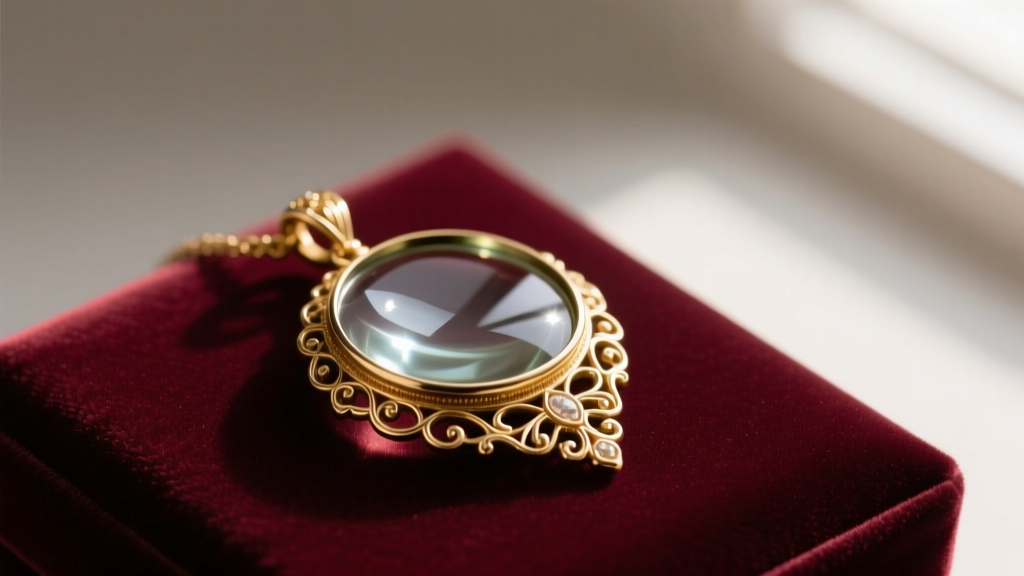
The vintage Avon magnifying glass necklace occupies a unique intersection of novelty charm and mid-century costume jewelry engineering. Originally produced during Avon's aggressive expansion into themed collectible jewelry in the 1970s and 1980s, these pendants were often marketed as part of mystery-themed collections, detective motifs, or floral-encrusted charm sets. For the serious collector, evaluating an Avon magnifying glass necklace requires looking past the aesthetic charm and scrutinizing the metallurgical composition, optical clarity, and structural integrity of the piece. This expert deep dive breaks down the technical specifications, failure modes, and conservation protocols necessary for authenticating and preserving these specific vintage artifacts.
Metallurgical Profile: Base Alloys and Flash Plating
To accurately assess any vintage Avon piece, one must understand the foundational materials. Avon rarely used solid precious metals for its mass-market costume lines. Instead, the base of the magnifying glass pendant is typically a zinc-copper-aluminum alloy, commonly known as Zamak, or a standardized brass alloy. Zamak was favored for its low melting point and excellent flow characteristics, allowing Avon's manufacturers to cast highly detailed frames, filigree accents, and ornate handles without expensive tooling.
Once cast, the base metal was subjected to a flash plating process. Avon's proprietary 'Avon Gold Tone' and 'Avon Silver Tone' finishes were achieved through electroplating a microscopically thin layer of gold or rhodium/silver alloy over a copper or nickel strike layer. The plating thickness on these vintage pieces generally ranges from 0.5 to 1.5 microns. While this provided a brilliant, authentic-looking finish upon manufacture, it is highly susceptible to friction wear and chemical degradation over decades of use.
Identifying Plating Failure and 'Brassing'
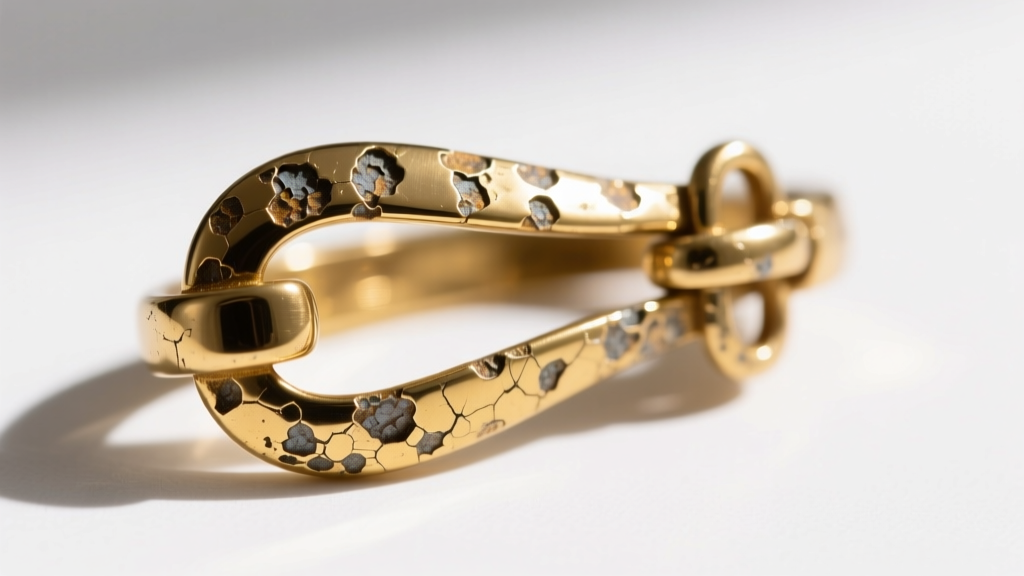
The most common failure mode for the Avon magnifying glass necklace is 'brassing'—the wearing away of the flash plating to reveal the yellowish brass or dull grey Zamak base metal beneath. This typically occurs at high-friction nodes: the bail loop where the chain threads through, the outer rim of the magnifying frame, and the clasp mechanism. When inspecting a potential acquisition, use a 10x jeweler's loupe to examine the bezel holding the lens. If you see flaking or a distinct color shift in the recessed crevices, the piece has suffered irreversible plating loss.
Optical Specifications: The Magnifying Element
While the primary function of the necklace is decorative, the lens itself is a critical component of the piece's value and authenticity. Vintage Avon magnifying pendants predominantly feature soda-lime glass lenses rather than optical-grade crown glass or modern acrylics (PMMA). Soda-lime glass was cost-effective and provided adequate scratch resistance, though it is inherently heavier and more prone to shattering upon impact.
The diopter (magnification power) of these novelty lenses is usually quite low, typically ranging from +1.0 to +2.0. This translates to roughly 1.25x to 1.5x magnification. The edges of the glass are often beveled and seated into a metal bezel secured with a tension fit or a clear, early-epoxy adhesive. A major red flag in authentication is the presence of a plastic or acrylic lens in a piece purported to be from the 1970s; acrylic was rarely used for these specific high-clarity novelty pendants until much later costume jewelry production runs. Furthermore, original glass lenses will feel cool to the touch and will not exhibit the deep, internal micro-scratches characteristic of aged acrylic.
Chain Architecture and Clasp Mechanics
The chain accompanying the Avon magnifying glass necklace is usually a 1.2mm to 1.5mm rope chain or a lightweight cable chain, typically measuring 18 inches in length. These chains were also flash-plated and are often the first component to fail. The structural weak point is almost always the spring ring clasp. Vintage spring rings rely on a tiny internal steel spring to maintain tension. Over time, moisture and skin oils penetrate the clasp housing, causing the internal spring to rust and seize. If the clasp on your Avon necklace feels stiff or fails to snap back with an audible click, the internal mechanism has likely corroded. Replacing the clasp with a modern stainless steel or gold-filled lobster clasp is a common conservation practice, though purists may seek out New Old Stock (NOS) vintage spring rings to maintain period accuracy.
Market Valuation and Grading Matrix
The secondary market for the Avon magnifying glass necklace is highly dependent on condition, completeness, and the specific rarity of the frame design. Below is a standardized grading matrix reflecting current collector market valuations.
| Grade | Plating Condition | Lens Clarity | Estimated Market Value |
|---|---|---|---|
| Mint / NOS | 100% intact flash plating, no brassing | Flawless glass, no scratches or bezel gaps | $45 - $85 |
| Excellent | Minor wear on high points, clasp functional | Micro-scratches visible only under loupe | $25 - $40 |
| Good | Noticeable brassing on bail and frame edges | Light surface scratching, secure in bezel | $12 - $20 |
| Fair / Parts | Heavy plating loss, potential base metal pitting | Cracked, missing, or loose lens | $3 - $8 |
Authentication Markers: The AVON Hallmark
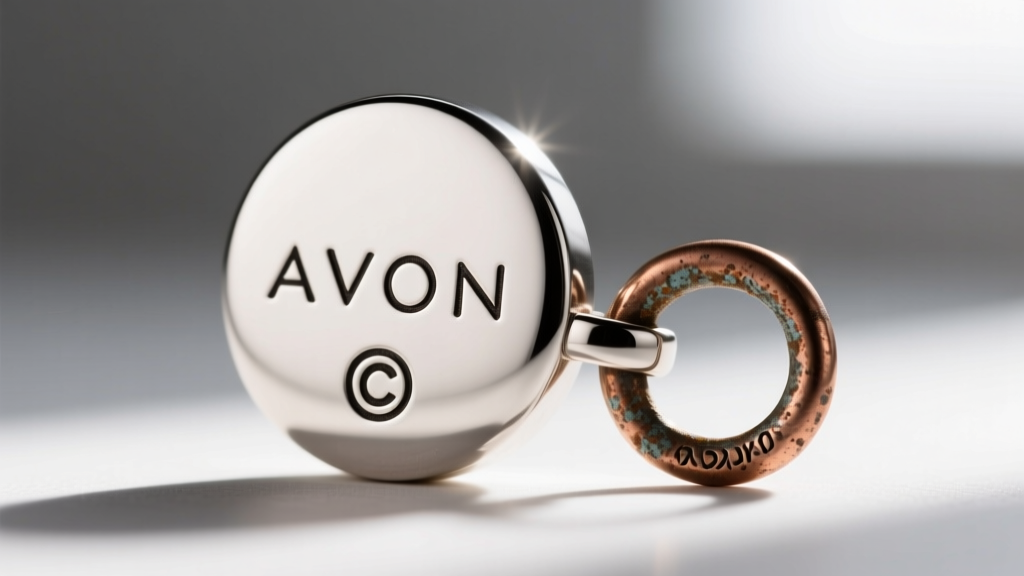
Authenticating the Avon magnifying glass necklace requires locating the manufacturer's hallmark. According to the Costume Jewelry Collectors Club, Avon began marking its jewelry with the 'AVON' stamp in block letters around 1971. Prior to this, pieces were largely unmarked or featured obscure patent numbers. On the magnifying glass pendants, the hallmark is typically stamped on the flat reverse of the handle or the back of the bail loop. You will often find the copyright symbol (©) adjacent to the AVON stamp, a standard inclusion for their post-1971 designs. Be highly suspicious of pieces where the stamp appears blurred, shallow, or stamped over a textured area, as these are indicators of modern counterfeit casting molds.
Conservation: Cleaning Without Stripping
Preserving the delicate flash plating of vintage costume jewelry requires a conservative approach. The Victoria and Albert Museum's jewelry conservation guidelines strongly advise against aggressive chemical dips or ultrasonic cleaning for plated base metals. Ultrasonic waves can easily shatter the tension-set soda-lime glass lens or cause the epoxy adhesive to fail, while chemical dips will strip the 1-micron gold flash plating instantly.
Safe Cleaning Protocol
- Dry Dusting: Use a soft, clean makeup brush to remove loose particulate matter from the filigree and the bezel edge.
- Mild Surfactant Wash: Mix a few drops of pH-neutral, non-detergent soap (like Orvus WA Paste) into distilled water. Dampen a cotton swab—do not soak it—and gently roll it over the metal surfaces. Avoid saturating the lens bezel to protect the adhesive.
- Drying: Immediately pat dry with a lint-free microfiber cloth and use a bulb syringe to blow out any trapped moisture from the chain links or clasp housing.
- Microcrystalline Wax: Apply a microscopic layer of Renaissance Wax to the metal frame using a soft cloth. This museum-grade wax creates a barrier against atmospheric sulfur and skin oils, significantly slowing the oxidation of the base metal and the wearing of the flash plating.
What to Avoid
Never use silver polish, brass cleaners, or baking soda pastes on an Avon magnifying glass necklace. These abrasive compounds will strip the gold tone down to the bare Zamak or brass in seconds, permanently destroying the piece's numismatic and aesthetic value. Additionally, avoid storing the necklace in PVC-based plastic bags, as the off-gassing of polyvinyl chloride accelerates the tarnishing and pitting of base metal alloys. Store the piece in an acid-free, archival-quality jewelry box with an anti-tarnish silica gel packet to control ambient humidity.
By understanding the specific metallurgical vulnerabilities and optical characteristics of the Avon magnifying glass necklace, collectors can make informed acquisitions and ensure these fascinating pieces of wearable history survive for future generations to study and enjoy.


