The Pea Pod Necklace: A Technical Guide to Craft & Materials
Explore the metallurgy, casting techniques, and gemstone settings behind the pea pod necklace. An expert guide to materials, pricing, and quality.

Introduction to the Pea Pod Motif in Fine Jewelry
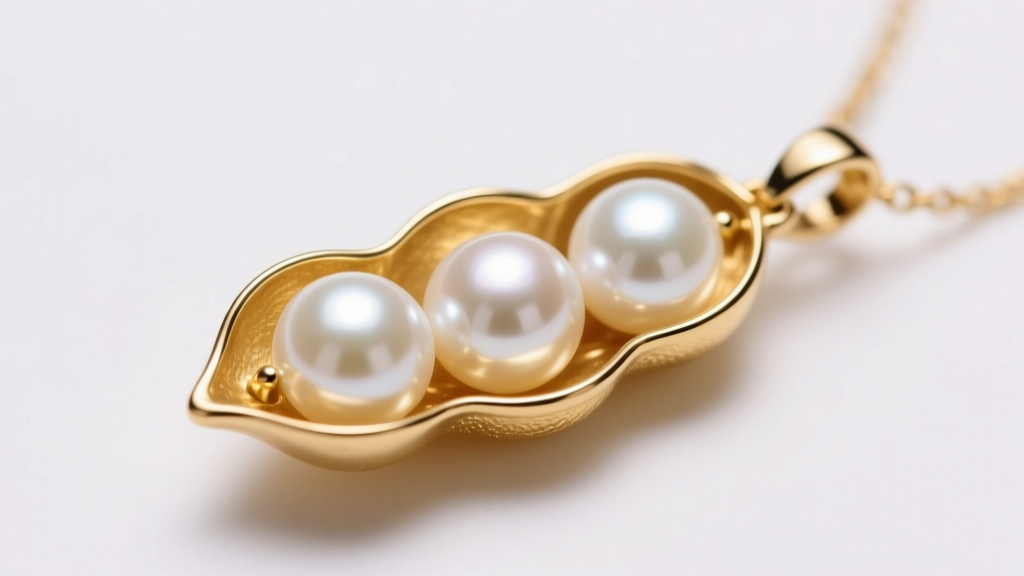
The pea pod necklace is a masterclass in balancing organic, botanic whimsy with rigorous structural engineering. Unlike flat, stamped pendants, a high-quality pea pod necklace requires three-dimensional volume, precise stone-setting mechanics, and careful weight distribution. From an expert perspective, this motif serves as a benchmark for a jeweler's technical proficiency. The design typically features a hollow or semi-hollow metallic 'pod' cradling spherical 'peas,' which are most commonly pearls, but can also include chrysoprase, jadeite, or colored gemstone cabochons. This deep dive explores the metallurgical realities, casting challenges, and gemological standards that separate fine jewelry iterations from mass-produced costume pieces.
Metallurgical Breakdown: Casting the Pod
The primary challenge in manufacturing a pea pod pendant is achieving structural integrity without excessive metal weight. A solid cast 14k gold pod measuring 30mm x 12mm would be prohibitively heavy and expensive. Therefore, expert jewelers utilize hollow-form casting or precise wax carving to create walls that are remarkably thin yet durable.
Wall Thickness and Structural Integrity
The ideal wall thickness for a cast 14k yellow gold pea pod is between 0.8mm and 1.1mm. Anything thinner risks denting from minor impacts; anything thicker unnecessarily inflates the retail price and adds uncomfortable weight to the neckline. To achieve this, modern manufacturers often use 3D resin printing with castable waxes (such as Ashland Photocentric) to generate the master model, ensuring exact dimensional accuracy before the investment casting process.
Combating Shrinkage Porosity
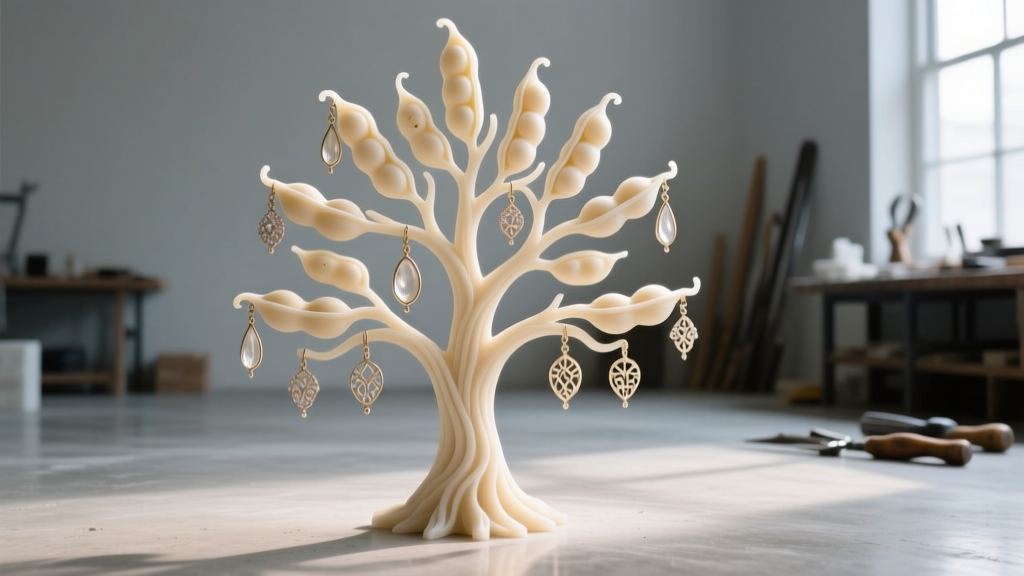
The 'valleys' of the pea pod—the indented curves between the spherical peas—are notorious hot spots for shrinkage porosity during the cooling phase of lost-wax casting. As the molten gold cools, it pulls away from the mold walls in these concave areas. Master casters mitigate this by using grain refiners in their gold alloys and carefully calculating the sprue thickness to ensure the pendant cools directionally, feeding molten metal into the valleys until the final moment of solidification. For a deeper understanding of these casting dynamics, the Santa Fe Symposium on Jewelry Manufacturing Technology provides extensive metallurgical papers on porosity prevention in complex geometries.
The 'Peas': Pearl Grading and Gemstone Alternatives
The spherical elements inside the pod are the focal point of the necklace. When pearls are used, they must be meticulously matched in diameter, overtone, and luster.
- Akoya Pearls: The premium standard. Ranging from 6.0mm to 8.5mm, Akoya pearls offer a mirror-like luster that contrasts beautifully with matte or high-polish gold pods. According to the Gemological Institute of America (GIA), evaluating the nacre thickness and surface cleanliness is paramount when selecting matched sets for a single pendant.
- Freshwater Pearls: A more accessible alternative. Modern Edison freshwater pearls can achieve near-perfect roundness and high luster, though they often exhibit slightly softer overtones compared to saltwater Akoyas.
- Chrysoprase and Jadeite: For a vibrant, opaque green aesthetic, lapidaries cut cabochons from chrysoprase or Type-A jadeite. These require precise bezel cups soldered into the interior of the pod, as they cannot be mounted on friction posts like half-drilled pearls.
Friction Post Mechanics for Pearls
When pearls are utilized, they are typically half-drilled and mounted on internal friction posts. The standard drill hole for an Akoya pearl is 0.9mm to 1.0mm. The gold or platinum post must be machined to exactly 0.85mm, leaving a 0.05mm to 0.15mm tolerance for a high-strength, two-part jeweler's epoxy. The curing time and ambient temperature during the epoxy bonding phase are critical; rushing this process is a leading cause of pearl loss in the first year of wear.
Hardware and Chain Pairings: Gauge and Clasp Mechanics
Because a pea pod pendant is horizontally oriented and often asymmetrical, it behaves differently on a chain than a standard teardrop or round pendant. If the bail (the loop connecting the pendant to the chain) is poorly designed, the pod will constantly flip upside down, hiding the pearls against the wearer's skin.
| Chain Type | Recommended Gauge | Suitability for Pea Pod Pendants |
|---|---|---|
| Rolo Chain | 1.2mm - 1.5mm | Excellent. The rounded links prevent tangling and provide enough stiffness to keep the horizontal pendant oriented correctly. |
| Box Chain | 1.0mm - 1.2mm | Good. Offers a sleek, modern contrast to the organic pod shape, though the sharp edges of the links can cause minor wear on a soft gold bail over time. |
| Cable Chain | 0.9mm - 1.1mm | Fair. Often too flimsy for heavier 14k gold pods; the pendant may pull the chain into a sharp 'V' shape, causing the pod to tilt. |
| Wheat Chain | 1.5mm+ | Poor. The intricate, woven texture competes visually with the detailed surface of the pea pod, creating a cluttered aesthetic. |
Quality Control: Spotting Manufacturing Defects
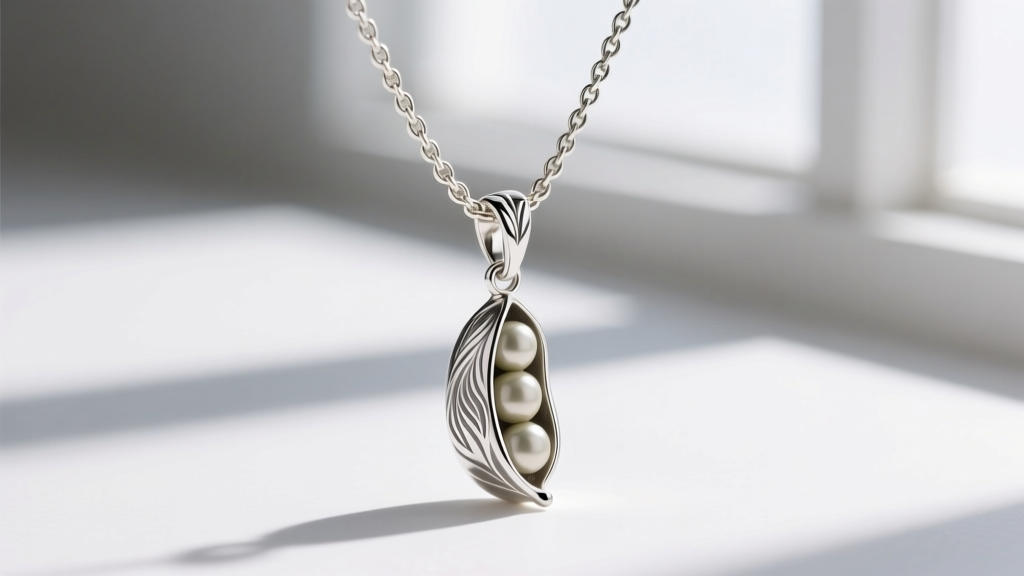
When evaluating a pea pod necklace for purchase or quality assurance, inspectors must look beyond the surface polish. The complex geometry of the pod hides several common failure modes.
Expert Inspection Tip: Use a 10x jeweler's loupe to inspect the interior 'valleys' of the pod. If you see tiny, pin-like holes or a rough, sandy texture in the recessed metal, this indicates shrinkage porosity. While small surface porosity can sometimes be laser-welded, extensive internal porosity compromises the structural integrity of the piece and will eventually lead to cracking.
Common Failure Modes to Avoid
- Bail Solder Joint Fatigue: The bail endures the most mechanical stress. If the bail is soldered using a low-temperature 'easy' solder without adequate surface area contact, it will snap under the pendulum-like motion of daily wear.
- Pearl Epoxies Degradation: Ultrasonic cleaners are the enemy of the pea pod necklace. The high-frequency vibrations and heated chemical baths will break down the cyanoacrylate or epoxy bonds holding the pearls, causing them to pop out of their settings.
- Prong Snagging: If the pod features small prongs wrapping over the pearls (rather than a clean friction post), ensure the prong tips are perfectly burnished. Even a microscopic burr will catch on silk blouses and knitwear.
Market Pricing and Value Retention
The pricing of a pea pod necklace is heavily dictated by the metal weight, the origin of the pearls, and the brand's craftsmanship premium. Here is a realistic breakdown of current market pricing for authentic, fine-jewelry grade pieces:
- Sterling Silver with Freshwater Pearls: $85 – $180. Ideal for everyday wear, though the silver pod will require occasional polishing to remove tarnish from the recessed valleys.
- 14k Yellow or White Gold with Edison Freshwater Pearls: $450 – $900. The sweet spot for durability and luxury. The 14k alloy provides sufficient Vickers hardness to resist denting.
- 18k Gold with Matched Akoya Pearls: $1,800 – $3,500+. Reserved for high-end fine jewelry. The rich color of 18k gold pairs exceptionally well with the rosé overtones of premium Hanadama-grade Akoya pearls.
- Platinum with South Sea Pearls: $5,000 – $12,000+. A rare, heavyweight configuration. The density of platinum requires advanced casting techniques to prevent the pendant from becoming too heavy for standard chains.
Conclusion
The pea pod necklace is far more than a simple nature-inspired trinket; it is a complex exercise in three-dimensional jewelry design, metallurgy, and gemological matching. By understanding the casting tolerances, pearl-setting mechanics, and appropriate chain pairings, collectors and enthusiasts can confidently identify pieces that will endure both structurally and aesthetically for generations. Whether you are selecting a sterling silver iteration for daily layering or investing in an 18k gold and Akoya masterpiece, prioritizing technical craftsmanship over mere visual novelty ensures lasting value.


