How to Clean Your Italian Gold Horn Necklace Safely
Learn expert techniques to clean and maintain your Italian gold horn necklace. Discover safe methods for 14k and 18k solid or hollow cornicellos.

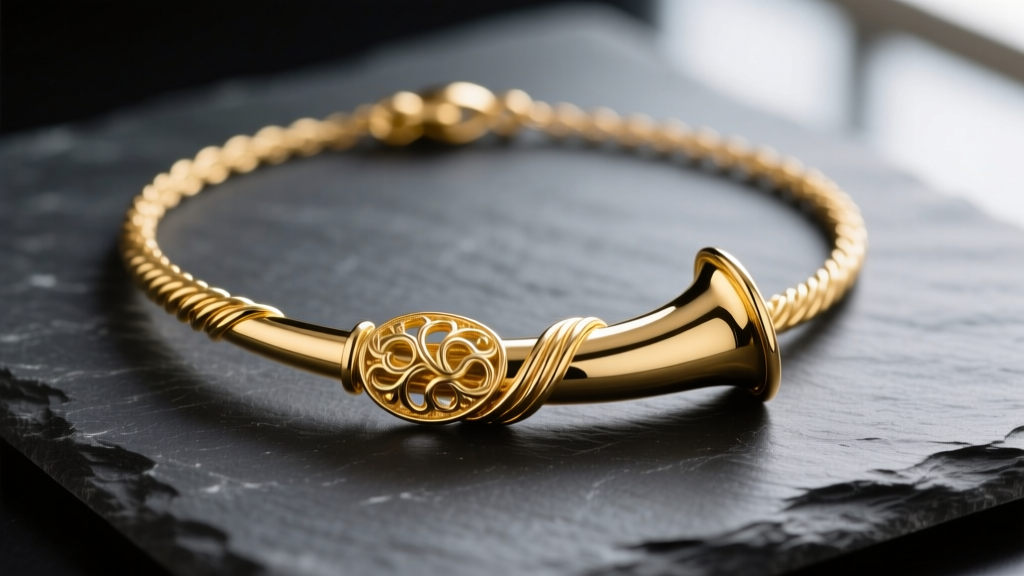
The cornicello, or Italian horn, is far more than a striking piece of jewelry; it is a historic talisman designed to ward off the malocchio (evil eye) and attract prosperity. Whether inherited from a relative in Naples or purchased from a high-end jeweler, an Italian gold horn necklace requires meticulous care to maintain its structural integrity and brilliant luster. Unlike standard gold pendants, the complex, twisted geometry of the horn creates unique challenges for cleaning and maintenance, particularly when dealing with authentic Italian gold alloys and specialized manufacturing techniques.
In 2026, with the rising value of precious metals and the increasing prevalence of delicate electroformed jewelry, understanding the metallurgical nuances of your piece is critical. Using the wrong cleaning agents or mechanical tools can permanently alter the surface finish or, in worst-case scenarios, compromise the structural integrity of the pendant. This comprehensive guide provides actionable, expert-level maintenance protocols to keep your amulet pristine.
Understanding Your Cornicello: Solid vs. Hollow Gold
Before applying any cleaning solution, you must determine the construction of your Italian gold horn necklace. Authentic Italian gold jewelry is predominantly crafted in 18k gold (stamped '750', meaning 75% pure gold), though 14k (stamped '585') is also common in export markets. However, the weight and construction dictate your cleaning strategy.
Solid Gold Horns
Smaller cornicellos (typically under 15mm) are often cast in solid gold. These pieces are dense, heavy, and highly durable. Solid 18k gold can withstand gentle mechanical cleaning, soft-bristle brushing, and professional ultrasonic cleaning without risk of structural failure. The primary concern with solid horns is surface scratching and the buildup of skin oils in the deep crevices of the twist.
Hollow Electroformed Horns
Larger Italian horns (25mm to 50mm+) are frequently manufactured using an electroforming process. This technique deposits a microscopic layer of gold over a wax or resin mold, which is later melted or dissolved away, leaving a hollow, lightweight shell. While electroforming allows for impressive volume without a prohibitive price tag, the gold walls are often less than 0.5mm thick. Never place a hollow gold horn in an ultrasonic cleaner. The high-frequency cavitation bubbles can implode against the thin interior walls, causing micro-fractures, dimpling, or total collapse. Furthermore, aggressive polishing can easily wear through the thin outer layer.
The Dangers of Everyday Chemicals
Gold itself is a noble metal and highly resistant to corrosion. However, an Italian gold horn necklace is an alloy. The 25% (in 18k) or 41.5% (in 14k) of secondary metals—typically copper and silver—are highly reactive to common household chemicals. According to the Gemological Institute of America (GIA), exposure to certain chemicals can lead to irreversible damage.
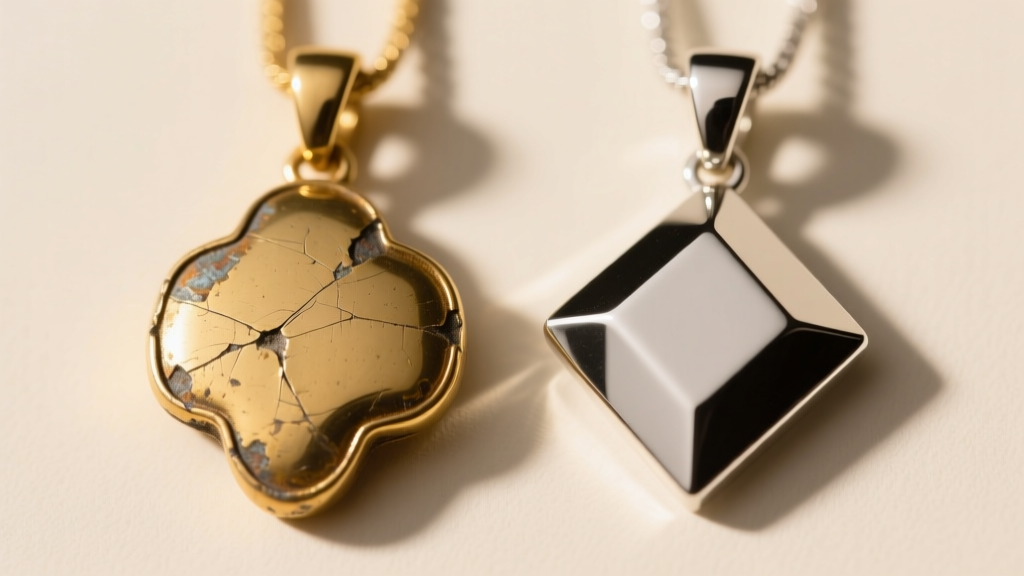
- Chlorine and Bleach: Chlorine causes 'stress corrosion cracking' in gold alloys. If the microscopic prongs holding a diamond accent (if present) or the delicate bail of the horn are exposed to swimming pool water or household bleach, the copper in the alloy breaks down, leading to sudden, brittle snapping.
- Cosmetics and Perfumes: Aerosol hairsprays, heavily perfumed lotions, and self-tanners contain alcohols and sulfur compounds. Sulfur reacts with the copper and silver in the gold alloy, creating a dark, tarnished film that settles deep into the grooves of the horn's spiral design.
- Ammonia: While mild ammonia solutions are sometimes used by jewelers to clean solid gold, they can degrade the structural adhesives used in the bails of hollow electroformed pieces.
Step-by-Step Cleaning Protocol for 18k and 14k Italian Gold
To safely remove sebum, dead skin cells, and environmental pollutants from your necklace, follow this precise, non-abrasive methodology recommended by the Jewelers of America.
1. The Preparation Phase
Plug your sink drain or use a dedicated plastic washbasin. Never clean jewelry directly over an open drain. Prepare a solution of lukewarm distilled water (tap water contains trace minerals and chlorine that can leave water spots) and three drops of phosphate-free, mild dish soap. Avoid soaps with added moisturizers or exfoliating beads.
2. The Soak and Agitation
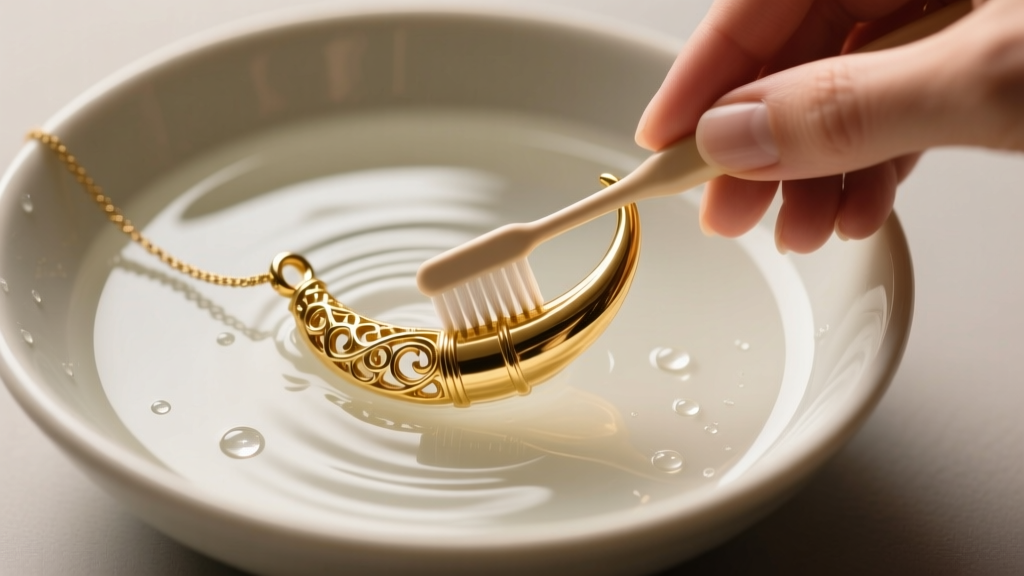
Submerge the Italian gold horn necklace in the solution for exactly 10 to 15 minutes. This allows the surfactants in the soap to break down the lipid bonds of skin oils trapped in the chain links and the pendant's crevices. Do not exceed 20 minutes, especially if the piece features any enamel accents, as prolonged soaking can weaken enamel adhesives.
3. Targeted Crevice Cleaning
Using a brand-new, extra-soft baby toothbrush (never a medium or hard brush, which will inflict micro-scratches on high-polish 18k gold), gently sweep the bristles along the spiral grooves of the horn. Use a 'flicking' motion rather than heavy scrubbing to lift debris out of the crevices without dragging it across the polished surface.
4. The Rinse and Dry
Rinse the piece thoroughly under a gentle stream of lukewarm distilled water. To dry, do not rub the piece with a standard cotton towel, as cotton fibers can catch on the bail or leave lint behind. Instead, pat the necklace dry with a lint-free microfiber cloth, and use a can of compressed air or a hair dryer on the 'cool' setting to blow water out of the chain links and the hollow bail.
Cleaning Agents: What to Use and What to Avoid
The market is flooded with jewelry cleaning solutions, but many are entirely inappropriate for Italian gold alloys or hollow constructions. Refer to this decision matrix before applying any product to your cornicello.
| Cleaning Agent | Effect on 18k/14k Gold | Verdict |
|---|---|---|
| Mild Dish Soap & Distilled Water | Lifts sebum and oils safely without chemical reactions. | ✅ Safe |
| Baking Soda Paste | Acts as an abrasive, creating micro-scratches on high polish. | ❌ Avoid |
| Chlorine Bleach | Causes stress corrosion cracking in copper/silver alloys. | ❌ Never |
| Thiourea-based Liquid Dips | Strips tarnish but removes natural patina; toxic if trapped in hollow horns. | ⚠️ Caution |
| Ultrasonic Cleaners | High-frequency cavitation can shatter hollow electroformed horns. | ❌ Never |
| Jeweler's Polishing Cloths | Safe for solid gold; contains mild rouge that restores shine. | ✅ Safe (Solid Only) |
Chain Maintenance and Clasp Lubrication
The chain accompanying your Italian gold horn necklace—often a Figaro, Rope, or Box chain—requires its own maintenance protocol. Rope chains, in particular, are notorious for trapping dead skin and soap scum deep within their woven links, which can cause the gold to look dull and grey over time.
When drying the chain, pay special attention to the clasp. Whether your necklace utilizes a lobster claw or a spring ring clasp, the internal mechanism contains a tiny steel spring. While the gold exterior will not rust, the internal steel spring will if water is trapped inside. Always use compressed air to blow moisture out of the clasp mechanism. If the clasp begins to feel stiff or stick, apply a microscopic drop of synthetic watch oil to the hinge pin—never use WD-40, which attracts dust and degrades over time.
Restoring the Luster: Polishing Cloths vs. Liquid Dips
If your solid 18k Italian horn has lost its mirror finish due to microscopic surface scratches, you can restore it using a treated jeweler's polishing cloth (such as a Sunshine cloth). These cloths are impregnated with micro-abrasives and anti-tarnish agents. Gently rub the cloth along the length of the horn, following the natural curve of the twist. Do not use these cloths on the chain, as the micro-abrasives will get trapped in the links and are nearly impossible to rinse out.
Liquid 'dip' cleaners, which rely on thiourea and sulfuric acid to instantly strip tarnish, should be avoided for Italian horn necklaces. While they work quickly, they strip away the natural, warm patina that gives vintage Italian gold its character. Furthermore, if your horn is hollow and has a microscopic seam or pinhole, the toxic liquid can become trapped inside the pendant, slowly degrading the gold from the inside out and causing a persistent, foul odor.
Proper Storage to Preserve the Polish
How you store your Italian gold horn necklace when it is not being worn is just as important as how you clean it. Gold is a relatively soft metal, and 18k gold (being 75% pure) is softer and more prone to scratching than 14k gold.
Expert Storage Rule: Never store your cornicello in a communal jewelry box where it can rub against diamond rings, tungsten bands, or sapphire pendants. Diamonds rank a 10 on the Mohs hardness scale and will effortlessly carve deep gouges into your 18k gold horn (which ranks around 2.5 to 3).
Store the necklace in an individual, anti-tarnish flannel pouch or a sealed polyethylene bag with a silica gel desiccant packet to control humidity. If the necklace features a hollow horn, ensure it is stored in a rigid compartment where it cannot be crushed or bent by heavier items. By combining mindful wearing habits with these precise cleaning techniques, your Italian gold horn necklace will remain a brilliant, protective heirloom for generations to come.


