The Beginner's Guide to Styling a Circular Pendant Necklace
Discover how to choose, size, and style a circular pendant necklace. Learn metal grades, chain pairings, and neckline tips in this beginner's guide.

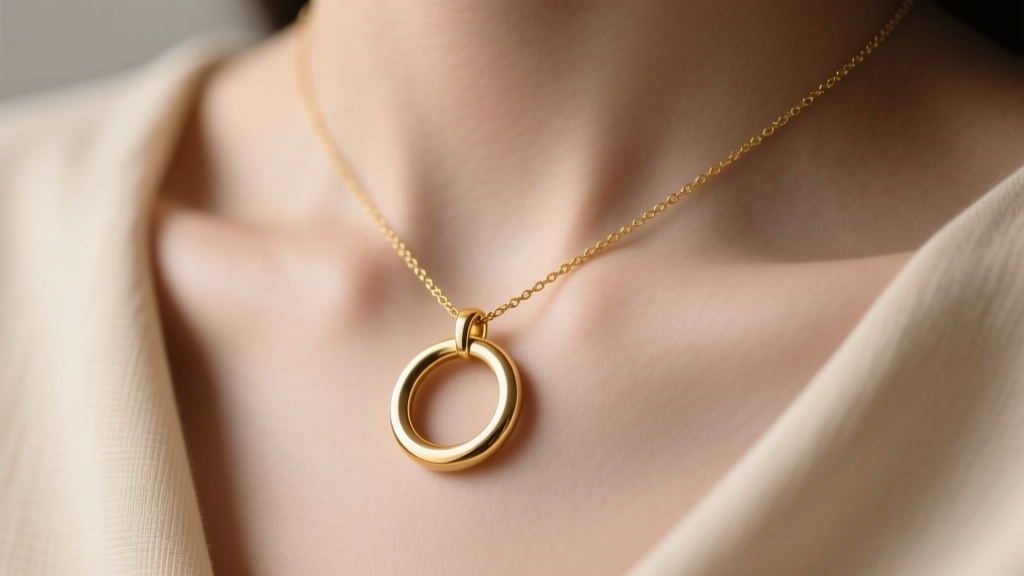
The Timeless Appeal of Geometric Jewelry
When building a foundational jewelry wardrobe, few pieces offer the versatility and enduring elegance of a circular pendant necklace. Unlike highly ornate or trend-driven shapes, the circle represents continuity, wholeness, and minimalist balance. For beginners navigating the vast landscape of necklaces and pendants, the circular silhouette serves as an anchor piece—one that transitions seamlessly from casual daytime wear to formal evening layering. However, simply picking a round charm off a display rack does not guarantee a flattering or durable addition to your collection. Understanding the nuances of diameter sizing, metal metallurgy, and chain mechanics is essential. In this guide, we will break down the exact specifications you need to know to select, style, and care for your circular pendants with confidence.
The Anatomy of a Circular Pendant
Before evaluating aesthetics, it is crucial to understand the structural components that dictate how a pendant sits on your chest. A high-quality circular pendant necklace consists of three primary elements: the disc (or coin), the bail, and the jump ring.
Edge Profiles and Visual Weight
The edge profile of the circle dramatically alters its visual weight and how it catches the light. Beveled edges feature a slight slope that reflects light outward, giving the illusion of a larger piece without adding physical weight. Flat edges offer a stark, modernist look but can feel sharp against the skin if the diameter is too small. Coin edges often feature milled or reeded borders, adding a vintage, tactile texture that pairs beautifully with matte finishes. When shopping, always check the thickness of the disc; a standard durable pendant should measure between 1.2mm and 2.0mm thick. Anything thinner than 1.0mm is highly susceptible to bending and warping from everyday impacts.
Sizing Your Circle: Diameter and Proportion
The most common mistake beginners make is ignoring scale. A circular pendant necklace must be proportionate to your frame and the neckline of your garment. Pendant diameters generally fall into four distinct categories, each serving a specific styling purpose.
| Diameter | Visual Weight | Best Chain Length | Ideal Neckline Pairing |
|---|---|---|---|
| 8mm - 12mm | Ultra-Minimalist | 14 - 16 inches | Deep V-necks, evening wear |
| 15mm - 20mm | Everyday Classic | 16 - 18 inches | Crew necks, button-downs |
| 25mm - 35mm | Statement Piece | 20 - 24 inches | High collars, turtlenecks |
| 40mm+ | Architectural/Bold | 24 - 30 inches | Solid color tunics, maxi dresses |
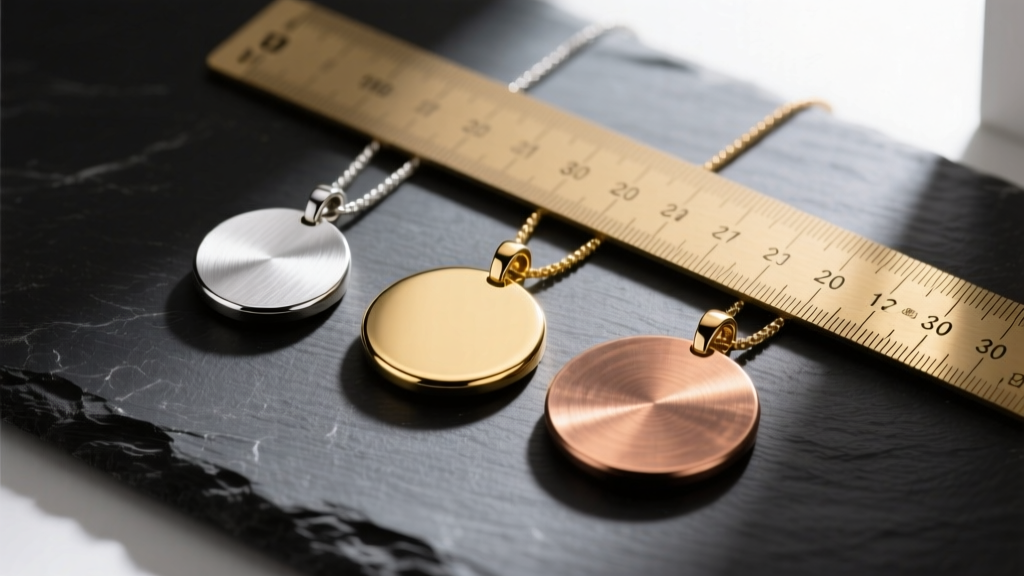
For a universally flattering starting point, a 15mm to 18mm disc on an 18-inch chain remains the industry standard for everyday wear. This size is large enough to showcase subtle engravings or gemstone inlays without overwhelming a delicate collarbone.
Decoding Metal Grades and Durability
The longevity of your necklace is entirely dependent on its metallurgical composition. Marketing terms like 'gold-plated' or 'silver-toned' are often used to mask inferior base metals. To ensure your piece survives daily wear, focus on these three verified standards:
Sterling Silver (925)
Composed of 92.5% pure silver and 7.5% copper, sterling silver is a brilliant, hypoallergenic choice. However, the copper content makes it prone to oxidation. According to the Gemological Institute of America (GIA), sterling silver requires periodic polishing and should be stored in anti-tarnish cloths to prevent sulfur-induced blackening.
Gold Vermeil (The FTC Standard)
Not all gold-plated jewelry is created equal. The Federal Trade Commission (FTC) Jewelry Guides strictly define 'vermeil' as a sterling silver base coated with a minimum of 2.5 microns of gold (usually 14k or 18k). If a piece is gold-plated over brass or copper, it is merely costume jewelry and will eventually corrode or trigger contact dermatitis. Always verify the micron thickness with the retailer before purchasing.
316L Surgical Stainless Steel
For those seeking a zero-maintenance, waterproof option, 316L steel is unparalleled. It contains molybdenum, which drastically increases its resistance to chlorides and industrial solvents. While it lacks the intrinsic value of precious metals, it will never tarnish, rust, or turn your skin green, making it ideal for shower-to-street wear.
Chain Mechanics: What Holds the Circle Best?
The chain you select must complement the geometry of the pendant while respecting the physical limitations of the bail (the loop that connects the pendant to the chain).
- Box Chains: Featuring interlocking square links, box chains offer a rigid, geometric structure that perfectly mirrors a circular pendant. They are highly resistant to tangling but can pull chest hair if the links are too loose.
- Cable Chains: The classic oval-link chain. A 1.5mm cable chain provides a delicate, traditional contrast to a solid disc pendant, allowing the circle to remain the focal point.
- Snake Chains: Composed of tightly joined wavy rings, snake chains offer a sleek, liquid-metal appearance. However, they are notoriously fragile; sleeping in a snake chain will cause permanent kinking.
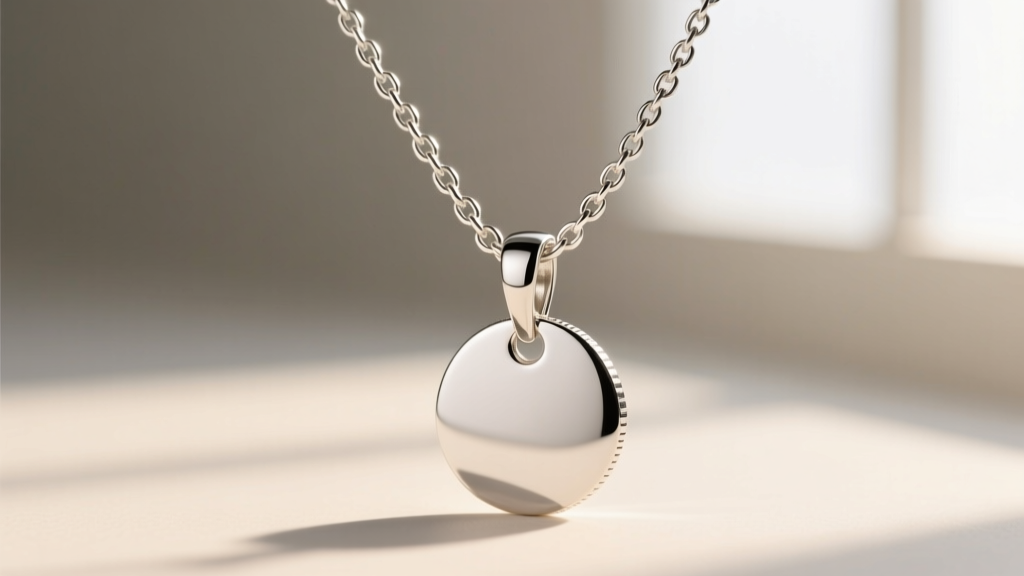
Pro Tip: Always measure the inner diameter of the pendant's bail before buying a chain. A standard 4mm bail will comfortably accommodate chains up to 3.0mm in width. If you prefer thick, heavy rope chains, you must ensure the pendant features an oversized, soldered jump ring rather than a traditional bail.
Styling Frameworks and Layering Techniques
Mastering the circular pendant necklace requires understanding spatial distribution on the décolletage. In 2026, the 'quiet luxury' aesthetic favors intentional, spaced-out layering over chaotic clustering.
The 2-Inch Rule: When layering a circular pendant with other necklaces, maintain a minimum two-inch difference in chain length between each piece. For example, pair a 16-inch choker with an 18-inch circular pendant, and finish with a 20-inch lariat. This prevents the metal clasps from tangling and ensures each silhouette is visually distinct.
When wearing patterned or highly textured clothing, opt for a high-polish, unadorned circular disc to cut through the visual noise. Conversely, if you are wearing a solid, monochromatic garment, choose a circular pendant with a hammered texture, a matte sandblasted finish, or a bezel-set diamond accent to introduce necessary dimension.
Engraving Limits and Customization
Circular pendants are the most popular canvas for custom engraving, but the physics of the surface area dictate what is possible. Laser engraving is the industry standard for precision. On a standard 15mm disc, the safe engraving zone (avoiding the curved edges where the laser focal point distorts) is roughly 10mm in diameter. This space comfortably fits a single monogram, a coordinate set (e.g., 40.7128° N), or a date in a minimalist sans-serif font at a 0.8mm height. Attempting to engrave long quotes on a sub-20mm circle results in illegible, clustered text that detracts from the piece's inherent elegance.
Final Thoughts on Building Your Collection
A circular pendant necklace is more than just a fleeting accessory; it is a foundational pillar of personal style. By prioritizing verified metal grades like 18k vermeil or 925 sterling silver, respecting the proportional relationship between pendant diameter and chain length, and understanding the mechanical limits of your jewelry, you elevate your collection from disposable fast fashion to enduring heirlooms. Start with a versatile 18mm classic disc, master your layering proportions, and let the unbroken line of the circle anchor your daily aesthetic.


