The Ultimate Women's Cross Necklace That Won't Tarnish Guide
Discover the best metals for a women's cross necklace that won't tarnish. Compare titanium, platinum, and stainless steel for lasting wear.


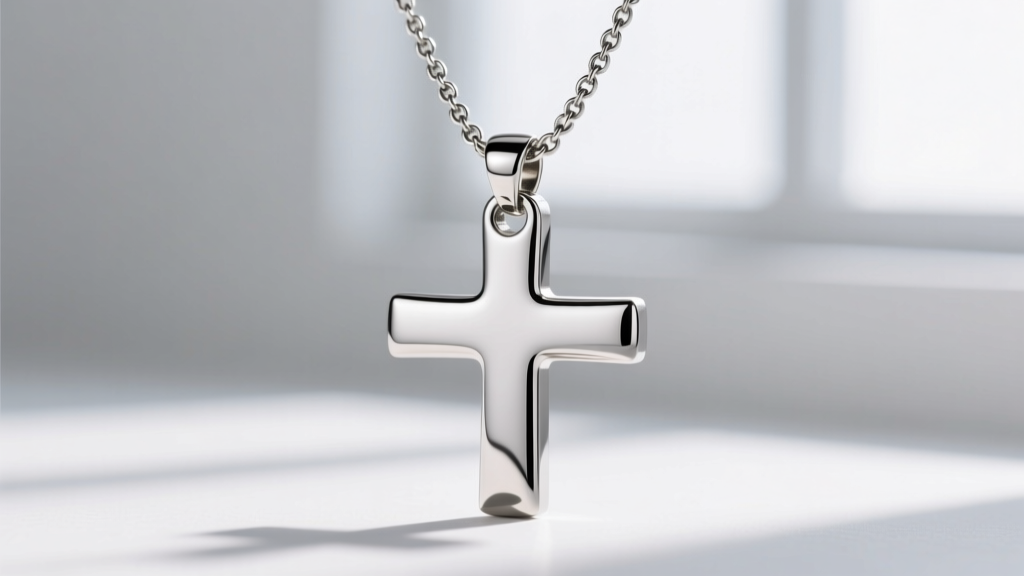
Finding a beautiful, meaningful piece of jewelry that withstands daily wear is a common challenge. If you are searching for a women's cross necklace that won't tarnish, you have likely experienced the frustration of watching a once-brilliant pendant turn dull, black, or green. Tarnish is not just a cosmetic annoyance; it is a chemical breakdown of the metal's surface. To guarantee a lifelong, maintenance-free piece, you must look past traditional sterling silver and gold plating, and instead focus on the metallurgical properties of highly inert, corrosion-resistant alloys.
The Metallurgy of Tarnish: Why Most Cross Necklaces Fail
Tarnish is a specific type of corrosion caused by a chemical reaction between a metal and non-metal compounds in the environment, most notably sulfur dioxide and hydrogen sulfide in the air. When these compounds interact with the copper alloys found in sterling silver (which is 92.5% silver and 7.5% copper), they form silver sulfide—a dark, blackish layer on the surface.
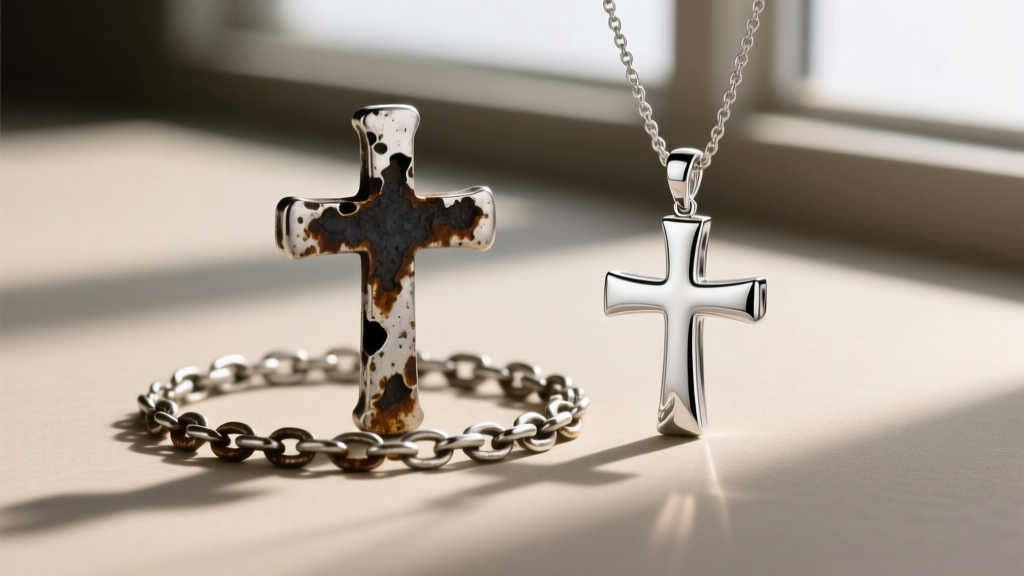
Furthermore, human sweat contains lactic acid and chlorides, which accelerate oxidation in reactive base metals. Many mass-market cross necklaces are made from brass or copper alloys coated in a microscopic layer of rhodium or gold. Once this plating wears off at the friction points (like the jump ring or the back of the pendant), the base metal is exposed to your skin's natural oils, resulting in rapid tarnishing and the dreaded "green skin" effect caused by copper oxidation.
Top 3 Metals for a Tarnish-Free Cross Necklace
To achieve true tarnish resistance, the metal must either be completely inert or possess a self-healing passivation layer. Here are the three best materials for an everlasting cross pendant.
1. Titanium (Grade 5 / ASTM F136)
Titanium is legendary in the jewelry and medical industries for its absolute biocompatibility and corrosion resistance. According to the National Center for Biotechnology Information (NCBI), titanium spontaneously forms a dense, highly stable oxide layer (TiO2) when exposed to oxygen, rendering it virtually immune to saltwater, chlorine, and sulfur compounds.
- Grade 2 vs. Grade 5: While Grade 2 is commercially pure titanium, it is relatively soft and prone to micro-scratches. For a high-polish cross pendant, always seek Grade 5 (Ti-6Al-4V), which is alloyed with aluminum and vanadium. It is significantly harder, holds crisp beveled edges, and maintains a brilliant mirror finish for decades.
- Weight & Comfort: With a density of just 4.43 g/cm³, titanium is nearly half the weight of steel, making it ideal for larger, statement-sized cross pendants that won't pull on the delicate skin of the neck.
- Price Range: $35 to $90 for a high-quality pendant and chain set.
2. 316L Surgical Stainless Steel
Not all stainless steel is created equal. While 304 stainless steel is common in kitchenware, it will eventually pit and rust when exposed to the chlorides in sweat. 316L stainless steel contains an added 2-3% molybdenum, which drastically increases its resistance to chloride corrosion.
The "L" stands for low carbon, which prevents carbide precipitation during the laser-welding process used to seal the jump rings on the chain. 316L relies on a chromium oxide passivation layer that heals instantly if scratched. It offers a heavier, more substantial feel (density of 8.0 g/cm³) and a bright, white-metal luster that mimics white gold without the need for rhodium plating.
3. Platinum (950 Pt)
For those seeking a luxury precious metal, platinum is the undisputed king of longevity. The Gemological Institute of America (GIA) notes that platinum is naturally white and will never tarnish, fade, or change color.
Unlike white gold, which requires re-plating every few years, 950 Platinum (95% pure platinum, usually alloyed with ruthenium for hardness) is completely inert to environmental sulfur. It is important to note that platinum develops a "patina" over time—a soft, matte finish caused by micro-scratches displacing the metal rather than removing it. This patina can be easily polished back to a mirror finish by a jeweler without any loss of metal mass.
The Hidden Vulnerability: Clasps and Jump Rings
A critical mistake many buyers make is focusing solely on the pendant's material while ignoring the chain's hardware. You can have a solid titanium cross pendant, but if it is hung on a chain with a standard lobster clasp, the necklace can still fail.
Standard lobster clasps contain an internal spring mechanism. In many mid-tier jewelry pieces, this spring is made from carbon steel because titanium and platinum springs are too expensive or difficult to manufacture. When exposed to humidity and sweat, the carbon steel spring inside the clasp will rust, seize up, and eventually stain the surrounding chain.
The E-E-A-T Solution: When buying a stainless steel or titanium chain, look for brands that explicitly advertise "solid stainless steel internals" or use spring ring clasps made entirely of 316L. Alternatively, opt for a continuous chain design with a secure screw-thread barrel clasp that eliminates the need for an internal steel spring altogether.
Material Comparison Matrix
Use this data table to compare the physical properties and market realities of the best tarnish-free metals for your cross necklace.
| Metal / Alloy | Density (g/cm³) | Tarnish Resistance | Chain Gauge Recommendation | Est. Price (18" Set) |
|---|---|---|---|---|
| Grade 5 Titanium | 4.43 | Absolute (Inert) | 1.2mm - 1.5mm Box Chain | $45 - $110 |
| 316L Stainless Steel | 8.00 | Exceptional (Passivated) | 1.0mm - 1.5mm Cable Chain | $25 - $65 |
| 950 Platinum | 21.45 | Absolute (Precious) | 0.9mm - 1.2mm Wheat Chain | $850 - $2,500+ |
| Niobium | 8.57 | Absolute (Inert) | 1.5mm+ Rope Chain | $60 - $140 |
Metals to Strictly Avoid for Everyday Wear
If your primary goal is a zero-maintenance necklace that you can wear in the shower, at the gym, and while sleeping, you must eliminate the following materials from your shopping list:
- Sterling Silver (925): Will inevitably form silver sulfide (black tarnish) when exposed to sulfur in the air and cosmetics. Requires frequent polishing with a treated cloth.
- Gold Vermeil / Plated Brass: The base brass core will oxidize and bleed through the microscopic gold layer within 6 to 12 months of daily wear, turning the metal dark brown and your skin green.
- White Gold (Unplated): White gold is actually yellow gold alloyed with nickel or palladium and plated in rhodium. Once the rhodium wears off at the bail (where the cross rubs against the chain), it will reveal a dull, yellowish-grey undertone that requires expensive re-plating.
Maintenance: Cleaning Without Damaging the Surface
While titanium, 316L steel, and platinum will not chemically tarnish, they will accumulate sebum (skin oils), dead skin cells, and lotion residue in the crevices of the cross design. This buildup can make the metal look dull and lifeless, mimicking the appearance of tarnish.
How to safely restore the shine:
- The Ultrasonic Method: For plain metal crosses (no gemstones, no anodized colors), an ultrasonic jewelry cleaner filled with warm water and a drop of mild dish soap is the most effective method. The cavitation bubbles will safely blast sebum out of the sharpest interior corners of the cross.
- The Soft Brush Technique: If you do not own an ultrasonic cleaner, use a brand-new, extra-soft baby toothbrush. Scrub gently in circular motions with a degreasing soap (like Dawn). Avoid abrasive toothpaste or baking soda pastes, as these contain silica particles that can induce micro-scratches on high-polish titanium and steel, permanently dulling the mirror finish.
By prioritizing metallurgical stability over traditional, high-maintenance precious metals, you can secure a women's cross necklace that remains as brilliant and meaningful on day 10,000 as it was on day one.


