Beginner Guide: Choosing the Right Leather Strap Necklace
Learn how to choose, style, and care for a leather strap necklace. We cover leather grades, thickness, hardware, and pendant pairing for beginners.

Why the Leather Strap Necklace is a Wardrobe Essential
When building a versatile jewelry collection, the leather strap necklace is an indispensable asset. Unlike traditional metal chains, leather offers a tactile, grounded aesthetic that bridges the gap between casual streetwear and refined bohemian styles. For beginners, navigating the world of leather cords can be surprisingly complex. Variables such as hide grading, tanning processes, cord profiles, and hardware compatibility all dictate how the necklace will look, feel, and age over time. This comprehensive guide strips away the marketing jargon and provides actionable, expert-level insights to help you select the perfect leather strap necklace for your wardrobe and pendants.
Decoding Leather Grades: What You Are Actually Buying
The most common pitfall for beginners is misunderstanding leather terminology. The fashion industry frequently uses misleading labels that obscure the actual quality of the hide. According to the Leather Working Group, understanding the anatomical layers of the hide is crucial for assessing durability and aging potential.
The Hierarchy of Hide
- Full-Grain Leather: The absolute highest quality. It includes the entire thickness of the hide, retaining the natural grain and imperfections. Full-grain leather develops a rich, dark patina over time as it absorbs oils from your skin and environment. It is incredibly durable and resistant to moisture.
- Top-Grain Leather: The second-highest quality. The very top layer is sanded or buffed to remove natural imperfections, resulting in a uniform, smooth finish. While it looks pristine initially, it will not develop a patina and is slightly less durable than full-grain.
- 'Genuine Leather': Despite how it sounds, this is a marketing term for low-grade split leather. It is made from the fibrous lower layers of the hide, heavily processed, painted, and coated with polyurethane. It lacks structural integrity, tends to crack, and will not age gracefully.
- Vegan Alternatives: Modern innovations like Piñatex (made from pineapple leaf fibers) or high-grade cork offer sustainable, water-resistant alternatives that mimic the flexibility of leather without the ethical concerns of animal hides.
Flat, Round, or Braided: Choosing the Right Profile
Leather straps are not one-size-fits-all; the cross-sectional profile drastically changes the drape and visual weight of the necklace.
Round Cords: These are the most common and versatile. They roll easily through pendant bails and offer a classic, minimalist look. However, cheaper round cords are often just flat leather strips folded and glued, which can unravel. Always look for solid extruded or tightly rolled round cords.
Flat Straps: Flat leather straps lay flush against the collarbone, offering a modern, sleek, and almost ribbon-like appearance. They are excellent for wide, geometric pendants but can be prone to creasing if stored improperly.
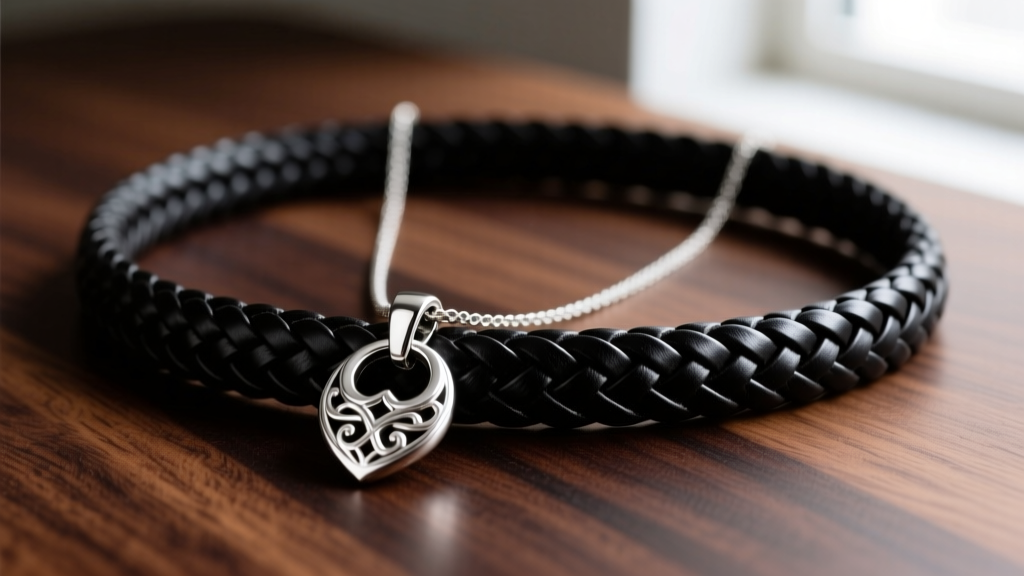
Braided Leather: Braiding multiple thin strips of leather creates a thick, rugged, and highly flexible cord. While visually striking and excellent for heavy statement pieces, braided leather has a major drawback: the crevices trap sweat, dead skin, and dust, requiring much more frequent and meticulous cleaning.
Sizing and Thickness: The Millimeter Difference
Thickness and width dictate both the visual proportion of the necklace and its functional weight capacity. A strap that is too thin will snap under a heavy silver pendant, while a strap that is too thick will look comically oversized with a delicate gemstone.
| Strap Width / Diameter | Max Pendant Weight | Best Use Case | Aesthetic Vibe |
|---|---|---|---|
| 1.0mm - 2.0mm | Under 15 grams | Small gemstones, delicate gold charms, layering | Minimalist, feminine, subtle |
| 3.0mm - 4.0mm | 15 to 40 grams | Standard silver pendants, medium-sized crystals, everyday wear | Versatile, balanced, classic |
| 5.0mm - 8.0mm | 40 to 100+ grams | Heavy cast bronze, large raw stones, statement pieces | Rugged, masculine, bold |
Hardware and Findings: Avoiding Clasp Failure
The point where the leather meets the clasp is the most common failure point on any leather strap necklace. Beginners often overlook the findings, leading to lost pendants and broken necklaces. Jewelry supply experts at Rio Grande emphasize that mechanical connections always outperform chemical ones in jewelry making.
Glue-In Cord Ends vs. Mechanical Crimps
Many mass-produced leather necklaces use glue-in ribbon crimps or bullet clasps. The leather is inserted into a metal tube and secured with cyanoacrylate (super glue) or epoxy. This is a critical failure point. Human sweat, body heat, and natural skin oils will eventually break down the adhesive bond, causing the clasp to slip off without warning.
The Expert Solution: Always look for, or retrofit your necklace with, mechanical fold-over crimps or screw-cap cord ends. Fold-over crimps use tiny metal teeth that physically bite into the leather when squeezed shut with chain-nose pliers. For a cleaner look, screw-cap ends feature a tiny internal setscrew that tightens directly against the leather, providing a secure, glue-free hold that can withstand years of daily wear.
Pairing Pendants: Bail Sizes and Friction Points
Not all pendants are compatible with leather straps. The 'bail'—the loop at the top of the pendant that the necklace passes through—must be carefully measured.
When sizing a bail for a leather strap, you must account for both the width and the thickness of the leather, plus a margin for friction. A 3mm round leather cord will struggle to pass through a 3.5mm bail because leather has a high coefficient of friction compared to polished metal. As a general rule, the inner diameter of the bail should be at least 1.5mm larger than the diameter of your leather cord. If you are using a 4mm braided leather strap, you need a bail with an inner diameter of at least 5.5mm to 6mm to allow the pendant to slide freely and lay flat against your chest.
Furthermore, be cautious with raw, unpolished gemstones or porous materials like turquoise and malachite. The natural oils and conditioners applied to leather straps can transfer to these stones, permanently darkening or staining them. Always use a protective metal bail lining or opt for highly polished, non-porous stones when pairing with conditioned leather.
Care and Maintenance: Extending the Lifespan
Leather is an organic material that reacts to its environment. Unlike gold or platinum, it requires proactive maintenance to prevent drying, cracking, and odor buildup. According to heritage leather goods makers like Saddleback Leather, the key to longevity is moisture management and periodic conditioning.
Expert Maintenance Rule: Never wear your leather strap necklace in the shower, pool, or ocean. Water strips the hide of its natural tanning oils, leading to stiff, brittle leather that will snap under the weight of a pendant. If it does get wet, let it air dry slowly away from direct heat sources.
Every three to six months, depending on your climate and how often you wear the piece, apply a high-quality leather conditioner. Avoid heavy waxes that can clog the pores of the leather or transfer onto your clothing. Instead, use a light, penetrating conditioner like Bick 4 or a pure neatsfoot oil applied sparingly with a microfiber cloth. This replenishes the lipids in the hide, maintaining its flexibility and ensuring your leather strap necklace remains a staple in your collection for years to come.


