2 Circle Necklace Design: Metallurgy, Soldering & Chain Pairing
Explore the metallurgy, soldering techniques, and stress points of the 2 circle necklace. Learn how to choose durable alloys and chain pairings.

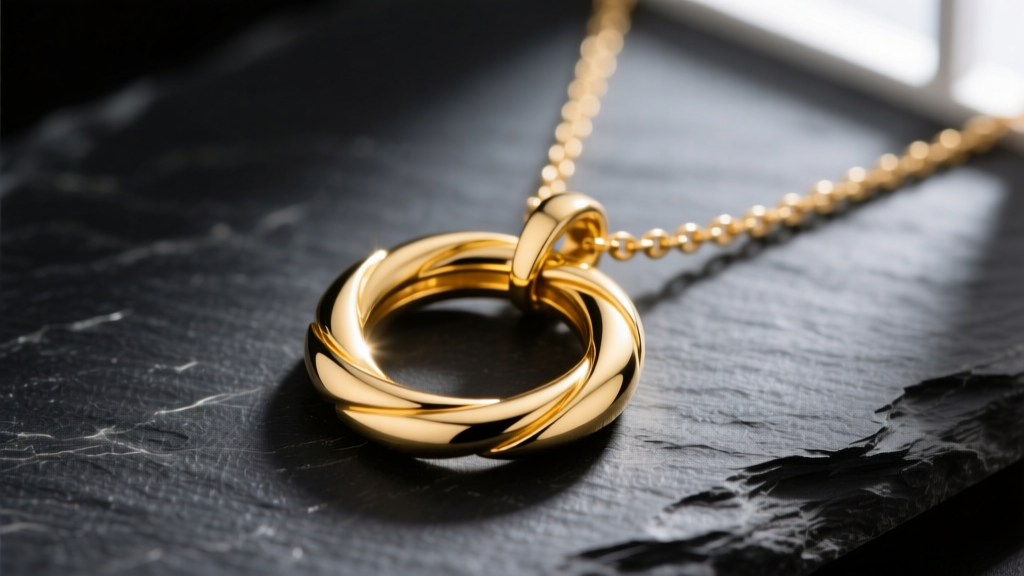
The Anatomy and Geometry of a 2 Circle Necklace
The 2 circle necklace—often marketed under terms like 'interlocking circles,' 'double infinity,' or 'bonded rings'—is a masterclass in deceptive simplicity. While consumers view it as a romantic symbol of unbreakable connection, jewelry engineers view it as a complex structural challenge. The fundamental geometry of a dual-loop pendant introduces unique torsional stresses that single-disc or solitaire pendants simply do not face.
Structurally, there are two primary variations of the 2 circle necklace: the free-moving interlocking design and the fixed overlapping design. In the interlocking variation, the inner diameter of each circle must be precisely calculated against the outer diameter and the wire gauge (minor diameter) of its partner. If the wire gauge is too thick relative to the circle's circumference, the rings will bind, causing abrasive wear at the friction point. If the wire is too thin (typically under 1.0mm for a 20mm circle), the pendant will warp into an oval shape under the sheer weight of the chain and daily kinetic movement.
Metallurgy and Tensile Strength: Choosing the Right Alloy
The longevity of a 2 circle necklace is entirely dictated by the Vickers Hardness (HV) and ductility of the chosen metal. Because the circular shape lacks the structural bracing of geometric or angular pendants, the metal must resist 'spring-back' and permanent deformation.
According to metallurgical guidelines from the Gemological Institute of America (GIA), the alloy composition drastically alters how the pendant handles daily stress:
- 14k Yellow Gold (HV ~140): Alloyed with copper and silver, 14k gold offers an excellent balance of tensile strength and malleability. It is the most reliable choice for fixed overlapping circles, as it holds a laser weld exceptionally well without becoming overly brittle.
- 18k White Gold (HV ~160): Often alloyed with nickel or palladium, 18k white gold is significantly harder than its yellow counterpart. However, this hardness comes at the cost of ductility. If an 18k white gold 2 circle necklace is subjected to a sharp impact, it is more prone to stress fracturing at the apex of the bend rather than bending gracefully.
- Platinum 950/Ruthenium (HV ~135): While platinum's HV score is lower than 18k white gold, its density and unique 'work-hardening' properties make it superior for interlocking circles. Platinum displaces rather than sheds metal when scratched or rubbed, meaning the friction point between two interlocking platinum circles will actually become harder and more durable over time.
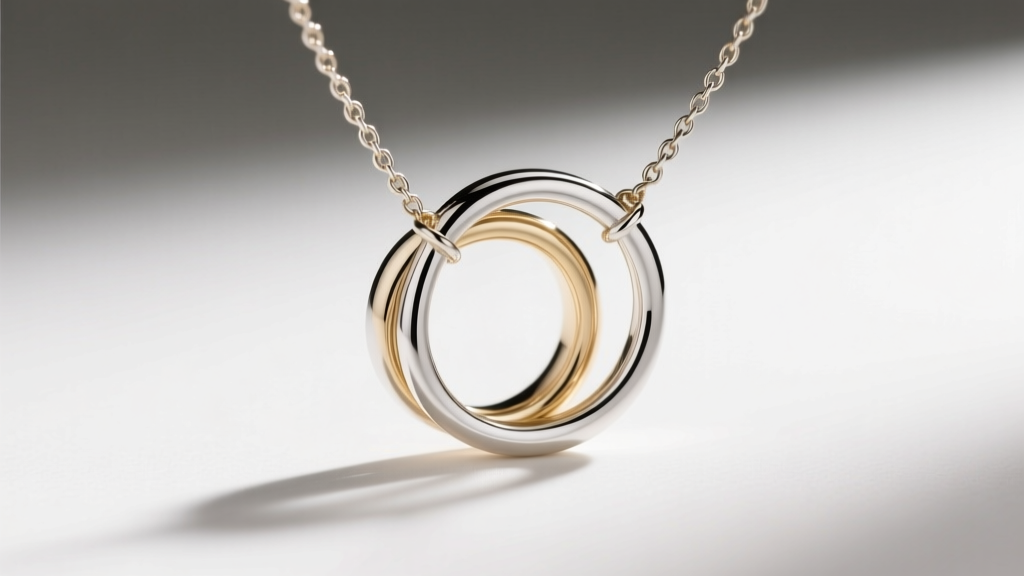
Soldering Techniques: Laser vs. Torch Welding
For fixed overlapping 2 circle necklaces, the joint where the two circles meet is the most critical point of failure. A traditional butt joint—where the two ends of a single wire meet to form a circle—is a catastrophic failure point in dual-loop designs. Expert manufacturing requires an overlap joint measuring at least 2x the wire diameter.
The Shift to Nd:YAG Laser Welding
Historically, jewelers used torch soldering with hard solder and flux to join the circles. However, torch soldering introduces high, widespread heat that can anneal (soften) the work-hardened wire, ruining the perfect circular geometry and causing 'fire scale' that requires aggressive polishing. Today, top-tier manufacturers utilize Nd:YAG laser welding. Laser welding uses localized, high-intensity light pulses to fuse the metal at the overlapping joint without heating the surrounding wire. This preserves the structural integrity and tensile strength of the circles. When evaluating a high-end 2 circle necklace, inspect the joint under a loupe; a seamless, pore-free weld indicates laser precision, whereas visible pitting or excessive solder flow indicates outdated torch methods.
Chain Pairing: Preventing the Pendulum Tangle
The physics of a 2 circle necklace create a high moment of inertia. Because the weight is distributed across two distinct horizontal axes, the pendant naturally wants to flip or rotate. If paired with the wrong chain, this rotation leads to the dreaded 'pendulum tangle,' where the chain wraps around the pendant's bail or the circles themselves.
Manufacturing standards outlined by Stuller emphasize matching chain rigidity to pendant weight. To counteract the flipping motion of a 2 circle pendant, you must select a chain with high lateral rigidity.
| Chain Type | Wire Gauge (mm) | Tangling Risk | Lateral Rigidity | Expert Verdict |
|---|---|---|---|---|
| Cable Chain | 0.9 - 1.2 | High | Low | Avoid. The high flexibility allows the 2 circle pendant to flip and wrap the chain. |
| Box Chain | 1.0 - 1.5 | Low | High | Excellent. The square links resist twisting, keeping the pendant oriented forward. |
| Wheat Chain | 1.0 - 1.5 | Very Low | Very High | Superior. The woven, directional links provide maximum anti-tangle stability. |
| Snake Chain | 1.5 - 2.0 | Medium | Medium | Conditional. Looks sleek but prone to permanent kinking if the heavy pendant pulls it. |
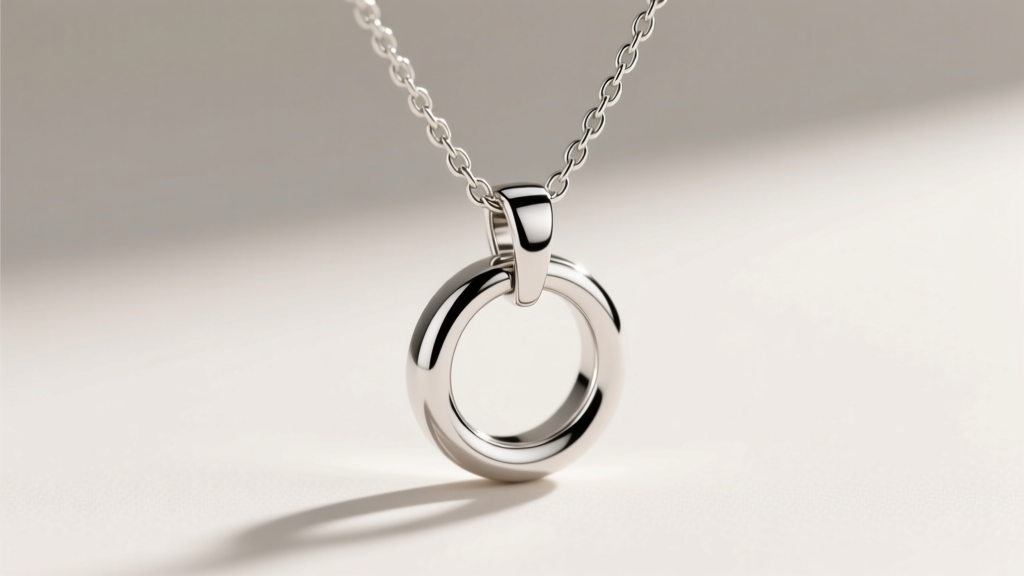
Bail Engineering and Center of Gravity (CoG)
The bail—the loop that connects the pendant to the chain—is where many mass-produced 2 circle necklaces fail aesthetically. Because the top circle adds mass above the geometric center of the bottom circle, the true Center of Gravity (CoG) is shifted upward. If a manufacturer simply solders a standard bail to the absolute apex of the top circle, the pendant will hang at a slight downward tilt, looking unbalanced.
Expert jewelers calculate the true CoG and position the bail slightly lower, or utilize a hidden V-bail that is cast directly into the overlapping joint of the two circles. Furthermore, avoid 'glue-on' or epoxy-set bails entirely. The kinetic energy generated by a heavy dual-circle pendant swinging against the chest will eventually break down chemical adhesives, resulting in the loss of the pendant. Always demand a soldered or cast-integrated bail.
The Expert Buying Framework
When investing in a fine jewelry 2 circle necklace, bypass the marketing fluff and evaluate the piece using this technical checklist:
- Verify the Wire Gauge: Ensure the wire thickness is at least 1/15th of the circle's total diameter to prevent torsional warping.
- Inspect the Joint: Use a 10x loupe to check the overlapping seam. It should be flush, pore-free, and show no signs of excessive solder pooling.
- Test the Interlock (if applicable): If the circles are free-moving, they should glide smoothly without catching. Friction indicates poor casting tolerances.
- Assess the Bail Placement: Hold the necklace by the chain and let it hang. The pendant should rest perfectly parallel to the floor, indicating correct CoG calculation.
- Match the Chain: Pair the pendant exclusively with a box or wheat chain of at least 1.0mm thickness to neutralize the pendulum effect.
By understanding the metallurgy, physics, and manufacturing techniques behind the 2 circle necklace, you can select a piece that is not only symbolically meaningful but structurally engineered to last a lifetime.


