How to Choose and Style Necklace Crystal Beads: A Beginner Guide
Learn how to choose, string, and style necklace crystal beads. Discover material grades, stringing essentials, and layering tips in this beginner guide.

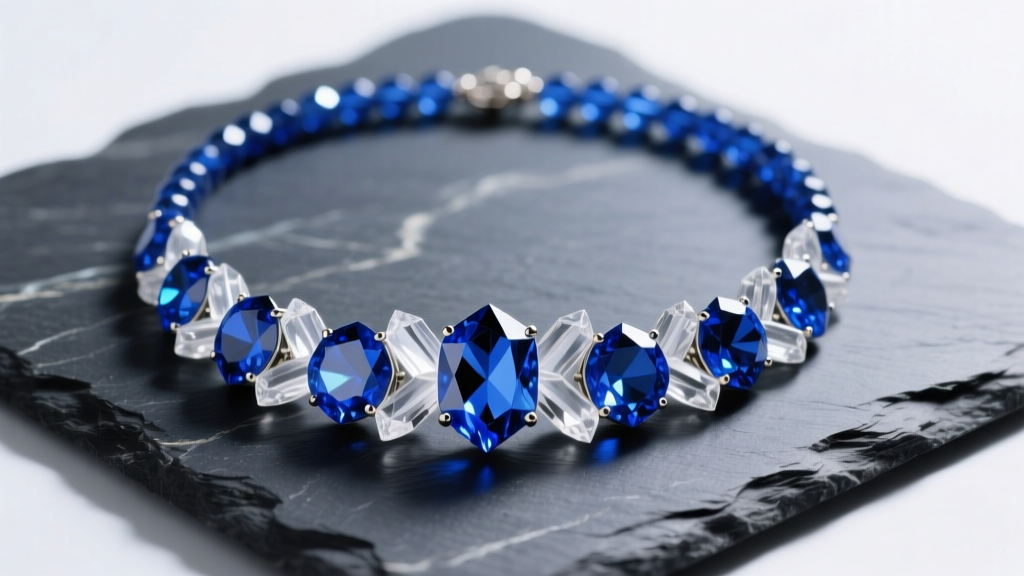
Entering the world of jewelry making and styling can feel overwhelming, especially when you start searching for the perfect necklace crystal beads. The term "crystal" is thrown around loosely in the jewelry industry, used to describe everything from cheap plastic to high-end precision-cut glass and natural earth-mined quartz. For a beginner, understanding these distinctions is the difference between crafting a piece that looks luxurious and lasts for years, or one that dulls, tangles, and breaks within a week.
This comprehensive guide will walk you through the material science of crystal beads, the engineering required to string them properly, and the mathematics of achieving the perfect drape. Whether you are designing your first beaded choker or looking to layer authentic crystals with metallic chains, these actionable insights will elevate your jewelry game.
Decoding the Terminology: What is a "Crystal" Bead?
Before purchasing your materials, you must understand what you are actually buying. According to the Gemological Institute of America (GIA), natural quartz is a crystalline silica mineral. However, in the commercial bead market, "crystal" almost always refers to lead glass or advanced lead-free glass that has been precision-cut to mimic the light refraction of diamonds.
- Natural Quartz Crystals: Mined from the earth. They feature natural inclusions, slight asymmetries, and a Mohs hardness of 7. They offer an organic, earthy aesthetic but lack the machine-perfect sparkle of manufactured glass.
- Manufactured Glass Crystals: Brands like Preciosa (and formerly Swarovski) create advanced glass formulas with high refractive indices. These are machine-cut for flawless symmetry and maximum light dispersion. They are softer (Mohs 5-6) but visually superior for formal jewelry.
- Acrylic "Crystals": Injection-molded plastic. They are lightweight and cheap but scratch easily and possess a low refractive index, resulting in a dull, lifeless appearance over time.
Material Grades and Pricing Breakdown
When sourcing necklace crystal beads, your budget and the intended use of the necklace will dictate your material choice. Below is a comparative analysis of the most common bead types available to modern jewelers and stylists.
| Material Type | Refractive Index / Sparkle | Durability (Mohs) | Avg. Price (per 8mm bead) | Best Application |
|---|---|---|---|---|
| Preciosa Advanced Crystal | Extremely High (Brilliant) | 5.5 - 6.0 | $0.25 - $0.60 | Bridal, evening wear, high-end gifts |
| Natural Clear Quartz | Moderate (Glassy) | 7.0 | $0.50 - $2.00 | Everyday wear, bohemian, spiritual |
| Standard Czech Glass | High (Bright) | 5.5 | $0.05 - $0.15 | Casual layering, colorful statement pieces |
| Faceted Acrylic | Low (Dull over time) | 2.0 - 3.0 | $0.01 - $0.03 | Children's crafts, temporary festival wear |
For beginners aiming to create professional-looking jewelry without the immediate investment of natural gemstones, precision-cut Czech glass or Preciosa crystals offer the best balance of luxury and affordability. You can source these reliably from specialized suppliers like Fire Mountain Gems, which provides extensive grading charts and material certifications.
The Engineering of Stringing: Wire, Thread, and Cord
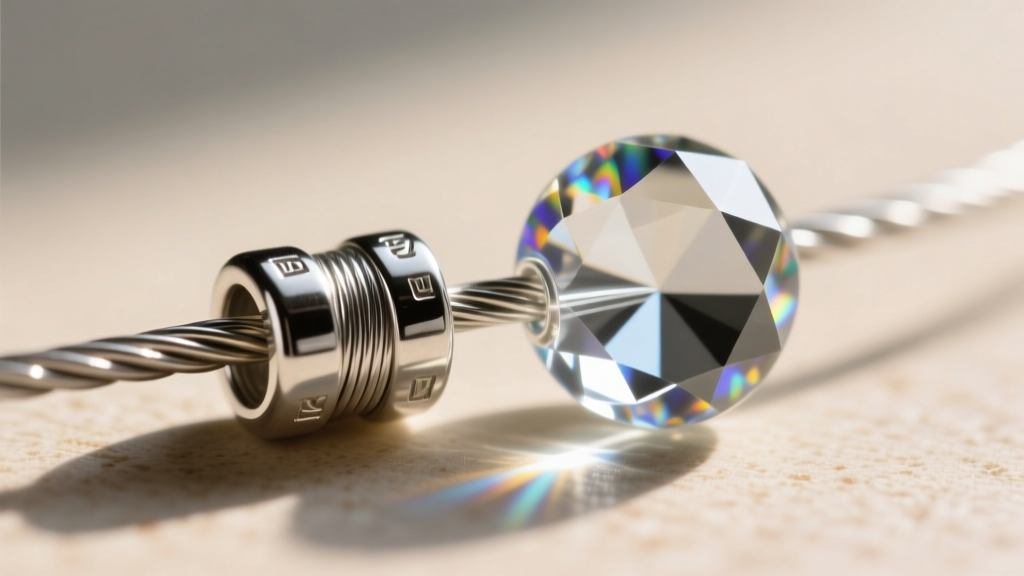
The most common failure mode for beginner beaders is selecting the wrong stringing material. Glass crystal beads have sharp, machine-cut holes that can easily saw through organic threads or cheap elastic. To ensure your necklace survives daily wear, you must use the correct structural foundation.
1. Micro-Woven Stainless Steel Wire
For 90% of crystal bead necklaces, a 49-strand micro-woven stainless steel wire coated in nylon is the gold standard. The 49 strands provide incredible flexibility, allowing the necklace to drape like fabric rather than sitting stiffly on the collarbone. Sizing rule: Use a 0.015-inch diameter wire for beads with standard 1mm holes (like 4mm to 8mm crystals). Step up to a 0.024-inch diameter only if you are using heavy, 12mm+ beads with larger drill holes.
2. Securing the Clasp: The Crimp Technique
Never tie knots in steel beading wire; it will kink and snap. Instead, use a crimping mechanism. Slide a 2x2mm sterling silver or gold-filled crimp tube over the wire, pass the wire through the clasp loop, and thread it back through the crimp tube. Using a specialized crimping plier, compress the tube into a neat, secure fold. Always finish the end with a 3mm crimp cover to hide the sharp metal edges and give the piece a seamless, professional finish.
Pro-Tip: Never use standard craft-store elastic for glass crystal beads. The sharp edges of the drilled holes will degrade the elastic core within weeks, leading to a catastrophic break and lost beads. Always use wire for rigid structure or high-quality stretch cord (like Elasticity by Beadalon) only for lightweight, rounded gemstone beads.
Sizing, Spacing, and the Mathematics of Drape
A beautifully strung necklace relies on precise mathematics. If you simply string beads tightly from clasp to clasp, the necklace will behave like a rigid hoop, unable to conform to the curves of the neck. You must account for the "drape allowance" and the physical space taken up by the stringing materials.
Let us calculate a standard 16-inch (406mm) choker using 8mm crystal beads:
- Total Length: 406mm.
- Hardware Allowance: Subtract roughly 15mm for the clasp, jump rings, and wire guards.
- Remaining Bead Space: 391mm.
- Bead Count Calculation: 391mm ÷ 8mm = 48.8 beads.
You will need exactly 49 beads. However, to prevent stiffness, professional jewelers often incorporate 2mm metal spacer beads or flexible silicone spacers between every third or fourth crystal. This introduces micro-hinges into the design, drastically improving how the necklace lays against the skin.
Styling and Layering Crystal Bead Necklaces
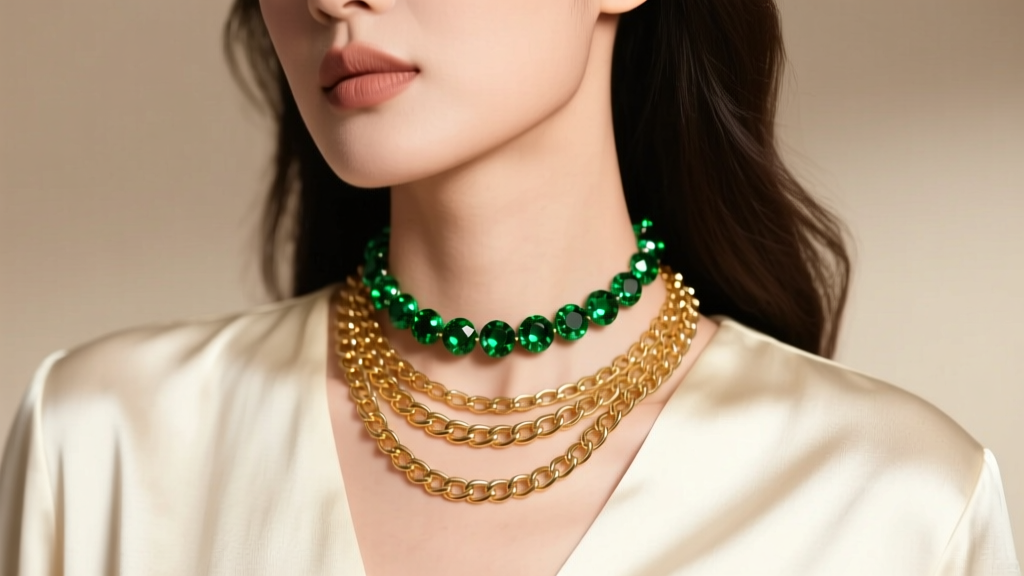
In contemporary fashion, wearing a single strand of beads can sometimes feel dated. The modern approach to styling necklace crystal beads is through intentional layering, mixing the organic texture of beads with the industrial shine of metallic chains.
The 2-4-6 Layering Rule
When building a layered necklace stack, vary the lengths by at least 2 inches to prevent the clasps and beads from tangling and abrading one another. A highly effective, beginner-friendly stack includes:
- Layer 1 (14-15 inches): A delicate 4mm crystal bead choker or a simple gold-filled satellite chain that sits high on the collarbone.
- Layer 2 (16-18 inches): Your primary statement piece. An 8mm faceted crystal bead necklace in a rich, saturated color (like sapphire blue or emerald green) resting just below the clavicle.
- Layer 3 (20-22 inches): A longer, heavier chain featuring a single, large crystal pendant to draw the eye downward and elongate the neckline.
When pairing glass crystals with metal, always match the undertones. Warm-toned crystals (amber, citrine, rose quartz) pair beautifully with 14k or 18k yellow gold chains. Cool-toned crystals (aquamarine, clear quartz, amethyst) look striking against white gold, platinum, or sterling silver.
Maintenance and Long-Term Care
Manufactured glass crystals and natural quartz require different maintenance routines to preserve their optical clarity. Skin oils, lotions, and perfume residue will quickly coat the facets of your beads, reducing their refractive index and making them look cloudy.
For manufactured glass crystals, avoid ultrasonic cleaners and harsh chemical dips, as these can damage the protective foil backing or specialized metallic coatings applied to certain specialty beads. Instead, use a mild, phosphate-free dish soap diluted in lukewarm water. Gently agitate the necklace with a soft-bristled baby toothbrush, rinse thoroughly, and dry immediately with a lint-free microfiber cloth.
For natural quartz crystals, you can safely use commercial silver-cleaning cloths on the metal hardware, but keep the chemicals away from porous natural stones. Always store your beaded necklaces flat or hung on a padded jewelry stand. Never toss them loosely into a drawer, as the heavy glass beads will act like hammers against one another, eventually causing micro-chips along the delicate facet edges.
By understanding the material science, mastering the structural engineering of stringing, and applying intentional styling techniques, you can transform simple necklace crystal beads into heirloom-quality pieces that command attention and stand the test of time.


