A Beginner's Guide to Choosing Your First Nephrite Necklace
Discover everything you need to know before buying a nephrite necklace. Learn about origins, grading, bead sizes, and how to spot fakes.

What Exactly is Nephrite? The Science Behind the Stone
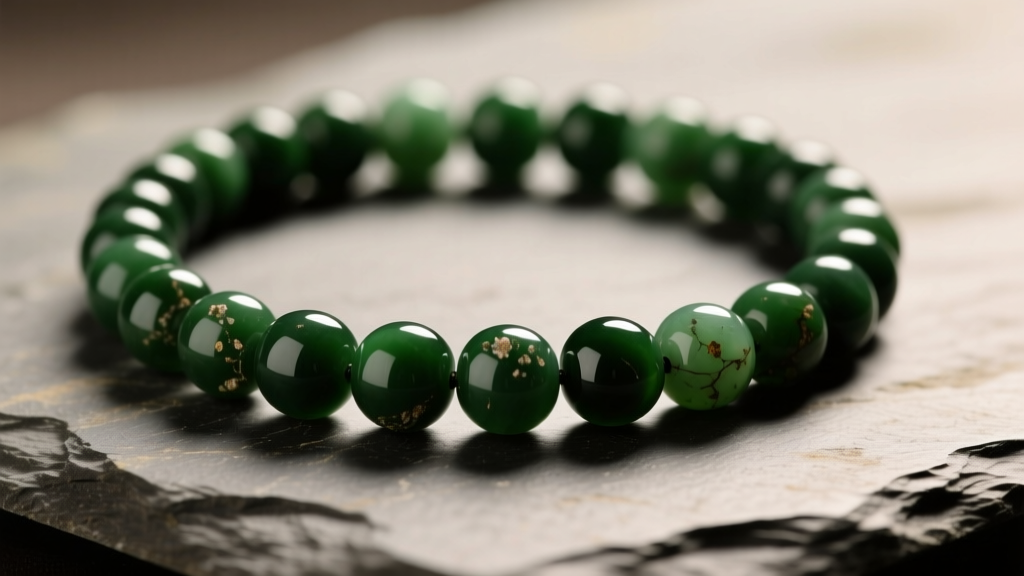
When beginners enter the world of jade jewelry, the terminology can be immediately overwhelming. The term 'jade' is actually an umbrella term for two distinct metamorphic minerals: jadeite and nephrite. While jadeite often steals the spotlight with its glassy, translucent emerald-green hues, a nephrite necklace offers a rich, historic, and deeply durable alternative that has been prized by civilizations for over 5,000 years.
Scientifically, nephrite is a calcium magnesium iron silicate belonging to the amphibole mineral group, primarily composed of tremolite and actinolite. According to the Mindat mineral database, nephrite's defining characteristic is its interlocking fibrous crystal structure. This microscopic felt-like matrix makes nephrite the toughest natural gemstone on earth—meaning it is highly resistant to breaking, chipping, and shattering, even though it ranks at a modest 6 to 6.5 on the Mohs hardness scale. For a necklace that will be worn daily and subjected to accidental bumps, this structural toughness is a massive practical advantage over more brittle gems.
Visually, nephrite differs from jadeite. It typically presents a waxy, oily luster rather than a glassy one, and ranges from opaque to semi-translucent. Its color palette is earthier and more subdued, featuring deep spinach greens, creamy whites, dark blacks, and earthy browns. Understanding these baseline scientific and visual traits is the first step in confidently selecting your first piece.
Global Origins: Where Does the Best Nephrite Come From?
Unlike diamonds or rubies, where origin heavily dictates a strict price hierarchy, nephrite's value is tied to its regional characteristics, cultural significance, and specific color variations. Knowing where your necklace's stones were mined will give you insight into its quality and fair market value.
| Origin | Primary Colors | Notable Traits | Avg. Necklace Price Range |
|---|---|---|---|
| Hetian, China | Creamy White, Spinach Green | Famous for 'Mutton Fat' white seed jade. Highly prized, historically significant, and often carved into intricate pendants. | $200 - $5,000+ |
| British Columbia, Canada | Vivid Spinach Green, Black | Known as 'Polar Jade'. Highly uniform, vibrant green, excellent for perfectly matched bead necklaces. | $80 - $600 |
| New Zealand | Forest Green, Pale Green | Known as 'Pounamu' or Maori Greenstone. Deep cultural significance, often carved into traditional shapes like the Hei Tiki. | $150 - $800 |
| Siberia, Russia | Dark Green with Black Spots | Distinctive dark green base with chromite inclusions (black spots). Highly recognizable and unique. | $50 - $300 |
For a beginner, Canadian nephrite offers the best entry point for a classic, uniform green bead necklace due to its affordability and high quality. However, if you are looking for a carved pendant necklace, Chinese Hetian jade or New Zealand Pounamu provides unmatched cultural depth and artistry.
How to Spot Treated vs. Natural Nephrite
The Gemological Institute of America (GIA) notes that while jadeite is frequently subjected to harsh acid baths and polymer injections (categorized as Type B and Type C jade), nephrite is less commonly treated in this destructive manner. However, because nephrite is porous, it is frequently dyed and waxed to enhance its color and luster.
The Flashlight and Loupe Tests
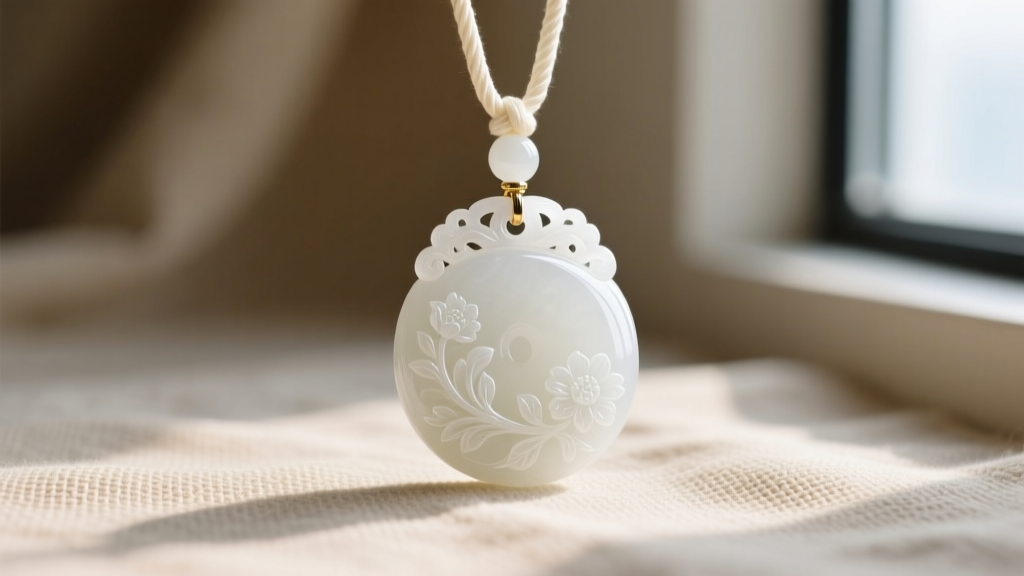
When shopping for a nephrite necklace, bring a 10x jeweler's loupe and a strong LED flashlight. Here is how to use them to protect your investment:
- Surface Pitting: Examine the surface of the beads or carving under the loupe. If you see a network of tiny, microscopic fissures that look like dried mud or spiderwebs, the stone may have been acid-bleached to remove brown impurities before dyeing. Natural, untreated nephrite will have a smooth, continuous surface, even with natural mineral inclusions.
- Color Concentration: Shine the flashlight through the edge of a bead. In dyed nephrite, the green color will often concentrate heavily along the natural grain boundaries and microscopic cracks, looking like dark green veins. Natural nephrite will show a more even, diffuse distribution of color.
- The Acetone Swab: If you are buying from a market stall or an unverified online vendor, rubbing a cotton swab dipped in acetone (nail polish remover) on an inconspicuous area of the bead can reveal surface dyes. If the swab turns green, the necklace is heavily dyed.
Always ask the seller if the nephrite is 'Type A' (completely natural, perhaps with a traditional beeswax polish) or if it has been chemically altered. A reputable jeweler will provide this information transparently.
Anatomy of a Nephrite Necklace: Beads, Sizes, and Stringing
Beyond the stone itself, the physical construction of the necklace dictates its comfort, drape, and longevity. Nephrite is a dense, heavy stone, meaning the structural components of the necklace must be chosen with care.
Beading Sizes and Proportions
Nephrite bead necklaces generally come in three standard millimeter sizes, each serving a different styling purpose:
- 6mm to 8mm (Delicate to Standard): Ideal for layering with gold chains or wearing tucked into a blouse. An 8mm bead is the industry standard for a classic, versatile princess-length necklace.
- 10mm to 12mm (Statement): These larger beads carry significant weight and presence. They are best worn as a single, standalone piece over a solid-colored garment to let the waxy luster of the stone stand out.
- Heishi and Barrel Cuts: Instead of perfect spheres, many nephrite necklaces feature flat heishi discs or elongated barrel beads. Barrel beads offer a more organic, rustic aesthetic and sit flatter against the collarbone, reducing the 'rolling' effect that round beads sometimes cause.
Stringing Materials: What Holds Your Necklace Together
Because nephrite beads are heavy and have hard, sharp edges around the drill holes, the stringing material is a critical point of failure. Avoid cheap elastic cords, which will degrade and snap under the weight of the stone. Instead, look for necklaces strung on knotted nylon (often branded as Jeweler's Secret or Silkon). Knotting between each individual bead serves two purposes: it prevents the heavy stones from grinding against one another and wearing down the drill holes, and it ensures that if the cord ever breaks, you will only lose one bead rather than the entire necklace. Traditional silk is also used, particularly for high-end Hetian jade, but it requires re-stringing every 2 to 3 years as it stretches and degrades with skin oils.
Daily Care and Long-Term Maintenance
Despite its legendary toughness, nephrite requires specific care to maintain its waxy luster and structural integrity. The interlocking fibers can trap dirt, oils, and cosmetics over time, leading to a dull appearance.
Expert Cleaning Tip: Never use ultrasonic or steam cleaners on a nephrite necklace. The high-frequency vibrations can exploit microscopic internal fractures, causing the beads to crack. Instead, soak the necklace in lukewarm water with a few drops of mild, phosphate-free dish soap for 10 minutes. Gently scrub the beads with a soft-bristled baby toothbrush, rinse under cool tap water, and dry immediately with a microfiber cloth.
Additionally, nephrite is sensitive to thermal shock and harsh chemicals. Always remove your necklace before swimming in chlorinated pools, entering a sauna, or applying heavy perfumes and hairsprays. Over decades of wear, the natural oils from your skin will actually enhance the polish of untreated nephrite, giving it a rich, antique patina that makes the stone uniquely yours. By understanding its origins, verifying its treatments, and maintaining its structure, your first nephrite necklace will easily become a lifelong staple in your jewelry collection.


