Anatomy of the Karoline Leavitt Necklace: Chain & Pendant Specs
Analyze the Karoline Leavitt necklace style. We break down the exact chain weaves, gold karat weights, and pendant specs for professional wear.

The Signature Look: Deconstructing the Press Briefing Aesthetic
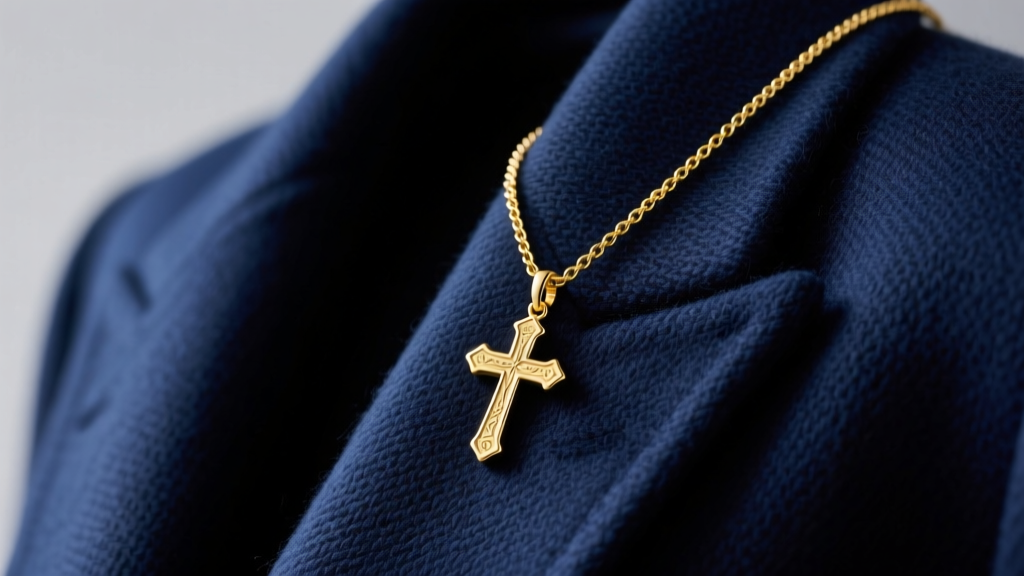
When analyzing the jewelry worn by high-profile political figures and press secretaries, the "Karoline Leavitt necklace" has emerged as a masterclass in strategic, professional styling. Appearing daily at the White House press briefing podium requires jewelry that communicates reliability, tradition, and meticulous attention to detail without distracting from the core message. The archetype of the Karoline Leavitt necklace typically features a delicate, high-polish gold chain paired with a modest, meaningful pendant—often a small cross or a classic initial.
However, replicating this look requires more than just buying a thin gold chain. To achieve the exact visual weight, durability, and camera-ready finish seen in high-definition broadcasts, we must deconstruct the metallurgy, chain weave engineering, and clasp tolerances that define this specific aesthetic. This expert deep dive breaks down the exact technical specifications required to build or source a necklace that meets the rigorous demands of daily professional wear.
Metallurgy & Karat Weight: The 14k Gold Advantage
The foundation of any enduring professional necklace is its alloy composition. While 18k and 24k gold offer richer yellow hues, they are fundamentally unsuited for the structural demands of a delicate, daily-wear chain holding a pendant. The Gemological Institute of America (GIA) notes that pure gold is exceptionally soft, making it prone to micro-deformations that lead to chain stretching and eventual snapping.
The optimal choice for the Karoline Leavitt necklace archetype is 14k yellow gold. Composed of 58.5% pure gold, 25% silver, and 16.5% copper, this specific alloy ratio yields a Vickers hardness (HV) of approximately 130. This hardness is critical for chains in the 0.8mm to 1.1mm range. When a pendant swings or catches on clothing, the higher tensile strength of 14k gold prevents the individual links from warping open. Furthermore, the copper content in 14k yellow gold provides a warm, classic tone that reads exceptionally well on television, avoiding the washed-out, pale yellow appearance that 18k gold can sometimes exhibit under harsh studio lighting.
Chain Weave Engineering: Cable, Rolo, and Box Chains
The visual texture of the chain dictates how light interacts with the metal on camera. High-polish chains create specular highlights; if the chain is too thick (over 2.0mm), it can cause lens flare or blow out camera sensors. The sweet spot for the Leavitt aesthetic is a chain width between 0.9mm and 1.2mm. Here is a technical comparison of the three most viable weaves for this application:
| Chain Weave | Width Range | Light Reflection | Snag Factor | Tensile Durability |
|---|---|---|---|---|
| Cable (Classic) | 0.8mm - 1.2mm | Moderate, uniform gleam | Low (smooth oval links) | High (soldered links) |
| Rolo | 0.9mm - 1.5mm | High, multi-angular flash | Medium (round interlocking) | Very High (thick wire gauge) |
| Box | 0.8mm - 1.1mm | Sharp, linear highlights | High (catches fine fabrics) | Medium (prone to kinking) |
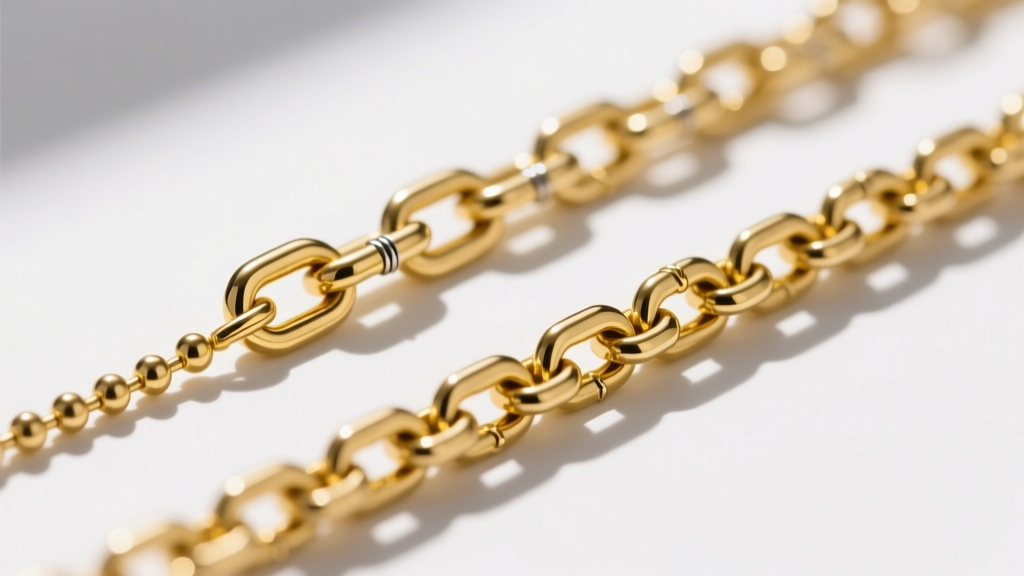
For the ultimate replication of the Karoline Leavitt necklace style, the classic cable chain or a micro-rolo chain are the superior choices. Cable chains offer a traditional, understated elegance that aligns with modest professional styling, while micro-rolo chains provide exceptional structural integrity due to their alternating, tightly packed circular links. Box chains, while beautiful, possess sharp interior angles that frequently catch on silk blouses and fine-knit sweaters, making them a liability for daily briefing room wear.
Pendant Proportions and Bail Mechanics
The pendant is the focal point, but the bail—the loop that connects the pendant to the chain—is where the engineering truly matters. A common failure in commercial jewelry is mismatching the bail inner diameter (ID) to the chain width. If a 1.0mm cable chain is threaded through a 3.5mm bail, the pendant will slide too freely, constantly shifting off-center and requiring distracting adjustments on camera.
The Golden Ratio of Bail Sizing
To achieve the perfect drape and centering, the bail's inner diameter should be exactly 1.2x to 1.5x the width of the chain. For a 1.0mm chain, the bail ID must be between 1.2mm and 1.5mm. This tight tolerance allows the pendant to hang perfectly straight while restricting excessive lateral movement. Furthermore, the bail should be laser-welded to the pendant rather than cast as a single piece. Laser welding ensures a clean, high-strength joint without introducing the porosity often found in cast bails, which can snap under the repetitive stress of daily wear.
The Weakest Link: Clasp and Jump Ring Tolerances
According to industry data cited by JCK Magazine, over 80% of delicate chain failures occur not in the chain itself, but at the findings—specifically the clasp and the jump rings. The standard spring ring clasp is inadequate for professional jewelry; its internal spring mechanism frequently fails, and the small lip makes it difficult to secure quickly.
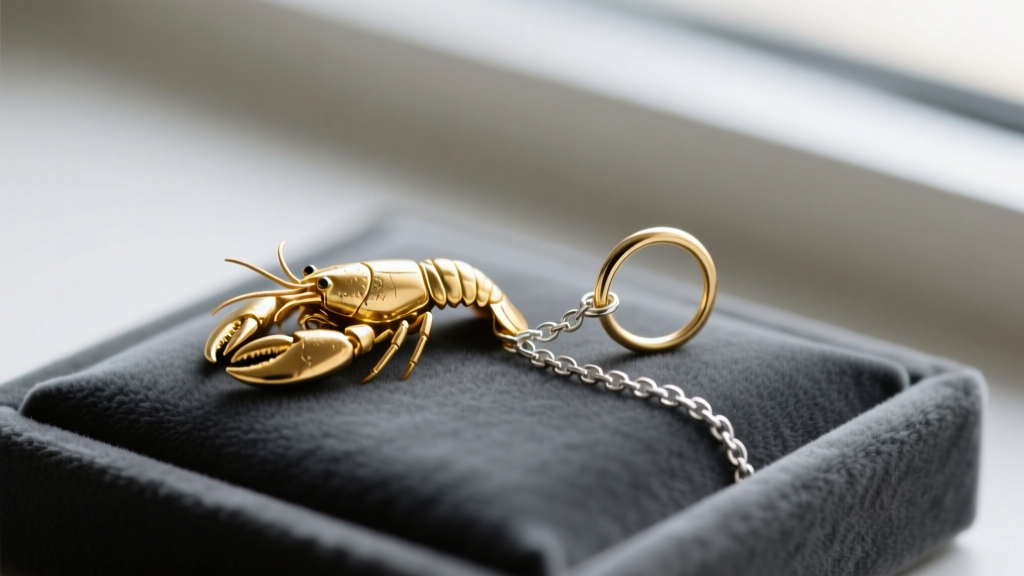
The mandatory specification for the Karoline Leavitt necklace archetype is a 5mm or 6mm solid lobster claw clasp. However, the clasp is only as strong as the jump ring connecting it to the chain. A standard commercial jump ring uses wire with a thickness of just 0.2mm. Under 2.5 lbs of tension (e.g., the chain catching on a jacket lapel), a 0.2mm jump ring will pull apart. To ensure longevity, you must upgrade to a 0.35mm or 0.4mm wire thickness jump ring with an outer diameter (OD) of 4mm. This minor increase in wire gauge increases the tensile failure point by over 300%, effectively making the clasp area indestructible under normal wear conditions.
Replicating the Archetype: A Buyer’s Specification Sheet
If you are commissioning a bench jeweler or sourcing a high-quality piece to replicate this exact professional aesthetic, use the following technical specification sheet. Handing these exact parameters to a jeweler guarantees a piece that mirrors the durability, camera-readiness, and elegance of the Karoline Leavitt necklace style.
- Metal: 14k Yellow Gold (Nickel-free alloy preferred for skin sensitivity).
- Chain Type: Classic Cable or Micro-Rolo, high-polish finish.
- Chain Width: 0.9mm to 1.1mm (Do not exceed 1.2mm to maintain delicacy).
- Chain Length: 16 inches with a 2-inch extender (Allows for precise placement over varying blouse necklines).
- Pendant Bail ID: 1.2mm to 1.5mm (Must match chain width + 0.2mm tolerance).
- Clasp: 5mm Solid Lobster Claw (Stamped 14k).
- Jump Rings: 4mm OD, minimum 0.35mm wire thickness, laser-welded or tightly butted.
"In high-stakes professional environments, jewelry should act as a subtle frame for the face and the message, not a distraction. The engineering of the piece—how it catches the light, how it drapes, and how it withstands the rigors of a 14-hour workday—is what separates a mere accessory from a strategic asset." — Principles of Broadcast Styling
Conclusion: The Intersection of Tradition and Engineering
The enduring appeal of the Karoline Leavitt necklace lies in its seamless blend of traditional modesty and modern metallurgical engineering. By prioritizing the tensile strength of 14k gold, selecting camera-friendly chain weaves, and enforcing strict tolerances on bails and jump rings, you can curate a piece of jewelry that is not only visually striking but structurally flawless. For professionals seeking to emulate this authoritative yet elegant style, understanding these technical deep dives ensures your jewelry will perform as impeccably as you do.
For further reading on jewelry manufacturing standards and chain durability, consult the technical guides available through Rio Grande, a premier supplier of jewelry findings and metallurgical resources.


