The Tie Necklace: 2026 Trend Analysis & Style Guide
Discover how the tie necklace is dominating 2026 fashion. Explore styling tips, material upgrades, and trend analysis for bolo and ribbon cord necklaces.

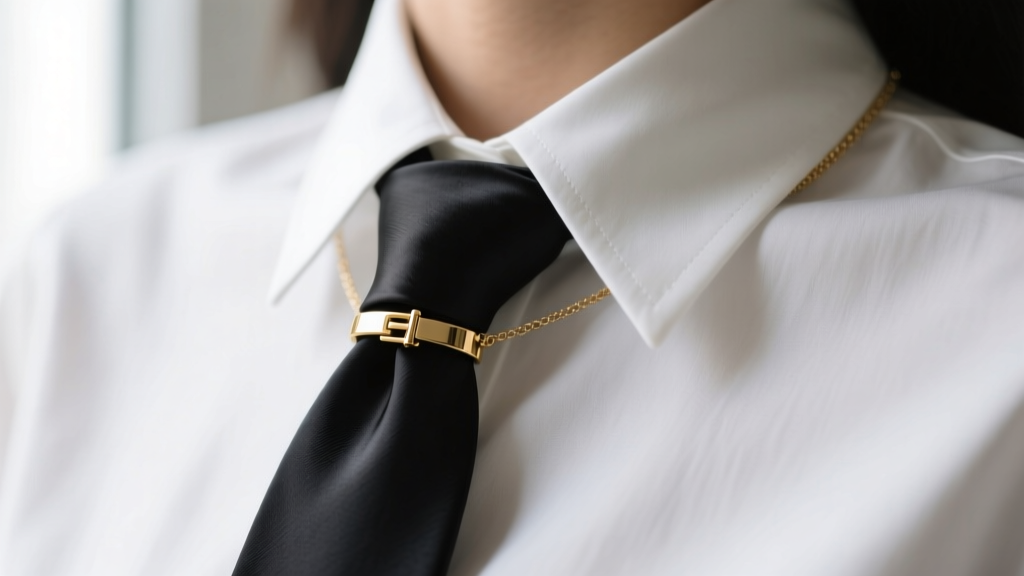
The Evolution of the Tie Necklace: From Western to Runway
The tie necklace—historically recognized as the bolo tie, ribbon tie, or lariat cord—has undergone a radical transformation. Once relegated to vintage Western wear or 1990s grunge chokers, the modern tie necklace has emerged as a cornerstone of modular fine jewelry in 2026. Today’s iterations strip away the costume elements of the past, replacing them with precision-engineered hardware, ethically sourced gemstone slides, and luxurious cord materials. According to trend reports from Vogue, the shift toward adjustable, multi-functional jewelry is driven by a consumer demand for pieces that transition seamlessly from boardroom to evening wear without requiring a full accessory change.
Unlike traditional clasped necklaces that lock into a single length, the tie necklace offers a continuous, adjustable drop. This fluidity allows the wearer to manipulate the silhouette of their outfit in real-time. In 2026, we are seeing a definitive split in the market: ultra-minimalist silk and chain ties for everyday elegance, and heavy, artisan-crafted leather and silver bolos making a massive resurgence in gender-neutral streetwear.
Material & Cord Breakdown: What’s Selling in 2026
The foundation of any tie necklace is the cord. The durability, drape, and friction coefficient of the cord dictate both the longevity of the piece and the type of hardware it can support. Cheap synthetic cords that fray and snap have been entirely phased out of the mid-to-high-tier market, replaced by specialized textiles and metals.
| Material | Core Composition | Standard Width | Price Range | Best Application |
|---|---|---|---|---|
| Mulberry Silk Cord | Grade 6A Silk, braided | 2.0mm - 3.0mm | $85 - $250 | Minimalist pendants, evening wear |
| Vegetable-Tanned Leather | Full-grain calfskin | 1.5mm - 2.5mm | $120 - $400 | Heavy metal slides, Western revival |
| Sterling Snake Chain | 925 Silver, tightly linked | 1.2mm - 1.8mm | $150 - $600 | Luxurious drape, high-friction slides |
| Waxed Cotton | Organic cotton, waxed | 1.0mm - 1.5mm | $45 - $120 | Casual layering, lightweight beads |
Silk cords offer a luxurious, matte finish that catches the light subtly, making them the preferred choice for high-end designer slides. However, silk requires careful maintenance; exposure to perfumes and lotions can degrade the protein fibers over time. Conversely, vegetable-tanned leather develops a rich patina but requires a wider slide channel to prevent the leather from compressing and creating a permanent 'bald' spot where the clasp rests most frequently.
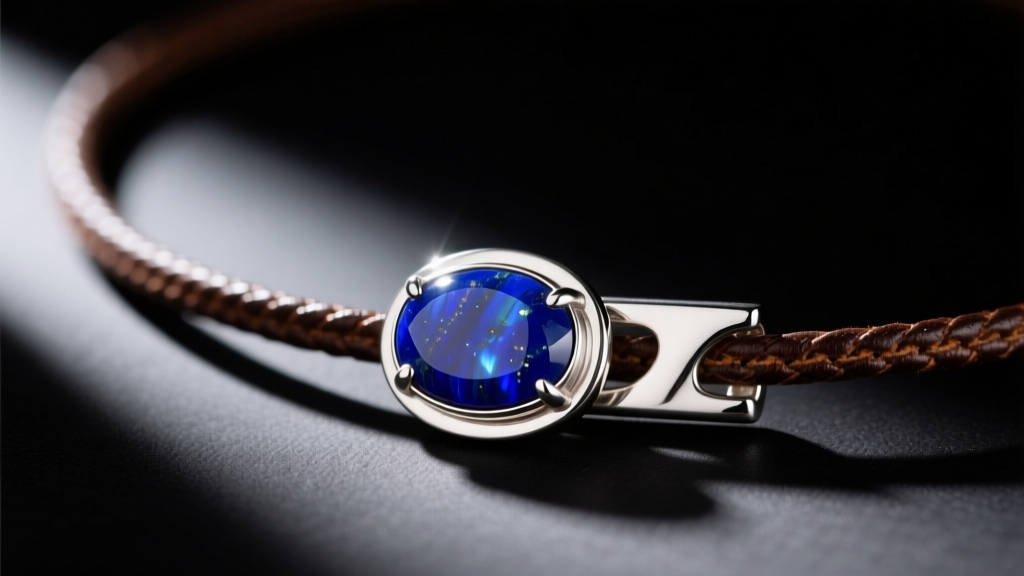
Hardware Mechanics & Failure Modes
The slide (or clasp) is the mechanical heart of the tie necklace. In 2026, jewelry engineers have moved beyond simple friction tubes, introducing advanced mechanisms that solve the historic problem of the 'drooping slide'—where the weight of the pendant pulls the clasp down the chest throughout the day.
- Neodymium Magnetic Slides: These feature two internal N52-grade rare earth magnets that snap together around the cord. They are incredibly secure and allow for a seamless, invisible closure. Failure Mode: If the cord is under 1.5mm thick, the magnets can pinch and eventually sever silk or cotton fibers.
- Spring-Loaded Friction Clutches: Often found in fine jewelry, these contain a tiny internal spring and ball bearing that grips the cord when released. Failure Mode: Dust and skin oils can clog the micro-spring mechanism over 12-18 months, requiring ultrasonic cleaning.
- Traditional Bolo Tips & Toggles: Relies purely on gravity and cord tension. While aesthetically classic, they are the least secure for heavy gemstone pendants exceeding 15 grams.
Styling Frameworks: Necklines and Drop Lengths
The versatility of the tie necklace lies in its adjustable drop. However, styling it requires an understanding of geometric proportions relative to the wearer's neckline. Here is the 2026 framework for positioning your slide:
The Deep V-Neck & Plunge
For deep V-neck blouses or wrap dresses, the tie necklace acts as a visual anchor. Position the slide precisely at the sternum, where the fabric's V intersects. Use a 2.0mm black silk cord with a geometric gold slide. The dark cord frames the décolletage without competing with the garment, while the slide draws the eye vertically, elongating the torso.
The High Collar & Turtleneck
When wearing a turtleneck, mock neck, or high-collared shirt, the tie necklace should be shortened to function almost like a choker or collarbone-length pendant. Pull the slide up to rest just above the clavicle. This works exceptionally well with 1.2mm sterling silver snake chains, which lay flat against the fabric and mimic the look of a high-end necktie. According to styling directors at Business of Fashion, this 'necktie-as-jewelry' approach is a dominant trend in modern androgynous suiting.
Layering Frameworks: Integrating Cords with Chains
Layering a tie necklace with traditional chains requires strict adherence to gauge and length disparities to prevent tangling and visual clutter. The golden rule for 2026 is the 2-4-6 Length Rule, combined with contrasting textures.
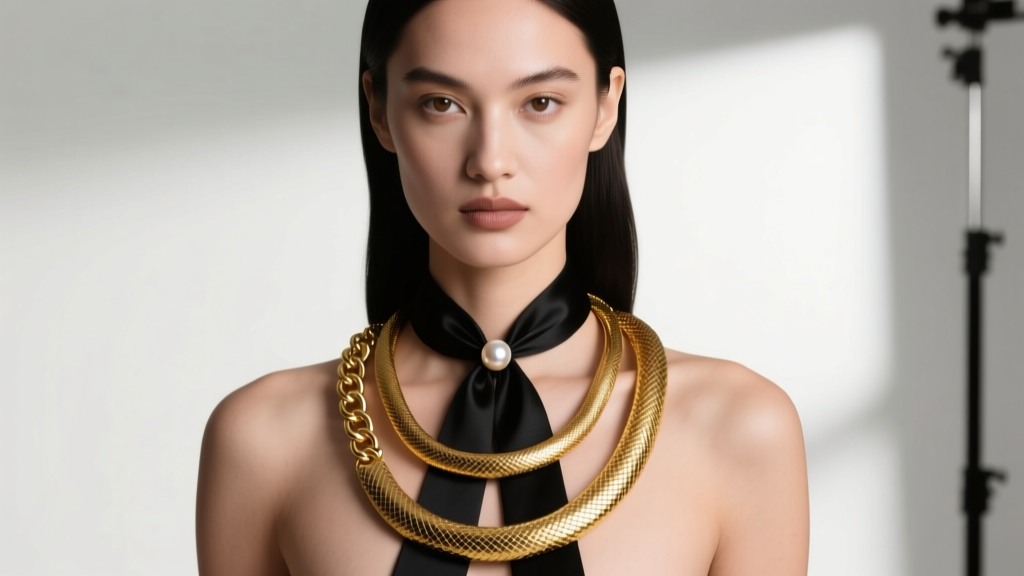
- The Base (14-16 inches): Start with a rigid or semi-rigid chain, such as a 1.0mm gold cable chain or a 14-inch herringbone. This sits high on the collarbone and provides a bright, metallic backdrop.
- The Bridge (18-20 inches): Optional, but if used, keep it minimal—a simple 18-inch rope chain with a tiny 3mm diamond or sapphire bezel.
- The Anchor (22-26 inches): This is where the tie necklace lives. Use a dark, matte cord (like black leather or navy silk) to create high contrast against the gold or silver base chains. The adjustable slide allows you to lower the pendant to 28 inches if you need to clear a complex neckline, ensuring the layers never overlap awkwardly.
Pro-Tip: Never layer a tie necklace with another lariat or Y-necklace. The dangling ends will inevitably tangle, and the competing vertical lines disrupt the visual flow of the stack.
Market Analysis: Designer vs. Artisan Pricing
The pricing architecture for tie necklaces has bifurcated. On one end, mass-market fashion brands are producing alloy-based magnetic slides on synthetic cords for $30 to $60. These pieces suffer from rapid hardware tarnishing and cord fraying, often failing within a single season.
In the mid-tier ($150 to $400), brands are focusing on modularity. Consumers are purchasing 'starter kits' that include one high-quality silk or leather cord and three interchangeable magnetic slides (e.g., a pearl, a malachite cabochon, and a brushed metal geometric shape). This modular approach increases the cost-per-wear value and aligns with sustainable consumption habits.
At the artisan and high-end designer level ($500 to $2,500+), the focus shifts to the slide itself as a standalone work of art. Hand-forged sterling silver bolo slides featuring inlay turquoise, custom-cut lapis lazuli, or micro-pavé diamonds are being treated as heirloom brooches that happen to be worn on a cord. The cord in these instances is merely a delivery mechanism for the artisan's metalwork, often finished with custom cast sterling silver end-caps rather than traditional knots or glued tips.
Conclusion
The tie necklace in 2026 is a masterclass in functional elegance. By understanding the material science of the cords, the mechanical realities of the slides, and the geometric rules of styling, you can elevate this piece from a nostalgic novelty to a cornerstone of your modern jewelry wardrobe. Whether you opt for the sleek minimalism of a magnetic silk tie or the bold statement of a heavy leather bolo, the key lies in precision, proportion, and quality hardware.


