Maasai Beaded Necklace Buying Guide: What to Look For
Discover how to choose an authentic Maasai beaded necklace. Learn about bead materials, traditional color meanings, ethical sourcing, and styling tips.

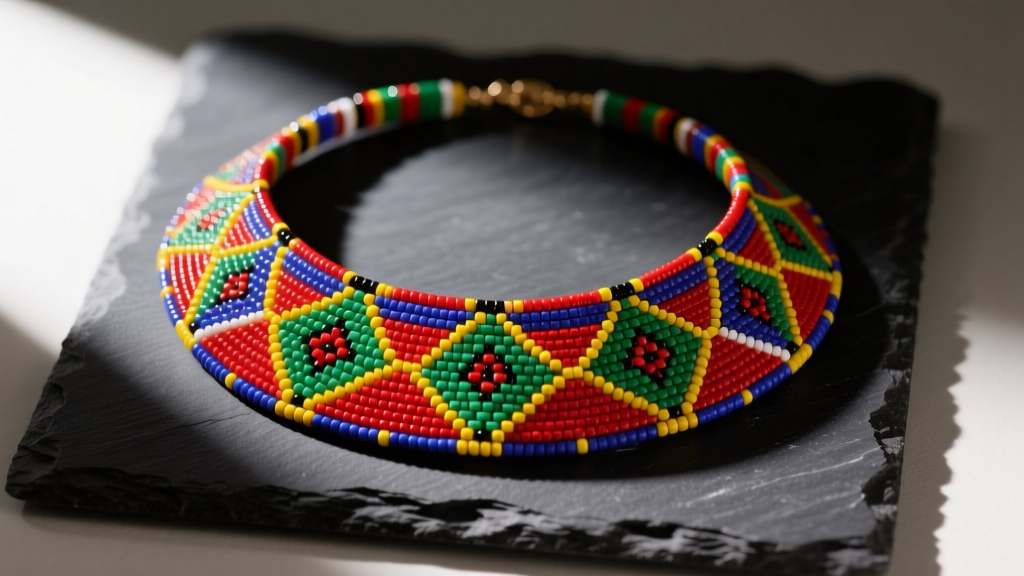
The Heritage and Evolution of Maasai Beadwork
The Maasai beaded necklace is far more than a striking fashion accessory; it is a profound cultural artifact that communicates age, social status, and identity. Before the late 19th century, Maasai artisans crafted jewelry from natural resources like clay, wood, bone, and copper. The introduction of glass trade beads by European merchants revolutionized this craft, allowing for the vibrant, tightly woven geometric patterns we recognize today. When shopping for an authentic Maasai beaded necklace in 2026, understanding this historical evolution is crucial. It helps you distinguish between mass-produced, culturally disconnected souvenirs and genuine, handcrafted pieces that support the indigenous communities of Kenya and Tanzania.
True Maasai beadwork is characterized by its rigid, flat collar structure, intricate symmetry, and heavy weight. As a buyer, your primary goal should be to verify material integrity, construction quality, and ethical sourcing. This comprehensive guide will walk you through the exact specifications to look for, ensuring your investment honors the tradition and craftsmanship of the Maasai people.
Decoding Traditional Color Symbolism
Every color in a genuine Maasai necklace carries specific cultural significance. While modern artisans sometimes experiment with contemporary palettes for the global market, traditional pieces adhere to a strict symbolic code. Understanding these meanings adds a layer of depth to your purchase and helps you identify authentic, community-made pieces versus factory-made imitations.
- Red (Enkare): Symbolizes blood, bravery, unity, and the sacrifices made for the community. It is the most dominant color in Maasai beadwork.
- White (Enkai): Represents peace, purity, and the milk of the cattle, which is a vital nutritional and spiritual staple.
- Blue (Olapa): Stands for the sky, energy, and the water that sustains the cattle and the land.
- Green (Olchani): Reflects the land, vegetation, nourishment, and health.
- Orange (Enkang): Signifies hospitality, warmth, and friendship, often associated with the gourds used to serve milk to guests.
- Yellow (Emurt): Represents the sun, fertility, and the growth of the community.
- Black (Erorok): Symbolizes the people themselves, unity, and the hardships or storms they must endure together.
Material Integrity: Identifying Authentic Glass Beads
The most critical factor in determining the quality and authenticity of a Maasai beaded necklace is the bead material. Historically and currently, the highest quality pieces utilize Czech glass seed beads, typically in sizes 10/0 or 11/0. These beads are prized for their opaque pigmentation, uniform shape, and durability. Unfortunately, the market is flooded with cheap plastic or acrylic injection-molded beads that mimic the look but lack the weight, longevity, and cultural authenticity.
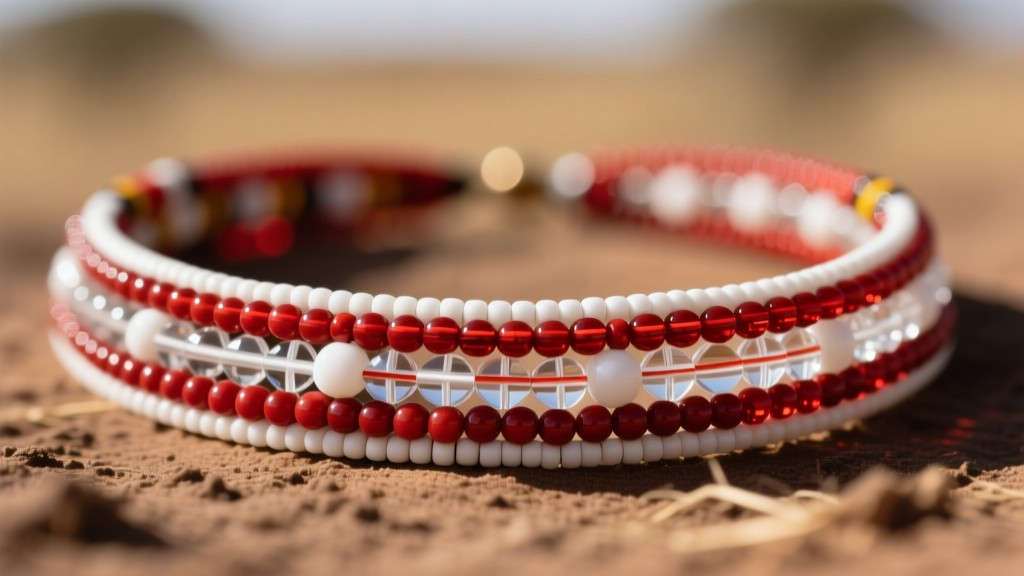
| Material Type | Visual & Tactile Traits | Durability & Weight | Authenticity Verdict |
|---|---|---|---|
| Czech Glass (Size 10/0) | Opaque, rich pigments, no visible seam lines, smooth finish. | Heavy (250g-450g per collar), highly durable, fade-resistant. | Authentic & Premium |
| Japanese Seed Beads | Extremely uniform, slightly more translucent, precise cuts. | Medium weight, very durable, excellent for fine detailing. | High-Quality Alternative |
| Plastic / Acrylic | Visible mold seams, lightweight, colors can look artificial. | Very light (<100g), prone to scratching, fading, and cracking. | Tourist Trap / Avoid |
To test the material, gently tap the beads against your teeth or a hard surface. Glass produces a sharp, distinct 'clink,' while plastic yields a dull, muted thud. Furthermore, authentic glass beads will feel noticeably cool to the touch and carry a substantial, satisfying weight when draped over the hand.
Construction Techniques and Backing Materials
The structural integrity of a Maasai collar necklace relies heavily on its internal armature and backing. Traditional collars are not simply strung on thread; they are meticulously woven or wired to maintain their iconic flat, disc-like shape that rests flush against the collarbone.
Wire Armature vs. Thread Weaving
Authentic stiff collars are constructed using a wire armature, often utilizing 20- to 24-gauge recycled copper, brass, or steel wire. Artisans weave the glass beads tightly around this wire framework using a technique similar to brick stitch or peyote stitch. This wire core is what allows the necklace to hold its rigid, circular shape without buckling. If a 'collar' necklace is entirely floppy and lacks structural memory, it is likely missing the traditional wire core or was mass-produced using cheap elastic threading.
The Importance of Leather Backing
Because the wire armature and glass beads can be abrasive against the skin, high-quality Maasai necklaces feature a backing material. Look for pieces backed with vegetable-tanned calfskin leather or, in some modern sustainable iterations, recycled tire rubber. The leather should be soft, supple, and securely bound to the beadwork with heavy-duty nylon thread or sinew. Avoid necklaces with raw, unfinished wire edges or rough canvas backings, as these will quickly degrade and cause skin irritation.
Ethical Sourcing and Fair Trade Verification
The global demand for indigenous crafts has unfortunately led to widespread exploitation and cultural appropriation. Many 'Maasai-style' necklaces sold in fast-fashion retail chains are manufactured in overseas factories, with zero financial benefit reaching the Maasai communities in East Africa.
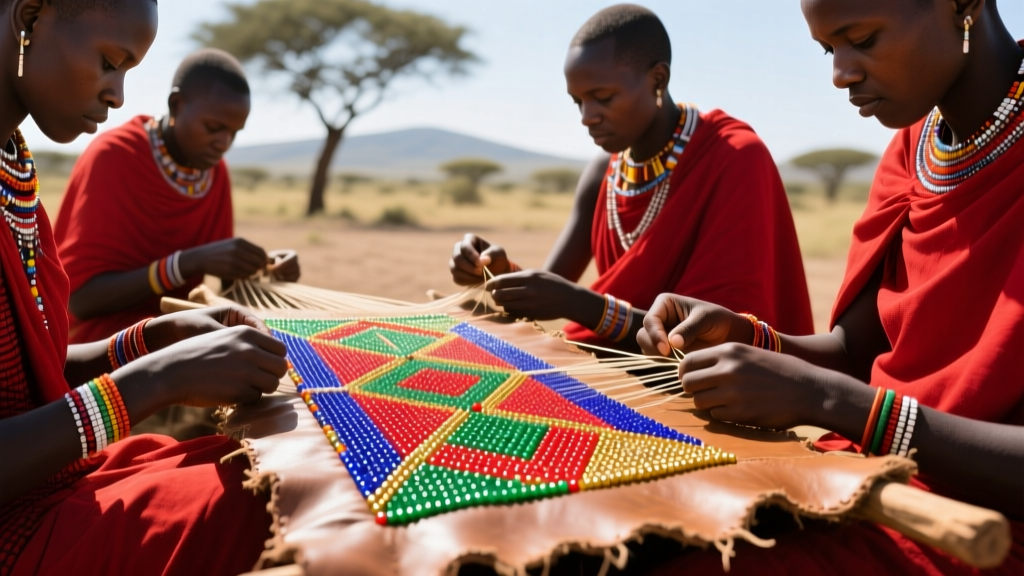
When purchasing a Maasai beaded necklace, prioritize vendors who are transparent about their supply chain. Look for certifications from organizations like the Fair Trade Federation, which ensures that artisans are paid living wages, work in safe conditions, and have a stake in the business. Additionally, the Kenya Tourism Board and various cultural heritage NGOs frequently highlight verified cooperatives that empower Maasai women, who are the traditional custodians of this beadwork. Buying directly from verified cooperatives or reputable fair-trade boutiques ensures your money supports community initiatives like education, clean water access, and livestock veterinary care.
Sizing, Weight, and Wardrobe Integration
Styling a Maasai beaded necklace requires an understanding of its unique proportions and visual weight. Because these pieces are inherently maximalist, they serve as the focal point of any outfit.
Understanding Collar vs. Bib Proportions
Collar Necklaces (14-16 inches): These sit high and tight against the base of the neck. They are rigid and frame the face beautifully. Due to the dense beadwork and wire core, a genuine collar will weigh between 250 and 450 grams. Ensure the inner diameter matches your neck measurement plus at least 1.5 inches for comfort.
Bib Necklaces (16-20 inches): These feature cascading layers of beadwork that drape over the upper chest. While slightly more flexible, they still carry significant weight. Look for reinforced clasps, such as heavy-duty brass toggle clasps or leather tie closures, which are better equipped to handle the tension than standard lobster clasps.
Neckline Pairing Framework
To let the intricate geometry and vibrant colors of the beadwork shine, pair your necklace with minimalist, structured garments. Strapless or sweetheart necklines provide a blank canvas of skin that allows the collar to sit flush without competing with fabric. Deep V-necks in solid, neutral tones (like crisp white linen, charcoal cotton, or black silk) perfectly frame the cascading layers of a bib necklace. Avoid busy patterns, ruffled collars, or high turtlenecks, which will visually clash with the beadwork and prevent the necklace from laying flat against the body.


