Rhinestone Choker Necklace Trends: 2026 Style Analysis
Discover how the rhinestone choker necklace evolved in 2026. Explore styling tips, material grades, and trend forecasts for this iconic Y2K staple.

The Evolution of the Rhinestone Choker Necklace: From Y2K to 2026
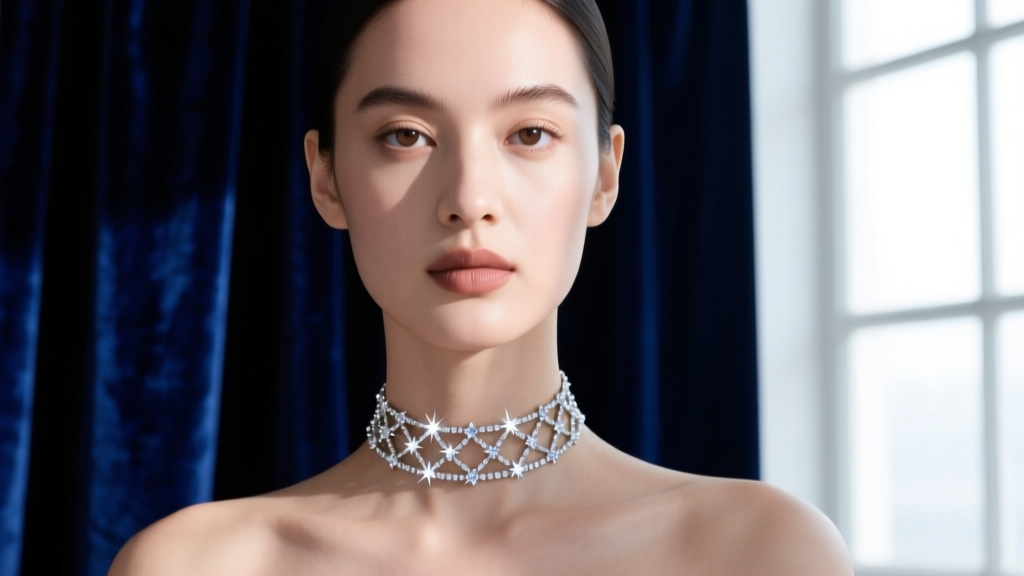
The rhinestone choker necklace has completed its cyclical journey through fashion history, transitioning from a nostalgic Y2K callback to a sophisticated, high-fashion staple in 2026. No longer confined to the chunky, plastic-studded velvet ribbons of the early 2000s, today's iterations are defined by precision engineering, advanced crystal cutting techniques, and minimalist architectural silhouettes. According to recent runway analyses and market data, the modern rhinestone choker necklace bridges the gap between fine jewelry and avant-garde accessories, offering a versatile sparkle that appeals to both maximalist stylists and quiet luxury enthusiasts.
What makes the 2026 landscape unique is the bifurcation of the trend. On one end, we see the 'invisible wire' illusion chokers that mimic floating diamonds. On the other, heavy, mixed-metal hardware integrated with precision-set stones creates a neo-industrial aesthetic. To truly master this trend, one must understand the material science, structural integrity, and styling mechanics that separate a premium piece from a fast-fashion afterthought.
Material Breakdown: Crystal vs. Cubic Zirconia vs. Acrylic
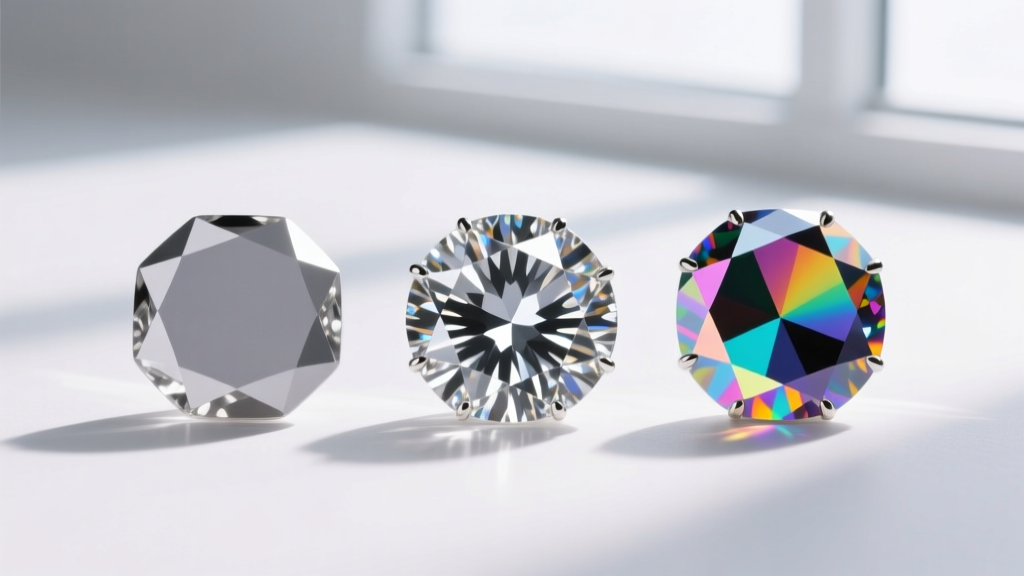
The brilliance of a rhinestone choker necklace is entirely dependent on the refractive index (RI) and the cut of the stones used. In 2026, discerning buyers and designers are moving away from generic 'rhinestones' and demanding specific material grades. Understanding these differences is critical for evaluating price points and longevity.
| Material Grade | Refractive Index (RI) | Durability (Mohs) | 2026 Price Range | Best Application |
|---|---|---|---|---|
| Premium Leaded-Free Crystal (e.g., Swarovski Advanced, Preciosa) | 1.52 - 1.58 | 6 - 7 | $120 - $450 | High-end evening wear, bridal, illusion chokers |
| Cubic Zirconia (CZ) | 2.15 - 2.18 | 8 - 8.5 | $80 - $250 | Everyday luxury, bezel-set hardware chokers |
| Glass Rhinestone (Foil-backed) | 1.50 - 1.52 | 5.5 - 6 | $40 - $90 | Statement pieces, vintage reproductions |
| Acrylic / Resin | 1.49 | 2 - 3 | $15 - $45 | Festival wear, fast-fashion layering |
As noted by the Gemological Institute of America (GIA), Cubic Zirconia possesses a higher refractive index than traditional crystal, meaning it bends light more aggressively, resulting in deeper brilliance but less of the prismatic 'rainbow' dispersion that high-end lead-free crystals are famous for. For a rhinestone choker necklace meant to catch the light from across a room, premium crystals with precision laser-cut facets remain the undisputed champion.
2026 Trend Forecast: Three Dominant Silhouettes
The design language of the rhinestone choker necklace has fractured into three distinct categories this year, each serving a different stylistic purpose.
1. The Invisible Wire Illusion
This silhouette relies on 24-gauge or 26-gauge stainless steel memory wire coated in a matte, skin-toned PVD (Physical Vapor Deposition) finish. The stones are set in micro-bezels that are nearly flush with the wire. The result is a rhinestone choker necklace that appears to float directly on the collarbone. The critical failure point in cheaper versions is the crimp bead at the clasp; premium 2026 versions use laser-welded micro-loops to secure the magnetic clasps, preventing the wire from fraying and snapping.
2. Asymmetric Constellation Clusters
Moving away from the perfectly spaced, uniform tennis-choker style, designers are clustering stones in intentional, asymmetric patterns. A heavy cluster of 4mm to 6mm stones might sit off-center on the left collarbone, tapering into a bare chain or wire on the right. This style requires a heavier base chain—typically a 1.5mm to 2mm sterling silver cable chain—to support the uneven weight distribution without twisting against the skin.
3. Mixed-Metal Hardware Integration
Combining the delicacy of rhinestones with brutalist, industrial hardware is a massive trend. Think heavy, oxidized silver carabiner clasps, oversized O-rings, and industrial chain links punctuated by pavé-set crystal stations. This neo-grunge aesthetic takes the rhinestone choker necklace out of the ballroom and into streetwear, often layered over heavyweight cotton tees or structured leather blazers.
How to Style a Rhinestone Choker Necklace for Modern Necklines
Styling a choker requires an understanding of negative space and proportion. The wrong pairing can crowd the neck and disrupt the visual flow of an outfit. Here is a practical decision framework for 2026 necklines:
- The Halter Neck: Avoid thick, multi-row rhinestone chokers, as they will compete with the halter's diagonal lines and cause physical friction. Opt for a single-strand, 14-inch invisible wire choker that sits exactly 1 inch below the halter's fabric edge.
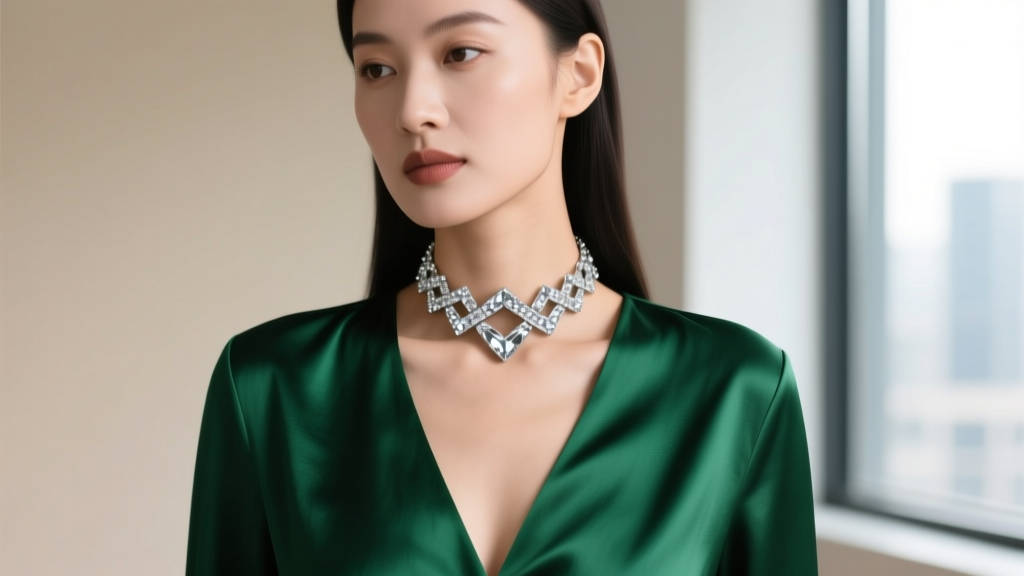
- The Deep-V Plunge: This is the ideal canvas for an asymmetric constellation choker. The V-shape draws the eye downward, and an off-center cluster of rhinestones highlights the collarbone without filling the V-space, which should be reserved for a longer, secondary pendant layer.
- The Crew Neck / T-Shirt: Lean into the mixed-metal hardware trend. A chunky, industrial rhinestone choker necklace worn over a crisp, heavyweight white cotton t-shirt creates a high-contrast, editorial look that balances casual fabric with high-shine accessories.
- The Sweetheart Neckline: Pair with a delicate, uniformly spaced crystal tennis choker (approx. 3mm stones). The curved neckline mirrors the curve of the choker, creating a harmonious, romantic silhouette perfect for evening wear.
Hardware and Clasp Mechanics: What to Look For
A rhinestone choker necklace is only as good as its weakest structural link. Because chokers sit high on the neck, they are subject to constant friction, sweat, and tension from head movements. When evaluating a piece, inspect the clasp and jump rings.
Traditional spring-ring clasps are largely being phased out in premium 2026 designs due to their small size and difficulty to fasten blindly at the nape of the neck. Instead, look for neodymium magnetic clasps encased in stainless steel or brass. These provide a secure, satisfying lock that can be easily fastened with one hand. Ensure the jump rings connecting the clasp to the chain or wire are soldered shut. If the jump ring has a visible gap, the tension of the choker will eventually pull it open, resulting in the loss of the piece.
For metal components, verify the plating method. Gold-plated brass will tarnish and flake within months when exposed to the pH of human skin at the neck. Demand PVD-coated stainless steel or solid 14k/18k gold. PVD coating is bonded at a molecular level in a vacuum chamber, making it highly resistant to the sweat and friction that destroy traditional electroplated jewelry.
Care and Maintenance for Maximum Sparkle
The foil backing on glass rhinestones and the porous nature of certain crystal cuts make cleaning a delicate process. Never use ultrasonic cleaners on foil-backed glass or acrylic rhinestone choker necklaces; the high-frequency vibrations will strip the reflective backing, leaving the stones dull and gray.
For premium lead-free crystals and CZ, use a solution of warm water and a single drop of mild, phosphate-free dish soap. Gently agitate with a soft-bristled baby toothbrush, paying special attention to the pavé settings where skin oils and cosmetics accumulate. Rinse with distilled water to prevent hard water spots, and dry immediately with a lint-free microfiber cloth. Store the choker flat or hung vertically in a climate-controlled environment to prevent the memory wire from warping or the chain from kinking.
Final Thoughts
The rhinestone choker necklace in 2026 is a triumph of material innovation and stylistic reinvention. By prioritizing high-refractive-index stones, robust PVD-coated hardware, and intentional silhouette pairings, you can elevate this piece from a fleeting trend to a permanent, versatile fixture in your jewelry wardrobe. Whether you prefer the ethereal float of an invisible wire or the grounded edge of industrial hardware, the modern choker offers a masterclass in curated brilliance.


