The Tie Pearl Necklace: 2026 Occasion & Gift Guide
Discover the ultimate 2026 gift guide for the tie pearl necklace. Learn occasion matching, material grades, hardware specs, and neckline styling.

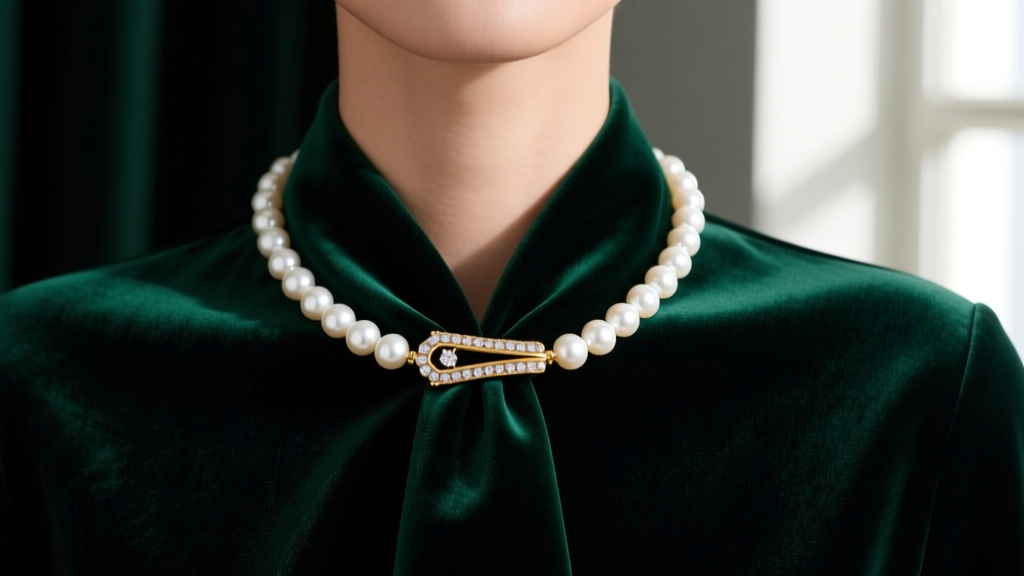
Decoding the Tie Pearl Necklace
When curating a fine jewelry gift, versatility and elegance are paramount. The tie pearl necklace—often referred to as a pearl bolo, lariat, or adjustable Y-drop necklace—has emerged as a dominant force in modern gifting. Unlike traditional fixed-length strands, the tie pearl necklace features a continuous strand of pearls (or a silk/leather cord terminating in pearls) that threads through a sliding clasp. This mechanism allows the wearer to adjust the drop length from a tight 16-inch choker to a sweeping 40-inch opera length in seconds.
For the uninitiated, the term 'tie' can also refer to vintage-inspired strands featuring a central bow or necktie motif crafted from gold and pavé diamonds. However, in the contemporary 2026 market, the adjustable lariat-style tie pearl necklace is the definitive standard for gifting, prized for its ergonomic adjustability and seamless transition from boardroom to black-tie events. According to the Gemological Institute of America (GIA), the modern consumer prioritizes adaptable jewelry that maximizes cost-per-wear, making the adjustable tie mechanism a highly strategic gift.
The Occasion Matrix: Matching the Gift to the Milestone
Selecting the right tie pearl necklace requires aligning the pearl type, cord material, and clasp hardware with the recipient's specific milestone. Below is a strategic framework for occasion matching.
| Occasion | Recommended Pearl Type | Ideal Total Length | Hardware & Cord Specification |
|---|---|---|---|
| Bridal / Wedding Day | Hanadama Akoya (8-8.5mm) | 36 inches | 18k White Gold slide, white Size F silk cord |
| 10th+ Anniversary | Gem-Grade South Sea (11-13mm) | 42 inches | 18k Yellow Gold rope slide, 1.2mm braided leather |
| Graduation / Milestone | AAA White Freshwater (7-8mm) | 32 inches | 14k Gold minimalist tube slide, continuous knotted strand |
| Corporate / Holiday | Metallic Edison Pearl (9-10mm) | 34 inches | Sterling Silver end-caps, black 0.8mm nylon cord |
Hardware Anatomy: The Secret to a Premium Tie Necklace
The most common failure mode in lower-tier tie pearl necklaces is the 'slipping clasp.' Cheap manufacturing relies on smooth metal tubes that lack internal friction, causing the slide to migrate down the wearer's chest throughout the day, requiring constant, frustrating adjustment.
When investing in a premium tie pearl necklace as a gift, you must verify the internal mechanics of the slide clasp. High-end jewelers utilize a silicone-lined O-ring or a spring-loaded internal tension mechanism inside the gold or platinum slide. This silicone grips the silk or nylon cord securely without degrading the fibers, holding the Y-drop exactly where the wearer places it.
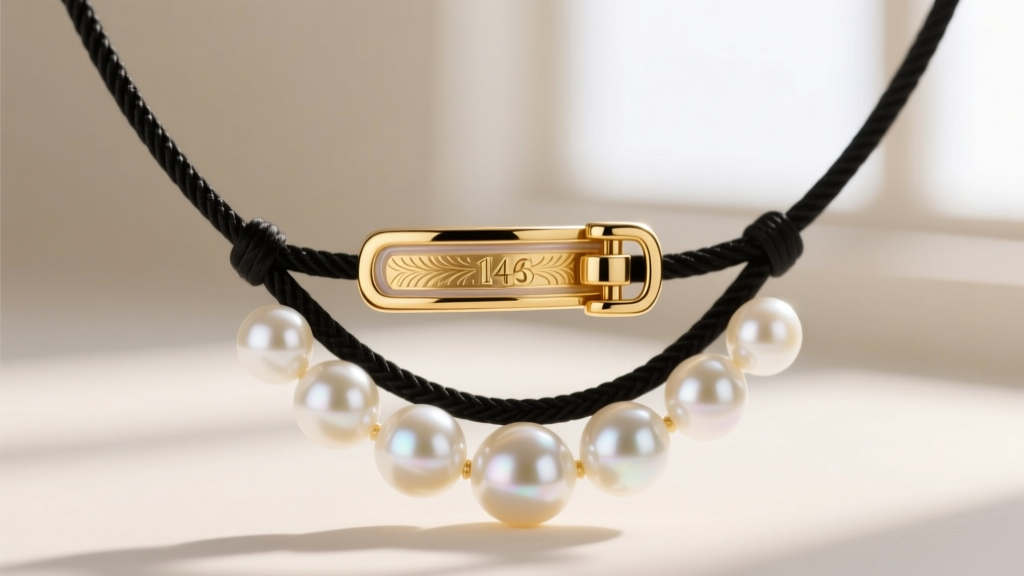
Furthermore, the cord gauge must be matched to the pearl weight. A strand of heavy 13mm South Sea pearls will snap a standard 0.6mm silk cord. For South Sea and large Edison pearls, the tie cord must be a minimum of 1.0mm to 1.2mm in thickness, often utilizing braided leather or reinforced nylon. For delicate Akoya pearls, traditional Size F (0.6mm) or Size G (0.8mm) Japanese silk remains the gold standard for its luxurious drape.
Neckline Engineering: How to Style the Drop
The genius of the tie pearl necklace lies in its geometric adaptability. Gifting this piece means gifting a masterclass in neckline engineering. Here is how the recipient can manipulate the slide clasp to complement specific garments:
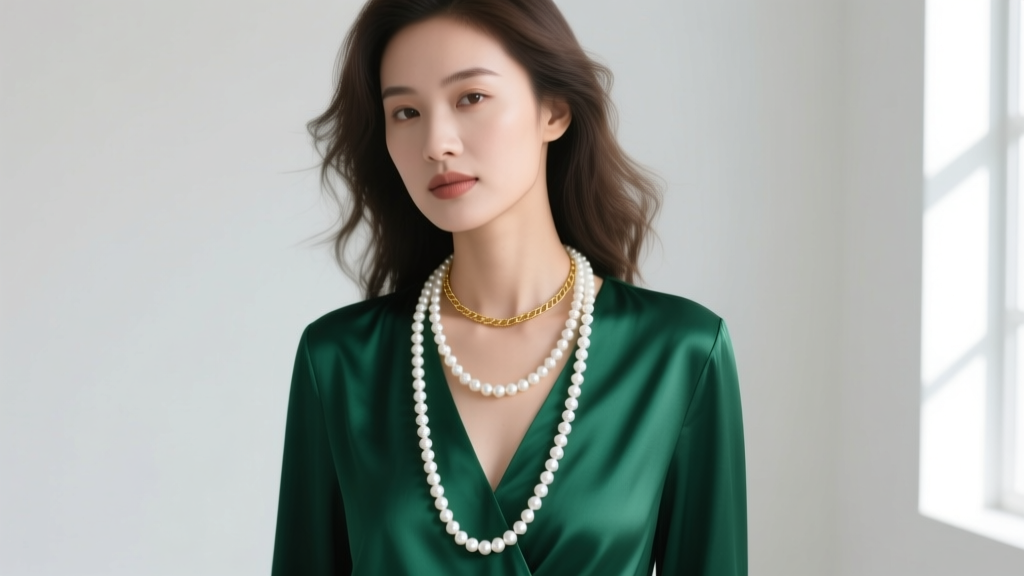
- The Plunging V-Neck: By dropping the slide clasp to the 28-to-30-inch mark, the pearls frame the décolletage and create a vertical line that elongates the torso, perfectly mirroring the garment's cut.
- The Turtleneck or Crew Neck: Pulling the slide up to the 16-to-18-inch mark transforms the piece into a choker-Y-drop hybrid. The collar sits snugly against the throat while the 'tail' of the tie rests elegantly over the fabric, breaking up the monotony of heavy winter knits.
- The Asymmetrical / Off-the-Shoulder: For avant-garde styling, the wearer can pull one side of the cord tighter than the other, positioning the slide clasp near the collarbone on one side while letting the tails hang asymmetrically. This is highly favored in editorial fashion, as noted in Vogue's recent pearl trend analyses.
2026 Market Pricing & Material Tiers
Understanding the pricing architecture ensures you do not overpay for inferior hardware or misgraded pearls. The 2026 market is segmented into three distinct gifting tiers:
"A true investment-grade tie necklace marries the luster of the pearl with the precision of the clasp. Never compromise on the slide mechanism; it is the engine of the garment's silhouette." — Master Jeweler Bench Note
Tier 1: The Accessible Luxury ($250 - $600)
Features AAA-grade Freshwater or Edison pearls on continuous knotted strands or nylon cords. Hardware is typically 14k gold-filled or solid 10k/14k gold with basic silicone inserts. Ideal for graduations, bridesmaids, and holiday gifting.
Tier 2: The Heirloom Standard ($800 - $2,200)
Features Hanadama-certified Akoya pearls with exceptional mirror luster. The cord is premium Japanese silk, and the slide clasp is solid 18k gold, often accented with a single bezel-set diamond or sapphire. The terminal pearls are secured with French wire (gimp) to prevent silk fraying. Perfect for significant anniversaries and bridal gifts.
Tier 3: The Haute Joaillerie ($3,500 - $8,000+)
Showcases South Sea or rare Tahitian pearls. The 'tie' mechanism may abandon silk entirely in favor of an articulated 18k gold rope chain that slides through a pavé-diamond-encrusted collar. These are museum-quality pieces reserved for landmark milestones.
Longevity & Failure Mode Prevention
To ensure your gift endures, educate the recipient on the specific care requirements of a tie pearl necklace. The friction of the slide clasp, combined with environmental factors, creates unique maintenance needs.
First, never pull the slide clasp by the pearls. The recipient must always pinch the metal slide itself with two fingers to move it; pulling the pearls will stretch the silk cord prematurely and weaken the drill holes. Second, perfume and hairspray are the enemies of both pearl nacre and silk. The necklace should always be the 'last thing on, first thing off.' Finally, if the tie necklace utilizes a silk cord, it should be inspected annually by a bench jeweler. Silk stretches and degrades from natural skin oils. If the cord begins to look 'fuzzy' near the slide clasp or the terminal knots, it requires immediate restringing to prevent a catastrophic break.
By selecting the correct pearl grade, demanding a silicone-lined clasp, and matching the piece to the recipient's lifestyle, the tie pearl necklace transcends being a mere accessory—it becomes a dynamic, lifelong sartorial tool.


