How to Style Sweat-Proof Golf Necklaces on the Course
Learn how to choose, style, and maintain sweat-proof golf necklaces. Discover the best materials, lengths, and pendants for the course and clubhouse.

The Unique Challenges of Jewelry on the Golf Course
Golf is a game of precision, focus, and tradition. When stepping onto the first tee, your accessories should complement your attire without disrupting your swing or violating clubhouse dress codes. However, the golf course presents a uniquely hostile microclimate for fine jewelry. Over the course of a four-hour round, your necklaces are subjected to high UV exposure, fluctuating body temperatures, and a combination of sweat and chemical sunscreens that can rapidly degrade inferior metals.
Choosing the right golf necklaces requires a strategic approach that balances aesthetic appeal with material science. Whether you are navigating the strict dress codes of a private country club or simply want a durable piece that transitions seamlessly from the 18th hole to the clubhouse bar, this step-by-step guide will ensure your jewelry performs as well as your short game.
The Chemistry of the Course: Sweat and Sunscreen
Human sweat has an average pH ranging from 4.0 to 6.0, making it mildly acidic. When this acidity combines with the active ingredients in modern sunscreens—specifically avobenzone and zinc oxide—it creates a highly corrosive environment for porous or alloyed metals. Sterling silver (925), for instance, contains 7.5% copper. When exposed to sunscreen and sweat, the copper oxidizes rapidly, leaving a green or black tarnish on your skin and permanently dulling the metal. To avoid this, golfers must prioritize inert, non-reactive metals that can withstand hours of direct chemical exposure.
Step 1: Selecting Sweat-Proof Materials
Not all metals are created equal when it comes to outdoor sports. Below is a comprehensive breakdown of the best materials for golf necklaces, evaluating their resistance to the specific elements found on the links.
| Material | Grade / Specification | Sweat Resistance | Sunscreen Resistance | Price Range |
|---|---|---|---|---|
| 316L Stainless Steel (PVD) | Marine-grade | Excellent | Excellent | $40 - $120 |
| 14k Solid Gold | 58.5% Pure Gold | Very Good | Very Good | $150 - $450 |
| Titanium | Grade 5 (Ti-6Al-4V) | Excellent | Excellent | $60 - $200 |
| Sterling Silver | 925 + Rhodium Plating | Fair (if scratched) | Poor | $30 - $90 |
Understanding PVD Coating Technology
For golfers who want the look of gold or black titanium without the premium price tag, Physical Vapor Deposition (PVD) is the gold standard. According to material science data referenced by the Gemological Institute of America (GIA), PVD involves vaporizing a metal in a vacuum chamber and bonding it to a 316L stainless steel base at the molecular level. This creates a coating that is up to 10 times thicker and more durable than traditional electroplating, meaning it will not flake or tarnish when exposed to acidic sweat or SPF 50 lotions.

Step 2: Dialing in the Perfect Length for Polo Shirts
The length of your necklace directly impacts both your visual focus and the physical mechanics of your golf swing. A pendant that swings wildly can be a massive distraction during your backswing and downswing.
The Kinematics of the Golf Swing
During a driver swing, the body rotates at speeds exceeding 90 mph, generating significant centrifugal force. If your necklace is 20 inches or longer, the pendant will swing outward, potentially striking your chin or collarbone, and disrupting your eye line at the apex of your backswing. Furthermore, longer chains tend to get caught in the plackets of zip-neck polos or button-down collars, violating the clean aesthetic required by most private club dress codes.
- 16 Inches (Choker/Collar): Sits high on the neck. Ideal for V-neck or zip-neck performance polos. Keeps the chain entirely clear of the collar.
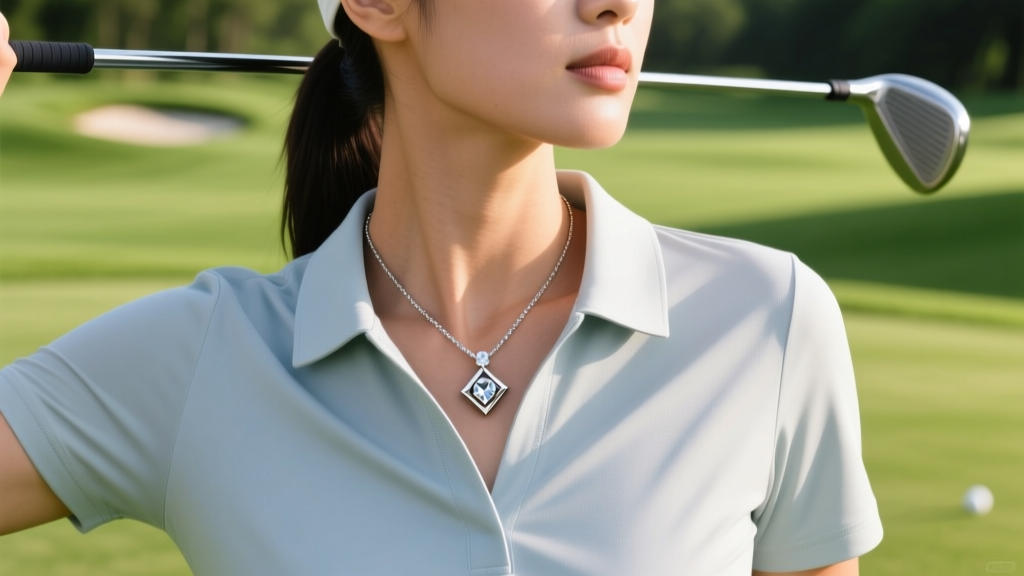
- 18 Inches (Base of Neck): The universal sweet spot for golfers. Rests perfectly just below the collarbone, remaining stationary during rotational movements and tucking neatly under a buttoned polo collar.
- 20+ Inches (Chest): Strictly avoid on the course. Too much movement, high risk of visual distraction, and prone to tangling with apparel.
Step 3: Choosing Functional and Subtle Pendants
While bare chains are incredibly popular, pendants on the golf course should ideally serve a purpose or maintain a low-profile geometric shape. Heavy, oversized pendants act as pendulums that disrupt your physical equilibrium during the swing.

Functional Golf Jewelry
The intersection of utility and style has given rise to functional golf necklaces. Many specialized jewelers now craft pendants that double as magnetic ball markers or divot repair tools. A brushed titanium pendant featuring a hidden, detachable magnetic ball marker allows you to mark your ball on the green without digging through your pockets. When selecting a functional pendant, ensure the magnet is encased in a non-corrosive housing (like 316L steel or ceramic) to prevent rust from morning dew on the greens.
Step 4: Navigating Clubhouse Dress Codes
The USGA Rules of Golf do not strictly regulate jewelry, but individual country clubs enforce rigorous dress codes that extend to accessories. Flashy, oversized diamond-encrusted crosses or heavy Cuban link chains are often frowned upon in traditional clubhouses, viewed as distracting or ostentatious. Opt for understated elegance: a simple 18-inch 14k gold rope chain, a subtle pearl pendant for female golfers, or a minimalist titanium bar necklace. The goal is to project a polished, athletic aesthetic that respects the traditions of the host venue.
Step 5: Post-Round Maintenance and Sunscreen Removal
Even the most resilient metals like PVD-coated steel and 14k gold require proper post-round maintenance. Sunscreen leaves a microscopic film that can dull the luster of your chain over time if allowed to cure into the links.
Pro-Tip: Never use ultrasonic jewelry cleaners on PVD-coated metals or golf necklaces with embedded neodymium magnets, as the high-frequency vibrations and heat can compromise the molecular bond of the coating and demagnetize the marker.
The 3-Step Post-Round Cleaning Protocol
- Prepare the Solution: Mix three drops of mild, phosphate-free dish soap (like Dawn) into eight ounces of lukewarm distilled water. Avoid tap water, as the chlorine and fluoride can leave hard water spots on titanium and gold.
- Agitate Gently: Submerge the necklace for exactly three minutes. Use a baby-soft toothbrush to gently sweep the bristles through the chain links, dislodging trapped zinc oxide and dead skin cells.
- Dry Completely: Rinse with distilled water and pat dry with a lint-free microfiber cloth. Ensure the clasp and any magnetic components are 100% dry before storing to prevent mechanical seizing.
Course-to-Clubhouse Transition Styling
The modern golfer rarely goes straight home after the 18th hole; the post-round clubhouse lunch or dinner is a staple of the sport. Your necklace should transition effortlessly from the fairway to the dining room. A 14k solid gold Figaro chain or a sleek, dark PVD-coated box chain pairs exceptionally well when layered under a quarter-zip sweater or a casual blazer. By prioritizing sweat-proof materials, precise 18-inch lengths, and understated pendants, you ensure your golf necklace remains a sophisticated, functional staple in your athletic wardrobe for every season to come.