Fix Your Charm Connector Necklace: Tangling, Clasps & Chain Fixes
Is your charm connector necklace tangling or breaking? Discover expert troubleshooting tips to fix clasps, stop knotting, and secure heavy charms.

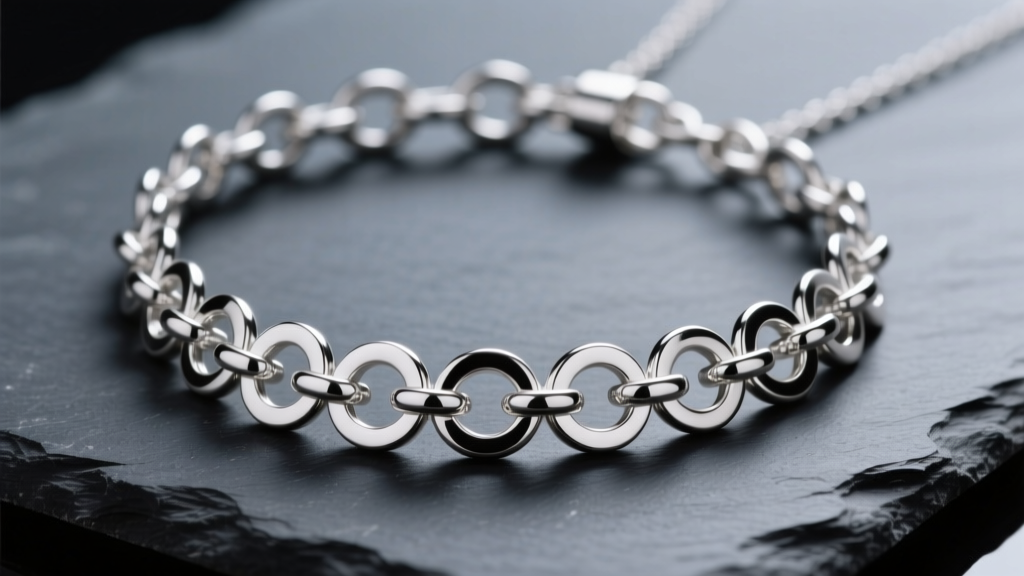
A charm connector necklace is a masterclass in modular jewelry design, allowing you to curate a highly personalized collection of pendants, lockets, and talismans on a single, versatile chain. However, the mechanical complexity of a multi-loop connector system introduces specific structural vulnerabilities. From charms perpetually flipping upside down to lobster clasps failing under dynamic weight, these issues are rarely defects in the metal itself; they are almost always failures of geometric proportion and metallurgical matching.
If your modular chain is underperforming, this troubleshooting guide will help you diagnose the exact mechanical failure points and apply professional-grade solutions to restore your necklace's functionality and drape.
The Anatomy of a Charm Connector Necklace (and Why It Fails)
Unlike a standard cable chain where pendants hang from a single, centralized bail, a charm connector necklace features integrated loops or 'stations' spaced at regular intervals. These stations are typically soldered jump rings or stamped open links. The primary failure points in these systems occur at three critical junctions: the bail-to-connector interface, the clasp-to-end-ring connection, and the structural integrity of the chain links under asymmetric load.
Understanding the metallurgy of your chain is the first step in troubleshooting. According to the Gemological Institute of America (GIA), proper jewelry care and maintenance require understanding the specific alloy properties of your metals. For instance, 925 sterling silver is relatively soft and prone to work hardening, meaning the repeated micro-stresses of heavy charms swinging can cause the silver links to become brittle and snap over time. Conversely, 316L stainless steel offers immense tensile strength but lacks the malleability required for easy at-home link repairs.
Troubleshooting 1: The Dreaded Charm Tangling & Flipping
The most common complaint with charm connector necklaces is charms that constantly flip upside down or tangle around the main chain axis. This is not bad luck; it is a failure of the bail-to-loop ratio.
The Bail-to-Loop Ratio Fix
Tangling occurs when the charm's bail inner diameter (ID) is significantly smaller than the connector link's outer width. When the bail is too tight, it acts as a fulcrum. As you move, the charm cannot swing freely along the horizontal plane of the connector loop; instead, it binds, flips over the top of the link, and wraps around the chain.
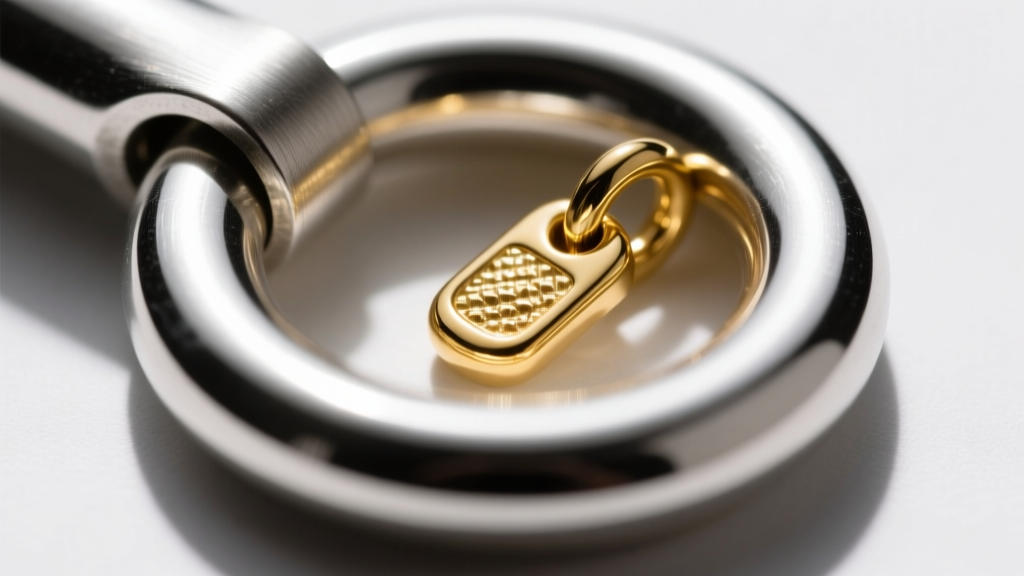
The Solution: You must introduce an adapter that restores a proper range of motion. Use a 20-gauge or 18-gauge round jump ring (typically 4mm or 5mm in outer diameter) as a bridge. Attach the jump ring to the connector loop, and then hang the charm from the jump ring. This creates a dual-axis hinge system, allowing the charm to rotate 360 degrees independently of the chain's movement. Ensure you use split rings or soldered jump rings for the adapter to prevent the charm from sliding off during wear.
Center of Gravity Imbalances
If a charm is top-heavy (e.g., a wide, flat disc with a small top-drilled hole), it will naturally flip backward against the chest. To solve this, apply a tiny drop of clear, flexible jewelry resin (like E6000 Fabri-Tac or a specialized UV resin) to the back of the charm's lower hemisphere to create a microscopic counterweight, or switch to a 'Y-fitting' bail that lowers the charm's hanging point.
Troubleshooting 2: Clasp Slippage and Connector Failure
Standard lobster clasps are the industry default, but they are notoriously inadequate for heavy charm connector necklaces. When a necklace carries 15 to 30 grams of silver or gold charms, the dynamic force of walking or bending over can pull the clasp lever open, or cause the clasp to slip through the end ring and slide down the chain.
Upgrading to Locking Carabiners and Magnetic Latches
As detailed in findings guides by wholesale suppliers like Halstead Bead, upgrading your clasp hardware is the most effective way to secure a modular chain. If your charms are heavy, replace the standard lobster clasp with a locking carabiner clasp or a magnetic clasp with a secondary safety latch.
- Locking Carabiner Clasps: These feature a threaded barrel that screws down over the lever, making accidental opening physically impossible. They are ideal for chains carrying over 15g of charms.
- Double-Latch Magnetic Clasps: Utilizing rare-earth neodymium magnets encased in 14k gold or sterling silver, these snap together securely but require a specific twisting motion to release, preventing chain slippage.
- End-Ring Sizing: Ensure the end ring (the loop the clasp grabs) is at least 1.5x the width of the clasp's interior jaw. If the clasp jaw is 4mm wide, the end ring should be at least 6mm to prevent the clasp from slipping through when the chain is pulled taut.
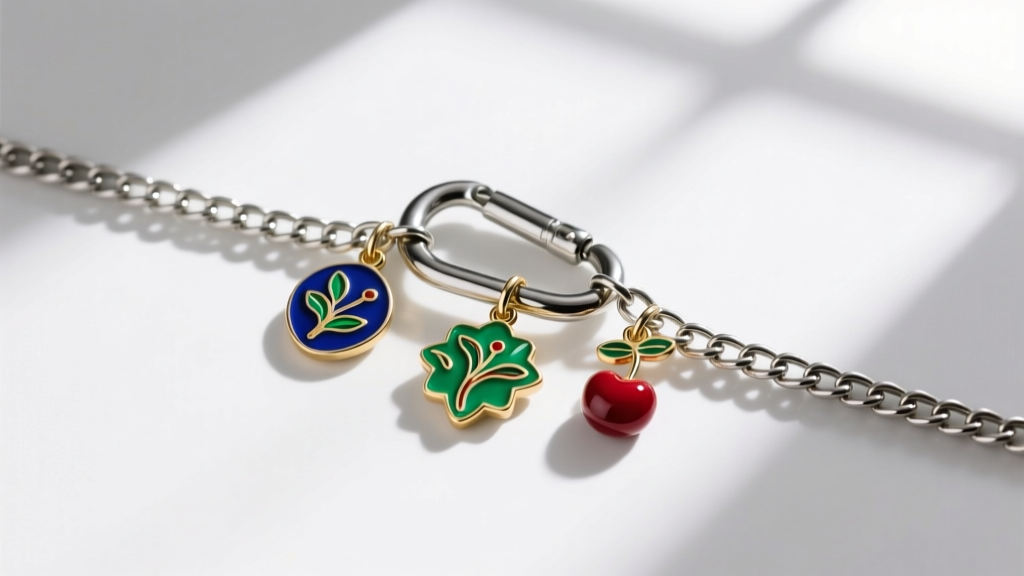
Troubleshooting 3: Chain Stretch and Metal Fatigue
A charm connector necklace is only as strong as its weakest soldered joint. When charms are clustered on one side of the neck, they create asymmetric tension that can stretch the links on the opposite side. This is especially prevalent in stamped (unsoldered) chains and soft alloys like high-karat gold or pure silver.
Chain Gauge vs. Charm Weight Limits
To prevent permanent chain deformation, you must match the chain's wire gauge and material to the total weight of your charm collection. Below is a diagnostic matrix for common charm connector materials:
| Chain Material | Minimum Wire Gauge | Max Safe Charm Load | Primary Vulnerability |
|---|---|---|---|
| 925 Sterling Silver | 1.5mm - 2.0mm | 10g - 15g | Work hardening, link stretching |
| 14k Gold-Filled | 1.2mm - 1.5mm | 8g - 12g | Clasp ring wear, brass core exposure |
| 316L Stainless Steel | 1.0mm - 1.2mm | 20g+ | Clasp lever stiffness, rigid drape |
| 14k Solid Yellow Gold | 1.2mm - 1.5mm | 12g - 18g | Malleability, link deformation |
Pro-Tip for Stretched Links: If your sterling silver rolo chain has already stretched, the links will appear oval rather than perfectly round. While you cannot un-stretch work-hardened silver without a professional jeweler's annealing torch, you can reinforce the stretched sections by weaving a secondary, ultra-fine (0.8mm) cable chain through the links and securing it at the clasps to bear the structural load.
Preventative Maintenance for Modular Chains
Troubleshooting is reactive; maintenance is proactive. To ensure your charm connector necklace remains functional and tangle-free, implement the following maintenance protocol:
- The Station Stopper Method: If your charms slide too close to the center and clump together, use 1.5mm inner-diameter silicone O-rings. Slide them onto the chain on either side of the connector loops to act as invisible bumpers, keeping your charms evenly spaced.
- Ultrasonic Caution: Never put a fully loaded charm connector necklace into an ultrasonic cleaner. The high-frequency vibrations can loosen the prongs on pavé-set charms or fracture the solder joints on the connector loops. Clean the chain and charms separately.
- Storage Geometry: Never store a charm necklace in a loose pile. The weight of the charms will compress the chain links, leading to micro-knots. Always hang the necklace vertically from a padded jewelry stand, allowing gravity to pull the chain straight and keep the charms aligned.
"The secret to a flawless modular necklace isn't just in the aesthetic selection of the charms, but in the mechanical sympathy for the chain. Respect the tensile limits of your alloys, and the jewelry will last generations." — Master Bench Jeweler Adage
By addressing the geometric mismatches at the bail, upgrading your clasp hardware to handle dynamic loads, and respecting the metallurgical limits of your chain, you can transform a frustrating, tangled charm connector necklace into a flawless, heirloom-quality piece of personalized art.


