Ultimate Care Guide for Your Solid Gold Knot Necklace
Learn how to safely clean, polish, and store your gold knot necklace. Expert tips on removing tarnish, avoiding damage, and maintaining its brilliant shine.

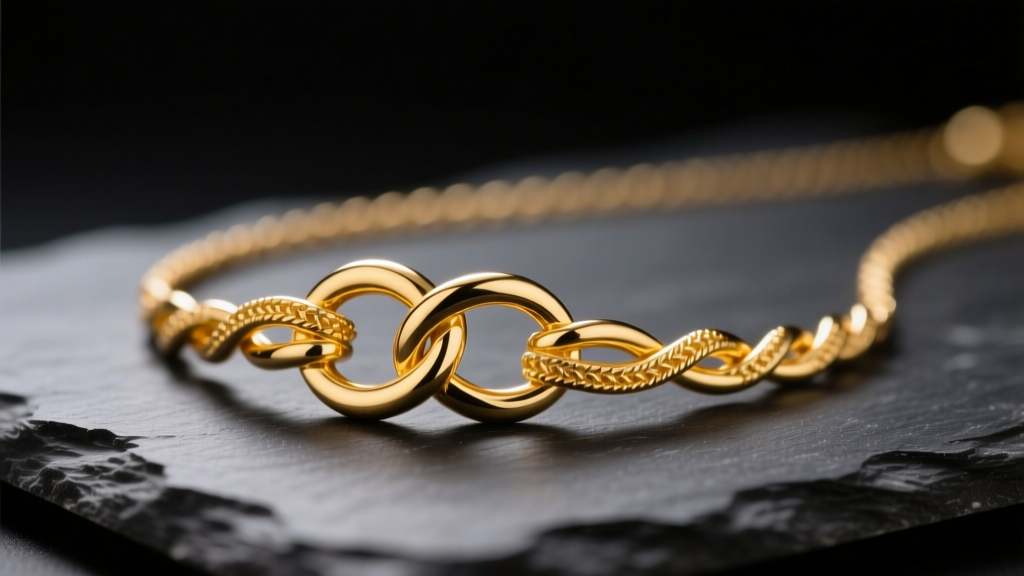
The Metallurgy of Your Gold Knot Necklace: Why Care Matters
A gold knot necklace is more than just a beautiful accessory; it is a symbol of eternity, connection, and unbreakable bonds. However, the very nature of its design—overlapping loops, twisted wires, and intricate undercuts—makes it uniquely susceptible to trapping sebum, cosmetic residues, and environmental pollutants. To properly care for this piece, you must first understand the metallurgy of the gold alloy you own.
Pure 24k gold is virtually impervious to tarnish, but it is far too soft to hold the complex structural integrity of a knot design. Therefore, jewelers use karat gold alloys. According to the Gemological Institute of America (GIA), 14k gold contains 58.5% pure gold, while 18k contains 75%. The remaining percentages are composed of copper, silver, zinc, or palladium. These alloy metals are what give your necklace its color (yellow, rose, or white) and its tensile strength, but they are also the metals that can oxidize, react to harsh chemicals, or dull over time. Rose gold, heavily alloyed with copper, can develop a slight patina if exposed to sulfur-rich environments, while white gold relies on a microscopic layer of rhodium plating that can be easily stripped by abrasive cleaning methods.
The Anatomy of the Knot: Identifying Grime Traps
Unlike a simple cable chain or a flat pendant, a knot necklace features deep crevices where the metal crosses over itself. In cast knot designs, these 'undercuts' can harbor months of compacted lotion, dead skin cells, and soap scum. When this debris accumulates, it not only dulls the reflective surface of the gold but can also cause localized skin irritation on your chest. Furthermore, if your knot necklace features micro-pave diamonds or enamel accents nestled within the loops, aggressive cleaning can dislodge stones or crack the glass-like enamel. Understanding these structural vulnerabilities is the first step in establishing a safe, effective maintenance routine.
Step-by-Step Deep Cleaning Protocol
Forget harsh commercial dips and abrasive toothpaste. To safely restore the luster of your gold knot necklace without damaging the alloy or any gemstone accents, follow this master jeweler-approved protocol.
- Prepare the Basin: Never clean jewelry directly over an open sink drain. Place a silicone mat or a soft towel in the bottom of a glass bowl to prevent accidental scratching if the necklace slips from your hands.
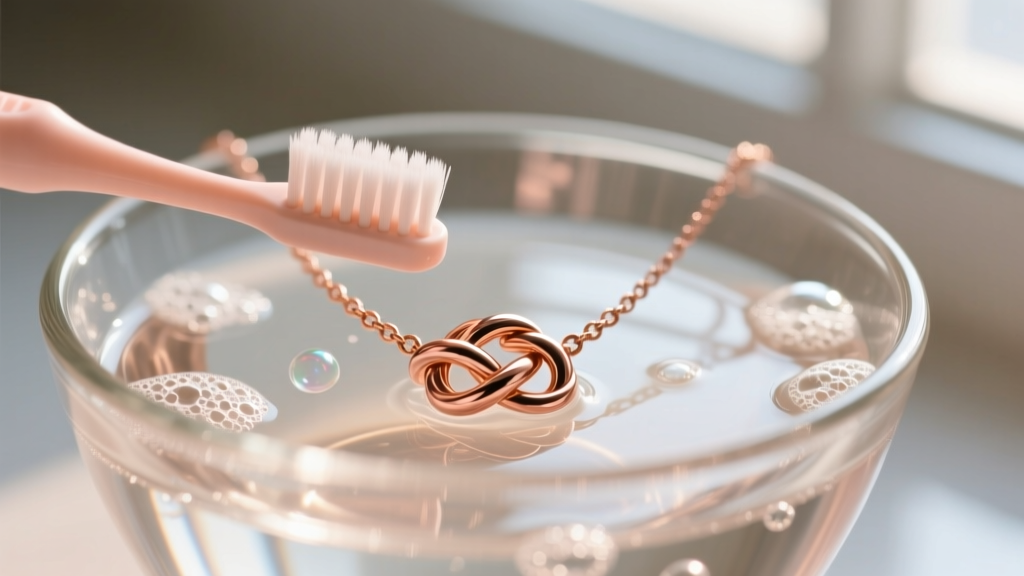
- Mix the Solution: Fill the bowl with lukewarm distilled water (approximately 85°F). Tap water contains chlorine and hard minerals that can leave microscopic spots on high-polish gold. Add exactly three drops of a mild, phosphate-free dish soap, such as Dawn.
- The Soak: Submerge the gold knot necklace and let it soak for 10 to 15 minutes. This allows the surfactants in the soap to break down the lipid bonds of skin oils trapped in the knot's crevices.
- Agitate Gently: Using an extra-soft baby toothbrush or a #6 Kolinsky sable detail brush, gently sweep the bristles into the overlapping loops of the knot. Use circular motions, never aggressive back-and-forth scrubbing, which can cause micro-scratches on the gold surface.
- The Rinse: Rinse the necklace thoroughly under a gentle stream of distilled water to remove all soap residue.
- Dry and Polish: Pat the piece dry with a lint-free microfiber cloth. For hard-to-reach moisture inside the knot, use a can of compressed air or a hair dryer on the 'cool' setting. Finish by lightly buffing the accessible outer curves with an untreated jeweler's polishing cloth.
Chemical Enemies: What to Avoid at All Costs
Gold is a noble metal, but the alloys mixed with it are highly reactive. Exposing your gold knot necklace to the wrong chemicals can lead to irreversible damage, including stress corrosion cracking—a phenomenon where the metal becomes brittle and snaps under minimal pressure.
| Chemical / Environment | Effect on Karat Gold Alloys | Risk Level |
|---|---|---|
| Chlorine (Pools, Bleach) | Causes stress corrosion cracking; weakens the knot's structural loops. | Critical |
| Bromine (Hot Tubs, Spas) | Similar to chlorine; rapidly degrades copper and silver alloys. | Critical |
| Hairspray & Perfume | Alcohol and aerosols create a sticky film that traps dirt in the crevices. | Moderate |
| Sulfur (Onions, Garlic) | Tarnishes the copper in rose gold and silver in yellow gold alloys. | Moderate |
| Abrasive Pastes (Toothpaste) | Contains silica; scratches high-polish surfaces and strips rhodium. | High |
The White Gold Knot Caveat: Rhodium Plating
If your knot necklace is crafted from white gold, it is essential to understand that the bright, silvery finish is not the natural color of the metal. White gold is naturally a pale, yellowish-gray alloy. To achieve a brilliant white shine, it is electroplated with a microscopic layer of rhodium, a platinum-group metal. Over time, friction from clothing and improper cleaning will wear this plating away, particularly on the high-contact outer edges of the knot. Never use ultrasonic cleaners or harsh polishing pastes on white gold, as the high-frequency vibrations and abrasives will strip the rhodium prematurely. When the yellowish tint begins to show through, take the necklace to a professional jeweler for a simple re-plating service.
"Ultrasonic cleaners operate at frequencies around 40kHz. While excellent for cleaning solid, heavy gold chains, introducing a delicate, hollow-cast knot necklace or one with tension-set stones into an ultrasonic bath can cause metal fatigue or shake gems loose. Hand-cleaning remains the gold standard for intricate knot designs." — Master Bench Jeweler Insights

Tangling and Storage Solutions
The interlocking loops of a knot necklace make it a notorious culprit for tangling, both with itself and with other chains in your jewelry box. When a knot necklace tangles, the friction between the chains can cause micro-abrasions on the gold surface. To prevent this, utilize the 'straw trick' for storage: unclasp the necklace, thread one end of the chain through a standard plastic drinking straw, and re-clasp it. This keeps the chain rigid and entirely eliminates the possibility of knotting. Alternatively, hang the necklace on a dedicated, velvet-lined jewelry stand. Store it in an anti-tarnish pouch infused with activated charcoal or silver-strip paper to absorb ambient sulfur and moisture, ensuring the alloy remains bright between wears.
When to Seek Professional Maintenance
While your bi-weekly home cleaning routine will maintain the surface luster, a gold knot necklace requires professional attention every 12 to 18 months. A certified jeweler, such as those accredited by Jewelers of America, will inspect the structural integrity of the knot's solder points, check for metal fatigue in the wire loops, and perform a professional steam clean that safely blasts debris out of the deepest undercuts without the use of damaging chemicals. If your knot design includes gemstone accents, the jeweler will also check the prongs and bezels for wear, ensuring your symbolic piece remains secure and brilliant for a lifetime.


