The Brown Agate Necklace Trend: 2026 Styling & Buyer's Guide
Discover why the brown agate necklace is the definitive 2026 jewelry trend. Learn gemology, layering formulas, and how to spot dyed stones.

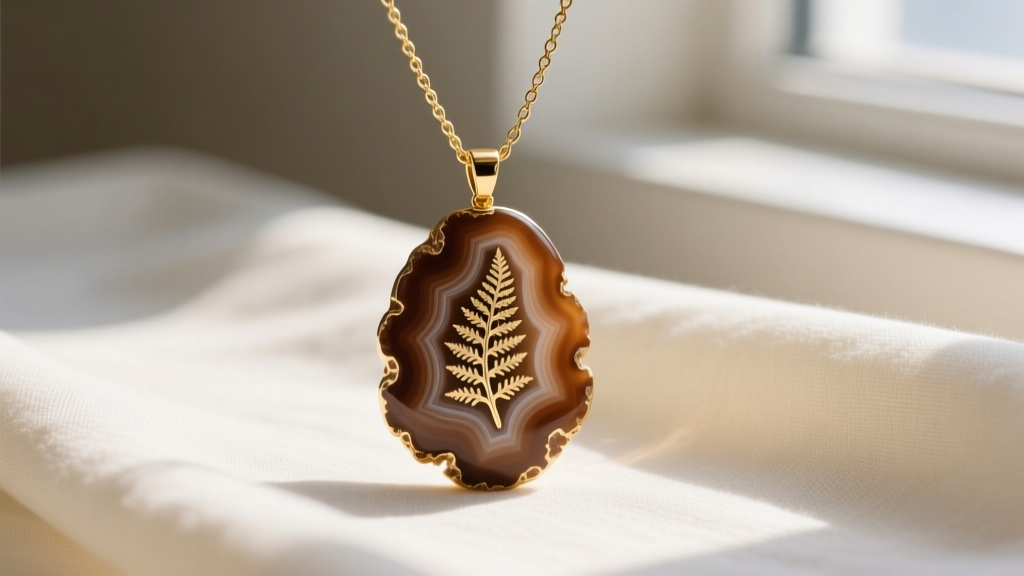
The 2026 Resurgence: Why Brown Agate is Dominating
As we navigate the 2026 jewelry landscape, the industry is experiencing a definitive shift away from the high-dopamine, hyper-saturated gemstones of previous years. In its place, the 'Grounded Luxury' aesthetic has taken root, prioritizing organic textures, earthy palettes, and mineral-forward designs. At the absolute epicenter of this movement is the brown agate necklace. Once relegated to vintage souvenir shops and bohemian festival wear, brown agate has been reclaimed by high-end contemporary jewelers and independent lapidary artists alike. The stone's rich, terracotta-adjacent hues offer a sophisticated neutrality that bridges the gap between statement jewelry and everyday wearability.
The surge in demand is not merely aesthetic; it is deeply tied to a broader cultural desire for grounding and tactile connection to the earth. According to recent trend forecasting from the Gemological Institute of America (GIA), consumers are increasingly seeking out stones with visible natural inclusions and organic banding over flawless, synthetic-looking alternatives. A brown agate necklace provides exactly this: a wearable piece of geological history that feels both deeply personal and effortlessly chic.
The Gemology: Natural vs. Treated Brown Agate
To shop intelligently, you must understand what you are buying. Agate is a cryptocrystalline variety of silica, primarily chalcedony, characterized by its fineness of grain and brightness of color. However, true, naturally occurring brown agate is relatively rare compared to its gray or clear counterparts. When you encounter a brown agate necklace, it typically falls into one of three gemological categories:
- Dendritic Agate: Often white, gray, or pale brown with distinct, fern-like inclusions of manganese or iron oxide. These inclusions look like painted landscapes or botanical fossils.
- Sardonyx: A highly prized variety featuring alternating, parallel bands of brown-to-red sard and white onyx. This is the classic material for cameos and high-end beaded strands.
- Botswana Agate: Features subtle, muted bands of peach, salmon, and light brown, highly sought after for its soothing, matte-like polish.
The critical pitfall for buyers is the prevalence of dyed stones. Because gray chalcedony is highly porous, it is routinely treated with sugar solutions and sulfuric acid, or iron oxide dyes, to produce a uniform, artificial brown. According to the Mindat mineral database, these treatments are permanent but significantly lower the gemological value of the stone. You can spot dyed agate by examining the stone under a 10x jeweler's loupe; if you see concentrated pools of dark brown dye trapped in microscopic surface fractures or along the banding lines, the stone has been treated.
Price & Value Matrix: What Should You Pay?
Pricing for a brown agate necklace varies wildly based on the origin of the stone, the quality of the lapidary work, and the hardware used. Below is a 2026 market breakdown to help you benchmark your purchases and avoid overpaying for mass-produced, dyed inventory.
| Agate Type & Style | Material Grade | Typical Price Range (USD) | Value Retention |
|---|---|---|---|
| Mass-Produced Dyed Bead Strand | Low (Treated Gray Chalcedony) | $15 - $45 | Poor (Costume jewelry) |
| Natural Dendritic Agate Cabochon Pendant | Medium-High (Unique Inclusions) | $80 - $250 | Moderate (Artisan value) |
| Genuine Sardonyx Carved Cameo Necklace | High (Natural Banded) | $400 - $1,200+ | High (Collector/Heirloom) |
| Designer Botswana Agate with 18k Gold | Premium (Top Tier Polish & Hardware) | $1,500 - $3,500 | High (Brand & Material) |
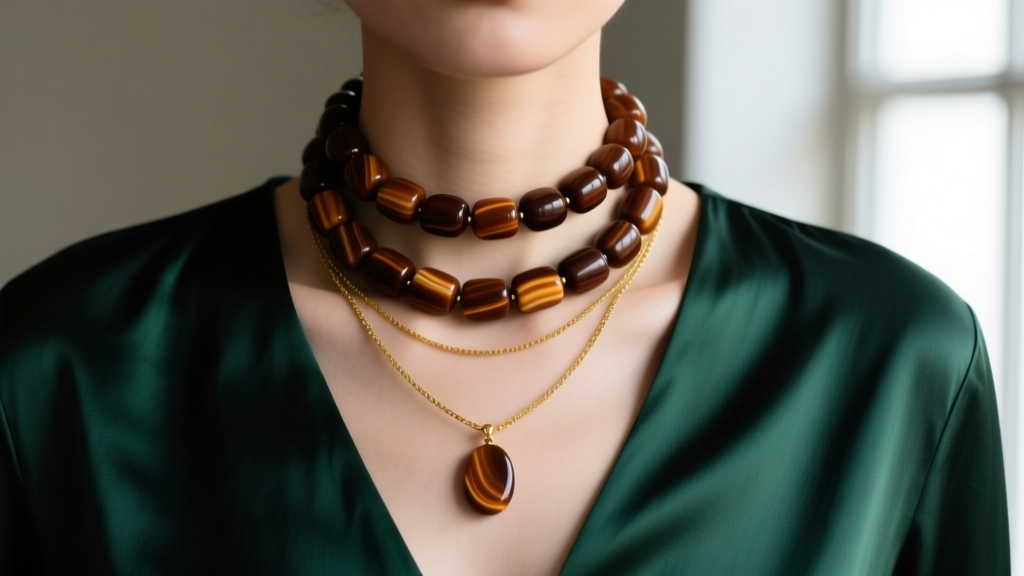
Masterclass: Layering Your Brown Agate Necklace
The true versatility of the brown agate necklace shines when it is integrated into a curated stack. In 2026, the 'clutter-core' layering of the past has evolved into intentional, structured stacking. The goal is to create depth without tangling, utilizing varying chain textures and precise length intervals. Here is a definitive, three-piece layering formula designed specifically for earth-toned agates.
The 'Grounded Earth' Stack Formula
- The Anchor (14 to 15 inches): Start with a strand of 4mm to 6mm natural sardonyx or matte brown agate beads. This sits at the collarbone and provides the foundational earthy texture. Avoid shiny, polished beads here; a matte finish absorbs light and looks more expensive.
- The Focal Point (18 inches): Introduce a 14k gold vermeil or solid gold snake chain featuring a single, bezel-set dendritic agate pendant. The solid metal of the snake chain contrasts beautifully with the organic bead strand above it. Ensure the pendant is roughly 12mm to 15mm in diameter—large enough to draw the eye, but small enough to remain elegant.
- The Elongator (22 to 24 inches): Finish with a lightweight, 14k gold paperclip chain. The open, geometric links of the paperclip chain introduce a modern, architectural element that prevents the stack from looking overly rustic or dated.
Neckline Pairings for Maximum Impact
A brown agate necklace must be matched to the architecture of your clothing. For deep V-necks and plunge necklines, utilize a Y-chain or lariat style that mimics the downward angle of the fabric, elongating the torso. If you are wearing a high-necked turtleneck or a structured crewneck sweater, opt for a long, opera-length (28 to 32 inches) strand of brown agate beads worn doubled, creating a rich, textural frame around the face. For boatnecks and off-the-shoulder silhouettes, a tight, 14-inch brown agate choker provides a striking horizontal contrast to the exposed collarbones.
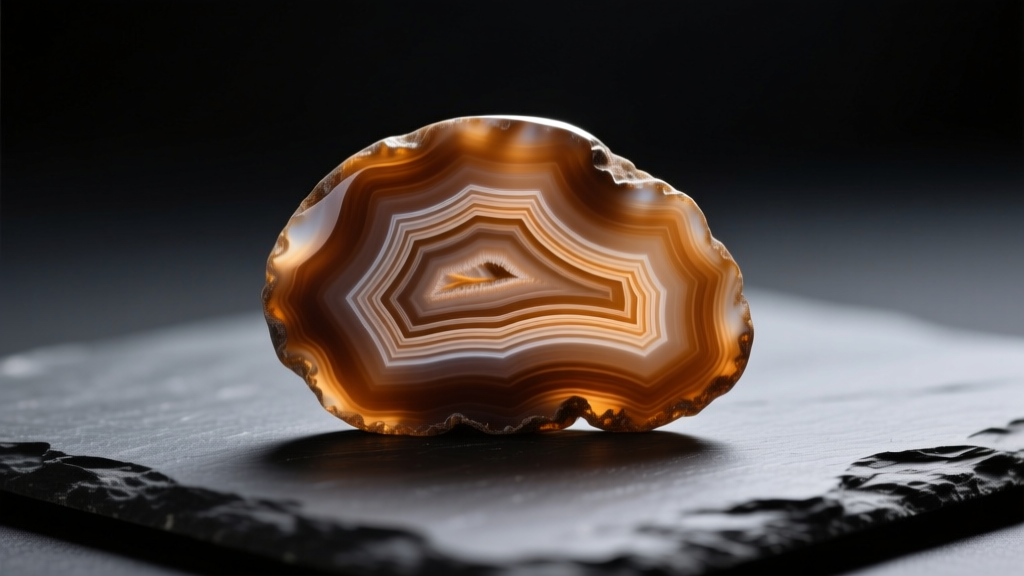
Care & Maintenance: Preventing Damage and Dye Bleed
Agate registers between 6.5 and 7 on the Mohs scale of hardness, making it relatively durable for daily wear. However, its cryptocrystalline structure and potential chemical treatments require specific care protocols to maintain its luster and structural integrity.
Never place a brown agate necklace in an ultrasonic cleaner. The high-frequency cavitation can cause thermal shock, particularly in dendritic agates that contain microscopic liquid inclusions or natural internal fractures. Furthermore, if your stone is dyed, the harsh chemicals and heat used in ultrasonic and steam cleaning will strip the color, leaving you with a dull, gray stone.
Expert Troubleshooting Tip: If you suspect your brown agate necklace is dyed and you notice a slight color transfer on your skin during hot weather, immediately wipe the stone down with a soft, dry microfiber cloth. To seal minor surface dye bleed, a professional jeweler can apply a microscopic layer of optically clear, jewelry-grade resin to the surface, though this should only be done on inexpensive fashion pieces, never on natural, high-grade sardonyx.
For routine cleaning, use a solution of lukewarm water and a few drops of mild, phosphate-free dish soap. Gently agitate the water, submerge the necklace for no more than three minutes, and use a baby-soft toothbrush to lightly sweep the back of the pendant where skin oils and cosmetics accumulate. Rinse thoroughly with distilled water to prevent hard water spots, and lay flat on a lint-free towel to air dry. Store your brown agate necklace in a soft pouch separate from diamonds or sapphires, which possess a higher Mohs hardness and can easily scratch the agate's polished surface.
Final Verdict
The brown agate necklace is not a fleeting micro-trend; it is a cornerstone of the 2026 earthy-mineral aesthetic. By understanding the gemological differences between natural dendritic inclusions and artificial dyes, and by applying structured, intentional layering techniques, you can elevate this ancient stone into a modern, sophisticated staple of your jewelry wardrobe. Invest in natural stones, pair them with high-quality gold hardware, and let the organic beauty of the earth do the talking.


