How to Make a Necklace: Wire, Metal & Cord Material Guide
Master how to make a necklace with our deep-dive into stringing wires, metal gauges, and cord properties for durable, professional jewelry.

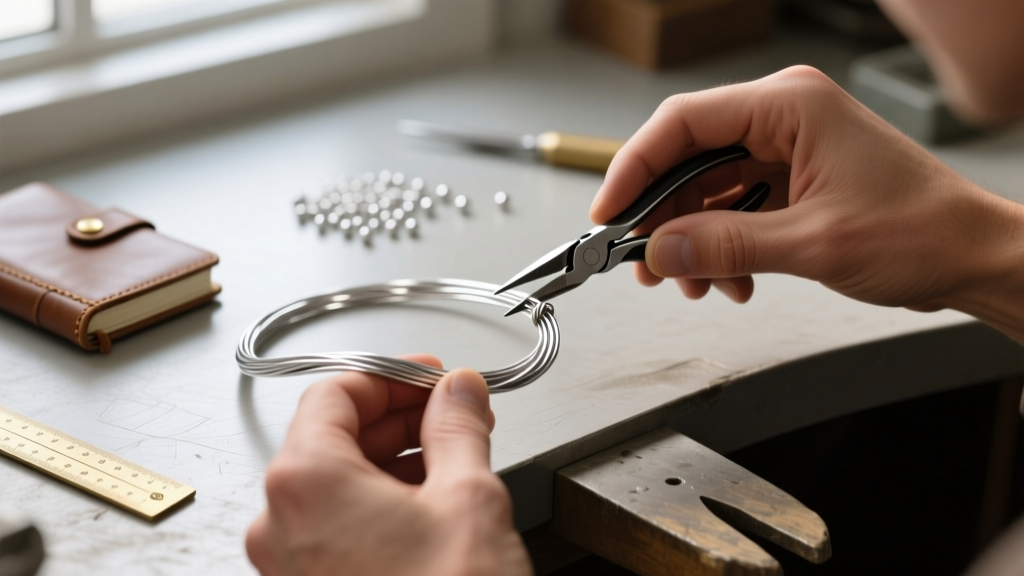
Learning how to make a necklace extends far beyond simply threading beads onto a string. True jewelry design requires a fundamental understanding of material science. The longevity, drape, and structural integrity of your finished piece depend entirely on the tensile strength, hardness, and chemical reactivity of the components you select. As we navigate the jewelry landscape in 2026, makers have access to advanced alloys and specialized stringing materials that were previously reserved for industrial applications.
This comprehensive guide breaks down the exact material properties, gauge sizes, and failure modes you must consider when engineering a necklace from scratch. Whether you are stringing heavy gemstones or wire-wrapping delicate pendants, choosing the right foundation is non-negotiable.
The Foundation: Selecting the Right Stringing Material
The stringing material is the spine of your necklace. Selecting the wrong cord for your bead type is the leading cause of catastrophic necklace failure. The choice primarily comes down to drape versus abrasion resistance.
Multi-Strand Beading Wire
For heavy or sharp-edged beads (like quartz, jasper, or glass), multi-strand stainless steel wire coated in nylon is the industry standard. These wires are categorized by strand count, which directly dictates flexibility and drape:
- 7-Strand: The most rigid and economical. Best for structured, stiff collars or heavy, large-holed beads. Prone to kinking.
- 19-Strand: A middle-ground offering decent drape and good tensile strength (usually around 20-30 lbs). Ideal for general-purpose beading.
- 49-Strand: The premium choice for high-end jewelry. It mimics the drape of silk thread while providing the cut-resistance of steel. Essential for heavy gemstone necklaces.
Pro Tip: Pay close attention to the diameter. A .015-inch wire is perfect for lightweight pearls and seed beads, while a .024-inch wire is required for heavy, large-holed lampwork glass or dense metal beads.
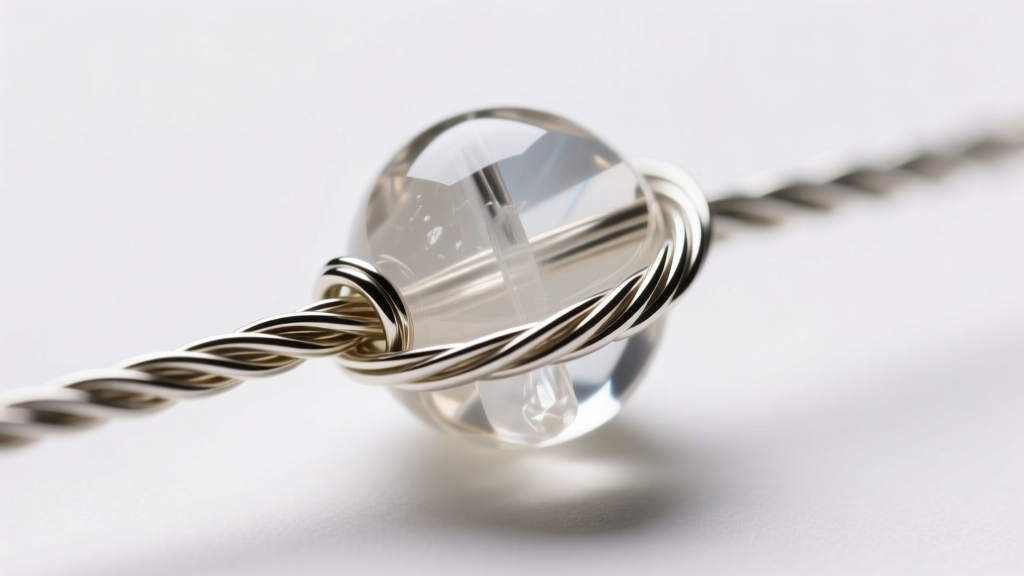
Silk, Nylon, and Synthetic Cords
If you are working with delicate pearls or turquoise, steel wire will eventually abrade the soft nacre or stone from the inside out. According to the Gemological Institute of America (GIA), organic gems require soft, knot-friendly stringing materials.
- Silk: Offers an unparalleled, luxurious drape and is the traditional choice for knotting pearls. However, it degrades with exposure to moisture, skin oils, and UV light. It must be replaced every 2-3 years.
- Nylon (e.g., Silkon): Provides a similar drape to silk but boasts vastly superior moisture resistance and tensile strength. It will not stretch or rot over time.
- Waxed Cotton/Polyester: Excellent for rustic, bohemian, or macramé designs. The wax coating helps knots hold securely, but the material lacks the elegance required for fine gemstones.
Wire Wrapping & Structural Metals: Gauge and Hardness
When your design requires wire wrapping, chain making, or custom clasps, you must understand the relationship between wire gauge (thickness) and temper (hardness). In the American Wire Gauge (AWG) system, a lower number indicates a thicker wire.
Understanding Wire Temper
Metal hardness dictates how the wire behaves under stress. Working with the wrong temper leads to frustration or structural failure.
- Dead Soft: Extremely malleable. Bends easily with bare hands. Ideal for weaving, wrapping around cabochons, and creating complex sculptural shapes. It work-hardens as you manipulate it.
- Half-Hard: The most versatile temper. It offers resistance to hold its shape but can still be bent with standard pliers. Perfect for making jump rings, ear wires, and structural clasps.
- Full-Hard: Very stiff and springy. Difficult to bend without heavy-duty tools. Used almost exclusively for rigid structural frames or heavy-duty jump rings that must never pull apart.
Gauge Selection Framework
| AWG Gauge | Diameter (mm) | Best Application | Recommended Temper |
|---|---|---|---|
| 16g - 18g | 1.29 - 1.02 | Necklace collars, heavy clasps, structural frames | Half-Hard |
| 20g | 0.81 | Standard jump rings, ear wires, basic wire wrapping | Half-Hard |
| 22g | 0.64 | Small jump rings, wrapping briolettes, linking | Dead Soft / Half-Hard |
| 24g - 26g | 0.51 - 0.40 | Weaving, coiling, securing cabochons in bezels | Dead Soft |
| 28g - 30g | 0.32 - 0.25 | Fine crochet, knitting, micro-macramé wire | Dead Soft |
Advanced Metal Alloys for 2026
The days of relying solely on basic sterling silver and brass are over. Modern jewelry makers are leveraging advanced metallurgy to solve age-old problems like tarnish and skin reactivity.
Argentium Silver
Standard sterling silver (.925) contains 7.5% copper, which reacts with sulfur in the air to create tarnish. Rio Grande and other major suppliers now heavily stock Argentium Silver. This alloy replaces some of the copper with germanium. The result is a .935 purity silver that is highly tarnish-resistant, brighter than traditional sterling, and can be fused to itself without solder. For necklace makers, this means fewer broken solder joints on custom chains and clasps.
Niobium and Titanium
For clients with severe metal allergies, nickel-free is not enough; you need inherently biocompatible metals. Niobium and Titanium (specifically Grade 1 or Grade 23 Ti-6Al-4V) are the gold standards. Niobium is particularly prized because it is a reactive metal; by running a low-voltage electrical current through it in an electrolyte bath, you can anodize it into vibrant, permanent colors without using dyes or platings that might wear off against the skin.
Failure Modes: Why Necklaces Break
Understanding how and why materials fail is the hallmark of an expert jewelry designer. Avoid these common engineering pitfalls when figuring out how to make a necklace that lasts.
Abrasion and Cutting
Gemstones like quartz, agate, and beryl have a Mohs hardness of 7 or higher. If threaded directly onto silk or nylon cord, the sharp inner edges of the bead hole will act like a saw, eventually slicing through the cord. Solution: Always use wire guards (French wire) or line the bead holes with tiny metal crimp covers when using soft cords with hard stones.
Work Hardening and Brittle Snaps
When you bend dead-soft wire repeatedly, the crystal structure of the metal compresses, making it harder and more brittle—a process called work hardening. If you over-manipulate a wire-wrapped bail or clasp, it will snap cleanly under tension. Solution: Use half-hard wire for structural bends, or anneal dead-soft wire with a butane torch to reset its crystal structure if it becomes too stiff during a complex wrap.
Galvanic Corrosion
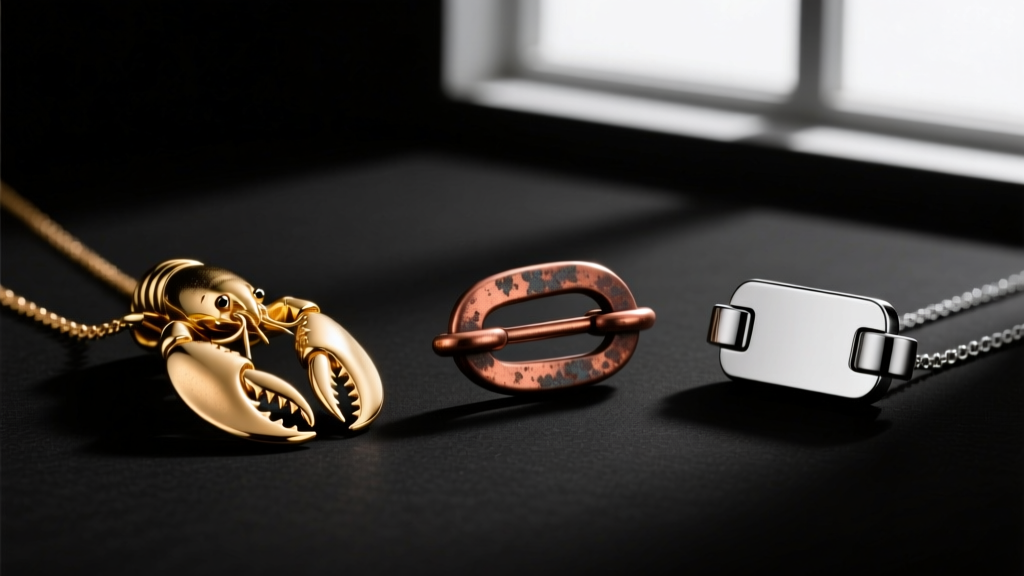
If you mix dissimilar metals in a necklace (e.g., a copper chain with a stainless steel clasp) and expose them to sweat (an electrolyte), you create a tiny battery. This causes galvanic corrosion, rapidly degrading the more anodic metal (the copper). Solution: Keep your primary structural metals uniform, or isolate dissimilar metals using non-conductive jump rings or sealed coatings.
Sourcing and Final Assembly Tips
When sourcing materials, avoid craft store assortments for critical structural components. The plating on mass-market findings is often too thin to withstand daily friction, leading to rapid wear-through and allergic reactions. Invest in solid metals or heavy gold-filled (1/20 14k) components from dedicated jewelry suppliers like Fire Mountain Gems or specialized metallurgical vendors.
Finally, always finish your stringing wire with high-quality crimp tubes rather than crimp beads. Tubes provide a larger surface area for the wire to compress against, resulting in a significantly higher pull-strength. Use a micro-crimping tool to fold the tube into a neat, rounded bead shape, ensuring it won't snag on delicate fabrics. By mastering these material properties, your transition from a casual crafter to a professional jewelry engineer is complete.


