The Necklace by Guy de Maupassant Plot Summary & Loss Guide
Explore the necklace by guy de maupassant plot summary to master modern jewelry troubleshooting, diamond authentication, and loss prevention strategies.

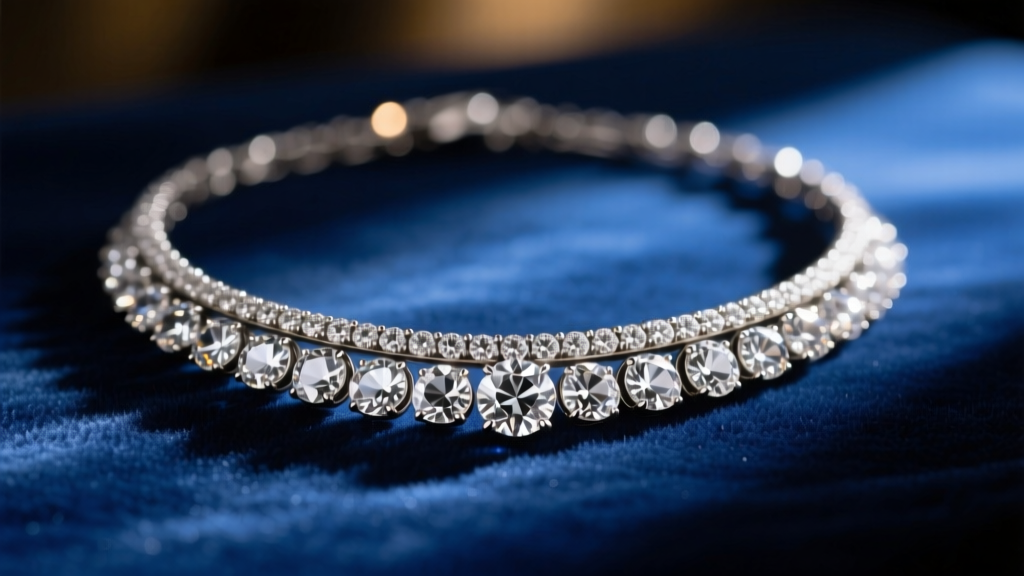
In the world of fine jewelry, few stories carry as much weight as a cautionary tale regarding authentication, borrowing, and catastrophic financial loss. While modern collectors and style enthusiasts focus on carat weights, metal purities, and designer provenance, the foundational lessons of jewelry troubleshooting can surprisingly be traced back to 19th-century French literature. By examining the necklace by guy de maupassant plot summary, we uncover a masterclass in what happens when gemological ignorance meets poor risk management. Mathilde Loisel’s tragic trajectory—from borrowing a seemingly exquisite piece to enduring a decade of grueling poverty to replace it—serves as the ultimate framework for our modern guide on jewelry authentication, insurance floaters, and loss prevention.
The Ultimate Cautionary Tale: The Necklace by Guy de Maupassant Plot Summary
Published in 1884, Guy de Maupassant’s La Parure (The Necklace) follows Mathilde Loisel, a woman deeply dissatisfied with her middle-class life. When invited to a high-society ball, she borrows what she believes to be a stunning diamond rivière necklace from her wealthy friend, Madame Forestier. After the ball, Mathilde discovers the necklace is missing. Instead of confessing the loss to her friend, she and her husband secretly purchase an identical-looking diamond necklace from a jeweler at the Palais-Royal for a staggering 36,000 francs, plunging themselves into crippling debt. For ten years, the couple lives in absolute destitution, working multiple menial jobs to pay off the usurious loans. The story’s devastating twist arrives in its final lines: upon finally paying off the debt, Mathilde encounters Madame Forestier and confesses the truth. Forestier, shocked, reveals that her original necklace was made of paste (rhinestone/lead glass) and was worth at most 500 francs.
From a modern jewelry troubleshooting perspective, Mathilde’s downfall was not merely bad luck; it was a compounding series of critical failures in gemological assessment, borrowing protocols, and insurance coverage. Let us break down these failures and explore how to solve them using 2026 industry standards.
Problem 1: The Failure to Authenticate (Paste vs. Real Diamonds)
Mathilde’s primary error was assuming that a piece belonging to a wealthy woman was inherently composed of natural, high-value gemstones. In the late 19th century, high-quality lead glass "paste" was frequently used by the elite as travel jewelry to deter thieves. Today, the market is flooded with sophisticated simulants, including cubic zirconia (CZ), moissanite, and advanced lab-grown diamonds, making visual identification alone a recipe for financial disaster. According to the Gemological Institute of America (GIA), relying on the naked eye to distinguish between high-grade paste and natural diamonds is a critical failure mode for amateur collectors.
Modern Gemological Troubleshooting Framework
If you are evaluating a vintage piece, inheriting estate jewelry, or attempting to verify a borrowed item, you must move beyond visual inspection and employ objective testing methodologies:
- Thermal Conductivity Testing: Diamonds are exceptional heat conductors. Using a modern tool like the Presidium Multi-Tester III, you can measure how quickly heat passes through the stone. Paste and glass retain heat, while diamonds disperse it almost instantly. If the tester’s metal tip touches a simulant, the heat signature will fail to trigger the diamond alert.
- Refractive Index (RI) Analysis: A natural diamond has an RI of 2.42, which creates its signature brilliance and "fire." Lead glass paste typically has an RI between 1.60 and 1.70. By performing a "read-through" test—placing the stone table-down on printed text—a real diamond will refract the light so intensely that the text becomes completely illegible. Paste or CZ will often allow the text to be read through the stone.
- 10x Triplet Loupe Inspection: Examine the girdle and facet junctions. Molded paste stones often feature rounded, softened facet edges and a smooth, glass-like girdle. Natural and lab-grown diamonds feature sharp, crisp facet junctions and a girdle that may be polished, bruted (frosted), or faceted, but never rounded like melted glass.

Had Mathilde possessed a basic understanding of refractive indices or simply consulted a local jeweler for a loupe inspection before the ball, she would have immediately identified the 500-franc paste necklace, entirely avoiding the 36,000-franc replacement trap.
Problem 2: Borrowing Protocol and Loss Prevention
The second catastrophic failure in the narrative is the informal, undocumented borrowing of high-value assets. Mathilde takes the necklace without a formal appraisal, without verifying its clasp integrity, and without discussing liability for loss. In today’s fine jewelry market, borrowing or loaning pieces for red-carpet events, weddings, or editorial shoots requires strict risk management protocols.
Troubleshooting the "Borrowed Jewelry" Dilemma
If you find yourself in a position where you must borrow a valuable necklace or pendant, implement the following troubleshooting steps to protect both the lender and the borrower:
- Hardware Integrity Check: Before the piece leaves the lender's possession, inspect the clasp mechanism. Lobster clasps should snap back with high tension; spring rings should not show signs of metal fatigue. For heavy pendants, ensure the bail (the loop connecting the pendant to the chain) is soldered securely and not experiencing friction wear from the chain.
- Photographic Documentation: Take high-resolution, macro photographs of the piece, specifically focusing on any unique inclusions, hallmarks, or existing scratches on the metal. This establishes a baseline condition report.
- Temporary Insurance Riders: If the lender’s policy does not cover items while in the custody of a third party, the borrower should secure a short-term inland marine insurance policy or a specialized event rider to cover the appraised replacement value of the piece.
The Financial Fallout: 1884 vs. Modern Replacement Strategies
When Mathilde lost the necklace, she attempted to secretly replace it by purchasing a visually identical natural diamond piece, taking on predatory debt in the process. Today, the jewelry industry offers multiple avenues for troubleshooting lost or destroyed pieces, heavily mitigating the financial ruin experienced by the Loisels.
| Scenario | Mathilde’s 1884 Mistake | 2026 Troubleshooting Solution |
|---|---|---|
| Valuation Ignorance | Assumed the piece was natural diamonds based on the owner's wealth. | Require a recent GIA or AGS grading report and an independent insurance appraisal before borrowing or purchasing. |
| Replacement Sourcing | Purchased a 36,000-franc natural diamond necklace from a retail jeweler under extreme time pressure. | Utilize lab-grown diamond alternatives for exact visual replacements at 70-80% less cost, or file a claim via a Scheduled Personal Property Endorsement. |
| Debt Management | Used a complex web of usurious loans, destroying a decade of financial stability. | Leverage the Insurance Information Institute (III) guidelines to ensure floaters cover "mysterious disappearance" without out-of-pocket ruin. |
| Communication | Concealed the loss from the owner out of pride and fear. | Immediately notify the owner to activate their insurance claim window and halt the statute of limitations on loss reporting. |

The Role of the Scheduled Personal Property Endorsement
Standard homeowner’s or renter’s insurance policies typically cap jewelry theft or loss payouts at a meager $1,500 to $2,500, and they rarely cover "mysterious disappearance" (e.g., losing a necklace at a ball or in a taxi). To troubleshoot this vulnerability, high-value necklaces must be "scheduled" on a policy. This requires a professional appraisal and adds a specific rider (floater) to the policy. Had Madame Forestier scheduled her necklace—even if it was paste, though insurers wouldn't schedule a $500 item—the lack of a claim would have immediately signaled to Mathilde that the piece held no insurable financial value, potentially unraveling the deception before the debt was incurred.
Conclusion: Mindful Jewelry Ownership
The enduring legacy of Maupassant’s masterpiece is not just a critique of vanity and class obsession; it is a glaring spotlight on the dangers of jewelry illiteracy. Whether you are navigating the secondary vintage market, borrowing a family heirloom for your wedding day, or simply investing in a high-carat diamond pendant, the principles remain unchanged. Authenticate ruthlessly using thermal and refractive metrics, document the structural integrity of your clasps and chains, and never rely on assumptions regarding a piece's material value. By applying modern gemological science and robust insurance frameworks, we ensure that the tragic fate of Mathilde Loisel remains strictly confined to the pages of 19th-century fiction.


