How to Clean and Preserve Authentic Pomo Necklaces
Learn expert techniques to clean and preserve Pomo necklaces. Discover safe methods for abalone, clam shell, and delicate seed beadwork.

Understanding the Material Chemistry of Pomo Jewelry
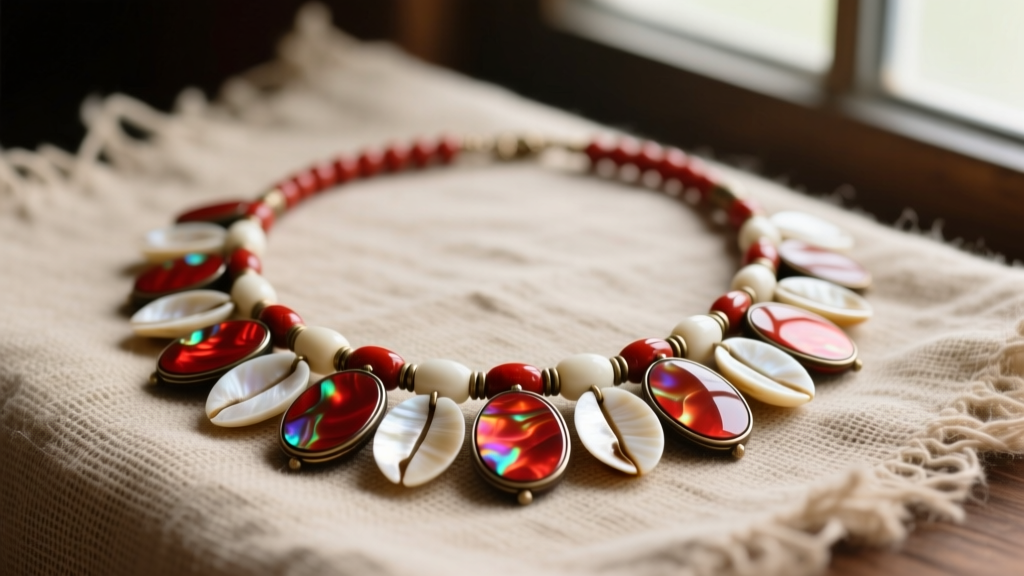
Authentic Pomo necklaces are masterpieces of Indigenous California artistry, historically crafted from organic and porous materials gathered from the Northern California coast and inland valleys. Unlike faceted gemstones or precious metals, the primary components of these necklaces—red abalone (Haliotis rufescens), butter clam shell (Saxidomus nuttalli), magnesite, and natural sinew or plant-fiber cordage—require highly specialized conservation techniques. According to guidelines published by the Gemological Institute of America (GIA), organic gems and shells are primarily composed of calcium carbonate and conchiolin, making them exceptionally vulnerable to acidic environments, extreme dryness, and improper mechanical cleaning.
Before attempting to clean Pomo necklaces, it is critical to understand the specific failure modes associated with each material. Using standard commercial jewelry dips or ultrasonic cleaners will cause irreversible etching, micro-fractures, and structural collapse of the stringing foundation.
Material Vulnerability Chart
| Material | Mohs Hardness | Primary Chemical Vulnerability | Common Failure Mode |
|---|---|---|---|
| Red Abalone | 2.5 - 4.0 | Acids, Ammonia, Chlorine | Surface etching, loss of iridescent nacre layer |
| Clam Shell Disc Beads | 3.0 - 4.0 | Acids (even mild skin oils) | Pitting, chalky degradation, brittleness |
| Magnesite | 3.5 - 4.5 | Acids, Ultrasonic cavitation | Internal fracturing, surface dulling |
| Glass Seed Beads | 5.5 - 7.0 | High alkaline solutions | Color leaching (if dyed), surface frosting |
| Sinew / Cotton Thread | N/A | Moisture, UV light, Pests | Dry rot, stretching, mold growth, snapping |
The Golden Rules of Pomo Necklace Maintenance
Museum conservators adhere to a strict 'do no harm' philosophy when handling ethnographic beadwork. The Canadian Conservation Institute (CCI) emphasizes that preventive care is always superior to interventive cleaning. When maintaining your Pomo necklaces, you must absolutely avoid the following common mistakes:
- Never use ultrasonic cleaners: The cavitation bubbles generated by ultrasonic waves implode with enough localized force to shatter porous magnesite and delaminate the delicate nacre layers of abalone.
- Never submerge in water: Soaking the necklace will cause natural sinew or aged cotton thread to swell, stretch, and eventually rot from the inside out. Furthermore, tap water contains chlorine and dissolved minerals that will stain porous shells.
- Avoid all commercial jewelry dips: Products designed for silver or gold often contain thiourea or mild acids that will instantly dissolve the calcium carbonate matrix of clam shell beads, leaving them permanently pitted and chalky.
Step-by-Step Dry and Damp Cleaning Protocol
If your Pomo necklace has accumulated dust, skin oils, or environmental grime, follow this conservative, multi-stage cleaning protocol designed specifically for organic and porous assemblies.
Stage 1: Mechanical Dry Cleaning
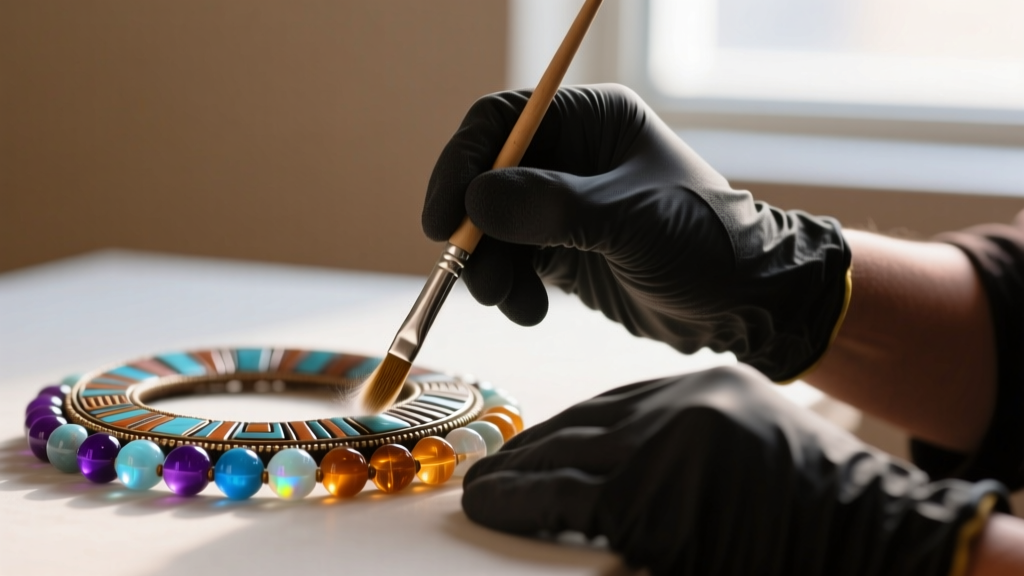
Always begin with dry cleaning to remove abrasive particulate matter. Use a soft, natural-hair brush—such as a clean sable makeup brush or a specialized conservation dusting brush. Hold the necklace flat on a padded, acid-free surface. Gently sweep the brush across the shell disc beads, abalone pendants, and seed beadwork. Do not apply downward pressure; let the bristles flick the dust away. Pay special attention to the drill holes of the clam shell beads, where sebum and dead skin cells tend to accumulate and harden.
Stage 2: Targeted Damp Cleaning (For Stubborn Grime)
If dry brushing is insufficient to remove skin oils from the shell beads, you may use a targeted damp-cleaning method. Never use tap water. Instead, use distilled or deionized water, which lacks the chlorine and heavy metals found in municipal water supplies.
- Dampen a lint-free microfiber cloth or a cotton swab with distilled water. Wring it out until it is barely moist, not wet.
- Gently wipe the surface of the abalone or clam shell beads, rotating the swab frequently to avoid redepositing oils.
- Immediately follow up with a dry microfiber cloth to buff the shell and remove any residual moisture.
- Crucial: Avoid touching the stringing material (sinew/thread) with the damp swab. Moisture trapped inside the drill holes against the cordage is the primary catalyst for dry rot and mold.
Caring for the Thread, Sinew, and Beadwork Foundation
The structural integrity of a Pomo necklace relies entirely on its foundation. Traditional dogbane or milkweed cordage, as well as later introductions of cotton thread and animal sinew, are highly susceptible to environmental degradation. Inspect the cordage every six months for signs of 'necklace stretch' (where the thread becomes visible between the beads, indicating permanent deformation) or fraying near the clasp and drill holes.
If the thread feels brittle to the touch or shows visible micro-fraying, the necklace must be retired from wear immediately. Do not attempt to condition the thread with oils, waxes, or leather conditioners; these organic treatments will oxidize over time, becoming acidic and sticky, which will attract dust and accelerate the degradation of the adjacent shell beads. According to the National Museum of the American Indian (NMAI), compromised ethnographic cordage should only be replaced by a professional conservator or a master beadworker who understands the historical tension and knotting techniques specific to Pomo jewelry.
Proper Storage and Environmental Controls
How you store your Pomo necklaces when they are not being worn is just as critical as how you clean them. Improper storage environments can trigger chemical reactions that destroy the jewelry from the inside out.
The Danger of PVC Plastics
Never store abalone or clam shell necklaces in standard plastic zip-top bags made of Polyvinyl Chloride (PVC). Over time, PVC degrades and off-gases hydrogen chloride. In the presence of ambient humidity, this gas forms trace amounts of hydrochloric acid inside the bag, which will chemically burn and etch the calcium carbonate shells. If you must use plastic enclosures for travel, ensure they are made of inert Polyethylene (PE) or Polypropylene (PP).
The Ideal Storage Environment
- Wrapping: Wrap the necklace loosely in unbuffered, acid-free tissue paper. This prevents the metal clasps (if present) from scratching the softer shell beads and absorbs minor fluctuations in ambient moisture.
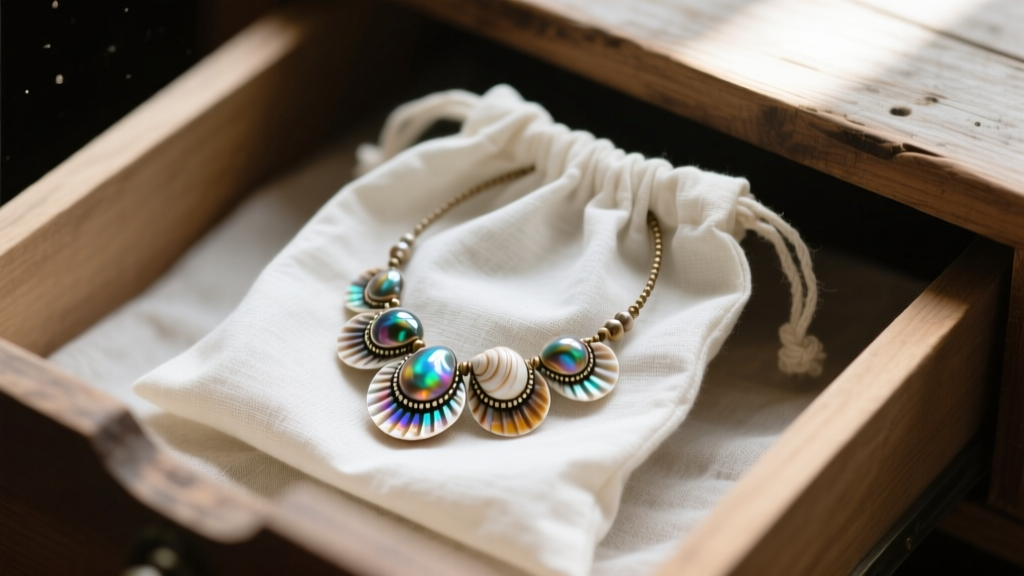
- Enclosure: Place the wrapped necklace inside a breathable, unbleached cotton muslin bag. This allows for air circulation while protecting the piece from UV light and dust.
- Orientation: Always store the necklace flat. Hanging heavy shell and magnesite necklaces on a jewelry stand places constant gravitational stress on the cordage, leading to premature stretching and eventual snapping.
- Humidity Control: Maintain a relative humidity (RH) of 45% to 55% in your storage area. Environments below 30% RH will cause natural sinew to become brittle and snap, while environments above 65% RH invite mold growth and cause cotton thread to rot.
When to Seek Professional Conservation
While routine dusting and careful storage can be managed at home, certain conditions require the intervention of a trained ethnographic conservator. If your Pomo necklace exhibits active flaking of the abalone nacre, a white powdery residue on the magnesite (a sign of advanced chemical degradation known as 'byne's disease'), or severe structural sagging, do not attempt DIY repairs. Consult a professional affiliated with the American Institute for Conservation (AIC) who specializes in Indigenous material culture to stabilize the piece using reversible, museum-grade consolidants.


