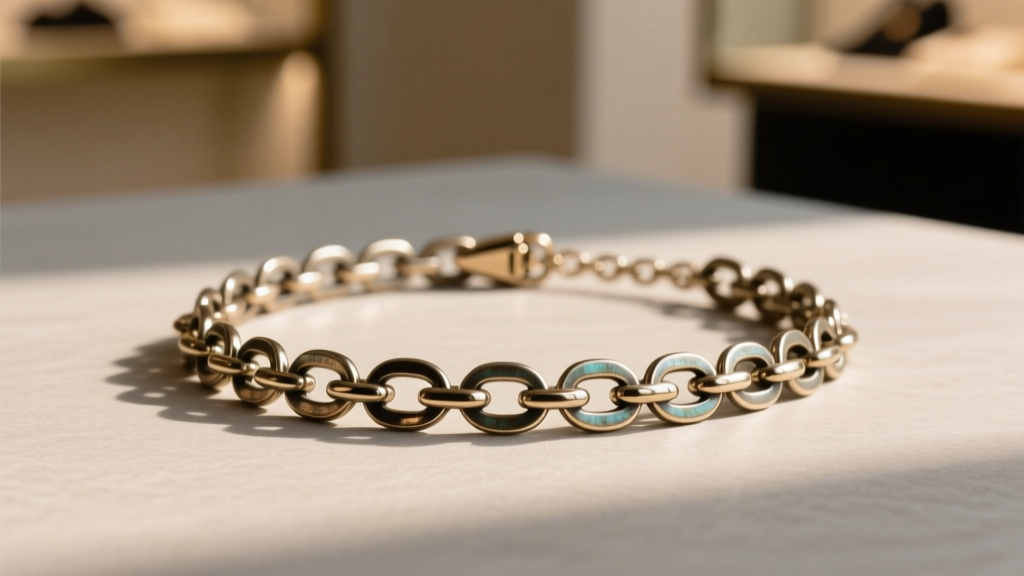
Necklace in the Bible: Historical Metallurgy & Modern Design
Explore the historical and metallurgical reality of the necklace in the Bible, from ancient Near East goldsmithing to modern recreations.

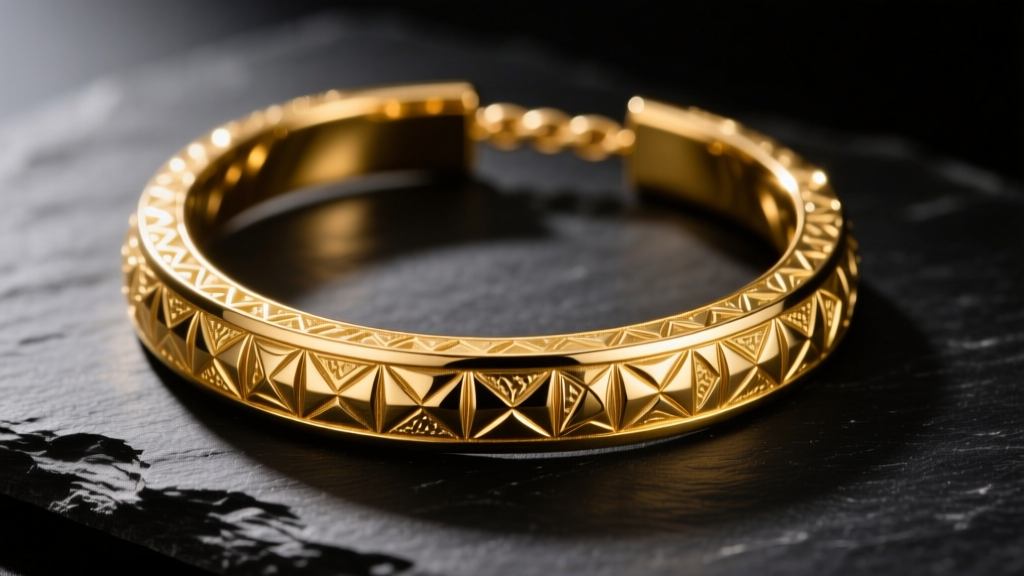
Decoding the 'Necklace in the Bible': Beyond the Text
When readers encounter the phrase 'necklace in the bible,' they are often met with spiritual metaphors or moral allegories. However, from a jewelry historian and master goldsmith perspective, these ancient texts serve as a vital catalog of Iron Age and Hellenistic metallurgy. The Ancient Near East (ANE) was a crucible of advanced jewelry-making, and the biblical references to necklaces, chains, and pendants reflect highly sophisticated trade routes, refining techniques, and gemological knowledge. To truly understand the scriptural mentions of adornment, we must strip away modern assumptions and examine the exact materials, alloys, and structural engineering that defined Levantine and Mesopotamian jewelry.
Metallurgical Realities of Ancient Near East Goldsmithing
The Hebrew word often translated as gold is zahab, but the metallurgical reality of the ancient world rarely involved 24-karat pure gold. Pure gold (99.9% Au) is far too malleable for structural jewelry components like chain links or torque clasps; it would deform under minimal tension. Instead, the 'gold' referenced in texts like Daniel or Genesis was typically an alloy, often ranging from 18k to 22k, or even electrum (a natural alloy of gold and silver).
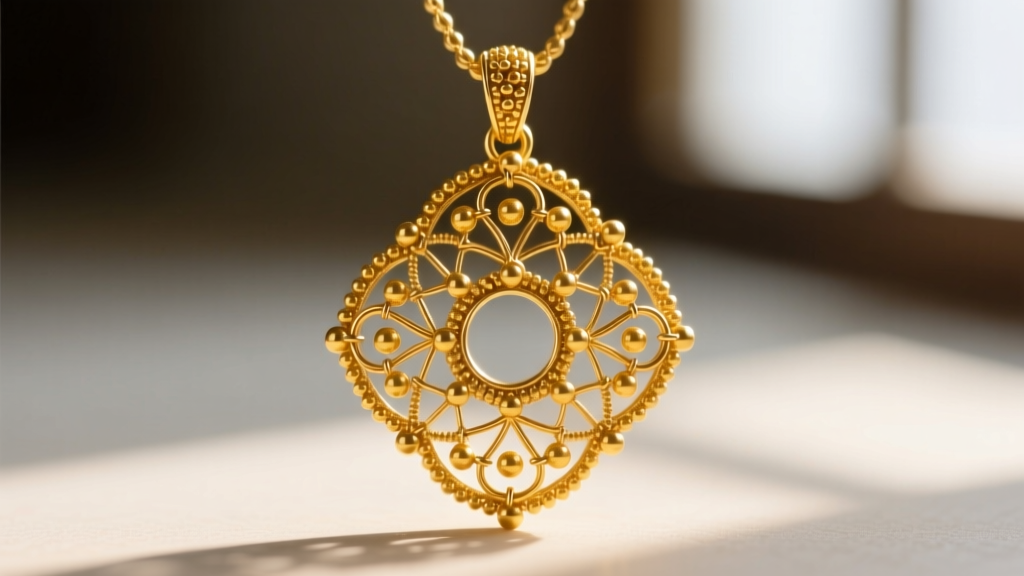
Ancient goldsmiths utilized a process called cupellation to separate precious metals from lead ores, and they intentionally alloyed gold with copper and silver to increase tensile strength. According to research on ancient metalwork from The Metropolitan Museum of Art, Levantine artisans mastered techniques like granulation and filigree as early as the Bronze Age. Granulation involves fusing microscopic spheres of high-karat gold to a base sheet using a copper-salt flux, a technique that requires precise temperature control to avoid melting the base structure. When modern jewelers attempt to recreate a biblical-era necklace, they must replicate these exact alloy ratios—typically 75% gold, 15% silver, and 10% copper for an 18k yellow gold—to achieve the correct color and structural integrity.
Gemological & Material Breakdown of Biblical Adornment
The gemstones mentioned alongside biblical necklaces were not the brilliant-cut diamonds or synthetic sapphires of today's market. They were cabochon-cut, tumbled, or roughly faceted minerals sourced from Egypt, the Arabian Peninsula, and the Indus Valley. Understanding the Mohs hardness and cleavage of these stones is critical for modern artisans recreating these pieces, as ancient settings relied on bezel and tension techniques rather than modern prongs.
| Biblical Term (Hebrew) | Modern Gemological Equivalent | Mohs Hardness | Ancient Setting Technique |
|---|---|---|---|
| Odem | Carnelian / Sardius | 6.5 - 7.0 | Flush bezel in electrum |
| Sappir | Lapis Lazuli (not Sapphire) | 5.0 - 6.0 | Wire-wrapped or inlaid |
| Yashpheh | Jasper / Green Chalcedony | 6.5 - 7.0 | Heavy bezel / Signet |
| Pitdah | Peridot / Topaz | 6.5 - 8.0 | Drilled and strung |
As noted by the GIA Gem Encyclopedia, ancient lapidaries lacked the diamond-tipped saws required to cleave hard stones cleanly. Therefore, carnelian and lapis lazuli were predominantly shaped using abrasive quartz sand and bow-drills, resulting in the smooth, domed cabochons that characterize historical Levantine pendants.
Specific Biblical References and Their Jewelry Context
Daniel's Golden Chain (Daniel 5)
In the Book of Daniel, King Belshazzar promises Daniel a 'chain of gold' (hamanikha dahaba) around his neck as a reward for interpreting the writing on the wall. Historically, a royal Persian or Median chain of this magnitude was not a delicate modern cable chain. It was likely a heavy, multi-strand loop-in-loop chain or a rigid, hinged torque. A loop-in-loop chain is constructed by soldering individual links closed, then folding and weaving them through one another. To support the weight of a royal medallion, these chains were forged from thick wire, often 10 to 12 AWG (American Wire Gauge), yielding a necklace weighing upwards of 150-300 grams.
Song of Solomon: The 'Necklace of Jewels' (Song 1:10)
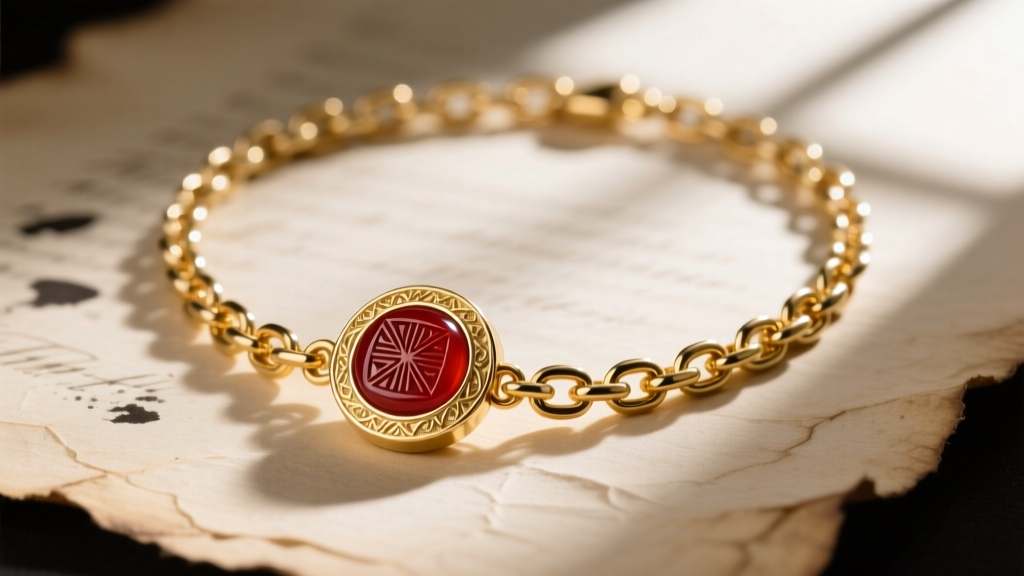
The poetic imagery in Song of Solomon 1:10 describes a neck adorned with 'chains of jewels' or 'strings of beads' (haruzim). In the context of Iron Age bridal jewelry, this refers to a multi-strand collar necklace. Artisans would drill carnelian, turquoise, and gold tubular beads, stringing them on linen or sinew threads separated by small gold spacers. The structural failure point of these ancient necklaces was almost always the organic threading material, which degraded over centuries. Today, when recreating a haruzim-style collar, expert jewelers substitute sinew with 49-strand micro-fused stainless steel wire coated in nylon, ensuring the piece can withstand the tension of heavy stone beads without snapping.
Recreating Biblical Necklaces Today: Technical Specifications
For contemporary collectors and historians looking to commission or craft a historically accurate necklace in the bible style, specific technical parameters must be followed to ensure both authenticity and wearability.
- Alloy Selection: Avoid 24k gold for structural elements. Use 22k (91.6% Au) for hammered torques and bezels, and 18k (75% Au) for complex chain weaves requiring high tensile strength and frequent soldering.
- Wire Gauges: For a Daniel-style royal chain, utilize 12-14 AWG wire for the primary load-bearing links. For intricate filigree work mimicking Levantine pendants, draw wire down to 26-28 AWG.
- Finishing Techniques: Ancient jewelry was rarely polished to a modern mirror finish. To achieve historical accuracy, use a brass wire brush with soapy water to create a soft, satin-matte luster, followed by a mild liver of sulfur patina to darken the recessed granulation and repoussé details.
- Clasp Engineering: The modern lobster claw is entirely anachronistic. Utilize a hand-forged hook-and-eye clasp or a mortise-and-tenon pin clasp, secured with a secondary figure-eight safety chain made from 20 AWG wire.
'The true mastery of ancient jewelry lies not just in the purity of the gold, but in the intentional imperfections of the hammer strikes and the chemical mastery of the flux. To wear a historically accurate biblical necklace is to wear a feat of ancient engineering.'
Sourcing and Ethical Considerations for Historical Jewelry
While the ancient world relied on conquest and unregulated mining to source gold and lapis lazuli, the modern 2026 jewelry market demands ethical transparency. When sourcing materials for a biblically inspired piece, insist on Fairmined certified gold, which ensures that the metal is extracted without the use of toxic mercury or cyanide. Furthermore, authentic Afghan lapis lazuli—historically the most prized source for ANE jewelers—must be vetted to ensure it is not funding illicit conflict zones. By combining the metallurgical genius of the ancient Levant with modern ethical sourcing, today's artisans can forge a 'necklace in the bible' style that honors both history and humanity.