Amber Necklace for Infants: Essential Care and Cleaning
Learn how to safely clean, inspect, and maintain an amber necklace for infants. Expert tips on Baltic amber care, knot inspection, and safety.

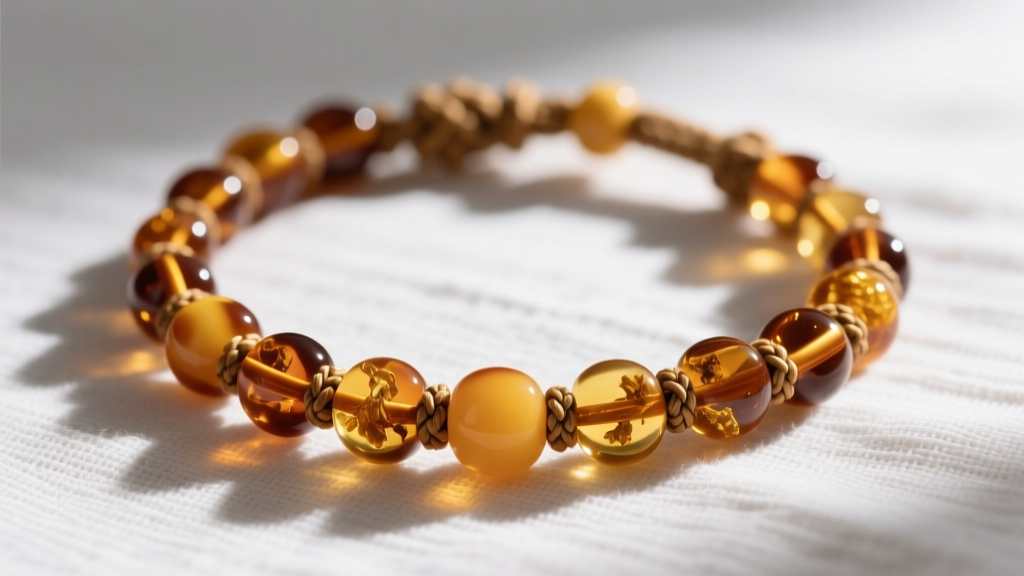
The Material Reality: Understanding Baltic Amber
When parents purchase an amber necklace for infants, they are often drawn to the rich, honey-colored hues and the historical association with Baltic succinite. However, from a gemological and material science perspective, amber is not a stone; it is a fossilized tree resin. This organic origin dictates its extreme fragility. On the Mohs scale of mineral hardness, Baltic amber ranks between 2.0 and 2.5, making it softer than a human fingernail and highly susceptible to scratching, chemical degradation, and thermal shock.
Furthermore, maintaining an infant's amber jewelry is inextricably linked to safety. The U.S. Food and Drug Administration (FDA) and the American Academy of Pediatrics (AAP) strongly warn against the use of teething necklaces due to severe strangulation and choking hazards. Therefore, 'maintenance' in this context goes far beyond keeping the beads shiny; it requires rigorous, daily structural inspections to ensure the integrity of the stringing and clasps if the item is used in any capacity near a child, or properly preserved if kept as a keepsake.
Daily Structural Inspection: The Most Critical Maintenance Step
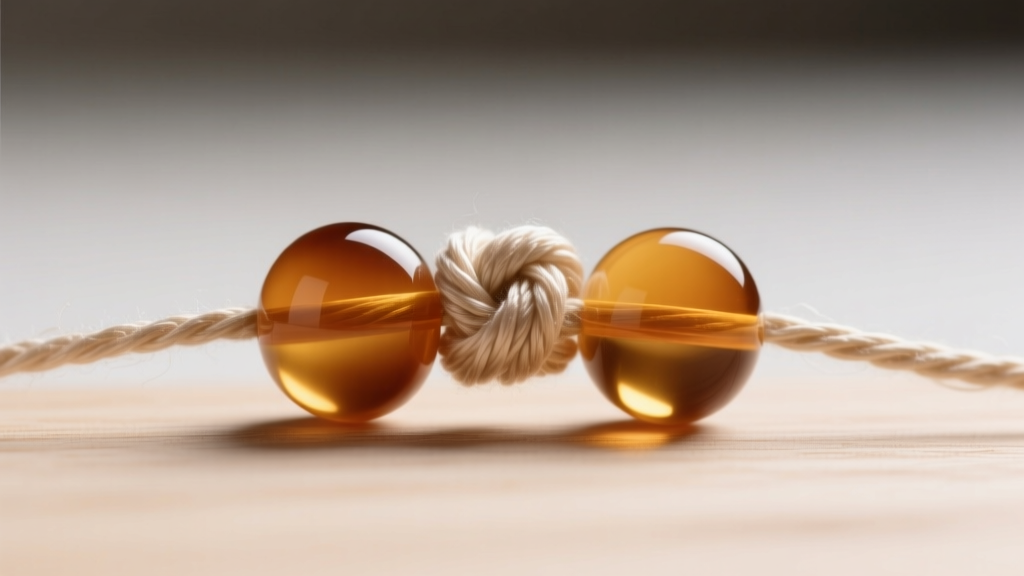
The most common point of failure in any amber necklace for infants is not the amber itself, but the threading. Genuine teething amber necklaces are strung on silk or nylon cord, with individual knots tied between every single bead. This knotting technique is a vital safety feature designed to ensure that if the necklace breaks, only one bead is released, minimizing the choking hazard.
The 'Pull and Roll' Inspection Protocol
Before every use, and at least once a week during storage, perform the following structural checks:
- The Knot Spacing Check: Run your fingers along the strand. The knots should be tight against the beads. If you notice gaps where the thread is visible between the knot and the bead hole, the silk has stretched and degraded. The necklace must be retired or professionally restrung immediately.
- The Tension Test: Gently pull the necklace from both ends. Silk degrades rapidly when exposed to the acids in human sweat, saliva, and skin oils. If the thread feels brittle, frayed, or shows any micro-tears, discard the necklace.
- Clasp Integrity: Authentic infant amber necklaces must feature a breakaway (pop-open) clasp, typically made of molded plastic or a specialized magnetic release. These are engineered to detach when subjected to roughly 5 to 7 pounds of pressure. Test the clasp mechanism monthly to ensure it has not become sticky or fused shut due to lotion buildup.
Step-by-Step Cleaning Guide for Infant Amber
Amber is highly porous. It readily absorbs oils, lotions, and environmental pollutants, which can cause the resin to become cloudy or develop a dull, waxy patina over time. Because of its low hardness and sensitivity to solvents, standard jewelry cleaning methods will destroy it.
The Safe Cleaning Method
- Rinse with Distilled Water: Hold the necklace under a gentle stream of lukewarm (never hot) distilled water. Tap water contains chlorine and hard minerals that can leave micro-deposits on the porous amber surface.
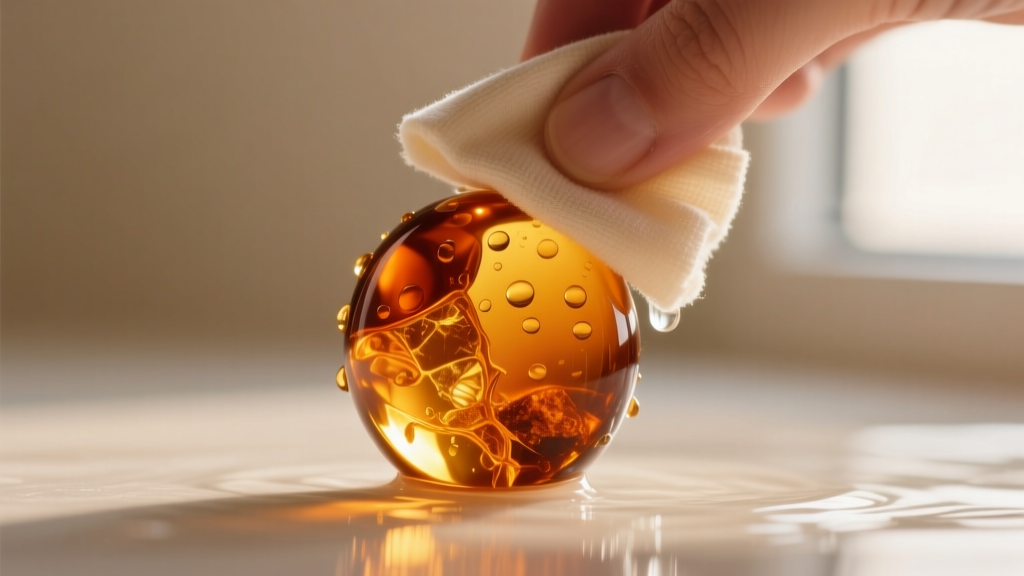
- Wipe Gently: Use a clean, untreated, ultra-soft microfiber cloth to gently rub each bead. Do not apply heavy pressure, as trapped dust particles (which often contain microscopic quartz) can easily scratch the 2.5 Mohs surface.
- Air Dry Completely: Lay the necklace flat on a dry towel in a cool, shaded area. Ensure the silk knots are 100% dry before storing, as trapped moisture will cause the silk to rot and the clasp to corrode.
The 'Do Not Use' List (Chemical Hazards)
According to the Gemological Institute of America (GIA), organic gemstones require specialized care. Never expose your amber necklace to the following:
- Alcohol and Hand Sanitizers: Isopropyl alcohol and ethanol will cause 'crazing'—a network of fine surface cracks that ruins the polish and weakens the bead.
- Ultrasonic Cleaners: The high-frequency vibrations will shatter the fossilized resin and snap the silk threading instantly.
- Commercial Jewelry Dips: Ammonia-based cleaners and silver polishes will strip the amber of its natural oils, turning it opaque and chalky.
- Steam Cleaners: Thermal shock from sudden heat will cause internal fracturing.
Storage and Environmental Degradation
How you store the amber necklace for infants when it is not in use is just as important as how you clean it. Amber is sensitive to ultraviolet (UV) light and extreme temperature fluctuations.
Prolonged exposure to direct sunlight accelerates oxidation. While some collectors appreciate the darkening of amber over decades, rapid UV exposure will make the resin brittle and prone to flaking. Always store the necklace in a dark, climate-controlled environment. Furthermore, keep it in a dedicated soft flannel pouch. Storing amber in a shared jewelry box with harder gemstones like quartz, topaz, or diamonds guarantees severe scratching, as those minerals rank 7 or higher on the Mohs scale and will act like sandpaper against the soft amber.
Authenticity Testing: Ensuring You Have Genuine Baltic Amber
The market is flooded with counterfeit infant amber necklaces made from copal (immature, unfossilized resin) or outright plastics like Bakelite and epoxy. Maintaining a fake plastic necklace with warm water and friction can release harmful chemicals. It is vital to verify the material. Below is a comparison framework to help you identify genuine Baltic succinite versus common imitations.
| Property | Genuine Baltic Amber | Copal (Immature Resin) | Plastic / Epoxy Fake |
|---|---|---|---|
| Specific Gravity (SG) | 1.05 - 1.10 (Floats in saturated saltwater) | 1.06 - 1.08 (Floats in saltwater) | Usually > 1.20 (Sinks in saltwater) |
| UV Fluorescence | Pale blue or milky green glow | Weak or no fluorescence | No fluorescence (or artificial dyes glow) |
| Friction / Rub Test | Emits a distinct pine/resin scent when rubbed vigorously on cloth | Smells slightly sweet or like sap | Smells like burnt plastic or chemicals |
| Hot Needle Test | Needle enters smoothly, emits white smoke and pine scent | Needle sticks, surface melts and becomes tacky | Needle melts a hole, emits acrid black smoke |
Note: The hot needle test is destructive and should only be performed on a loose bead or an inconspicuous area, never on a strung infant necklace where structural integrity is paramount.
Final Verdict: When to Retire the Necklace
Even with meticulous care, an amber necklace for infants has a finite lifespan. The silk or nylon threading is the ultimate limiting factor. Skin oils, saliva, and ambient humidity break down organic fibers over time. As a strict rule of thumb, you should retire or completely restring the necklace every 6 to 12 months, regardless of how pristine the amber beads appear. If the necklace is kept purely as a family heirloom or keepsake, clean it bi-annually with a dry microfiber cloth, store it in an acid-free tissue pouch, and keep it far out of the reach of children to honor both the beauty of the material and the paramount importance of infant safety.


