The 50 cm Necklace: Technical Guide to Fit, Links, and Clasps
Master the 50 cm necklace. Our technical deep dive covers chain link tensile strength, clasp mechanics, and exact neckline geometry for perfect fit.

The Geometry of the 50 cm Necklace: Biomechanics and Fit
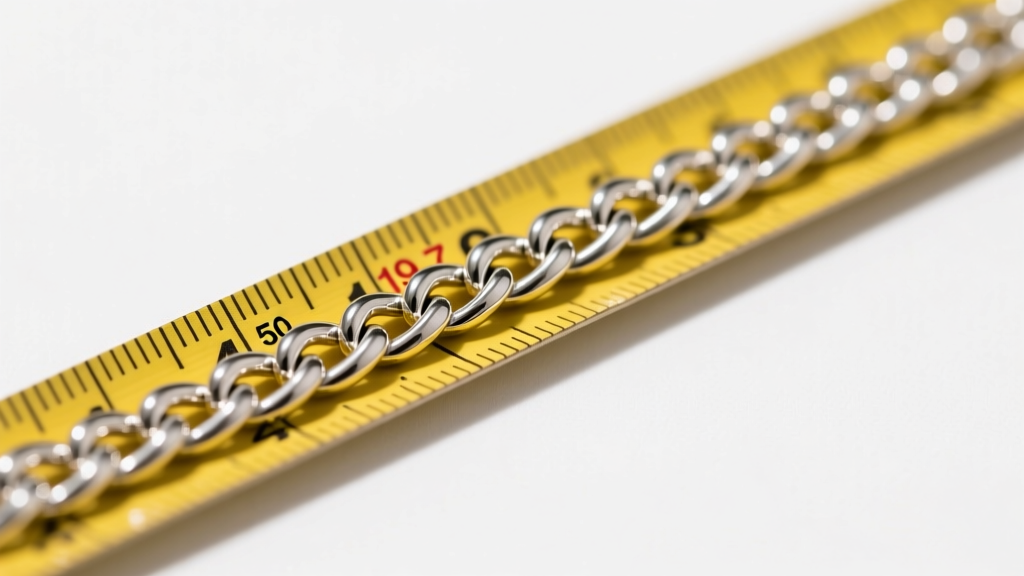
The 50 cm necklace—measuring precisely 19.685 inches—occupies a critical threshold in jewelry design and wearability. Often categorized as a "princess" length in women's jewelry or a standard 20-inch chain in men's accessories, this specific dimension sits exactly at the clavicular notch. For jewelers, metallurgists, and serious collectors, understanding the 50 cm necklace goes far beyond mere aesthetics; it requires a deep dive into tensile strength, link architecture, and the biomechanics of pendant suspension.
To master the 50 cm necklace, one must first understand human anatomy. The average adult neck circumference ranges from 35 cm to 42 cm. A 50 cm chain provides 8 to 15 cm of "drop" below the base of the neck. This places the lowest point of the chain directly over the sternoclavicular joint, creating a natural framing effect for the face while avoiding the constriction of a choker or the excessive swing of a 60 cm matinee chain. When fitting a 50 cm necklace, always account for the wearer's trapezius muscle development; broader shoulders will pull the chain tauter, effectively reducing the perceived drop depth by up to 1.5 cm.
Metallurgy and Link Architecture: Tensile Realities
The structural integrity of a 50 cm necklace is heavily dictated by its link profile and alloy composition. At this length, the chain acts as a lever. When a pendant is attached, the 25 cm drop on either side of the neck generates continuous lateral torque on the individual links. According to manufacturing standards outlined by Rio Grande, a jewelry supplier and manufacturing authority, the choice of alloy drastically alters the chain's resistance to this torque.
For instance, a 50 cm cable chain crafted in 24k gold is highly susceptible to link elongation due to the metal's low yield strength. Conversely, a 50 cm chain in 14k gold (58.5% gold alloyed with copper and silver) offers a significantly higher tensile yield point, making it the industry standard for everyday pendant suspension. Sterling silver (92.5% Ag, 7.5% Cu) provides excellent rigidity but is prone to work-hardening and eventual brittleness if subjected to repetitive bending at the clasp joint.
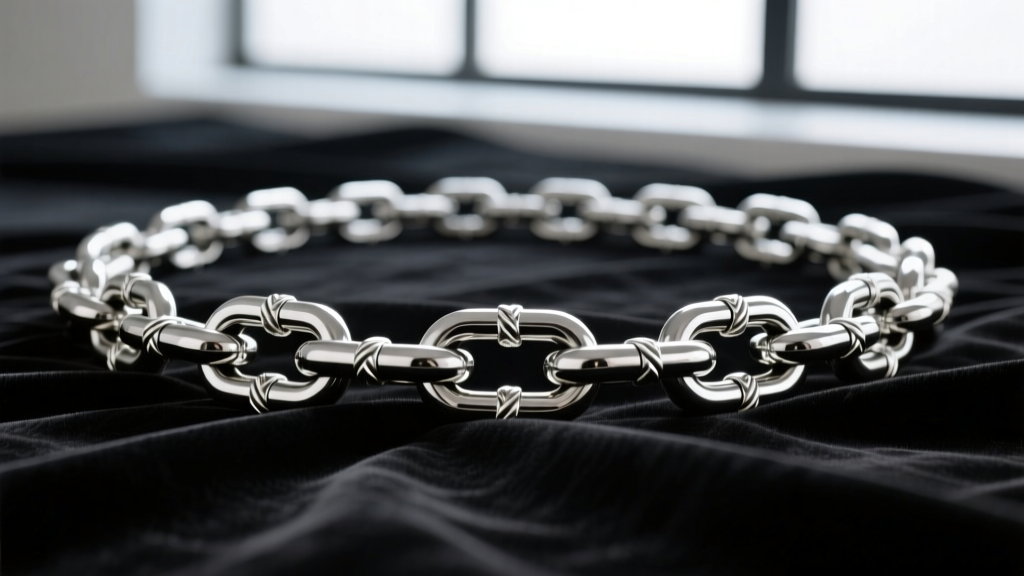
Comparative Link Analysis for 50 cm Chains
| Link Style | Avg Weight (50cm, 3mm) | Tensile Resistance | Best Application |
|---|---|---|---|
| Cable (Round) | 8.2 grams | Moderate | Lightweight solitaires (< 5g) |
| Curb (Flat) | 12.4 grams | High | Heavy pendants, standalone wear |
| Rope (Twisted) | 14.1 grams | Very High | Maximum load, high-torque environments |
| Figaro (Patterned) | 11.0 grams | High | Asymmetrical pendant bails |
Clasp Mechanics and the Pendulum Effect
A frequently overlooked failure mode in the 50 cm necklace is clasp migration and mechanical fatigue. Because the 50 cm length rests at the base of the neck, it is subject to the "pendulum effect." Every time the wearer moves, the heavy front section of the chain swings slightly, pulling the lighter clasp section forward. Over time, this causes the clasp to migrate to the front of the neck—a persistent annoyance for wearers.
To combat this, expert bench jewelers recommend two technical solutions. First, utilize a counterweight. Soldering a small 2-gram metallic tag or using a silicone friction bead on the chain directly adjacent to the clasp shifts the center of gravity backward, anchoring the clasp at the nape of the neck. Second, upgrade the clasp mechanics. Standard 5mm spring ring clasps lack the internal spring tension to withstand the lateral shear forces of a 50 cm chain bearing a 10-gram pendant. Instead, opt for a 7mm or 9mm lobster trigger clasp with a reinforced internal spring, or a box clasp with a secondary figure-eight safety catch, as recommended in durability guidelines by the Gemological Institute of America (GIA).
Pendant Suspension: Bail Sizing and Center of Gravity
When suspending a pendant from a 50 cm chain, the center of gravity shifts dramatically. The bail—the loop that connects the pendant to the chain—must be precisely calibrated to the chain's thickness and link profile. A 50 cm necklace typically features a chain width between 1.5 mm and 4.0 mm for optimal drape.
Calculating Drop Depth and Bail Clearance
- The 2mm Rule: The internal diameter of the pendant bail must be at least 2mm larger than the width of the 50 cm chain. If you are using a 3mm rope chain, the bail opening must be a minimum of 5mm to allow the chain to articulate freely without binding the links.
- Friction Wear: If the bail is too tight, the 50 cm chain will experience accelerated friction wear at the exact center point. This localized stress will eventually cause the link to snap. Always ensure the bail features a hardened steel or ceramic insert if the pendant exceeds 15 grams.
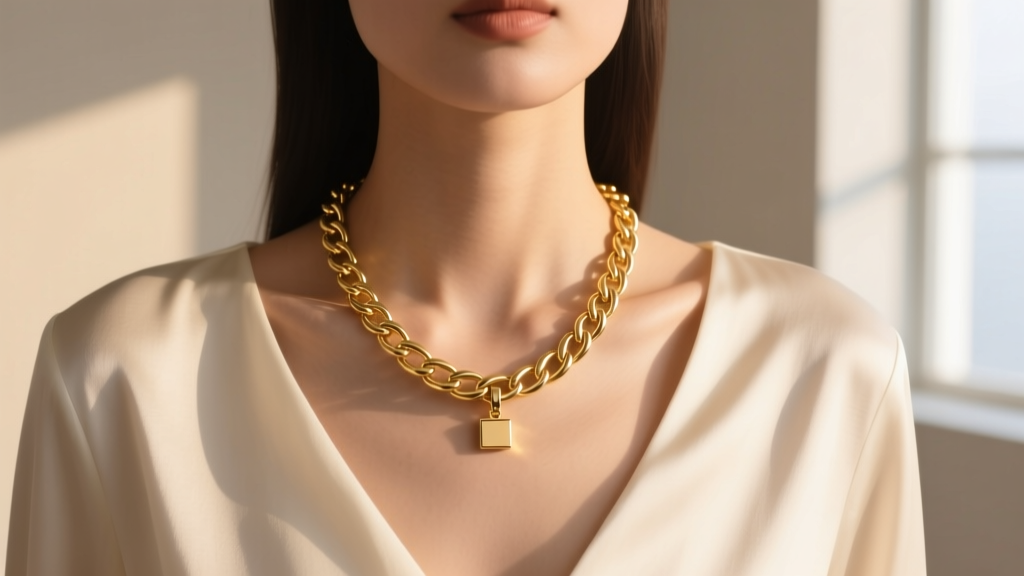
- Visual Proportion: A 50 cm necklace places the pendant exactly at the sternal notch. For pendants measuring 20mm to 30mm in diameter, a 50 cm chain provides the ideal negative space, preventing the piece from looking cluttered against the collarbone.
2026 Market Pricing and Sourcing Standards
Navigating the market for a high-quality 50 cm necklace requires an understanding of current spot prices and manufacturing premiums. As of 2026, the pricing for a standard 50 cm chain is calculated using the formula: (Current Spot Price × Gram Weight) + Manufacturing Premium (typically 15% to 35%).
For a 50 cm, 3mm 14k gold rope chain weighing approximately 14 grams, buyers should expect to pay a premium over the raw melt value due to the complex laser-welding required to secure the twisted links. When sourcing, always demand a stamped hallmark (e.g., "14K" or "585") and a manufacturer's certificate of alloy composition. Avoid hollow-core chains at the 50 cm length; while they offer the visual volume of a 6mm chain at the weight of a 2mm chain, their structural integrity is severely compromised, and they are nearly impossible for a bench jeweler to repair if crushed.
Ultimately, the 50 cm necklace remains the undisputed workhorse of the jewelry industry. By respecting the metallurgy, engineering the clasp for torque, and properly sizing the pendant bail, you ensure that this precise 19.7-inch length performs flawlessly for decades.


