Flat Necklace Mechanics: Chain Types, Kink Repair, and Alloys
Explore the metallurgy and mechanics of flat necklace chains. Learn about herringbone kink repair, alloy hardness, and clasp engineering for seamless wear.

The Anatomy of Flat Chain Architectures
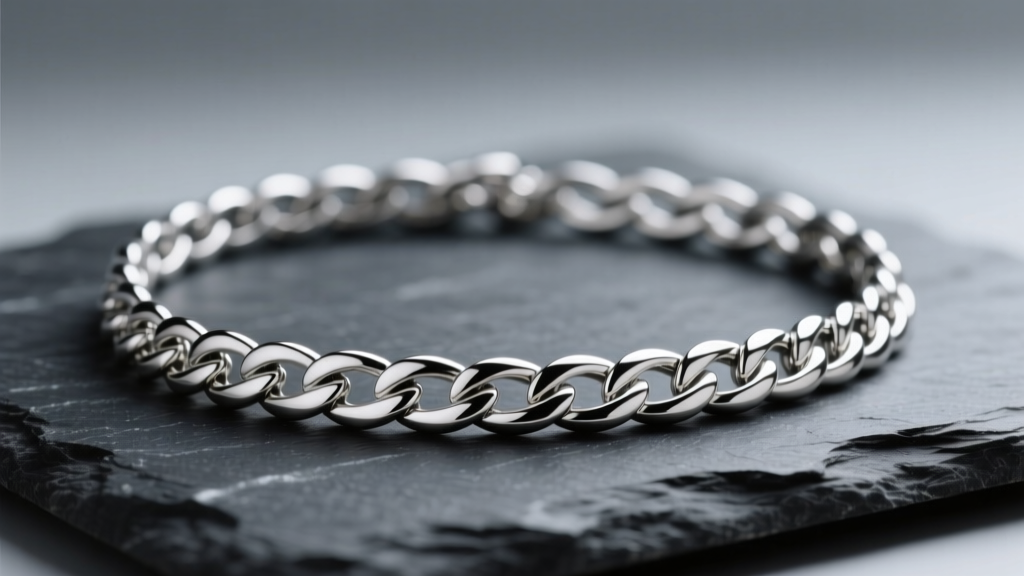
When discussing a flat necklace from a metallurgical and engineering perspective, we are analyzing a high-surface-area jewelry structure defined by its unique link articulation and planar geometry. Unlike rope or cable chains, which rely on radial symmetry and multi-axis flexibility, flat chains are engineered to lay flush against the clavicle and sternum. This zero-profile design maximizes light reflection across a continuous planar surface, creating a liquid-metal illusion. However, this aesthetic triumph introduces significant structural vulnerabilities. The very mechanics that allow a herringbone or snake chain to drape like fabric also make them highly susceptible to plastic deformation, torsional stress, and micro-abrasions. In this technical deep dive, we will dissect the architectural differences between flat chain variants, analyze the Vickers hardness of common precious alloys, and outline professional protocols for kink repair and clasp integration.
Herringbone vs. Snake Chain: Fluidity Metrics
The herringbone chain is the most fluid, yet structurally compromised, flat necklace variant. It is constructed from multiple parallel rows of short, flat links that are slightly offset and interlocked without a central supporting wire. This lack of an internal armature means the chain's structural integrity relies entirely on the sheer strength of the micro-tension between the links. When subjected to torsional twisting, the links easily slip past their yield point, resulting in permanent kinking.
Conversely, a flat snake chain utilizes a radically different engineering approach. It consists of tightly wound, flat wire rings that are smoothly joined to form a continuous, flexible tube, often built around a central core wire or a tightly interlocking base armature. This core provides immense tensile strength and prevents the chain from collapsing inward. According to manufacturing data from Rio Grande Jewelry Supply, laser-welded snake chains exhibit up to 40% higher resistance to torsional kinking compared to traditional soldered herringbone chains of the same carat weight, due to the localized heat treatment strengthening the micro-joints.
Finally, the flat curb chain offers the highest durability. By taking standard oval cable links, twisting them, and compressing them through a rolling mill, the resulting flat curb chain achieves a high surface-area-to-volume ratio while maintaining the interlocking structural redundancy of a cable chain. It is the only flat necklace variant recommended for heavy pendant suspension.
Metallurgy and the Vickers Hardness Scale
The susceptibility of a flat necklace to permanent deformation is directly governed by the Vickers Hardness (HV) and the yield strength of the chosen alloy. Pure gold (24k) and pure silver are too malleable for flat chains; they would kink under their own weight. Therefore, alloying elements like copper, zinc, nickel, and palladium are introduced to disrupt the crystalline lattice, increasing hardness through solid solution strengthening.
| Material / Alloy | Vickers Hardness (HV) | Kink Resistance | Tensile Strength (MPa) |
|---|---|---|---|
| Sterling Silver (925) | 65 - 75 HV | Low | ~250 MPa |
| 14k Yellow Gold | 120 - 140 HV | Medium | ~400 MPa |
| 18k White Gold (Pd) | 130 - 150 HV | Medium-High | ~450 MPa |
| Platinum (950 Pt/Ru) | 135 - 145 HV | High (Bends, doesn't snap) | ~500 MPa |
As noted by the Gemological Institute of America (GIA), platinum's unique metallurgical property is its low work-hardening rate. While a platinum flat necklace may bend or dent, the metal displaces rather than fracturing, making it vastly superior for heirloom-quality flat chains that must endure decades of skin-contact friction.
The Physics of Kinking and Plastic Deformation
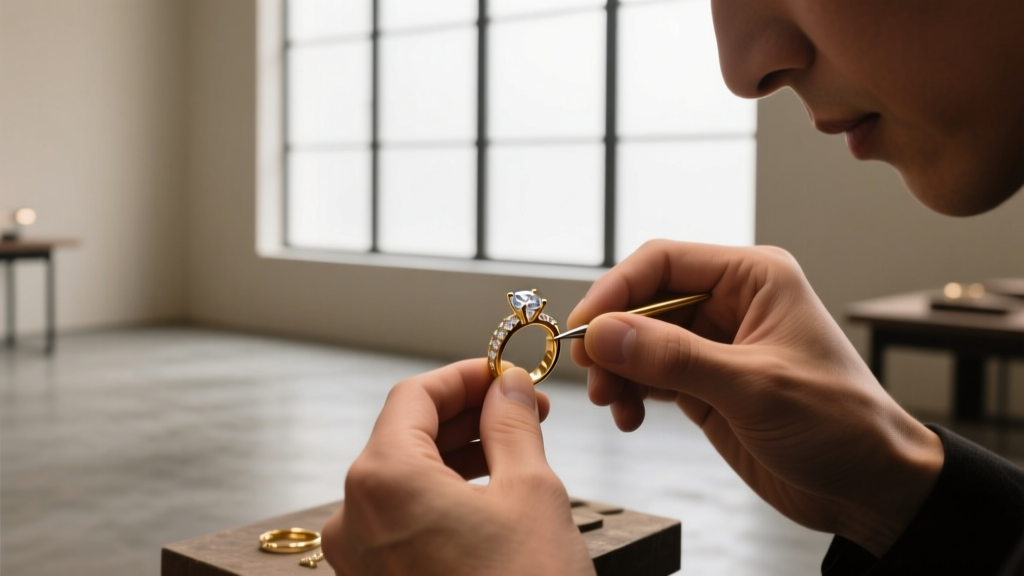
When a flat necklace folds sharply, it exceeds its elastic limit and enters the realm of plastic deformation. At the microscopic level, the metal's crystalline lattice experiences a dislocation pile-up. The atoms slip along specific crystallographic planes and become locked in their new, deformed positions. This localized stress causes work hardening—the kinked area becomes significantly harder and more brittle than the surrounding metal.
The structural integrity of a flat necklace is an exercise in managed vulnerability; we trade tensile redundancy for unparalleled optical fluidity.
Step-by-Step Kink Repair Protocol
Attempting to simply bend a kink back into place with your fingers or pliers will exacerbate the work hardening, inevitably leading to metal fatigue and a catastrophic snap. Professional jewelers employ a specific planishing protocol to realign the crystalline structure without inducing micro-fractures:
- Annealing Assessment: If the kink is severe, the chain must be locally annealed using a micro-torch to recrystallize the metal and relieve internal stresses. This must be done carefully to avoid melting the micro-solder joints.
- Planishing: The chain is laid perfectly flat on a hardened steel bench block. Using a rawhide or nylon mallet (never steel, which will mar the high-polish surface), the jeweler gently taps the kinked area. The compressive force forces the displaced atoms back into a planar alignment.
- Burnishing: A polished steel burnisher is rubbed firmly over the repaired section to close any microscopic surface voids and restore the liquid-like reflectivity of the flat links.
- Ultrasonic Cleaning: The chain is submerged in an ultrasonic cleaner with a mild alkaline solution to remove any polishing compounds or skin oils trapped in the realigned links.
Clasp Engineering for Zero-Profile Chains
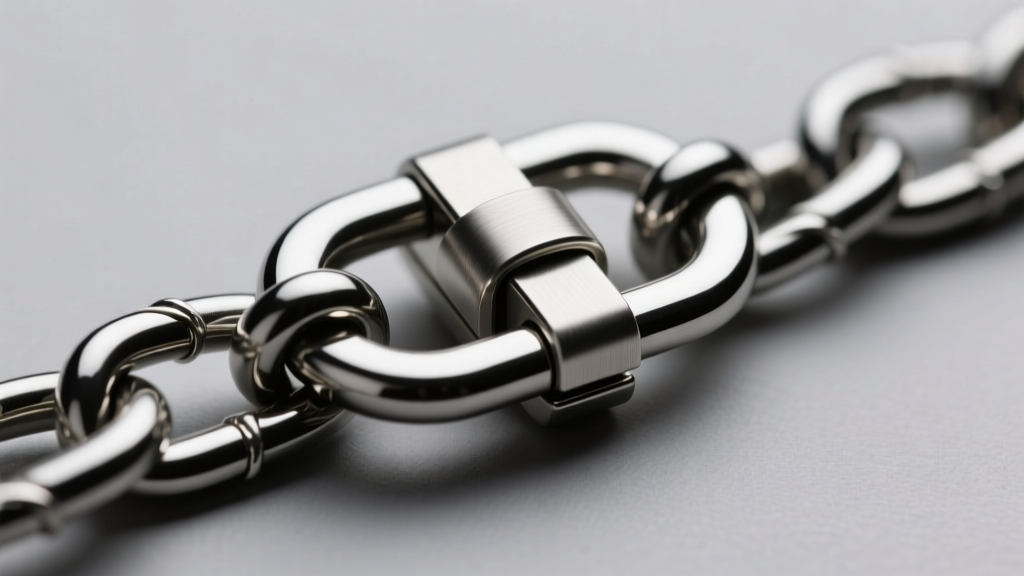
A flat necklace requires a clasp that maintains the continuous planar illusion. Standard spring rings or lobster claws introduce an awkward, bulky pivot point that disrupts the drape and creates a high-stress fulcrum. The industry standard for high-end flat chains is the hidden tongue box clasp with a figure-8 safety wire.
The engineering tolerances for a premium box clasp are incredibly tight. The tongue, a folded strip of spring-tempered metal, must compress smoothly upon insertion and snap into a precisely milled notch inside the box housing. The friction fit tolerance is typically held to within 0.05 millimeters. If the tolerance is too loose, the clasp will rattle and eventually disengage; if too tight, the user will struggle to open it, applying lateral torque that can damage the flat links adjacent to the solder joint. Modern manufacturing utilizes laser welding to attach the box housing to the terminal flat links, ensuring a localized heat-affected zone that prevents the surrounding chain from losing its temper and becoming soft.
Ergonomics and Skin Contact Dynamics
The broad, continuous surface area of a flat necklace creates unique ergonomic and chemical interactions with the wearer's skin. Unlike cable chains, which allow for airflow and skin respiration, a wide herringbone or snake chain acts as a semi-occlusive barrier. This traps sebum, sweat, and dead epidermal cells within the micro-crevices of the links.
From a chemical perspective, this trapped moisture accelerates the oxidation of copper-rich alloys. For instance, a 14k rose gold flat necklace (which contains up to 20% copper) will tarnish and develop a dark patina much faster than a 14k yellow gold chain when worn daily against the skin. Furthermore, the edges of flat links, if not properly tumbled and polished during manufacturing, can develop microscopic burrs. These burrs act like tiny saw teeth, catching and severing fine vellus hairs on the chest and neck, a common complaint among wearers of lower-quality herringbone chains. To mitigate this, expert manufacturers subject flat chains to a multi-stage magnetic tumbling process, using microscopic steel shot to peen and smooth every internal edge before the final high-polish buffing stage.
To maintain the optical fluidity and structural health of a flat necklace, a rigorous maintenance protocol is required. Jewelers recommend ultrasonic cleaning every three months to dislodge compacted sebum from the link interstices. However, caution must be exercised with oxidized or antiqued flat chains, as ultrasonic cavitation can strip the intentional patina from the recessed areas. For daily care, wiping the chain with a microfiber cloth treated with a mild silver or gold anti-tarnish agent will neutralize the acidic pH of sweat before it can etch the metal surface.
Final Engineering Considerations
Ultimately, selecting and maintaining a flat necklace requires an understanding of its mechanical limitations. While a flat curb chain can withstand the rigors of daily wear and heavy pendants, herringbone and snake chains must be treated as delicate, high-precision optical instruments. By respecting the yield strengths of the chosen alloys, employing proper planishing techniques for kink repair, and insisting on laser-welded, zero-profile clasps, collectors and bench jewelers can ensure these remarkable feats of metallurgical engineering retain their liquid-metal drape for generations.


