Gold Drop Necklace Guide: Karats, Alloys & Durability
Discover how gold karats, alloys, and plating affect the durability and drape of a gold drop necklace. Compare 14k, 18k, vermeil, and structural bails.

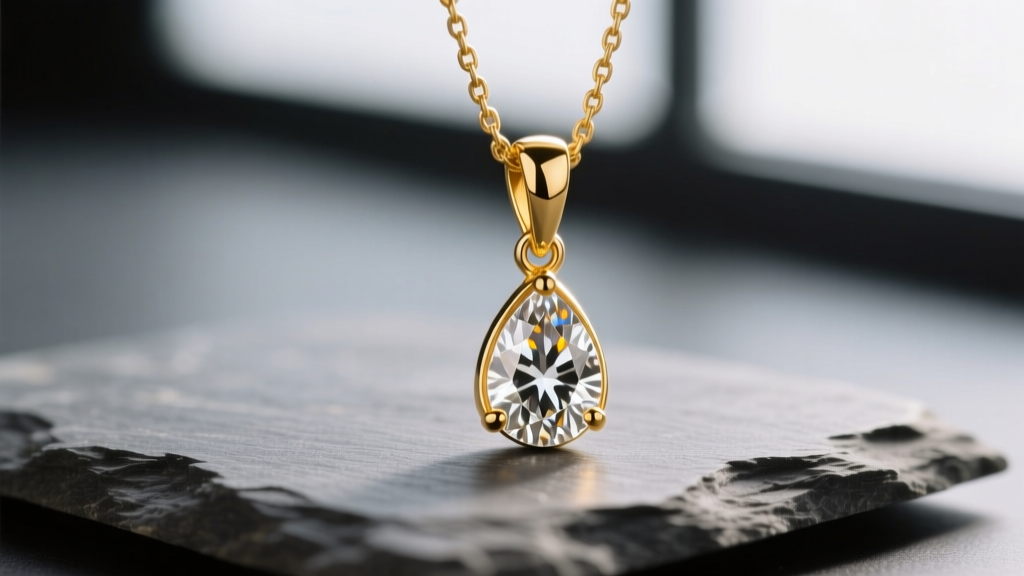
The Physics and Anatomy of a Drop Necklace
A gold drop necklace is defined by its vertical orientation—a pendant or gemstone that hangs downward from a single point on the chain, creating a pendulum effect that draws the eye toward the neckline. Unlike flush-fitting collars or evenly weighted station necklaces, the drop necklace concentrates gravitational stress on a single, critical junction: the bail. When selecting the right material for this style, you are not just choosing a color; you are engineering for friction, weight distribution, and long-term structural integrity.
The constant micro-movements of the human body cause the pendant to swing, creating repetitive friction where the bail meets the interior of the chain links. If the gold alloy is too soft, this friction will slowly erode the metal, eventually leading to catastrophic failure and the loss of the pendant. Understanding the metallurgical properties of gold is therefore essential before investing in a drop necklace designed for daily wear.
Solid Gold Karats Compared for Drop Pendants
Pure gold (24k) is notoriously malleable, possessing a Vickers Hardness (HV) of roughly 25. To create jewelry that can withstand the mechanical stress of a heavy drop pendant, gold is alloyed with metals like copper, silver, zinc, and palladium. The Gemological Institute of America (GIA) notes that these alloys not only change the color of the gold but drastically alter its tensile strength and scratch resistance.
| Karat | Gold Purity | Vickers Hardness (HV) | Drop Pendant Suitability | Avg. Price Range (USD) |
|---|---|---|---|---|
| 24k | 99.9% | ~25 HV | Poor (Bails will deform and stretch under weight) | $800 - $2,500+ |
| 18k | 75.0% | ~120 HV | Good (Rich color, suitable for lightweight drops under 4 grams) | $500 - $1,800 |
| 14k | 58.3% | ~140 HV | Excellent (Industry standard, handles heavy stone drops easily) | $250 - $900 |
| 10k | 41.7% | ~160 HV | Superior Durability (Very hard, but pale color and brittle prongs) | $150 - $450 |
For a gold drop necklace featuring a substantial gemstone or a solid metal teardrop weighing over 5 grams, 14k gold is the optimal choice. Its higher copper and zinc content provides the rigidity needed to keep the bail circular and prevent the chain from elongating. Conversely, 18k gold is perfect for delicate, sub-3-gram diamond solitaire drops where the rich, buttery yellow hue is prioritized over extreme tensile strength.
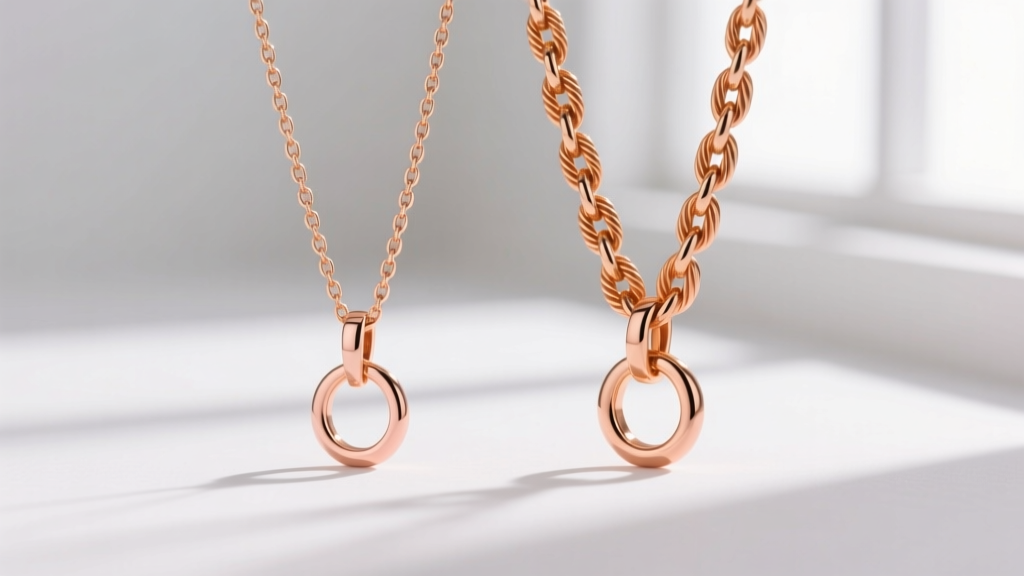
Vermeil vs. Gold Plated: The Base Metal Factor
Not all gold drop necklaces are solid throughout. For budget-conscious buyers, gold vermeil and gold-plated options offer the aesthetic of solid gold at a fraction of the cost. However, the structural realities of a drop necklace make the base metal critically important.
The 2.5-Micron Rule and FTC Standards
According to the Federal Trade Commission (FTC) Jewelry Guides, a piece can only be legally marketed as "gold vermeil" if it consists of a sterling silver base coated with a minimum of 2.5 microns of 10k gold or higher. Standard gold plating, often applied over brass or copper bases, typically features a gold layer of less than 0.5 microns.
- Gold Vermeil: The sterling silver base provides excellent structural memory. If a vermeil drop necklace catches on clothing, the silver core will bend but rarely snap. However, the friction at the bail will eventually wear through the 2.5-micron gold layer, revealing the white silver beneath.
- Gold Plated (Brass Base): Brass is rigid but lacks the fatigue resistance of silver. Repeated swinging of a heavy drop pendant can cause microscopic stress fractures in the brass chain links, leading to sudden snapping. Furthermore, brass reacts with human sweat, leading to galvanic corrosion that degrades the chain from the inside out.
"When engineering a drop necklace, the bail is the engine's piston. It takes all the friction. If you use a thin plated chain with a heavy pendant, you are guaranteeing a structural failure within six months of daily wear." — Master Bench Jeweler
Structural Integrity: Bails, Gauges, and Weight Distribution
The success of a gold drop necklace relies heavily on the ratio between the pendant's weight and the chain's gauge (thickness). A common mistake is pairing a heavy, solid-gold teardrop pendant with a delicate, low-gauge chain, resulting in an unbalanced drape and accelerated metal fatigue.
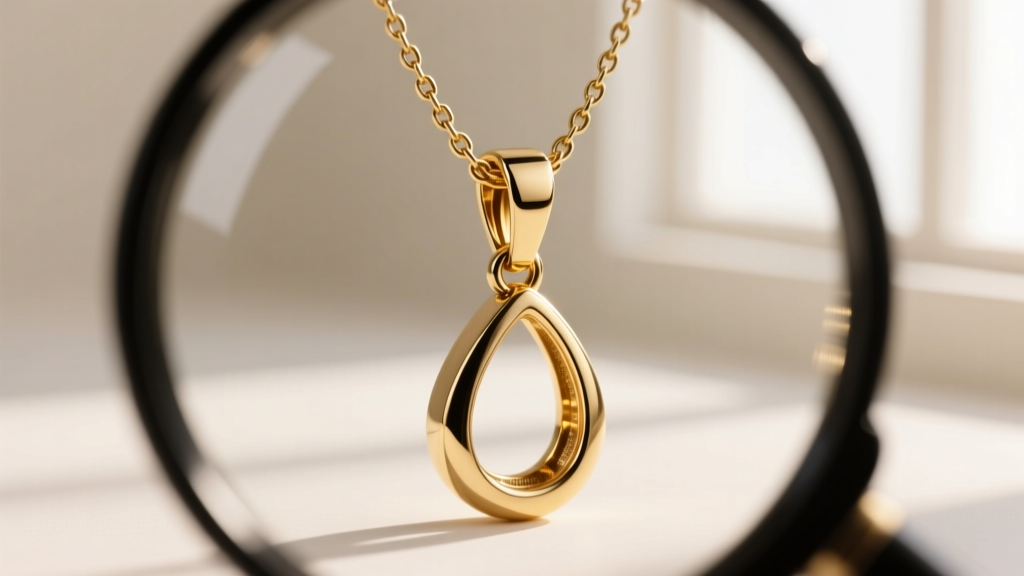
Chain Gauge Recommendations by Pendant Weight
To ensure your gold drop necklace hangs perfectly and lasts a lifetime, match the chain gauge to the pendant's mass:
- Micro Drops (Under 2 grams): A 0.6mm to 0.8mm cable or rope chain is sufficient. These lightweight chains allow the small pendant to move freely without causing friction damage.
- Standard Drops (2 to 6 grams): Opt for a 1.0mm to 1.2mm curb or cable chain. The interlocking links of a curb chain lay flat against the skin, providing a stable track for the bail to glide across.
- Statement Drops (Over 6 grams): You need a 1.5mm+ box chain or a reinforced wheat chain. Box chains feature square links that distribute the weight of a heavy pendant evenly, preventing the localized stretching that plagues standard cable chains.
Real-World Failure Modes and Maintenance
Even the finest 18k or 14k gold drop necklace will degrade if subjected to improper care. Understanding the specific failure modes of this jewelry style allows you to intervene before a repair becomes necessary.
Bail Elongation and "Keyholing"
The most frequent failure point is the bail—the loop that connects the drop pendant to the chain. Over time, the friction of the chain rubbing against the inside of the bail causes the circular hole to stretch into an oval, and eventually, a "keyhole" shape. Once the keyhole becomes wide enough, the chain can slip through, dropping the pendant. To prevent this, have a jeweler inspect the bail thickness annually. Adding a tiny, hardened platinum or white gold sleeve inside a yellow gold bail can eliminate friction wear entirely.
Chain Stretch (Elongation)
Gold is a dense, heavy metal. When a heavy drop pendant pulls continuously on a gold chain, the individual links can slowly elongate. This is particularly prevalent in 18k and 22k gold. If you notice your necklace sitting lower on your chest than it used to, the chain is stretching. Remove the pendant and wear the chain alone for a few weeks to allow the metal to rest, or upgrade to a thicker gauge.
Final Verdict: Which Gold Should You Choose?
Selecting the ideal material for your gold drop necklace requires balancing aesthetic preferences with mechanical realities. If you desire a lightweight, everyday diamond drop with a rich, luxurious color, 18k solid gold is unmatched. If you are investing in a heavier, statement gemstone drop intended for daily wear and tear, 14k solid gold provides the necessary Vickers hardness to protect your investment. Avoid gold-plated brass for any drop necklace exceeding 3 grams, and reserve 24k gold strictly for occasional-wear, lightweight cultural pieces where structural stress is minimal. By matching the alloy to the architecture of the drop, you ensure a piece that drapes beautifully and endures for generations.


