2026 Authentic Great White Shark Tooth Necklace Trends & Sourcing
Explore the 2026 resurgence of the authentic great white shark tooth necklace. Learn ethical sourcing, CITES rules, and high-end coastal styling tips.

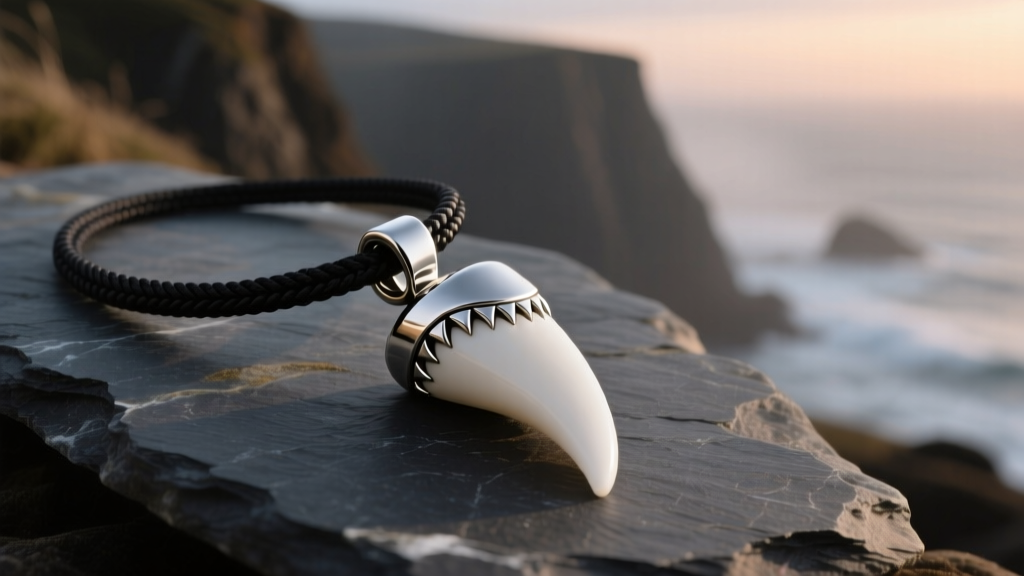
Once relegated to the realm of surf-shop souvenirs and 1990s beach clichés, the authentic great white shark tooth necklace has undergone a radical transformation. In 2026, this striking piece of marine history has been reclaimed by high-end coastal luxury brands and avant-garde streetwear designers alike. No longer just a talisman for surfers, it is now a centerpiece of the "Dark Nautical" and "Coastal Grandfather" aesthetics, prized for its raw, organic geometry and the complex ethics surrounding its acquisition.
However, navigating the market for genuine apex predator jewelry requires more than just an eye for style. Between stringent international conservation laws, sophisticated counterfeits, and the physical vulnerabilities of organic enamels, buying an authentic piece is an exercise in due diligence. This guide breaks down the morphological, legal, and metallurgical realities of acquiring and styling a genuine great white shark tooth pendant in today's market.
The 2026 Aesthetic: Dark Nautical and Coastal Luxury
The styling paradigm for shark tooth pendants has shifted dramatically. The polished, yellow-gold rope chains of the early 2010s have been entirely replaced by matte, oxidized, and industrial hardware. In 2026, the authentic great white shark tooth necklace is treated as an artifact. Jewelers are pairing the stark, vitreous white and charcoal-grey enamel of the tooth with brushed Grade 23 Titanium (Ti-6Al-4V ELI) or heavily oxidized sterling silver bails.
Styling-wise, the piece is now layered over heavyweight organic cottons, merino wool turtlenecks, and unstructured linen blazers. The goal is juxtaposition: the primal, serrated edge of the *Carcharodon carcharias* tooth contrasting against refined, minimalist tailoring. For women's fashion, the tooth is increasingly worn as a bold, solitary statement piece on a choker-length blackened steel chain, serving as an organic alternative to traditional diamond or gemstone pendants.
Navigating CITES and Ethical Sourcing
The most critical aspect of purchasing an authentic great white shark tooth necklace is understanding the legal framework. The great white shark is a vulnerable species protected under international law. In 2004, it was added to CITES Appendix II, which strictly regulates international trade to ensure it does not threaten the species' survival. Furthermore, regional bodies like NOAA Fisheries enforce rigorous protections in domestic waters.
Because great whites do not shed teeth on beaches with any predictable frequency (unlike reptiles), finding a "beach-combed" modern great white tooth is statistically improbable. The modern teeth on the market primarily originate from two sources:
- Regulated Bycatch: Teeth salvaged from sharks accidentally caught in legal, heavily monitored commercial fisheries, accompanied by strict chain-of-custody documentation.
- Scientific Tagging Programs: Occasionally, teeth are recovered during non-lethal biological sampling and tagging operations, though these rarely enter the commercial jewelry market.
Any reputable jeweler selling a modern, authentic great white shark tooth necklace in 2026 must provide a CITES permit or verifiable provenance proving the specimen was legally acquired before the ban or sourced through a compliant, non-detrimental bycatch program. If a vendor cannot produce this paperwork, the tooth is either poached, misidentified, or a replica.
Morphological Matrix: What Are You Actually Buying?
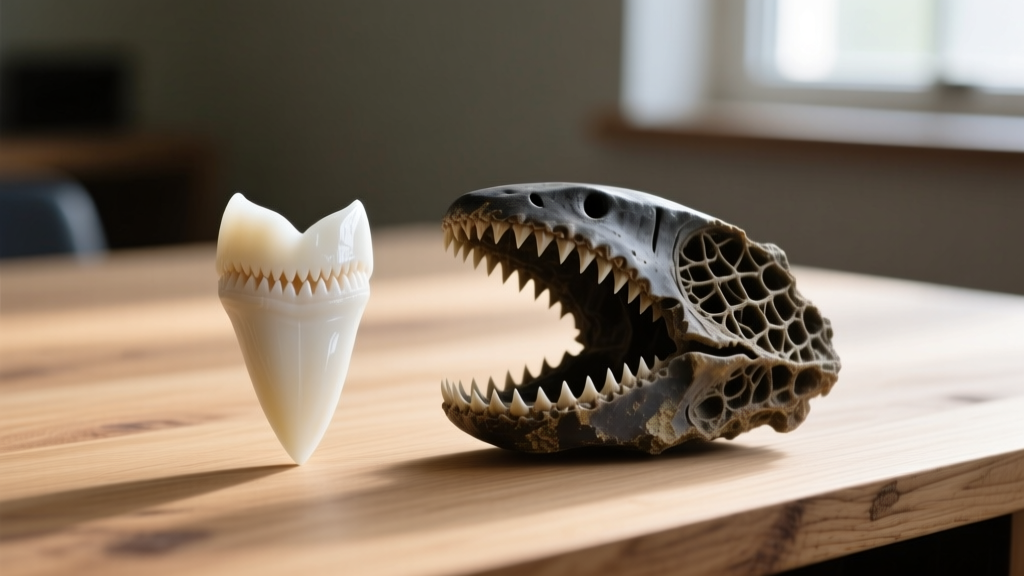
Because modern great white teeth are heavily restricted and exceptionally expensive, many buyers opt for fossilized alternatives or related species. Understanding the morphological differences is vital to ensure you are paying the correct market rate.
| Specimen Type | Scientific Name | Key Morphological Traits | 2026 Market Price Range |
|---|---|---|---|
| Modern Great White | Carcharodon carcharias | Broad, triangular, coarse serrations, pristine white/charcoal enamel. Requires CITES permit. | $800 - $2,500+ |
| Fossilized Great White | Carcharodon hastalis | Ancestral great white. Lacks coarse serrations, smoother edges, heavily mineralized (grey/blue). | $150 - $400 |
| Megalodon | Otodus megalodon | Massive (3-6 inches), distinct bourrelet (band) between blade and root, heavily serrated. | $300 - $5,000+ |
| Shortfin Mako | Isurus oxyrinchus | Narrow, needle-like, smooth edges (no serrations), highly glossy. Often mislabeled as great white. | $40 - $120 |
Anatomy of a Premium Pendant: Bails, Caps, and Metals
The physical connection between the organic tooth and the metal chain is the most common point of failure in shark tooth jewelry. Historically, jewelers would drill a hole directly through the root (the porous, calcified base of the tooth) to thread a cord. In 2026, this practice is considered barbaric by high-end artisans, as it compromises the structural integrity of the root and invites moisture trapping, leading to internal fractures.
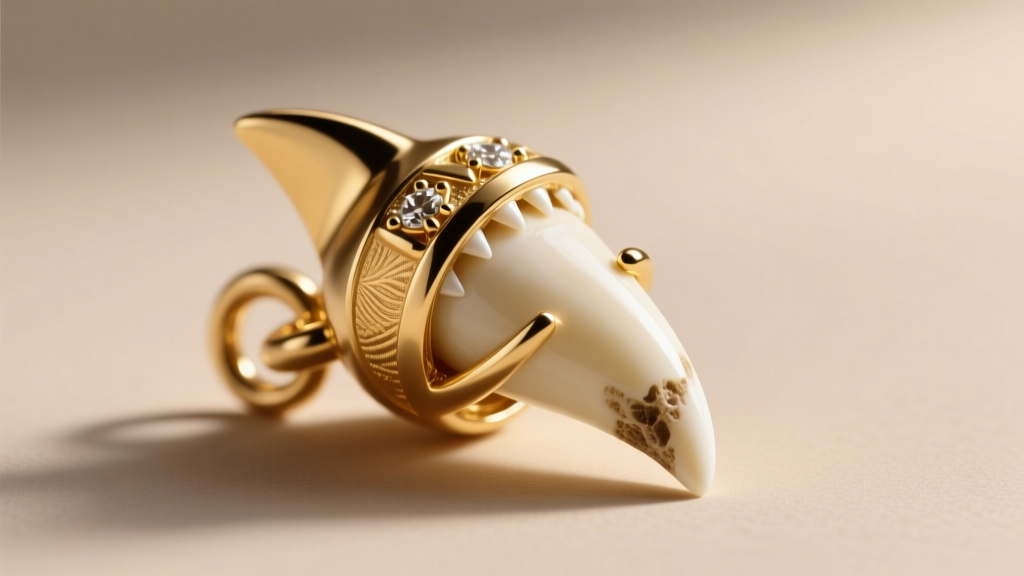
The Superiority of the Cap Bail
Premium authentic great white shark tooth necklaces now utilize a cap bail or a prong-set cage. This hardware wraps around the upper lobes of the root, securing the tooth via tension and custom-fitted prongs without penetrating the enamel or the dentin.
When selecting the metal for the bail, consider the environment in which the necklace will be worn. Sweat and saltwater are highly corrosive. The top-tier material choices include:
- Grade 23 Titanium (Ti-6Al-4V ELI): The ultimate choice for saltwater resistance. It is lightweight, hypoallergenic, and immune to galvanic corrosion, ensuring the bail never degrades and stains the porous tooth root.
- 18k Solid Gold: Excellent for luxury coastal styling. Unlike 14k gold, which contains higher copper alloys that can oxidize and leave green stains on the tooth root, 18k gold remains stable and inert.
- 316L Marine-Grade Stainless Steel: A budget-friendly but highly durable option that resists pitting in marine environments.
Chain Pairings for the Modern Collector
The chain must support the weight of the tooth (which can range from 15 to 40 grams depending on the specimen) without overpowering its organic texture. Waxed linen cords and braided vegan leather remain popular for casual wear, as they allow the tooth to rest flat against the sternum. For metal chains, a 3mm to 4mm rounded box chain or a matte-finish Figaro chain provides the necessary tensile strength while maintaining the rugged, nautical aesthetic.
Authentication: Spotting Resin and Bone Fakes
As the price of authentic specimens has surged, so has the sophistication of counterfeits. In 2026, the market is flooded with high-density polyurethane resin casts and carved bovine bone replicas. Here is how domain experts authenticate a genuine great white tooth:
- The Enamel Transition: A real shark tooth features a distinct, glossy vitreous enamel that transitions sharply into the porous, matte-textured root. Resin casts often have a uniform sheen or a visible seam line running down the edge where the mold halves met.
- Thermal Conductivity: Genuine enamel and dentin feel distinctly cool to the touch and take time to warm up against the skin. Resin and plastic fakes immediately adopt ambient room temperature and feel unnaturally warm.
- Serration Geometry: Under a jeweler's loupe, the serrations of a true *Carcharodon carcharias* tooth show micro-wear patterns and natural asymmetries. Carved bone or 3D-printed resin will display perfectly uniform, machine-like teeth along the edge.
Preservation Protocols: Preventing Enamel Fractures
An authentic great white shark tooth is an organic artifact that requires specific environmental controls. The most common failure mode for vintage and fossilized teeth is desiccation cracking. When a tooth is removed from its natural marine environment or a stable display case and worn against the body, the fluctuating humidity and body heat can cause the inner dentin to dry out and expand or contract at a different rate than the outer enamel shell, leading to catastrophic splitting.
"To maintain the structural integrity of a fossilized or modern shark tooth pendant, collectors should apply a micro-thin layer of food-grade mineral oil to the root and unglazed dentin areas twice a year. Never use synthetic lubricants or waxes, as they can trap moisture and accelerate bacterial degradation of the porous root structure."
Furthermore, avoid wearing your necklace in chlorinated pools or hot tubs. Chlorine is highly reactive and will permanently dull the glossy finish of the enamel, micro-etching the surface and destroying the specimen's optical depth and market value.
Final Verdict on the 2026 Market
The authentic great white shark tooth necklace has successfully graduated from a niche surf accessory to a highly regulated, luxury collector's item. The 2026 market demands absolute transparency regarding CITES compliance, favoring ethical bycatch provenance and fossilized ancestral alternatives over questionable modern specimens. By prioritizing non-invasive cap bails, corrosion-resistant titanium or 18k gold hardware, and rigorous authentication protocols, collectors can safely wear a piece of marine apex history while respecting the fragile ecosystems from which these remarkable artifacts originate.


