How to Style, Layer, and Clean a Sparkle Chain Necklace
Learn how to perfectly layer, style, and clean your sparkle chain necklace. Expert tips on gauges, clasps, and safe ultrasonic use.

What Defines a Sparkle Chain Necklace?
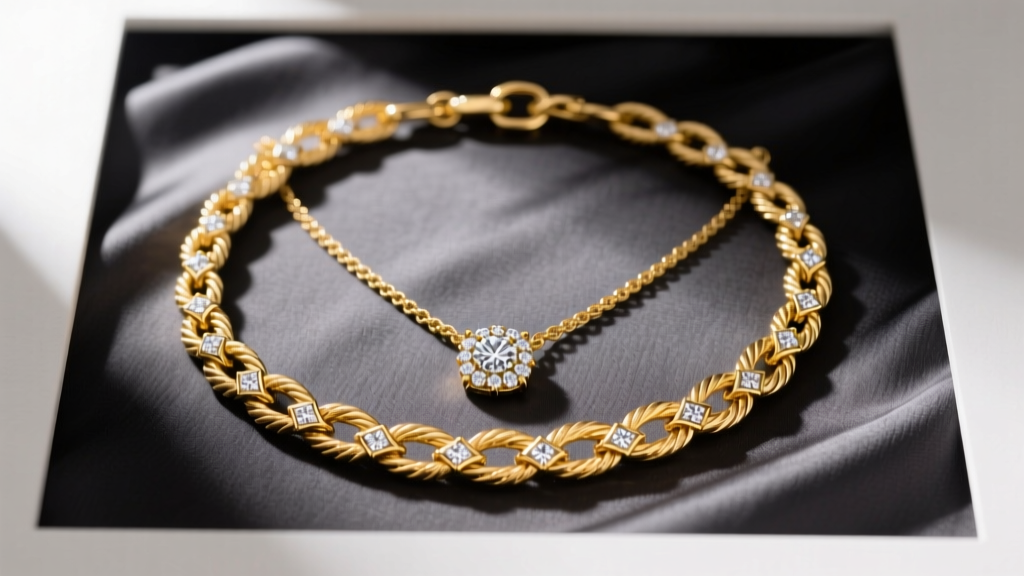
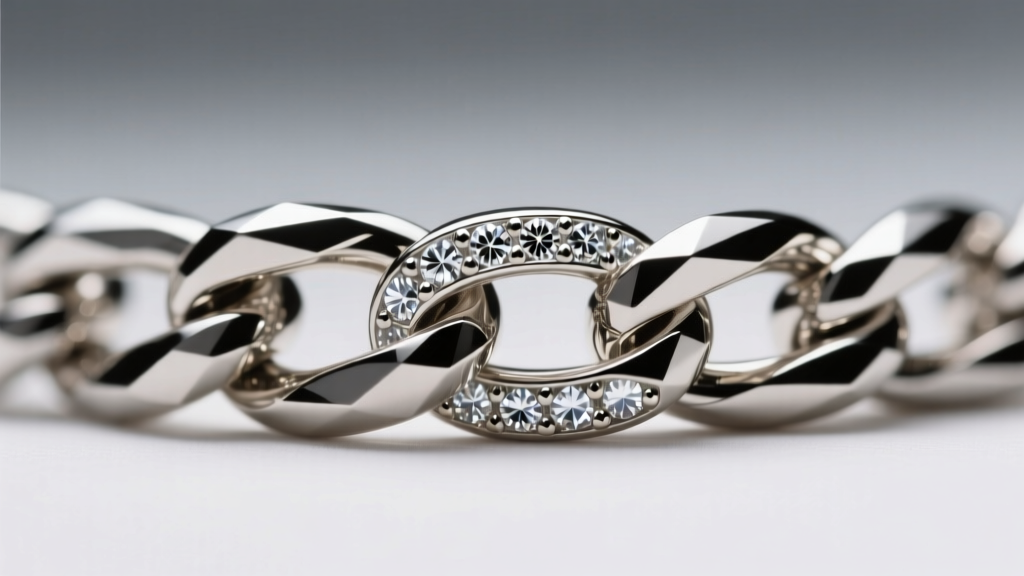
When jewelers and stylists refer to a sparkle chain necklace, they are generally describing one of two distinct constructions. The first is a solid metal chain—such as a rope, Figaro, or box chain—that has been diamond-cut. This manufacturing process uses precision blades to slice flat, angled facets into the metal links, creating a highly reflective surface that mimics the light return of gemstones. The second variation is a delicate chain integrated with micro-pavé or bezel-set diamond and cubic zirconia stations, often called a tennis or station chain.
As we move through 2026, the trend of mixing high-reflectivity diamond-cut metals with subtle gemstone stations has dominated neckline styling. However, maximizing the visual impact of a sparkle chain necklace requires a strategic approach to layering, hardware selection, and maintenance. Because the light-reflecting properties rely entirely on the pristine condition of the metal facets or the clarity of the set stones, improper care can quickly dull your jewelry. This step-by-step guide will teach you how to curate, wear, and maintain your pieces like a professional bench jeweler.
Step 1: Selecting the Right Lengths and Gauges for Layering
The most common mistake consumers make when layering is choosing chains of similar lengths and gauges. This not only causes severe tangling but also creates metal-on-metal friction. On the Mohs hardness scale, 14k and 18k gold sit between 2.5 and 3. When two diamond-cut chains rub together constantly, the harder edges of one link will inevitably scratch and smooth out the polished facets of the other, permanently reducing the necklace's sparkle.
To prevent this, you must adhere to the "two-inch rule" for length differentials and vary your wire gauges to create visual hierarchy and physical separation.
| Layer Position | Ideal Length | Recommended Gauge | Best Chain Style for Sparkle |
|---|---|---|---|
| Base (Choker) | 15 - 16 inches | 0.9mm - 1.2mm | Micro-pavé station or delicate diamond-cut box |
| Mid-Layer | 18 inches | 1.5mm - 2.2mm | Diamond-cut rope or Figaro |
| Statement Outer | 20 - 22 inches | 3.0mm - 4.5mm | Wide diamond-cut curb or hollow Cuban |
By staggering the lengths by at least two inches and increasing the gauge thickness as you move outward, the chains will drape in distinct arcs, allowing light to hit every diamond-cut facet without interference.
Step 2: Mastering the Clasp and Hardware Configuration
A sparkle chain necklace is only as secure as its weakest link, which is almost always the clasp. For chains under 1.5mm in gauge, manufacturers frequently use spring-ring clasps to maintain a delicate aesthetic. However, spring rings harbor a hidden failure mode: the internal spring mechanism is typically made of hardened steel, while the outer shell is gold or platinum. Over time, exposure to moisture and skin acidity can cause the internal steel to corrode or snap, resulting in sudden chain loss.
For any diamond-cut or pavé chain exceeding 1.2mm in thickness, or any chain holding a pendant heavier than 3 grams, you must upgrade to a lobster clasp. Lobster clasps feature a solid internal lever mechanism that is far more resistant to lateral stress. Furthermore, inspect the jump rings connecting the clasp to the chain. If the jump ring is not soldered shut, the sharp, angled edges of a diamond-cut rope chain can easily wedge into the split of the jump ring, prying it open and causing the necklace to slip off your neck.
Step 3: Daily Wear and Preventing Link Snagging
The very features that make a sparkle chain necklace beautiful—its sharp, angled facets and intricate link weaving—make it highly susceptible to snagging. Diamond-cut rope chains, in particular, possess microscopic hooks where the metal has been sliced. These hooks will aggressively catch on knitwear, silk, and even fine hair.
To preserve the structural integrity of the links, always put your sparkle chains on after applying cosmetics, perfumes, and hairspray. The chemical solvents in these products can leave a filmy residue that settles into the crevices of the diamond cuts, acting like a magnet for dust and dead skin cells. This buildup creates a gray, opaque layer that completely neutralizes the light return of the metal. When dressing, pull garments over your head before fastening the necklace to avoid stretching the links, which can cause irreversible kinking in rope and box chains.
Step 4: The Ultrasonic Debate and Proper Cleaning Protocol
How you clean your necklace depends entirely on its construction. According to the Gemological Institute of America (GIA), ultrasonic cleaners are highly effective for removing trapped grime from plain metal jewelry. If your sparkle chain necklace is strictly diamond-cut metal with no gemstones, a 40 kHz ultrasonic bath with a mild ammonia-based solution will violently shake debris out of the tight link crevices, restoring factory-level brilliance in minutes.
However, if your sparkle chain features micro-pavé diamonds or cubic zirconia stations, never use an ultrasonic cleaner. Industry experts at JCK Online frequently note that the high-frequency vibrations of ultrasonic machines will shatter the fragile adhesive used in micro-set jewelry or loosen the microscopic prongs, leading to catastrophic stone loss.
The Safe "Drop, Soak, Swish" Method
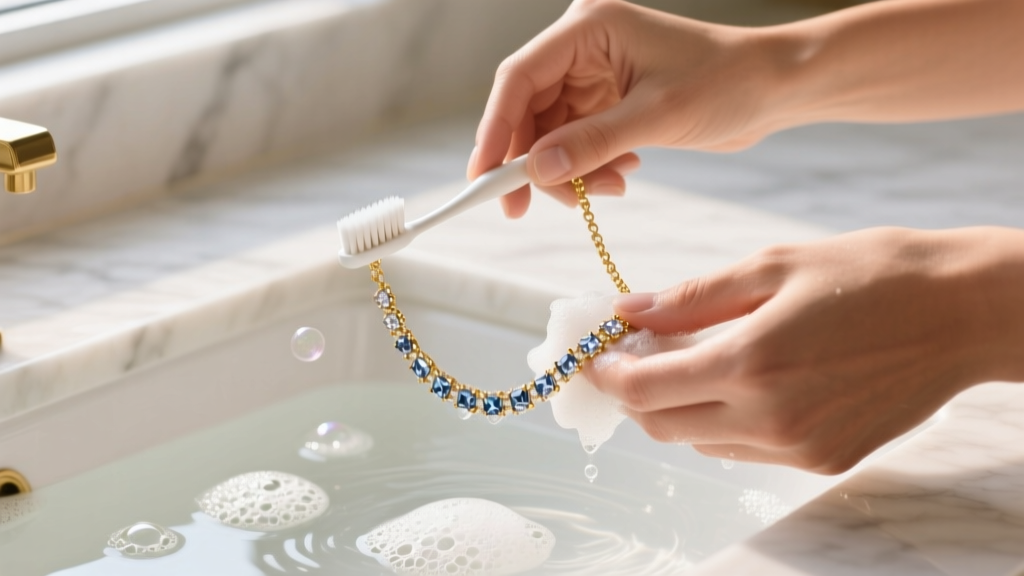
- Drop: Fill a ceramic bowl with warm water and three drops of mild, phosphate-free dish soap (avoid harsh detergents that can strip rhodium plating from white gold chains).
- Soak: Submerge the sparkle chain necklace and let it sit for 15 to 20 minutes to loosen sebum and cosmetic buildup.
- Swish: Gently agitate the water. For stubborn grime in diamond-cut grooves, use a brand-new, ultra-soft baby toothbrush to lightly sweep along the grain of the chain. Never scrub in circular motions, as this can bend delicate links.
- Rinse and Dry: Rinse under lukewarm running water, ensuring the drain is plugged. Pat dry with a lint-free microfiber cloth, avoiding paper towels which can leave microscopic scratches on high-polish facets.
Troubleshooting Common Sparkle Chain Issues
Even with meticulous care, you may encounter specific issues inherent to sparkle chains. Here is how to troubleshoot them:
Rhodium Wear on White Gold: If your white gold diamond-cut chain begins to look dull or slightly yellow in high-friction areas (like the back of the neck), the rhodium plating is wearing off. The diamond-cutting process exposes fresh metal, making re-plating necessary every 12 to 18 months to maintain that icy, high-contrast sparkle.
Kinking in Rope Chains: If a diamond-cut rope chain kinks, do not pull it tight. Lay the chain flat on a glass surface and use two pairs of smooth-jawed nylon pliers to gently massage the kink out in the opposite direction of the twist. Pulling a kinked rope chain will permanently deform the woven links, destroying the light-reflecting geometry.
Bench Jeweler's Tip: To test if your diamond-cut facets are still sharp and reflective, hold the sparkle chain necklace under a single, direct point-source light (like a smartphone flashlight) in a dark room. If the light scatters in sharp, distinct starbursts, your facets are pristine. If the light creates a soft, diffused glow, the metal has experienced friction wear and requires a professional polish to recut the facets.
By understanding the mechanical and optical properties of your jewelry, you can ensure your sparkle chain necklace remains a brilliant, eye-catching staple in your collection for decades to come. Proper layering geometry, robust hardware upgrades, and construction-specific cleaning protocols are the true secrets to lasting radiance.


