Pink Opal Bead Necklace Guide: Material Properties & Care
Explore the mineral properties, grading, and stringing materials of a pink opal bead necklace. Learn how to identify, care for, and buy authentic opals.

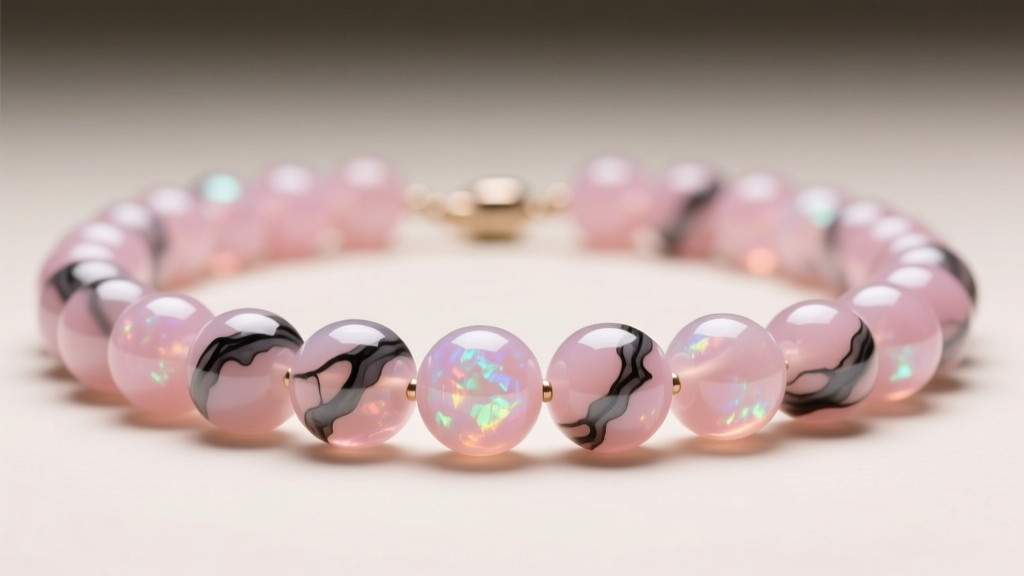
The pastel jewelry movement has firmly cemented the pink opal bead necklace as a staple in contemporary gemstone collections. Sourced primarily from the high altitudes of the Peruvian Andes, this gemstone offers a soft, translucent blush that ranges from delicate baby pink to vibrant bubblegum. However, beneath its trendy aesthetic lies a complex mineral structure that demands specific care, precise stringing techniques, and an informed buying strategy.
As a porous, hydrated silica, pink opal behaves very differently than crystalline quartz or beryl. In this comprehensive material guide, we dissect the mineralogy, grading standards, and structural vulnerabilities of pink opal beads, providing you with the technical knowledge required to select, wear, and maintain a strand that will last a lifetime.
The Mineralogy of Pink Opal: What You Are Actually Wearing
Unlike its precious counterparts (such as Australian black or white opal), pink opal is classified as a "common" opal. This means it lacks the internal silica sphere diffraction grating required to produce play-of-color. Instead, its value lies in its uniform body color and translucency.
- Chemical Composition: Hydrated silicon dioxide (SiO2·nH2O). The pink hue is caused by trace organic compounds and inclusions of palygorskite or sepiolite clay minerals.
- Water Content: Typically ranges between 3% and 10% by weight. This internal water is structurally bound but remains vulnerable to environmental dehydration.
- Mohs Hardness: 5.5 to 6.5. While harder than a steel knife (4.5), it is significantly softer than quartz (7) and topaz (8), making it highly susceptible to surface abrasion from everyday dust.
- Specific Gravity: Approximately 2.05 to 2.20, making it notably lighter than most crystalline gemstones of the same volume.
According to the Mindat mineralogical database, the amorphous to cryptocrystalline structure of Peruvian pink opal means it has no cleavage planes. While this prevents it from shattering along flat lines like topaz, it results in conchoidal (shell-like) fracturing when subjected to sharp impacts.
Natural vs. Treated vs. Synthetic: Material Identification
The market is currently flooded with dyed alternatives and synthetic lookalikes. Because a high-quality pink opal bead necklace commands a premium, understanding the physical properties that separate natural Peruvian opal from imitations is critical for any serious collector.
| Material Type | Origin / Source | Specific Gravity | Refractive Index | Key Visual Identifier |
|---|---|---|---|---|
| Natural Pink Opal | Peru (Andes) | 2.05 - 2.20 | 1.450 | Subtle color zoning, occasional black/brown dendritic matrix inclusions. |
| Dyed Common Opal | Various (often Mexico) | 1.90 - 2.10 | 1.440 | Dye concentration visible in surface-reaching fractures; unnaturally saturated. |
| Synthetic (Gilson) | Laboratory | 1.70 - 1.75 | 1.460 | "Lizard skin" texture under magnification; completely devoid of natural matrix. |
| Dyed Howlite | USA / South Africa | 2.53 - 2.59 | 1.590 | Heavier in hand; distinct grey/white veining that absorbs dye unevenly. |
When evaluating a strand, always use a 10x jeweler's loupe to inspect the drill holes. In dyed stones, the dye will pool heavily around the micro-fractures near the drill site. For a definitive assessment of questionable pieces, the Gemological Institute of America (GIA) recommends advanced spectroscopic testing to identify artificial colorants.
Bead Grading and Sizing: Evaluating the Strand
Pink opal beads are graded primarily on color uniformity, translucency, and the presence of matrix (the host rock). A standard 16-inch strand contains dozens of individual beads, and consistency across the entire strand dictates the wholesale and retail value.
The Grading Scale
- AAA Grade (Gem Quality): Uniform pastel pink, high translucency, zero chalky spots, and absolutely no dark matrix inclusions. These are rare and command the highest price per carat.
- AA Grade (Standard Quality): Good pink color but may feature minor chalky white spots or tiny, aesthetically pleasing black dendritic inclusions. Makes up 80% of the commercial market.
- A Grade (Commercial Quality): Heavy matrix inclusions, pale or blotchy color, and opaque sections. Often used for bohemian-style jewelry where a "rustic" look is desired.
Sizing and Drape
Bead diameter drastically alters the drape and weight of the necklace. A 4mm to 5mm strand offers a delicate, fluid drape suitable for layering with gold chains. A 6mm to 7mm strand provides a classic, substantial presence that rests perfectly on the collarbone. Beads 8mm and larger create a heavy, statement-making piece but require significantly more robust stringing materials to support the increased static load.
Stringing Material Comparison: The Hidden Failure Point
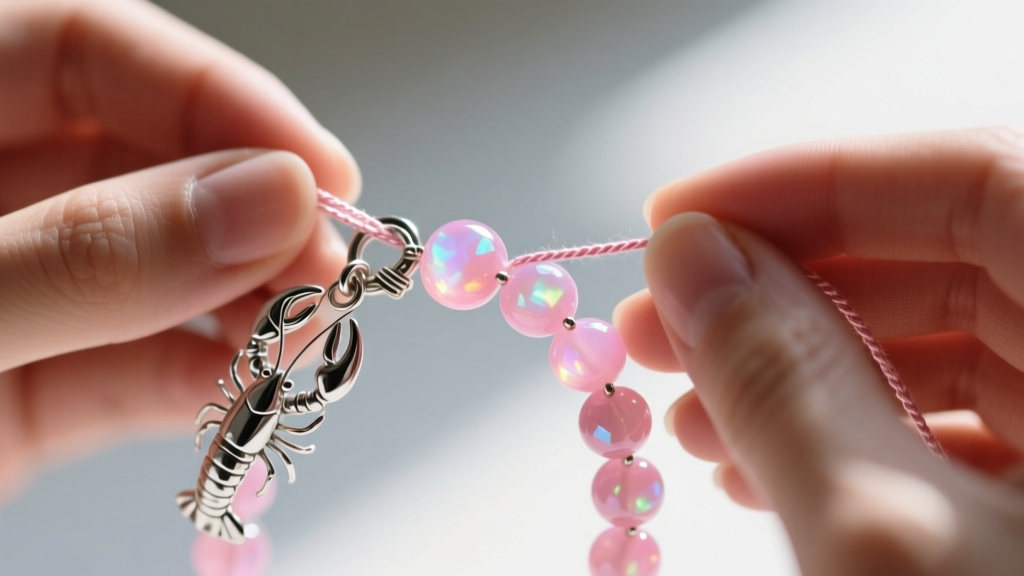
The most common failure mode for any bead necklace is not the gemstone breaking, but the stringing material degrading or snapping. Pink opal beads are relatively light, but their drill holes can sometimes feature sharp, unpolished internal edges that act like microscopic saws against the stringing medium.
Material Options Evaluated
- Natural Silk Thread: The traditional choice for knotting. While it offers an unparalleled, liquid-like drape, silk is a protein fiber that degrades when exposed to sweat, perfumes, and UV light. It requires restringing every 2 to 3 years.
- 49-Strand Micro-Fused Stainless Steel Wire (e.g., Beadalon): Offers extreme tensile strength (up to 40 lbs for 0.018" diameter). However, steel wire has "memory" and will permanently kink if bent, resulting in a stiff necklace that lacks a natural drape.
- Braided UHMWPE (Ultra-High-Molecular-Weight Polyethylene): Marketed under names like Power Pro or WildFire, this is the superior choice for a pink opal bead necklace in 2026. It offers the high tensile strength of steel (20 lb test in a 0.008" diameter) with the flexibility and knot-holding capability of silk. It is entirely impervious to water, sweat, and UV degradation.
Expert Tip: Always use 14k gold-filled or sterling silver "wire guardians" (horseshoe-shaped metal tubes) at the clasp connection point. This prevents the stringing material from abrading against the metal jump ring during the micro-movements of daily wear.
Care, Crazing, and Long-Term Maintenance
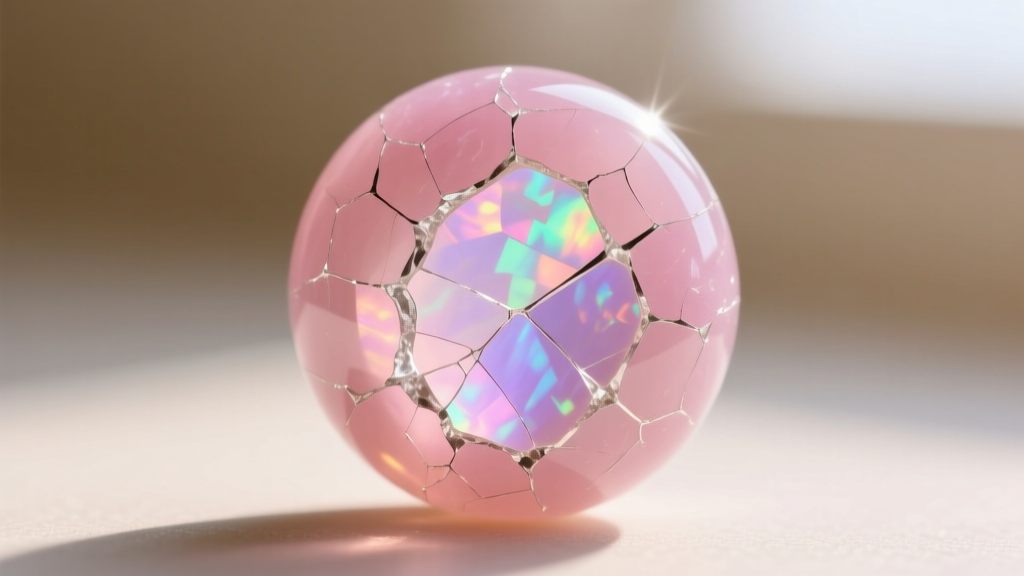
Because pink opal contains structural water, it is susceptible to a phenomenon known as crazing—the development of a fine, spiderweb network of surface cracks caused by rapid dehydration or thermal shock. Once an opal crazes, the structural integrity is permanently compromised, and the bead will eventually crumble.
Strict Care Protocols
- Never use ultrasonic cleaners. The high-frequency acoustic cavitation will shatter the internal silica structure of common opal.
- Avoid extreme heat. Do not wear your necklace in saunas, hot tubs, or while blow-drying your hair. Temperatures exceeding 100°C (212°F) will rapidly boil off the internal water content.
- Chemical avoidance. Opal is highly sensitive to hydrofluoric acid and caustic alkaline solutions. Remove your necklace before using harsh household cleaning agents or applying aerosol hairsprays.
- Proper storage. Store the necklace in a soft, padded pouch away from direct sunlight. If you live in an extremely arid climate, storing the opal in a sealed bag with a slightly damp (not wet) cotton ball can help maintain ambient humidity and prevent long-term dehydration.
Pricing Guide: What Should a Pink Opal Bead Necklace Cost?
Understanding the intersection of bead size, grade, and finishing hardware will protect you from retail markups and counterfeit pricing. Below is the current market valuation for a standard 16-to-18-inch finished necklace.
- Entry-Level (A Grade, 6mm beads, silver hardware): $45 - $75. Expect visible matrix and opaque beads.
- Mid-Tier (AA Grade, 7mm beads, gold-filled hardware): $120 - $180. Good color consistency with minor inclusions.
- Investment Grade (AAA Grade, 8mm+ beads, solid 14k gold clasp): $350 - $600+. Flawless translucency, uniform pastel hue, and premium stringing materials.
When purchasing a pink opal bead necklace, always request information regarding the stringing material and the exact origin of the stones. A reputable jeweler will gladly provide these material specifications, ensuring your investment is both structurally sound and authentically sourced.


