2026 Challenge Coin Necklace Buying Guide & Fit Chart
Discover how to choose the perfect challenge coin necklace. Our 2026 buying guide covers chain gauges, enamel types, bail mounts, and weight limits.

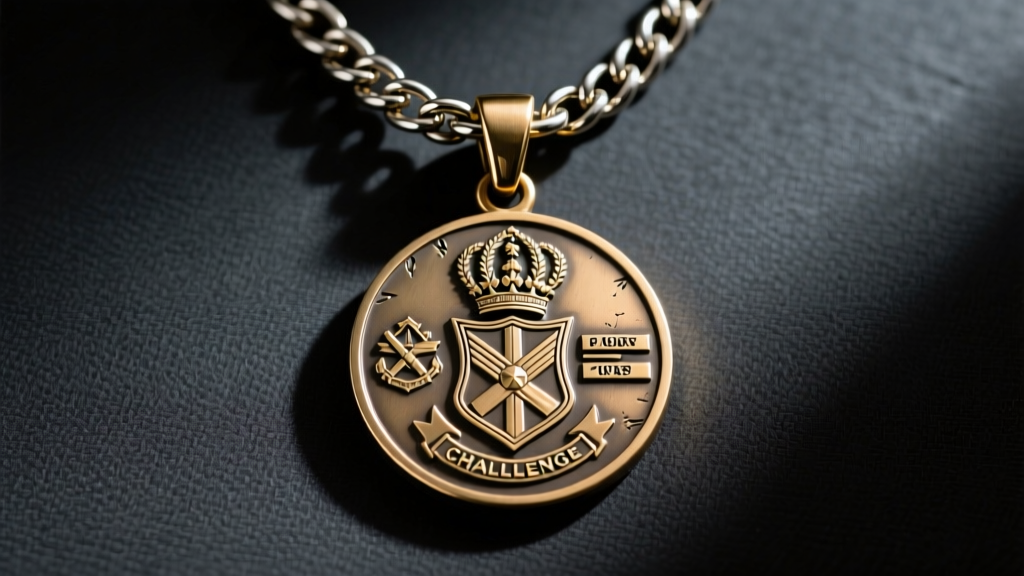
The Evolution of the Challenge Coin Necklace
Once confined to the pockets of military personnel, first responders, and fraternal organizations, the challenge coin has evolved into a prominent staple of modern heritage jewelry. A well-crafted challenge coin necklace serves as a wearable testament to service, achievement, and camaraderie. However, transitioning a heavy, dense metal coin from a pocket to a pendant requires serious structural engineering. In 2026, the market is flooded with mass-produced novelty chains that simply cannot support the weight of a genuine minted coin. This comprehensive buying guide will teach you how to evaluate coin metallurgy, select the correct chain gauge, and choose a bail mount that guarantees your necklace survives daily wear without snapping.
Decoding the Coin: Struck Brass vs. Cast Zinc Alloy
The foundation of any challenge coin necklace is the pendant itself. When evaluating a coin for jewelry conversion, you must first identify its base metal and manufacturing process. According to the American Numismatic Association, the method of striking deeply impacts the durability and detail of the final piece.
Struck Brass and Bronze
Authentic military and high-end corporate challenge coins are typically die-struck from solid brass or bronze. This process involves stamping a metal blank under hundreds of tons of pressure, resulting in razor-sharp relief details, high structural density, and a satisfying, heavy weight. A standard 1.75-inch solid brass coin weighs between 40 and 50 grams. While this weight feels premium, it demands a heavy-duty chain.
Cast Zinc Alloy (Zamak)
Budget-friendly or highly complex 3D-shaped coins are often cast from zinc alloy. While casting allows for intricate, multi-dimensional shapes that die-striking cannot achieve, zinc alloy is inherently softer and more brittle. Over time, zinc coins can suffer from "pitting" or surface oxidation if the outer plating wears away. If you are buying a zinc alloy challenge coin necklace, ensure it features a thick, protective clear-coat or epoxy dome to prevent skin contact with raw zinc.
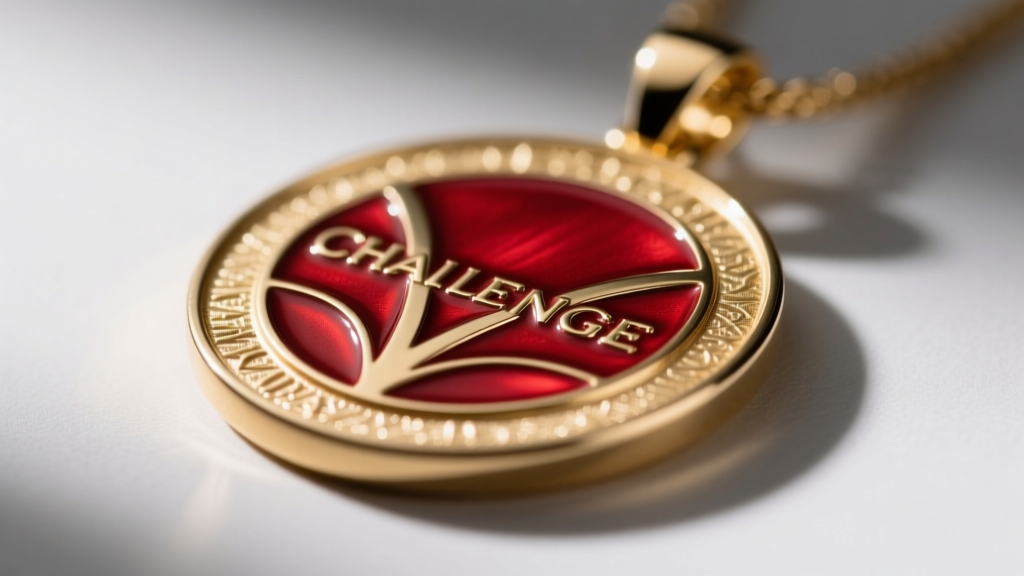
Enamel Finishes: Hard vs. Soft
Most challenge coins feature colored enamel to highlight insignias and text. Understanding the difference between soft and hard enamel is crucial for a necklace, as the pendant will constantly experience friction against clothing.
- Soft Enamel: The color fill is recessed below the raised metal lines. This provides a highly textured, traditional look. However, the raised metal lines are the first to show wear and tear, and the recessed enamel can trap dirt and oils from the skin.
- Hard Enamel (Cloisonné): The enamel is filled to the top of the metal lines and then polished completely flat. This creates a smooth, glass-like surface that is highly resistant to scratching and friction. For a necklace that will be worn daily under a shirt, hard enamel is the superior choice for longevity.
The Critical Link: Bail and Mount Engineering
How the coin connects to the chain is the most common point of failure in challenge coin jewelry. Never buy a necklace where the chain is simply fed through a poorly drilled hole in the coin's rim.
Edge-Drilling vs. Soldered Loops
Drilling a hole directly through the edge of a challenge coin compromises the structural integrity of the rim and ruins the coin's edge detailing. The gold standard for challenge coin necklaces is a soldered hidden loop or a peg bail epoxied and mechanically pinned into a precision-milled recess on the back or top edge of the coin. This preserves the coin's original circumference while providing a reinforced, heavy-gauge jump ring for the chain to pass through.
Bezel Settings and Wire Wrapping
For vintage or irreplaceable challenge coins, a custom bezel setting is the safest route. A jeweler will create a metal "frame" that grips the coin's edge without altering the original metal. Alternatively, heavy-gauge wire wrapping (using 16-gauge or 14-gauge sterling silver or gold-filled wire) can secure the coin without any adhesive or drilling, though this yields a more rustic, artisan aesthetic.
Chain Engineering: Gauges, Weights, and Metals
This is where most buyers make a critical error. A chain that looks robust in a display case may snap under the dynamic load of a swinging 50-gram brass coin. Jewelry suppliers like Rio Grande emphasize that chain gauge (thickness) must be matched to the pendant's weight and the wearer's activity level.
Challenge Coin Weight to Chain Gauge Chart
Use the following data table to ensure your chain can safely support your specific challenge coin necklace.
| Coin Diameter | Approx. Weight (Solid Brass) | Minimum Chain Gauge | Recommended Link Type |
|---|---|---|---|
| 1.50 inches | 25g - 30g | 2.5mm | Cable or Curb |
| 1.75 inches | 40g - 50g | 3.5mm | Box or Cuban Curb |
| 2.00 inches | 55g - 70g | 4.5mm+ | Heavy Box or Rope |
| 3D / Multi-piece | 80g+ | 5.5mm+ | Solid Curb with Welded Links |
Note: Always ensure the inner diameter of the coin's bail loop is at least 1.5mm larger than the chain gauge. For example, a 4.0mm box chain requires a bail with an inner diameter of at least 5.5mm to prevent binding and metal-on-metal friction wear.
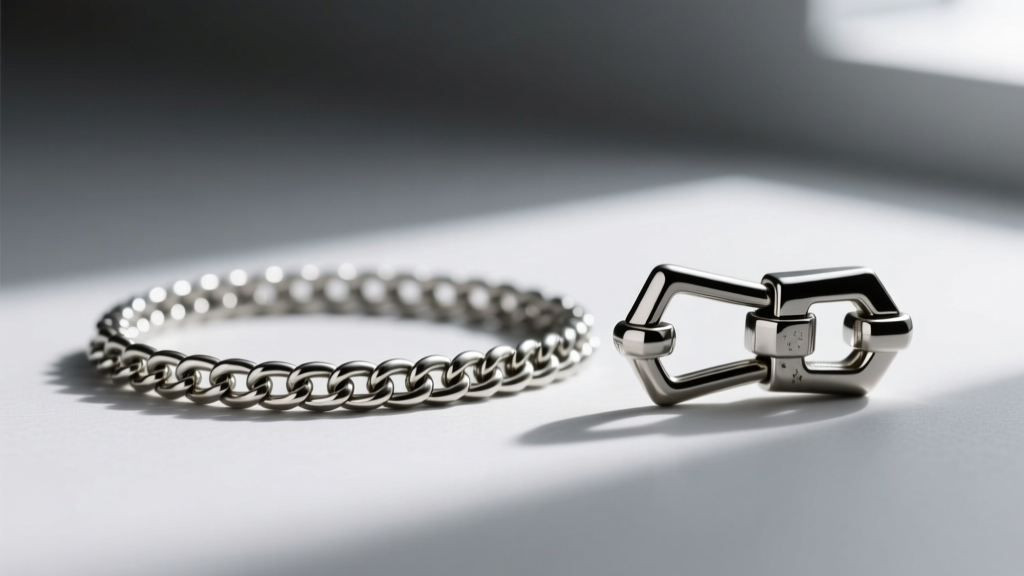
Clasp Mechanics: Don't Trust the Standard Lobster
A chain is only as strong as its clasp. Standard 10mm lobster clasps rely on a tiny internal spring that will easily fail when subjected to the downward pull of a heavy challenge coin. If the coin swings and catches on a door handle or tactical gear, a standard clasp will bend open.
For any challenge coin necklace weighing over 30 grams, demand a toggle clasp or a heavy-duty 15mm lobster clasp paired with soldered (not split) jump rings. Toggle clasps use gravity and tension to remain closed, making them incredibly secure for heavy pendants. If you prefer a magnetic clasp for ease of use, ensure it is a neodymium-core tactical magnetic clasp rated for at least 15 lbs of pull force.
Sizing the Drop: Tactical vs. Formal Wear
The length of your chain dictates how the challenge coin sits on your body and how it interacts with your wardrobe.
- 20 to 22 Inches (The Collarbone Drop): Ideal for wearing over a t-shirt or with an open-collar button-down. The coin rests visibly on the upper chest. Best for lighter, 1.5-inch coins.
- 24 to 26 Inches (The Mid-Chest Drop): The most versatile length. It allows a heavy 2-inch coin to hang comfortably without choking the wearer, and it can easily be tucked under a uniform or dress shirt.
- 28 to 32 Inches (The Tactical / Under-Shirt Drop): Designed specifically for military and first responders wearing body armor or tactical vests. This length keeps the coin resting on the sternum, completely hidden beneath gear, preventing it from snagging or clanking against equipment.
Final 2026 Buyer's Checklist
Before finalizing your purchase, run the necklace through this quick quality assurance checklist:
1. Is the coin solid brass/bronze, or cast zinc? (Check the product specs).
2. Is the chain gauge at least 3.5mm for a standard 1.75-inch coin?
3. Are the jump rings connecting the clasp fully soldered shut?
4. Does the bail loop allow the chain to move freely without pinching?
5. Is the enamel hard (flush) or soft (recessed) based on my daily friction exposure?
By prioritizing structural engineering over mere aesthetics, your challenge coin necklace will remain a secure, proud symbol of your heritage for decades to come.


