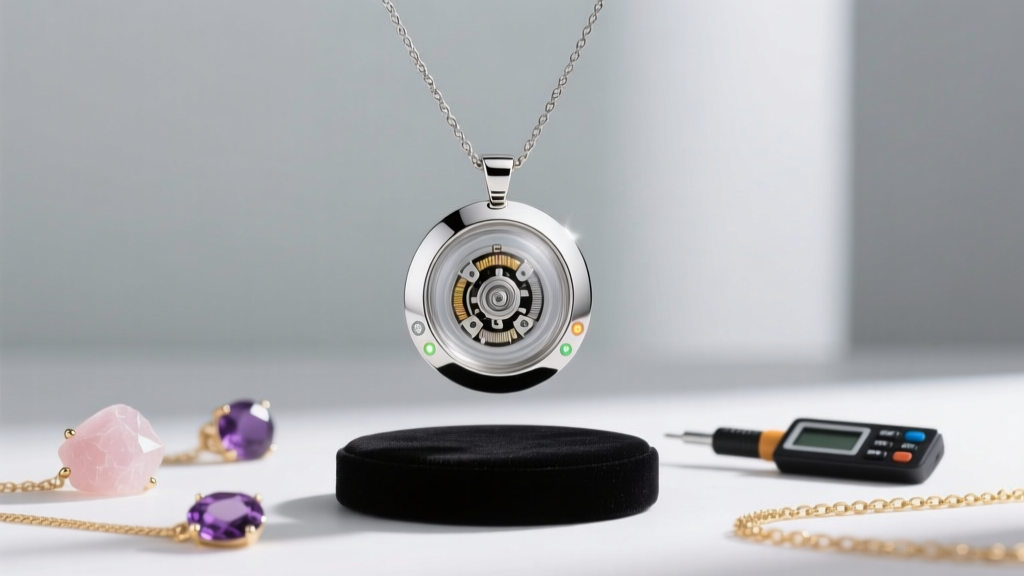
Talisman Necklace Guide: Metal Alloys, Settings & Chain Gauges
Discover the technical specs for a durable talisman necklace. Compare metal alloys, bezel settings, and chain gauges for heavy daily-wear pendants.

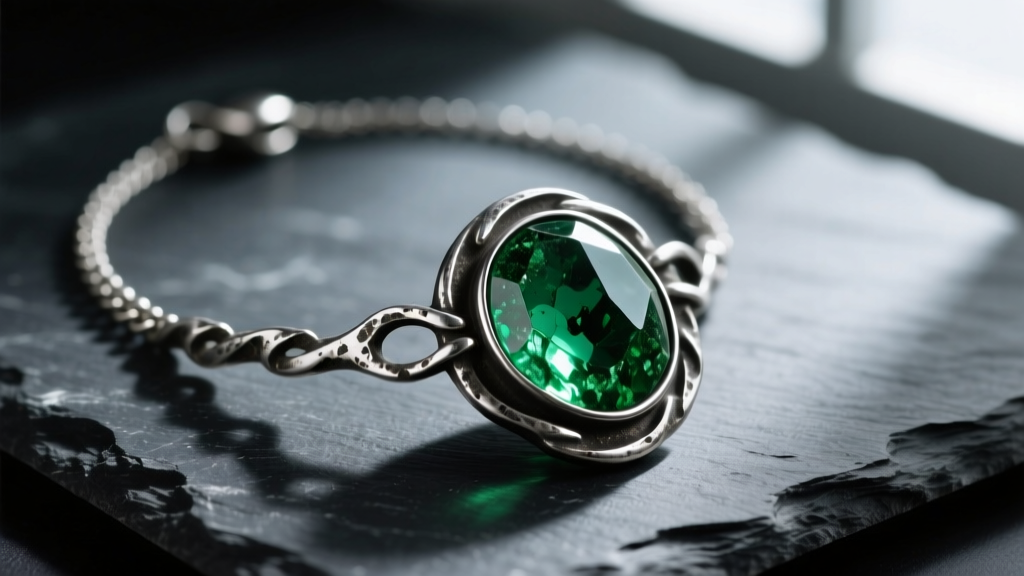
A true talisman necklace is not merely a seasonal accessory; it is an anchor. Because talismans are intended for continuous, often lifelong wear, the engineering behind them must vastly surpass standard fashion jewelry. When a piece is meant to absorb daily friction, environmental exposure, and occasional physical impact, structural failure is not an option. In this expert deep dive, we examine the metallurgy, lapidary settings, and tensile strengths required to craft a talisman necklace that survives decades of daily wear without compromising its sentimental or material integrity.
Metallurgy of the Amulet: Choosing the Right Alloy
The foundation of any heirloom-quality talisman necklace lies in its base metal. While pure gold (24k) and pure silver (999) possess high intrinsic value, their Vickers hardness ratings make them entirely unsuitable for daily-wear pendants. Pure metals are prone to severe deformation, meaning a dropped pendant or a snagged chain can easily warp the piece and dislodge the central stone.
For gold alloys, 14k gold (58.5% pure gold) remains the superior choice for heavy talismans. Alloyed with copper, silver, and zinc, 14k gold achieves a Vickers hardness of approximately 120-140 HV, offering excellent scratch resistance and structural rigidity. While 18k gold (75% pure gold) provides a richer yellow hue, its softer nature (around 90-100 HV) makes it more susceptible to micro-abrasions and bezel wear over a decade of continuous use.
If silver is your preferred medium, standard Sterling Silver (92.5% silver, 7.5% copper) is prone to rapid oxidation and fire-scale during repairs. Instead, specify Argentium Silver (93.5% silver, 6.5% copper and germanium). The addition of germanium creates a transparent oxide layer that drastically slows tarnishing and increases the metal's hardness, making it an ideal, low-maintenance canvas for a talisman necklace. For those with nickel allergies or a preference for dense, white metals, PT950 (95% platinum, 5% ruthenium or iridium) offers unparalleled durability. Platinum does not lose metal mass when scratched; it merely displaces, developing a patina that many talisman collectors actively desire.
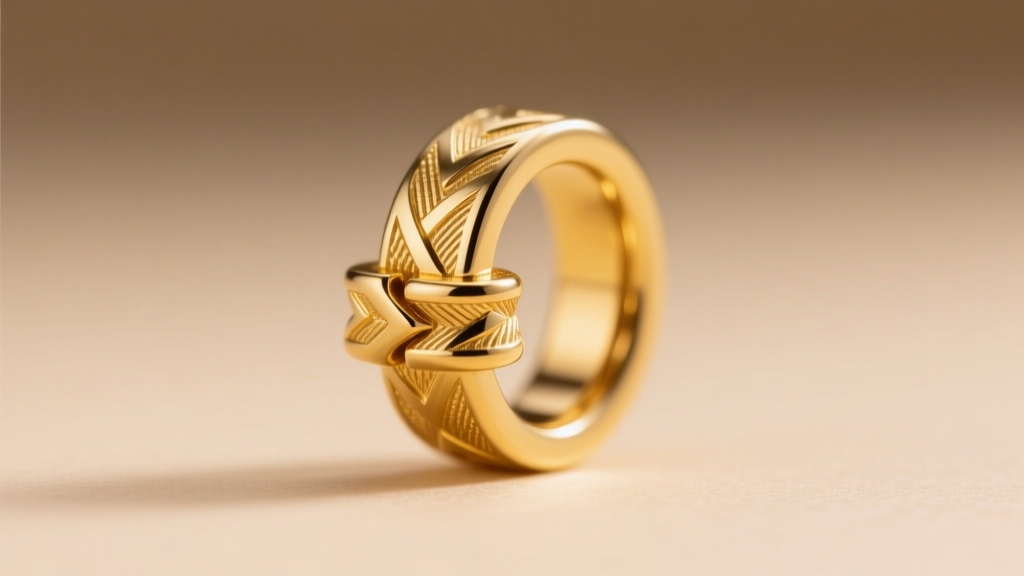
Gemstone Enclosure: Bezel vs. Prong Settings
Talisman jewelry frequently incorporates raw, uncut, or lower-Mohs stones—such as turquoise (5-6 Mohs), moldavite (5.5 Mohs), or labradorite (6-6.5 Mohs). According to the GIA Gem Encyclopedia, stones below a 7 on the Mohs scale are highly susceptible to scratching from ambient quartz dust in the air. Therefore, prong settings are a critical failure point for talisman pendants. Prongs leave the girdle and crown of the stone exposed to lateral impacts, and the prongs themselves can catch on textiles, eventually pulling away from the setting.
A full bezel setting is mandatory for high-impact daily wear. When designing or commissioning a talisman necklace, ensure the bezel wall thickness is a minimum of 0.5mm to 0.7mm. Thinner walls (0.25mm) may look delicate but will quickly wear down from friction against clothing and skin oils. For stones with uneven girdles, such as raw crystals or druzy clusters, a custom-fitted bezel with a burnished edge ensures the metal grips the stone's natural topography without applying excessive localized pressure, which could cause internal fracturing.
For higher hardness stones like sapphire or black diamond (9-10 Mohs), a gypsy (flush) setting can be utilized. This technique embeds the stone directly into the metal face of the pendant, leaving only the crown exposed and eliminating any protruding metal lips that could snag or wear down over time.
Structural Integrity: Chain Gauge and Bail Mechanics
The most common point of catastrophic failure in a talisman necklace is not the pendant itself, but the chain and bail assembly. A heavy pendant acts as a pendulum, generating kinetic energy and torque that concentrates stress on the weakest link—literally. The bail (the loop connecting the pendant to the chain) must be engineered to distribute this load.
Avoid pinch bails or glue-set bails entirely. A talisman necklace requires a soldered tube bail or an integrated cast bail. Furthermore, the inner diameter (ID) of the bail must be at least 1.5 times the width of the chain. If the chain fits too tightly inside the bail, lateral movement will cause severe friction wear, eventually sawing through the metal from the inside out.
Below is a technical breakdown of chain styles and their load-bearing capacities for heavy pendants:
| Chain Style | Recommended Gauge | Max Pendant Weight | Torque & Snag Resistance |
|---|---|---|---|
| Wheat (Spiga) | 1.5mm - 2.0mm | 35g - 50g | Exceptional. Interlocking woven links distribute stress evenly. |
| Box | 1.5mm - 2.0mm | 25g - 40g | High. Square links resist twisting, but sharp edges can catch on hair. |
| Cable | 1.2mm - 1.5mm | 15g - 20g | Moderate. Classic look, but single solder points on oval links are vulnerable. |
| Rope | 2.0mm - 3.0mm | 15g - 25g | Low. The twisted structure creates internal friction; prone to snapping under sudden torque. |
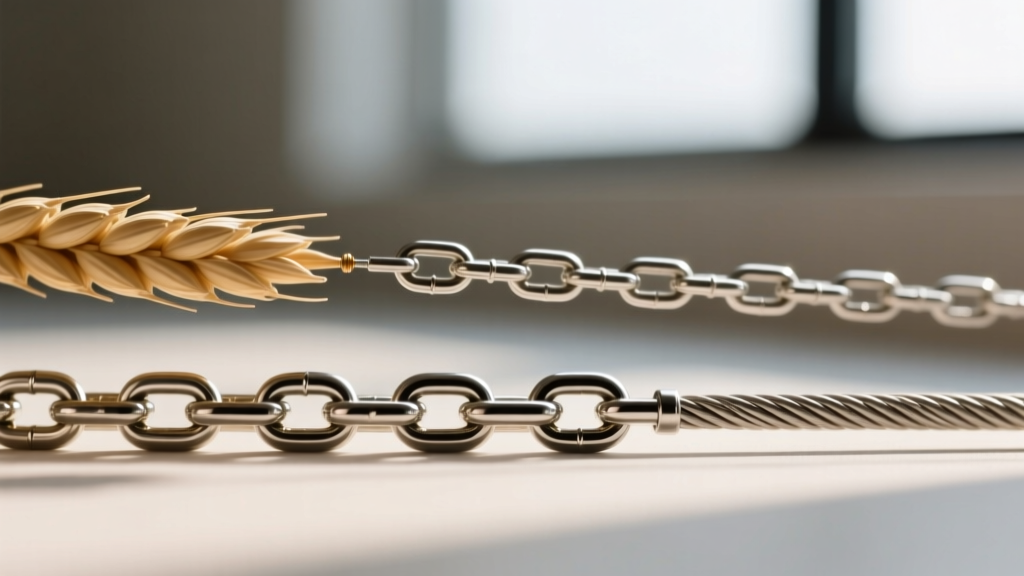
As noted by Jewelers of America, regular inspection of chain links—particularly the jump ring connecting the clasp to the chain—is vital. For heavy talismans, the jump ring must be soldered shut or replaced with a locking lobster clasp with an integrated, welded O-ring to prevent the pendant from slipping off during wear.
Patina, Oxidation, and Long-Term Maintenance
Many talisman necklaces are designed to look ancient, utilizing deep oxidization to highlight textured metalwork and ancient motifs. This is achieved using Liver of Sulfur (potassium polysulfide), which reacts with the copper or silver in the alloy to create black copper sulfide or silver sulfide layers. However, daily wear against the skin and clothing will naturally polish the high points of the pendant, leaving the recesses dark and creating a natural, high-contrast patina.
To stabilize this oxidation and prevent it from rubbing off onto your skin or clothing, the pendant should be sealed with a microcrystalline wax, such as Renaissance Wax. Unlike polyurethane or lacquer coatings—which can yellow, chip, and trap moisture against the metal—microcrystalline wax penetrates the microscopic pores of the oxidized metal. It provides a stable, non-yellowing barrier that preserves the talisman's darkened crevices while allowing the metal to breathe.
When cleaning a talisman necklace, never use ultrasonic cleaners or harsh chemical dips. Ultrasonic vibrations can shatter stones with internal inclusions (like emeralds or raw quartz), while chemical dips will strip the intentional oxidation in seconds, ruining the piece's aesthetic depth. Instead, use a soft-bristled brush with a mild, phosphate-free dish soap and warm water, carefully avoiding the bezel edges to prevent moisture from becoming trapped beneath the stone.
Ultimately, crafting or selecting a talisman necklace is an exercise in applied engineering. By prioritizing 14k gold or Argentium silver, demanding thick bezel settings, and pairing the pendant with a high-tensile wheat or box chain, you ensure that your talisman remains a resilient companion for a lifetime of wear.