The Beginner's Guide to Styling Small Initial Necklaces
Discover how to choose, style, and layer small initial necklaces. Our beginner guide covers chain gauges, metal grades, and font choices.

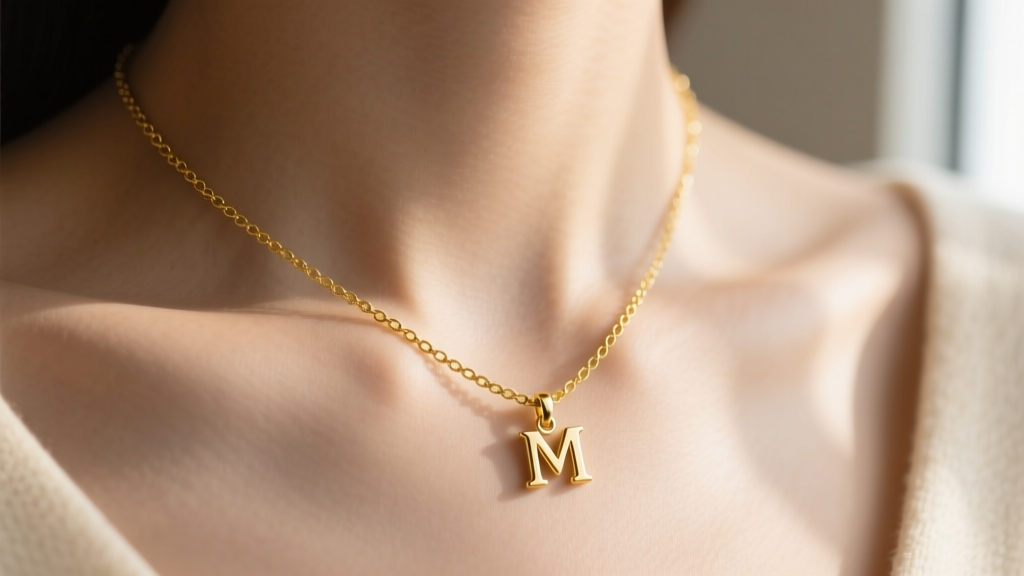
Why Small Initial Necklaces Are a Wardrobe Staple
If you are just beginning to build a curated jewelry collection, small initial necklaces are the ultimate entry point. Unlike oversized statement pieces or highly specific motif pendants, a tiny letter offers subtle personalization without overpowering your outfit. As we navigate the jewelry landscape in 2026, the trend has firmly shifted away from chunky, loud monograms toward micro-pendants that sit delicately on the collarbone. Whether you are buying your own first letter, commemorating a loved one, or looking for a foolproof gift, understanding the mechanics of these petite pieces is crucial for making a smart investment.
Decoding the Anatomy of an Initial Pendant
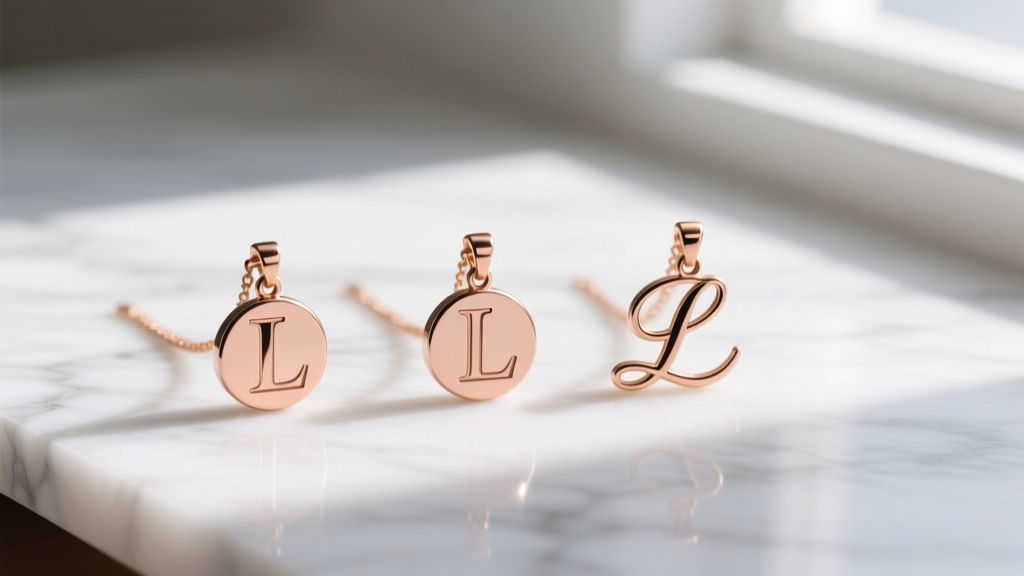
Not all letter pendants are created equal. When shopping for small initial necklaces, the dimensions, font, and bail (the loop that connects the pendant to the chain) drastically alter the final look.
Font Styles and Their Vibes
- Classic Serif: Features small lines at the ends of characters (think Times New Roman). It conveys tradition, elegance, and a vintage feel.
- Modern Sans-Serif: Clean, uniform lines without embellishments (think Helvetica). This is the most popular choice for minimalist, everyday wear.
- Script/Cursive: Flowing and romantic. While beautiful, script fonts can become illegible when scaled down to micro-sizes, so proceed with caution.
Pendant Dimensions and Bail Types
For a truly "small" initial, look for pendants measuring between 5mm and 8mm in height. Anything larger crosses into standard pendant territory. Pay close attention to the bail. A soldered ring bail allows the pendant to slide freely along the chain, while a hidden bail (drilled through the back of the letter) makes the pendant appear as though it is floating directly on the chain. Hidden bails are slightly more expensive to manufacture but offer a sleeker, high-end finish.
Chain Types and Gauges That Actually Work
The biggest mistake beginners make is pairing a tiny 6mm pendant with a thick, heavy chain. The chain gauge (thickness) must be proportional to the pendant. For small initial necklaces, you want a chain gauge between 0.8mm and 1.2mm. Anything thicker will visually swallow the letter; anything thinner (like a 0.5mm thread chain) is highly prone to snapping.
| Chain Style | Best Gauge for Micro Pendants | Durability & Vibe |
|---|---|---|
| Cable Chain | 0.9mm - 1.1mm | Classic, lightweight, but can kink if slept in. |
| Box Chain | 1.0mm - 1.2mm | Highly durable, geometric, lays flat against the skin. |
| Rope Chain | 0.8mm - 1.0mm | Textured, catches the light beautifully, slightly more delicate. |
| Paperclip Chain | 1.2mm (Mini) | Trendy, elongated links, better for layering than solo wear. |
Metal Grades: What Beginners Need to Know
Understanding metal purity is essential for avoiding skin irritation and ensuring longevity. According to the Gemological Institute of America (GIA), pure 24k gold is too soft for everyday jewelry, which is why it is alloyed with other metals. Here is how to navigate your options:
- Solid 14k Gold ($150 - $350): The gold standard for daily wear. It contains 58.3% pure gold, offering a rich color that will never tarnish or rub off. It is safe for showering and swimming.
- Gold Vermeil ($45 - $90): A thick layer of gold (at least 2.5 microns) over a sterling silver base. It is an excellent mid-tier option, but you must remove it before swimming or applying heavy lotions to prevent the silver core from oxidizing.
- PVD Gold-Plated Stainless Steel ($25 - $50): Physical Vapor Deposition (PVD) creates a highly durable, waterproof gold coating over surgical steel. This is the best budget-friendly, waterproof option for beginners who refuse to take their jewelry off in the shower.
Expert Tip: Avoid standard "gold-plated" brass or copper if you have sensitive skin or a nickel allergy. The base metals in cheap plating often cause green discoloration and contact dermatitis. Always check the GIA Gem Encyclopedia for metal allergy guidelines if you are unsure.
Diamond Accents and Gemstone Pairings
If a plain metal letter feels too understated, consider small initial necklaces with micro-pavé diamond accents. A single 1.5mm diamond chip set into the center of a serif letter adds just enough sparkle for evening wear without looking gaudy. Alternatively, pairing your initial pendant with a tiny birthstone bead (like a 3mm emerald or sapphire) on the same chain is a massive trend for personalized gifting. When adding gemstones, ensure the total carat weight remains under 0.05 ctw to maintain the delicate, micro-aesthetic.
How to Layer Without Tangling
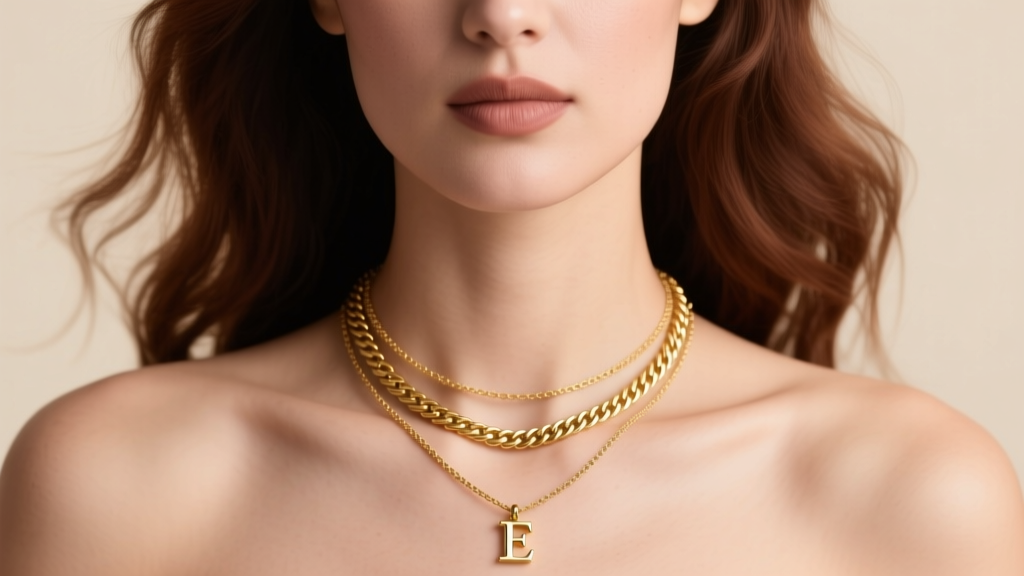
Small initial necklaces shine brightest when layered, but beginners often end up with a knotted mess. The secret to a flawless stack is the 2-inch rule. Your first chain (the initial pendant) should sit at 16 inches (choker/collarbone length). Your second chain should be exactly 18 inches, and your third at 20 inches. This strict spacing prevents the clasps and pendants from catching on one another. Furthermore, mix your chain textures. Pair a delicate cable chain holding your initial with a smooth, flat herringbone or snake chain for the secondary layer to create visual contrast and reduce friction.
Troubleshooting Common Beginner Mistakes
Even with the perfect piece, wearability issues can arise. Here is how to fix the most common problems:
- The Pendant Keeps Flipping Upside Down: This happens when the bail is too wide for the chain link, or the chain is too stiff. Switch to a more fluid chain, like a rope or cable, which allows the pendant to naturally right itself.
- The Clasp Keeps Sliding to the Front: Upgrade your clasp. Standard spring-ring clasps are lightweight and easily slide around. Ask a jeweler to swap it for a slightly heavier lobster clasp, which acts as a counterweight to keep the clasp at the back of your neck.
- Chain Breakage at the Bail: If your chain constantly snaps at the loop, the metal edge of the pendant bail is acting like a microscopic saw. A jeweler can easily file down the inside of the bail or add a tiny protective jump ring to stop the friction.
By paying attention to gauge sizes, metal grades, and proportional styling, your first small initial necklace will transition from a simple accessory to an indispensable, everyday signature piece.


