Expert Care and Cleaning for a Luxury Diamond Necklace
Learn expert cleaning, storage, and maintenance tips to protect your luxury diamond necklace. Keep high-carat gems and precious metals brilliant.

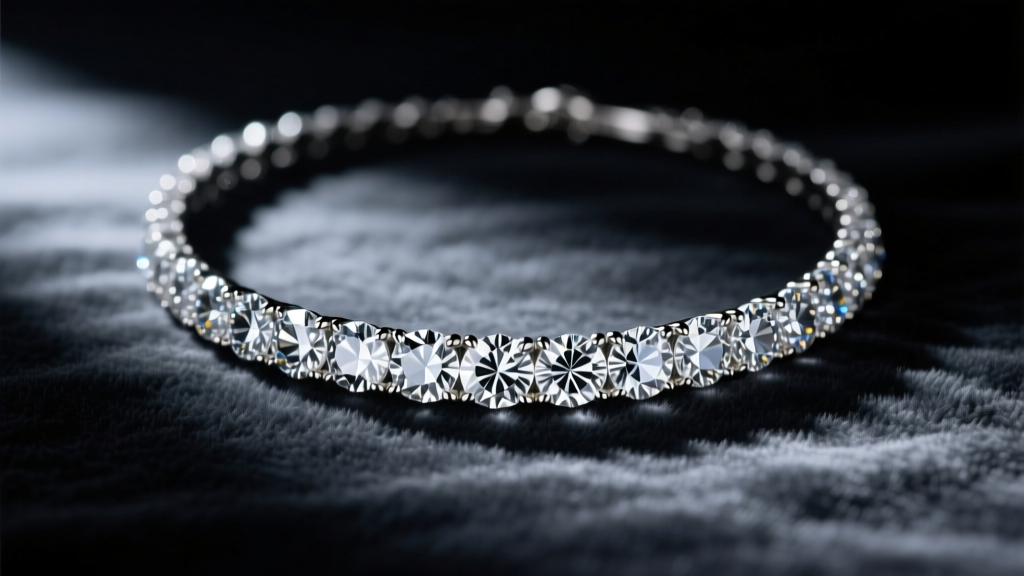
The Science of Diamond Degradation: Why Your Necklace Loses Brilliance
Owning a luxury diamond necklace is an investment in both capital and artistry. However, even a flawless, D-color, Type IIa diamond will appear dull and lifeless if not maintained correctly. To understand proper care, one must first understand the chemical nature of the gemstone. Diamonds are composed of a pure carbon lattice structure, which makes them inherently lipophilic (oil-attracting) and hydrophobic (water-repelling). This means that natural sebum from your skin, cosmetic lotions, hairsprays, and environmental cooking oils will readily bond to the surface of the diamond's pavilion and crown.
When a microscopic layer of grease accumulates on the facets, it alters the refractive index contrast between the stone and the surrounding air. Instead of light entering the table, reflecting off the pavilion facets, and returning to the eye as 'fire' and 'brilliance,' the light leaks out of the bottom of the stone. According to the Gemological Institute of America (GIA), a diamond can lose up to 50% of its visual light return within just two weeks of daily wear due to oil and dust accumulation. Furthermore, the precious metal setting—whether 950 platinum or 18-karat gold—faces its own set of metallurgical challenges, from micro-abrasions to chemical tarnishing.
The Professional Deep-Cleaning Protocol
While commercial jewelry dips and ultrasonic cleaners have their place, a meticulous manual cleaning is the safest and most effective method for high-end diamond necklaces, particularly those featuring intricate pavé or micro-prong settings. Here is the exact protocol used by master jewelers to restore optical clarity without risking structural damage.
Assembling the Correct Materials
Never use harsh chemicals, bleach, or abrasive toothpaste. You will need:
- Distilled Water: Tap water contains dissolved calcium and magnesium. When it evaporates, it leaves hard water spots that mimic diamond inclusions and dull the surface.
- Ammonia-Free Mild Surfactant: A drop of unscented, ammonia-free dish soap. While pure diamonds can tolerate ammonia, it can degrade the rhodium plating on white gold and damage secondary accent stones like emeralds or pearls often found in luxury pieces.
- Ultra-Soft Goat-Hair Brush: Standard toothbrushes, even those labeled 'soft,' feature nylon bristles that can micro-scratch high-polish platinum and 18k gold settings over time. Goat-hair or specialized gem-cleaning brushes are mandatory.
- Lint-Free Microfiber Cloth: For the final drying phase to prevent water spotting.
The 15-Minute Immersion Technique
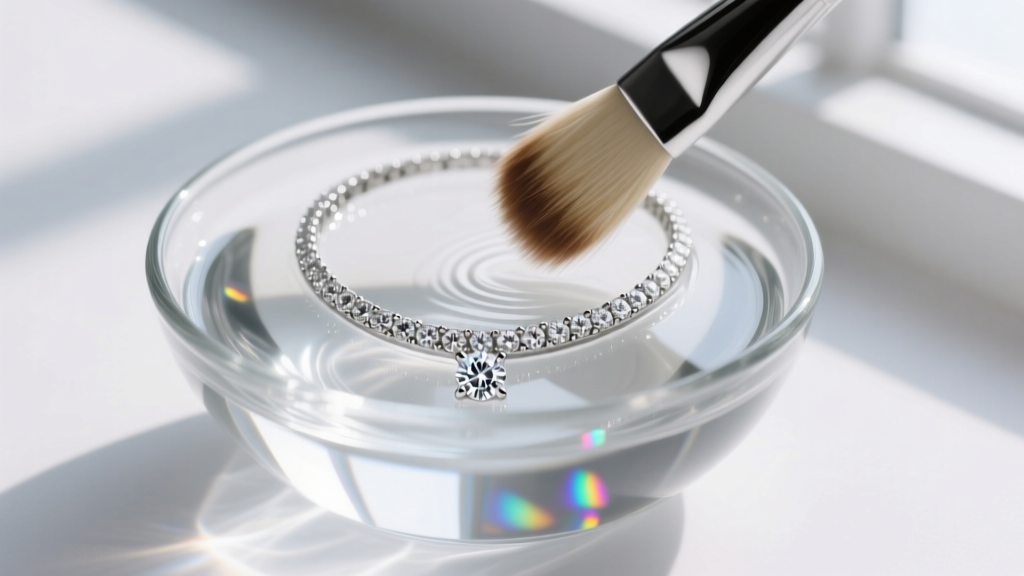
Fill a small glass bowl with warm (not hot) distilled water and add a single drop of the surfactant. Submerge your luxury diamond necklace and let it soak for exactly 15 minutes. This allows the surfactant to break the surface tension of the lipophilic oils trapped beneath the gallery wire and pavilion facets. After soaking, gently agitate the water. Then, using the goat-hair brush, lightly sweep the bristles across the table and, crucially, underneath the setting where the culet rests. Rinse thoroughly under a gentle stream of warm distilled water, and immediately pat dry with the microfiber cloth.
The Ultrasonic Cleaner Dilemma: When to Avoid High-Frequency Waves
Ultrasonic cleaners use high-frequency sound waves (typically around 40 kHz) to create microscopic cavitation bubbles in a liquid solution. When these bubbles collapse against the jewelry, they generate localized heat and shockwaves that blast away dirt. While highly effective for solid diamond solitaires, they pose severe risks to certain luxury necklace constructions.
You must never place a diamond necklace in an ultrasonic cleaner if it features:
- Fracture-Filled Diamonds: Diamonds treated with glass-like resins to mask internal fissures can shatter or cloud permanently when subjected to ultrasonic cavitation.
- Invisible Settings: Stones set into a hidden metal grid without visible prongs rely on precise tension. Ultrasonic vibrations can loosen the stones, causing them to fall out.
- Cluster Settings with Adhesive: Some intricate designs use specialized jeweler's epoxy to secure micro-diamonds. The heat generated by cavitation can melt the adhesive.
For these intricate luxury pieces, stick to the manual immersion method or seek professional steam cleaning from a certified gemologist.
Prong and Setting Integrity: The 6-Month Metallurgical Checkup
Cleaning is only half the battle; structural maintenance is what prevents catastrophic stone loss. The American Gem Society (AGS) recommends a professional prong inspection every six months. The wear patterns of your setting depend entirely on the metal alloy chosen by the jeweler.
| Metal Type | Wear Pattern | Maintenance Requirement | Expected Prong Lifespan |
|---|---|---|---|
| 950 Platinum | Displacement (metal bends but does not wear away) | Prong tightening and re-polishing | 20+ years |
| 18k White Gold | Abrasion (metal physically wears away over time) | Rhodium replating and eventual prong retipping | 10-15 years |
| 18k Yellow Gold | Abrasion (softer alloy, prone to snagging) | Frequent loupe inspections and retipping | 8-12 years |
Platinum is the superior choice for heavy luxury diamond necklaces because its density and tensile strength mean that when a prong is snagged on fabric, it bends rather than snaps or thins out. White gold, however, requires rhodium plating every 12 to 18 months to maintain its bright white luster, as the underlying alloy naturally possesses a faint yellowish-gray hue.
Advanced Storage Solutions to Prevent Mechanical Creep
How you store your luxury diamond necklace is just as critical as how you clean it. A common mistake is hanging heavy diamond pendants or tennis necklaces on standard jewelry hooks. Gravity, combined with the inherent softness of 18-karat gold, causes a phenomenon known as 'mechanical creep.' Over several months, the links of a delicate cable or box chain will permanently stretch and deform under the weight of a high-carat pendant.
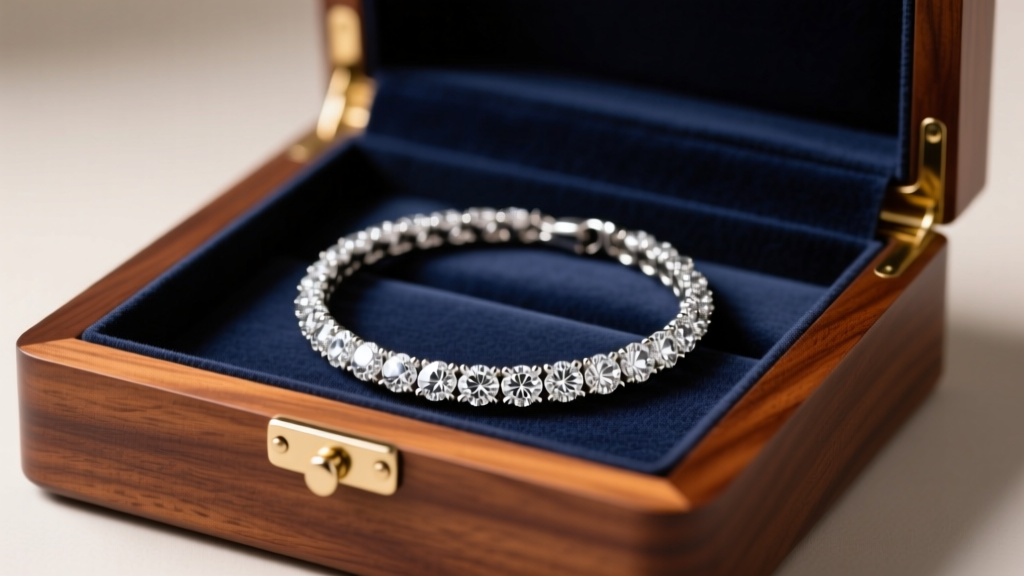
Never store multiple diamond pieces in the same unpartitioned compartment. Diamond is the hardest natural material on earth (10 on the Mohs scale) and will effortlessly scratch adjacent diamonds, as well as the precious metal settings holding them.
Invest in a climate-controlled jewelry safe with individual, anti-tarnish microfiber-lined compartments. For heavy necklaces, lay them flat in a relaxed coil, or drape them over a padded velvet jewelry mandrel to distribute the weight evenly and prevent kinking. Ensure the clasp is secured to prevent the chain from tangling into micro-knots, which require professional laser cutting to remove.
Chemical Exposure: The Silent Destroyer of Precious Alloys
While the diamond itself is virtually impervious to household chemicals, the alloy metals holding it are not. Chlorine, found in swimming pools and hot tubs, is the ultimate enemy of 18-karat gold. Chlorine reacts with the copper, silver, and zinc alloys mixed into the gold, causing a chemical reaction that leads to 'stress corrosion cracking.' This microscopic degradation weakens the prongs from the inside out, often resulting in the sudden and complete loss of a center stone.
Similarly, sulfur compounds in the air, hot springs, and certain cosmetics will rapidly tarnish silver and lower-karat gold alloys. Always adopt a strict 'last on, first off' policy: your luxury diamond necklace should be the final item you put on after applying perfumes, hairsprays, and lotions, and the very first item you remove before showering, swimming, or exercising.
Professional Servicing: Laser Welding vs. Traditional Soldering
When your necklace inevitably requires professional repair—whether for a broken chain link or a worn prong—the technology used by the jeweler matters immensely. As of 2026, the industry standard for high-end jewelry repair is laser welding. Traditional torch soldering requires the removal of the diamond, as the extreme heat required to melt the solder can cause thermal shock to the stone or damage any laser-drilled inclusions. Laser welding, however, uses a highly focused beam of light to fuse platinum or gold at a microscopic level. The heat dissipation is so rapid that the metal just millimeters away remains completely cool, allowing the jeweler to retip a prong or weld a chain without ever removing the luxury diamond from its setting. Always verify that your chosen master jeweler utilizes laser welding technology to preserve the integrity and value of your investment piece.


