How to Fix & Clean a Tarnished Black Swan Necklace
Learn how to troubleshoot, clean, and repair your black swan necklace. Expert fixes for faded black rhodium, chipped enamel, and cloudy onyx.

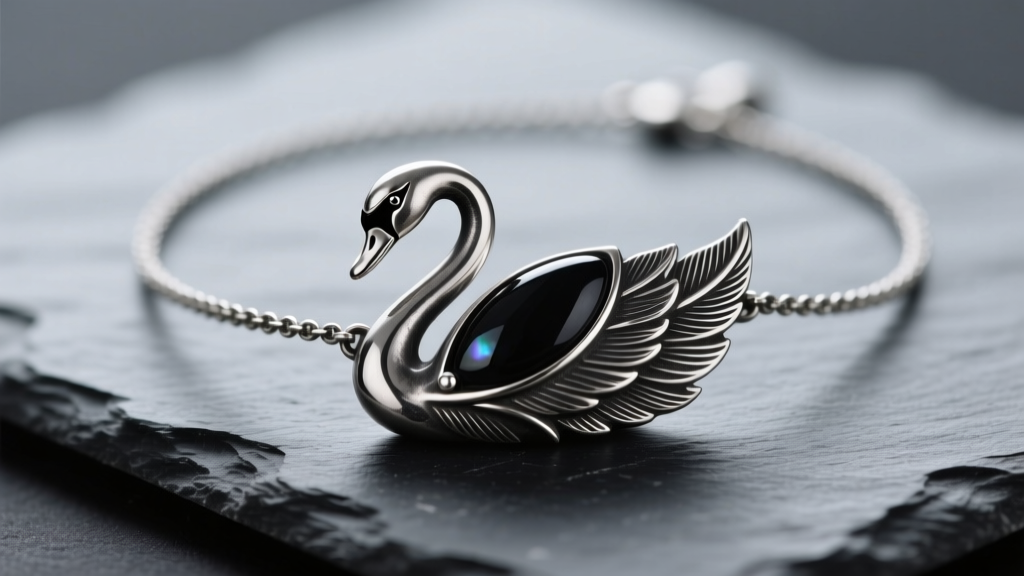
The black swan necklace is a staple of dark academia, gothic elegance, and balletic-inspired fashion. Whether your piece features a stylized swan motif cast in oxidized silver, a delicate bird silhouette coated in black rhodium, or a pendant inlaid with black onyx, these necklaces require highly specific care. Unlike standard yellow gold or bright silver jewelry, the dark finishes and moody gemstones used in black swan designs are notoriously prone to unique failure modes. Fading plating, chipped enamel, and clouded stones can quickly turn a striking statement piece into a dull disappointment.
As a senior jewelry stylist, I frequently troubleshoot degraded dark-motif jewelry. In this comprehensive 2026 repair and maintenance guide, we will diagnose the exact materials of your black swan necklace and provide actionable, professional-grade solutions to restore its original dark elegance.
Diagnosing Your Black Swan Necklace Material
Before applying any chemicals or polishes, you must identify the exact material and finish of your necklace. Using a standard silver dip on a black rhodium piece will strip the finish entirely, while ultrasonic cleaners can shatter certain dark inlays. Review the diagnostic table below to identify your necklace's composition and its primary vulnerabilities.
| Material / Finish | Common Failure Mode | DIY Fixable? | Professional Repair Cost |
|---|---|---|---|
| Black Rhodium over 925 Silver | Plating wears off, revealing bright silver underneath | No (Requires replating) | $45 - $85 |
| Oxidized Sterling Silver | Dark patina rubs off on high-relief feather details | Yes (Liver of Sulfur) | $20 - $40 |
| Black Enamel (Cold or Vitreous) | Chipping, cracking, or yellowing on wing edges | Yes (Epoxy tinting for cold) | $60 - $120 |
| Black Onyx / Obsidian Inlay | Scratching, clouding from harsh chemicals | Yes (Gentle polishing) | $30 - $50 |
Troubleshooting Black Rhodium & Oxidized Silver Fading
The most common complaint I receive regarding black swan necklaces is the loss of the dark metal finish. It is crucial to understand the difference between black rhodium plating and oxidized silver, as they require entirely different approaches.
The Black Rhodium Problem
Black rhodium is not a natural metal color; it is a platinum-group metal (often alloyed with ruthenium or tin) electroplated onto sterling silver or brass. The plating is exceptionally thin, typically ranging from 0.1 to 0.3 microns. When the swan's wings or the bail of the pendant rub against your skin or clothing, this microscopic layer wears away, exposing the bright silver or brass beneath. Do not attempt to clean or re-blacken this at home. You must take it to a jeweler who offers electroplating services to have the black rhodium re-applied.
Restoring Oxidized Silver at Home
If your necklace is solid 925 sterling silver that has been intentionally oxidized (darkened) to highlight the intricate feather textures of the swan, you can easily restore the patina yourself using Liver of Sulfur (potassium polysulfide). According to finishing experts at Rio Grande Jewelry Supply, this is the industry standard for darkening silver.
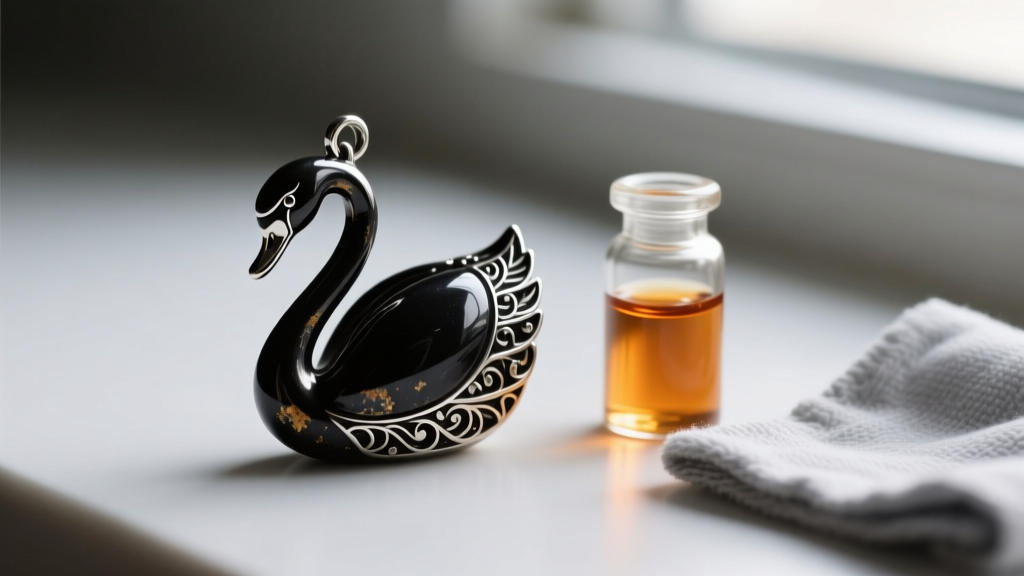
- Clean the piece: Wash the necklace in warm water with a drop of mild dish soap to remove skin oils. Dry completely.
- Mix the solution: Dissolve a tiny pinch (about 1/8 teaspoon) of Liver of Sulfur gel in one cup of warm (not boiling) water. The water should turn a murky yellow-green.
- Dip and observe: Submerge the silver swan pendant for 10 to 30 seconds. It will quickly turn yellow, then brown, then deep black.
- Neutralize: Immediately transfer the necklace to a bowl of water mixed with a tablespoon of baking soda to stop the chemical reaction.
- Polish the high points: Once dry, use a soft microfiber cloth or a 0000-grade steel wool pad to gently buff the raised edges of the swan's feathers, leaving the recesses pitch black for maximum contrast.
Fixing Chipped Black Enamel on Swan Motifs
Many artisan and vintage black swan necklaces utilize black enamel to fill the recessed wings or the eye of the bird. As of 2026, mass-market jewelers have largely shifted from kiln-fired vitreous enamel (crushed glass) to cheaper cold enamel (tinted epoxy resins). If your enamel is chipped, the repair method depends on the type.
Vitreous enamel requires a professional to re-fire the glass in a kiln. However, if your piece uses cold enamel, you can perform a micro-repair at home. Purchase a two-part clear epoxy (like Devcon 5-Minute) and a black alcohol-based ink or mica powder. Mix a tiny drop of the epoxy, tint it black, and use a fine needle tool to carefully drop the resin into the chip. Let it cure for 24 hours, then gently sand it flush with a 2000-grit wet/dry sandpaper. This prevents further moisture intrusion that could lift the surrounding enamel.
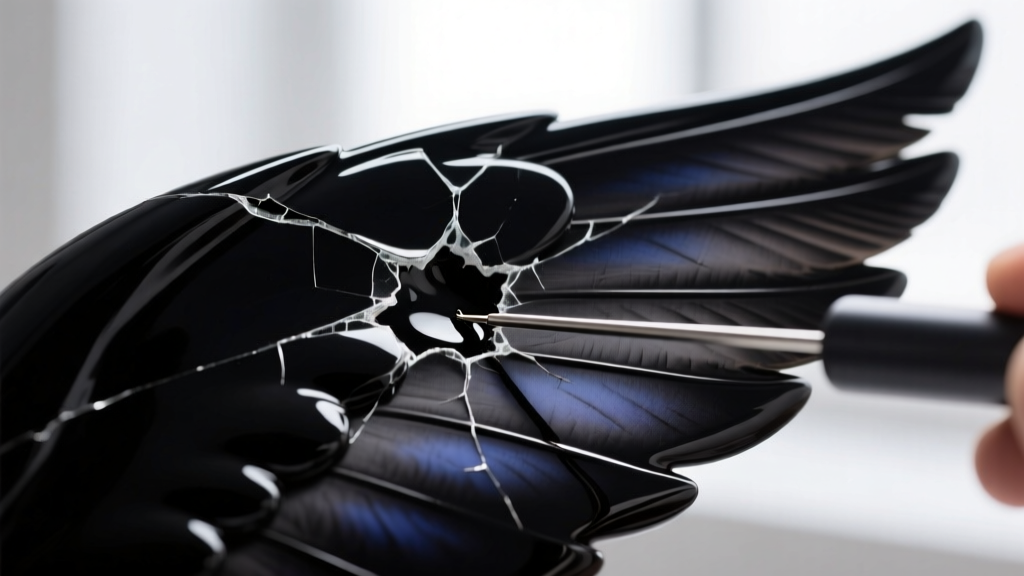
Restoring Cloudy Black Onyx or Dark Crystals
Black onyx is a popular choice for the body or eye of a swan pendant due to its deep, opaque luster. However, onyx is a porous chalcedony (Mohs hardness of 7) that is often dyed to achieve its pitch-black color. Exposure to perfumes, lotions, and chlorine can cause the dye to leach or the surface to become cloudy and dull.
Warning: Never place a black onyx or obsidian swan pendant in an ultrasonic jewelry cleaner. The high-frequency vibrations can cause internal stress fractures, especially in obsidian (Mohs 5-5.5), which is essentially natural glass and highly brittle. Always rely on manual cleaning methods for dark gemstone inlays. (Source: Gemological Institute of America)
The Fix: To restore the shine to a cloudy onyx swan, wipe it with a damp cloth and a pH-neutral soap. If the surface is lightly scratched or dull, apply a tiny amount of cerium oxide polishing compound to a soft felt Dremel bit or a cotton swab, and buff the stone in small circles at a low speed. Wipe away the residue with a clean, damp cloth to reveal a mirror-like black finish.
Chain and Clasp Failures on Delicate Pendant Necklaces
A recurring structural issue with black swan necklaces is the mismatch between the weight of the pendant and the fragility of the chain. A solid silver or stone-inlaid swan pendant can easily weigh 8 to 15 grams, yet manufacturers frequently string them on delicate 0.9mm cable chains with weak spring-ring clasps. This leads to stretched links, broken soldering points, and lost pendants.
Upgrading Your Hardware
- Swap the Chain: Replace the factory chain with a 1.2mm to 1.5mm oxidized silver rope chain or wheat chain. These interlocking patterns offer superior tensile strength and complement the gothic aesthetic of the swan.
- Upgrade the Clasp: Discard the spring-ring clasp. Have a jeweler solder on a 5mm or 6mm oxidized lobster clasp. The internal spring mechanism of a lobster clasp is far more robust and less likely to catch on dark, heavy fabrics like velvet or wool.
- Add a Bail Protector: If the chain is wearing a groove into the top loop (bail) of the swan pendant, slide a small silicone or rubber pendant protector (often called an "O-ring" or "donut") over the chain before attaching the bail. This eliminates metal-on-metal friction.
Preventative Storage for Dark Jewelry
Troubleshooting is only half the battle; proper storage prevents 90% of these issues. Black rhodium and oxidized silver are highly reactive to sulfur and moisture in the air. Store your black swan necklace in an airtight ziplock bag with an anti-tarnish strip (such as 3M Intercept technology). Keep it in a dark, climate-controlled drawer away from direct sunlight, which can yellow cold epoxy enamels and fade dyed onyx over time. By understanding the specific metallurgy and gemology of your piece, you can ensure your black swan necklace remains a striking, flawless accessory for years to come.


