The Ultimate Beginner Guide to Styling an Eagles Necklace
Discover how to choose, style, and care for your eagles necklace. Learn about metals, chain pairings, and symbolism in this beginner-friendly guide.

The Symbolism and Appeal of the Eagle Motif
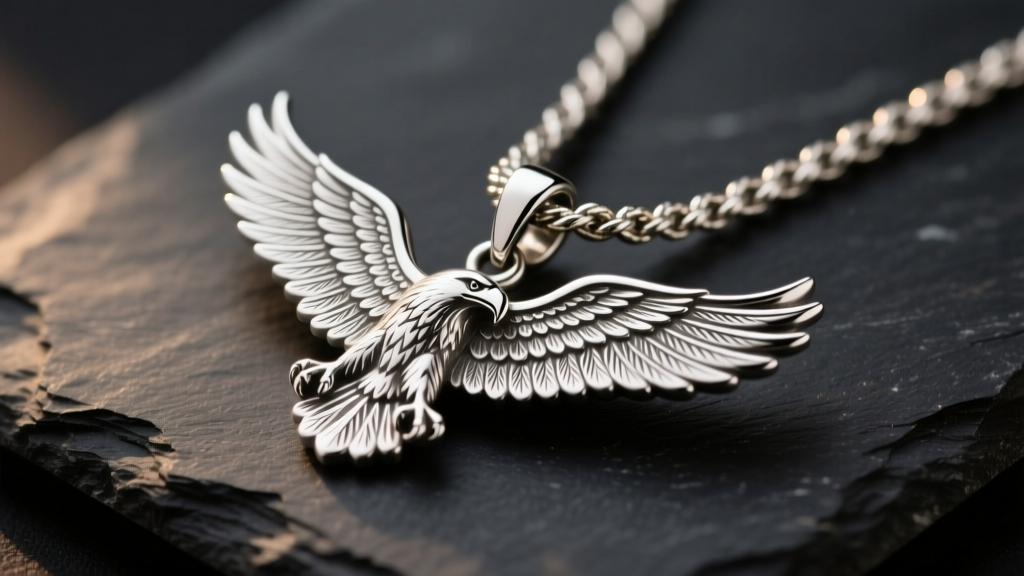
The eagle is one of the most universally recognized symbols in jewelry, representing freedom, vision, strength, and spiritual protection. Whether you are drawn to the eagle for its deep-rooted significance in Native American heritage, its association with military valor, or simply its striking aesthetic as a apex predator, an eagles necklace is a bold statement piece. For beginners, navigating the vast market of bird-motif jewelry can be overwhelming. This guide breaks down the metallurgy, structural engineering, and styling nuances required to choose a pendant that will last a lifetime.
Manufacturing Methods: Cast vs. Die-Struck
Before evaluating metals, you must understand how the pendant is manufactured. The production method dictates the level of detail in the eagle’s feathers and the overall structural integrity of the piece.
- Lost-Wax Casting: Most 3D, sculptural eagle pendants are cast. This allows for intricate, lifelike details—such as individually carved talons and layered wing feathers. However, poorly cast pieces can suffer from porosity (tiny air bubbles), making them brittle. Always buy from reputable jewelers who use high-pressure casting.
- Die-Struck: If you prefer a flatter, coin-like eagle profile, die-struck pendants are ideal. The metal is compressed under immense pressure, resulting in a denser, stronger, and more scratch-resistant piece, though it lacks the 3D depth of a cast pendant.
Decoding Metals: What to Look For
The metal you choose will determine the necklace's weight, skin compatibility, and aging process. Here is a comparative breakdown of the most common metals used for an eagles necklace.
| Metal Grade | Durability & Weight | Avg. Price Range | Maintenance Level |
|---|---|---|---|
| 316L Stainless Steel | Extremely high; heavy and scratch-resistant | $25 - $75 | Very Low (soap and water) |
| 925 Sterling Silver | Medium; softer, prone to scratching and tarnish | $60 - $200 | High (requires regular polishing) |
| 14k Solid Gold | High; excellent heirloom durability | $400 - $1,200+ | Low (occasional professional clean) |
| Zinc Alloy / Pewter | Low; brittle, can cause skin reactions | $10 - $30 | Medium (degrades over time) |
Expert Tip: If you have sensitive skin or a nickel allergy, strictly avoid unverified zinc alloys. Opt for 316L surgical steel or 925 silver, as both are generally hypoallergenic. For a comprehensive look at metal properties and skin reactions, refer to the GIA Gem Encyclopedia.
Chain Pairings: Engineering the Right Support
The most common mistake beginners make is pairing a heavy eagle pendant with an inadequate chain. A detailed, solid-metal eagle pendant typically weighs between 15 and 35 grams. A standard 1mm or 2mm chain will eventually stretch, kink, or snap under this dynamic load.
The Best Chain Styles for Heavy Pendants
- Rope Chain (3mm - 5mm): The twisted links distribute weight evenly and resist kinking. This is the gold standard for heavy, ornate pendants.
- Cuban Link (4mm+): Offers a thick, masculine profile with high tensile strength. Ensure the links are soldered shut to prevent pulling apart.
- Wheat Chain (2.5mm - 4mm): Features braided, interlocking oval links that are incredibly strong and flexible, draping beautifully over the chest.
Understanding the Bail
The bail is the loop at the top of the eagle pendant that connects to the chain. For a 4mm rope chain, you need a bail with an inner diameter of at least 5mm. Many eagle pendants feature a "hidden tube bail" integrated into the back of the bird's head or wings, which keeps the pendant lying flat against the chest rather than flipping upside down.
Proportions and Neckline Matching
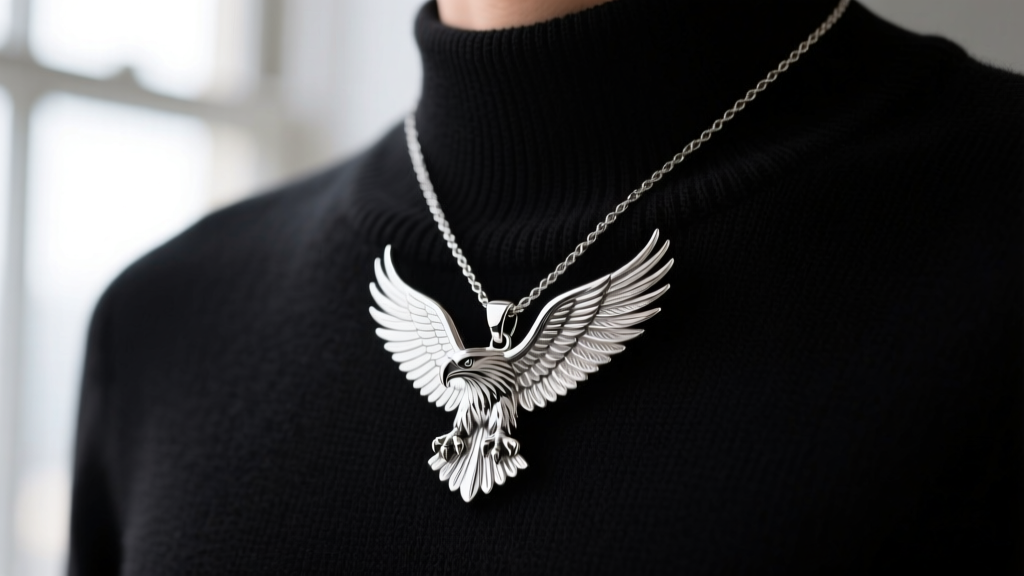
An eagles necklace is inherently bold, so proportion is critical. The pendant's wingspan should not exceed the width of your sternum.
- For V-Necks and Open Collars: A larger pendant (2 to 2.5 inches in height) on a 24-inch chain allows the eagle to rest perfectly in the negative space of the V-neck, drawing the eye downward and elongating the torso.
- For Crew Necks and T-Shirts: Opt for a slightly smaller, more streamlined eagle profile (1.5 inches) on a 20 or 22-inch chain so it rests just below the collarbone without looking cluttered against the fabric.
Maintenance and Cleaning Protocols
Because eagle pendants feature deep crevices for feathers and talons, they trap skin oils, lotions, and environmental dirt more easily than flat jewelry. Proper cleaning is essential to maintain the metal's luster.
Cleaning 925 Sterling Silver
Silver oxidizes when exposed to sulfur in the air and natural skin acids. For heavy tarnish trapped in the feather engravings, use a chemical reduction bath: line a bowl with aluminum foil, add boiling water and a tablespoon of baking soda, and submerge the pendant for 3 minutes. Warning: If your eagle necklace features turquoise, opal, or onyx inlays (common in Southwestern designs), never use this method. The heat and alkalinity will fracture and destroy the stones. Instead, use a soft-bristled baby toothbrush with mild dish soap, as recommended by Jewelers of America.
Cleaning Stainless Steel and Gold
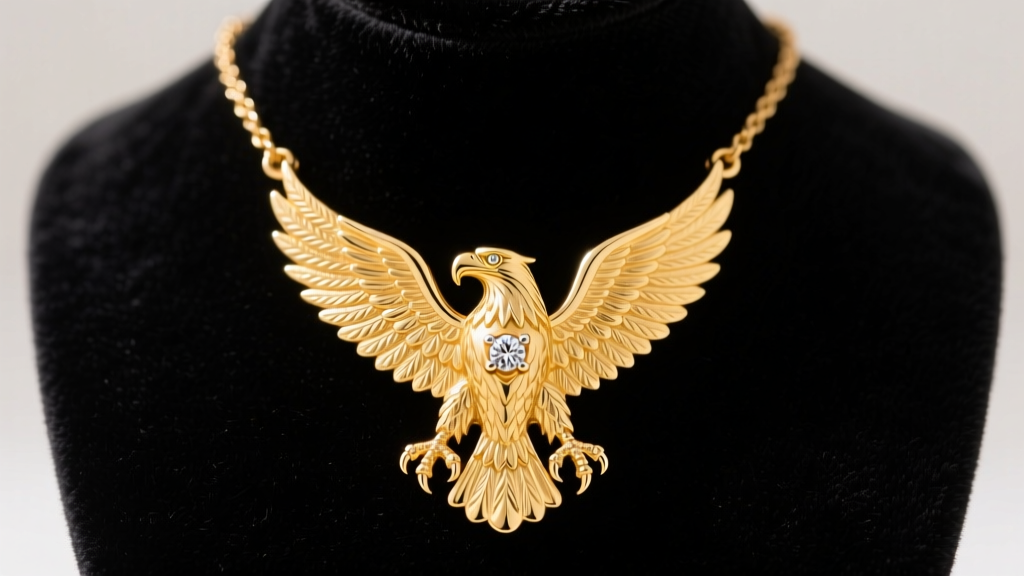
For 316L steel and 14k gold, a simple soak in warm water with a few drops of degreasing dish soap, followed by a gentle scrub with a microfiber cloth, will restore the original shine. Avoid ultrasonic cleaners if your pendant has any glued-in gemstone accents, as the high-frequency vibrations can shake the stones loose from their settings.
Final Thoughts
Investing in an eagles necklace is about more than just acquiring a piece of metal; it is about adopting a symbol of resilience and perspective. By prioritizing structural integrity—selecting the right metal grade, ensuring a robust chain pairing, and committing to proper maintenance—you ensure that your pendant remains a striking, enduring staple in your wardrobe for decades to come.