The Ultimate Guide to Buying an Authentic Vintage Bone Necklace
Learn how to authenticate, price, and care for a vintage bone necklace. Discover expert tips on identifying patina, tool marks, and ethical sourcing.
The Enduring Appeal of Vintage Bone Jewelry
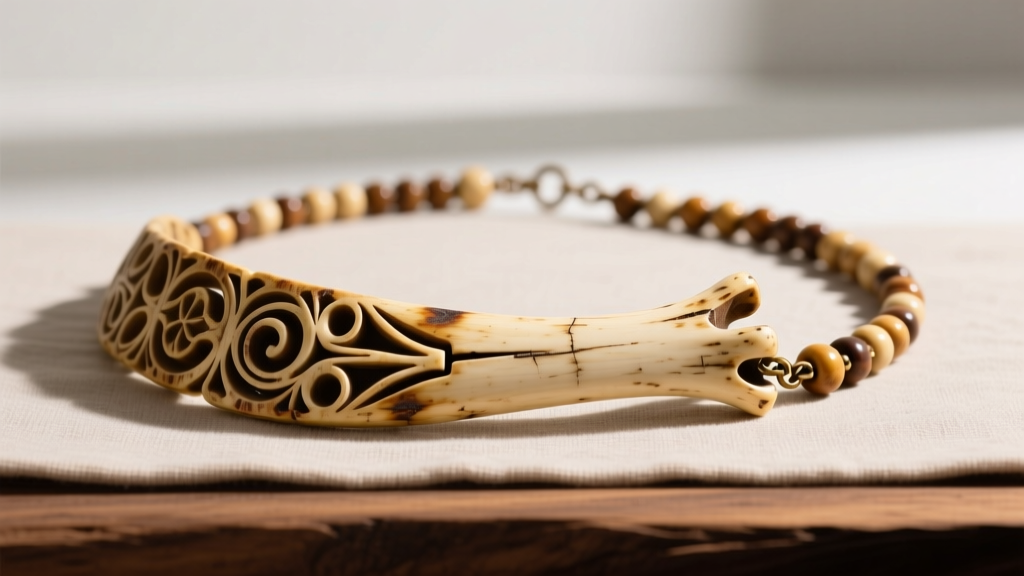
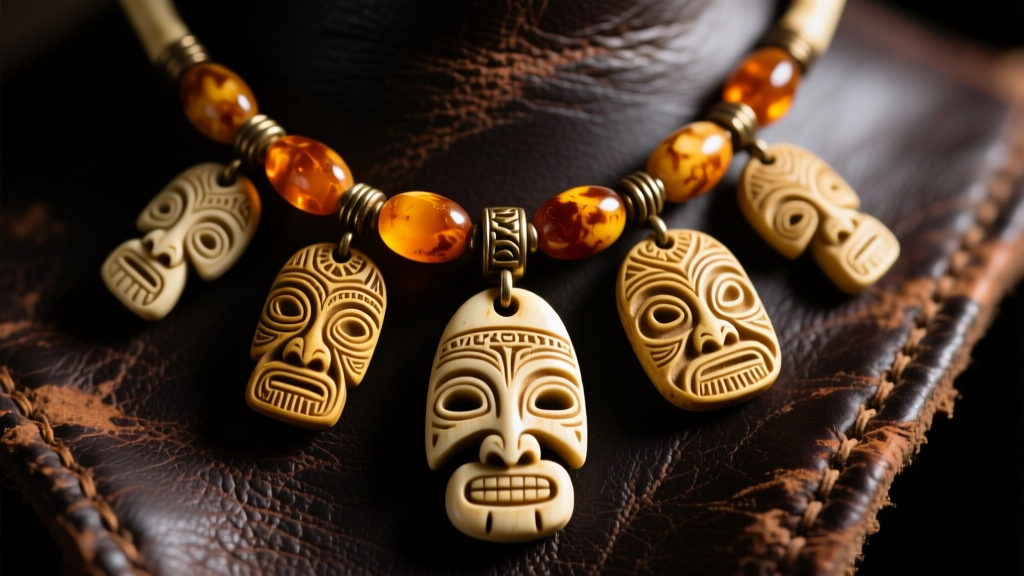
Bone is one of the oldest materials used in human adornment, predating metalwork and gem-cutting by tens of thousands of years. When you search for a vintage bone necklace, you are not just looking for a piece of jewelry; you are seeking a tangible artifact of cultural history, mid-century bohemian fashion, or global trade. Unlike mass-produced contemporary resin replicas, genuine vintage bone pieces carry the unmistakable marks of time, hand-carving, and organic decay. However, the market is flooded with synthetic imitations, dyed horn, and early plastics like Bakelite or Celluloid masquerading as antique bone. This comprehensive buying guide will equip you with the gemological and historical frameworks necessary to authenticate, evaluate, and preserve a true vintage bone necklace.
How to Authenticate Genuine Vintage Bone
Authenticating organic materials requires a multi-sensory approach. According to the Gemological Institute of America (GIA), bone is classified as an organic gemstone with a specific gravity of 1.70 to 2.00 and a Mohs hardness of roughly 5.0. Here is how you can verify these properties in the field without damaging the piece.
Visual and Tactile Indicators
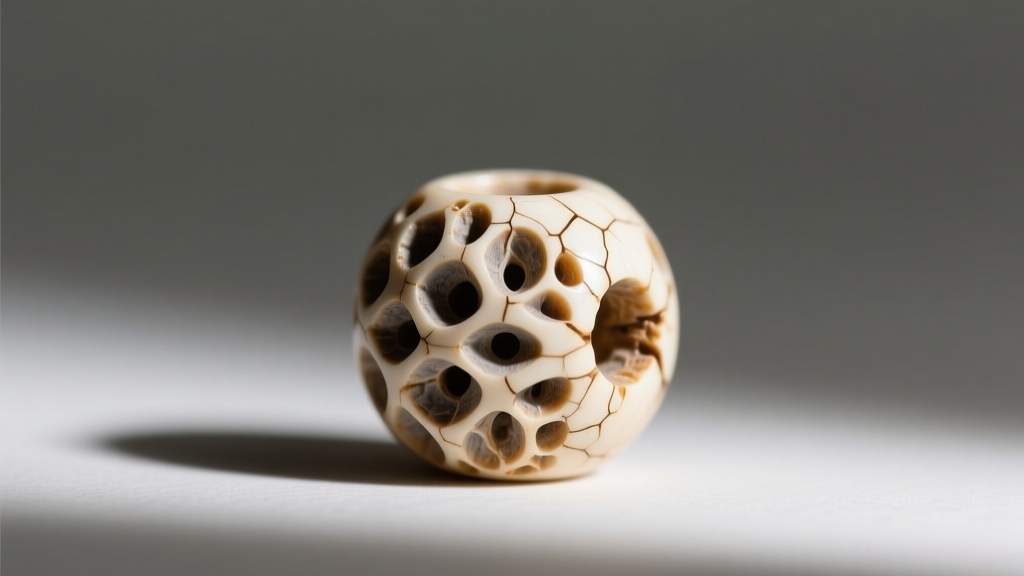
The most definitive visual hallmark of real bone is the presence of Haversian canals. These are microscopic vascular channels that appear as tiny, irregular dark dots or short, jagged lines on the surface of the bead or pendant. While some high-end resins attempt to mimic this texture, synthetic pores are usually uniform, perfectly round, and evenly spaced. Genuine bone will also exhibit micro-crazing—a network of ultra-fine, shallow surface cracks caused by decades of moisture loss and temperature fluctuations. Tactilely, bone is an excellent thermal conductor. When pressed against your lower lip or the inside of your wrist, genuine vintage bone will feel distinctly cool and heavy, whereas plastic or resin will immediately adopt your body temperature and feel unnaturally light.
The Thermal and UV Tests
If you are examining a piece in person and the seller permits, the hot pin test remains the gold standard for differentiation. Heat a needle until it is red-hot and touch it to an inconspicuous area (like the inside of a bead hole). Genuine bone will not melt; it will emit a faint, chalky white smoke and smell distinctly of burning calcium or singed hair. Conversely, plastic, resin, or celluloid will melt instantly, stick to the pin, and emit a harsh chemical odor. Additionally, under long-wave ultraviolet (UV) light, natural bone typically fluoresces a pale blue or chalky white, while early plastics like Bakelite will show no fluorescence, and celluloid may glow a dull yellow or orange.
Bone vs. Horn vs. Resin: A Buyer's Comparison
Unscrupulous sellers frequently mislabel horn or modern resin as 'vintage bone' to inflate prices. Understanding the structural differences is vital for accurate valuation.
| Material | Visual Hallmarks | Weight & Temperature | Common Vintage Eras |
|---|---|---|---|
| Genuine Bone | Haversian canals (tiny pores), chalky matte finish, micro-crazing. | Heavy, distinctly cool to the touch. | Antique tribal, 1920s-1970s bohemian. |
| Animal Horn | Growth rings, fibrous striations, translucent edges when held to light. | Medium weight, slightly warmer than bone. | Mid-century tourist trade, 19th-century mourning jewelry. |
| Resin / Plastic | Mold seams, uniform 'pores', perfectly consistent coloration. | Lightweight, rapidly warms to skin temperature. | 1980s-present mass-produced replicas. |
Analyzing Stringing Materials and Hardware
A true vintage bone necklace is only as authentic as its assembly. The stringing material and metal findings provide crucial chronological clues. If a purported 19th-century tribal bone necklace is strung on modern, extruded nylon monofilament or features a laser-stamped '925' lobster clasp, it has either been heavily restored or is an outright forgery.
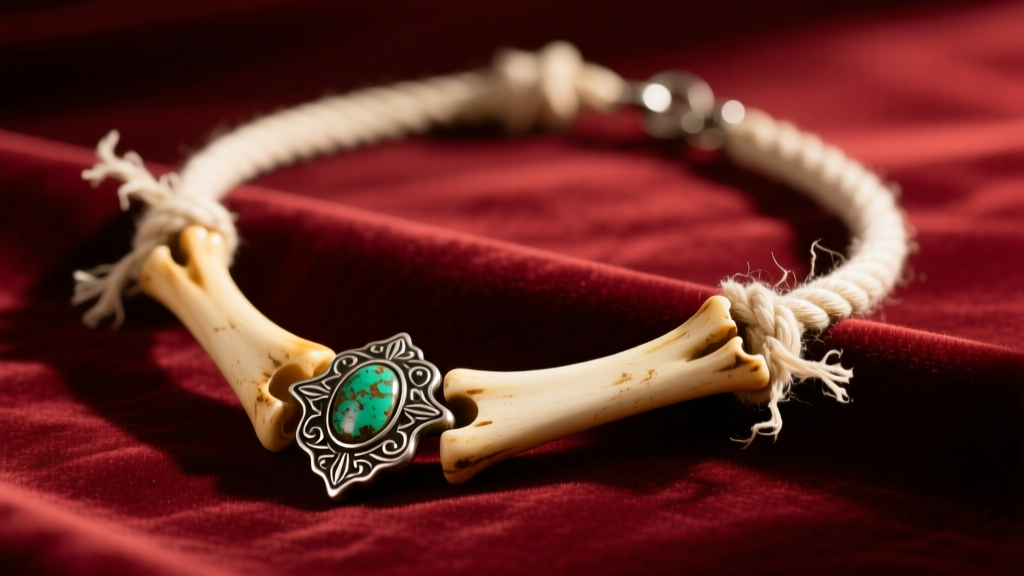
Look for hand-knotted silk thread, braided cotton, or natural animal sinew. Early cotton stringing often shows signs of fraying, uneven tension, and a grayish, oxidized hue from decades of absorbing skin oils and environmental dust. Hardware on genuine vintage pieces typically consists of hand-forged brass hooks, oxidized silver barrel clasps, or simple slip-knot closures. Avoid pieces with bright, shiny, machine-stamped base metal jump rings, which indicate modern, mass-market assembly.
Pricing Tiers for Vintage Bone Necklaces
The valuation of a vintage bone necklace depends heavily on its provenance, the complexity of the carving, and its structural integrity. Here is a realistic pricing framework for the current collector's market:
- Tier 1: Mass-Produced Tourist Trade ($25 - $75)
These are typically mid-to-late 20th-century pieces from regions like Bali, India, or Kenya. The bone is often dyed or heavily polished, and the carvings are simple, repetitive geometric shapes or basic floral motifs. They are charming but lack significant collector value. - Tier 2: Hand-Carved Tribal & Antique Pieces ($150 - $450)
This tier includes early 20th-century or late 19th-century necklaces featuring intricate, asymmetrical hand-carving, ceremonial motifs, and authentic aged patina. Pieces originating from specific indigenous cultures (e.g., Native American, Maori, or Himalayan) with verifiable age command premium prices. - Tier 3: Museum Quality & Provenance ($800 - $2,500+)
Necklaces in this tier possess documented provenance, such as being featured in historical exhibitions or originating from notable estate collections. They often feature bone carved in high relief, integrated with antique trade beads, silver, or semi-precious stones, and exhibit exceptional preservation.
Ethical Sourcing and CITES Regulations
When buying antique organic jewelry, you must be acutely aware of international wildlife trade laws. The Convention on International Trade in Endangered Species (CITES) strictly regulates the sale and transport of ivory, tortoiseshell, and certain animal horns. Unethical sellers sometimes attempt to pass off illegal, pre-ban ivory as 'vintage bone' to bypass customs.
To protect yourself legally and ethically, learn to identify the Schreger lines—a distinct cross-hatched pattern visible in the cross-section of elephant and mammoth ivory. Bone lacks these lines entirely. Furthermore, request documentation or a CITES certificate if a piece is claimed to contain protected materials. As noted by The Metropolitan Museum of Art, historical carving traditions often utilized locally sourced, non-endangered animal byproducts (like cattle or camel bone), which are perfectly legal to trade, provided they are accurately represented.
Care and Maintenance Framework
Bone is a porous, hygroscopic material, meaning it absorbs moisture and environmental contaminants. Improper care can lead to catastrophic structural failure, warping, or irreversible staining.
Expert Warning: Never use ultrasonic cleaners, steamers, or harsh chemical jewelry dips on a vintage bone necklace. The high-frequency vibrations can shatter micro-crazed bone, and chemicals will strip the natural oils, leaving the material brittle and chalky.
To clean your necklace, use a soft, dry, natural-bristle brush to gently dislodge dust from the carved crevices. If the bone is heavily soiled, slightly dampen a microfiber cloth with distilled water and wipe the surface quickly, drying it immediately. To maintain the structural integrity and enhance the ambered patina, apply a microscopically thin layer of food-grade mineral oil or pure jojoba oil once a year. Avoid wearing the necklace in swimming pools, hot tubs, or while applying cosmetics, as chlorine and alcohol-based perfumes will rapidly degrade the organic calcium matrix.


