Is a fixed ghost necklace better on bedrock tones? 2026 Guide
Discover the illusion wire trend. We break down if a fixed ghost necklace better on bedrock tones, plus a step-by-step guide to securing floating pendants.

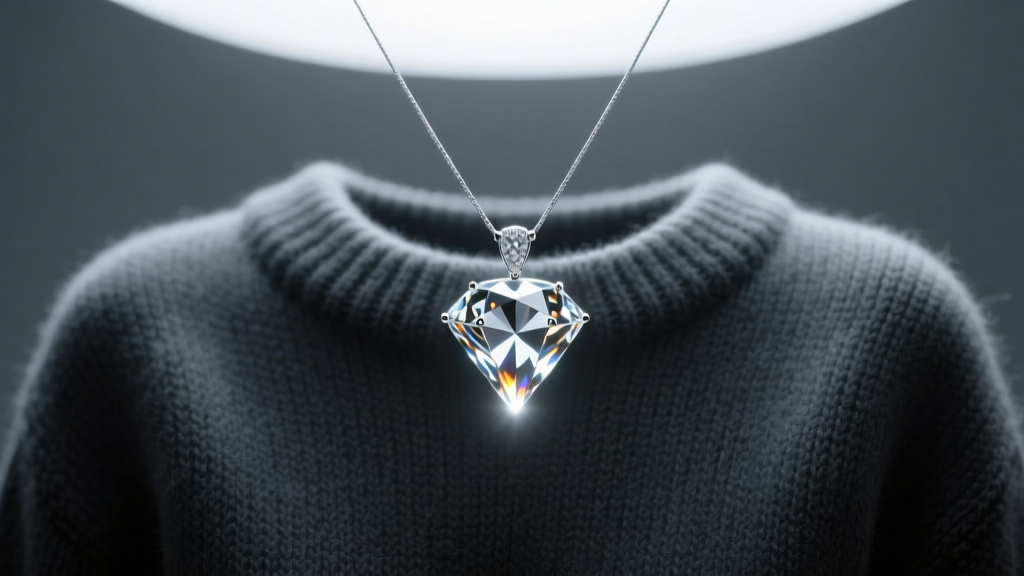
The Anatomy of the Ghost Necklace
The "ghost necklace"—more formally known in fine jewelry circles as an illusion wire necklace—has evolved from a mid-century novelty into a cornerstone of modern minimalist styling. Unlike traditional cable or curb chains, a ghost necklace utilizes a high-tensile, transparent synthetic thread to create the optical illusion that a pendant is floating directly on the wearer's skin. As we navigate the styling landscape of 2026, the preference has shifted heavily toward "fixed" pendants, where the gemstone or charm is permanently stationed at the center of the wire rather than sliding freely.
The magic of this design lies in its material science. Modern ghost necklaces rely on extruded fluorocarbon or high-grade nylon monofilament. According to Fluoropolymer material science databases, fluorocarbon polymers possess a refractive index remarkably close to that of water and human skin oils, which is why the wire seemingly vanishes when pressed against the collarbone. However, the success of this optical illusion is entirely dependent on the backdrop against which it is worn.
Defining "Bedrock" Tones in Jewelry Styling
In fashion and jewelry styling, "bedrock" refers to the foundational, solid, and matte garments that anchor a wardrobe. Think deep charcoal turtlenecks, obsidian silk blouses, navy wool blazers, and rich espresso knits. These are the bedrock tones: colors with zero reflectivity, high light absorption, and an absence of busy patterns or high-contrast weaves.
When styling delicate, nearly invisible jewelry, the backdrop is just as critical as the piece itself. A bedrock wardrobe provides the necessary negative space. Because illusion wire is transparent, it does not cast a shadow; instead, it relies on the contrast between the wearer's skin and the pendant to create the floating effect. If worn over a highly reflective or patterned garment, the micro-reflections off the synthetic wire catch the light, breaking the illusion and revealing the plastic nature of the thread.
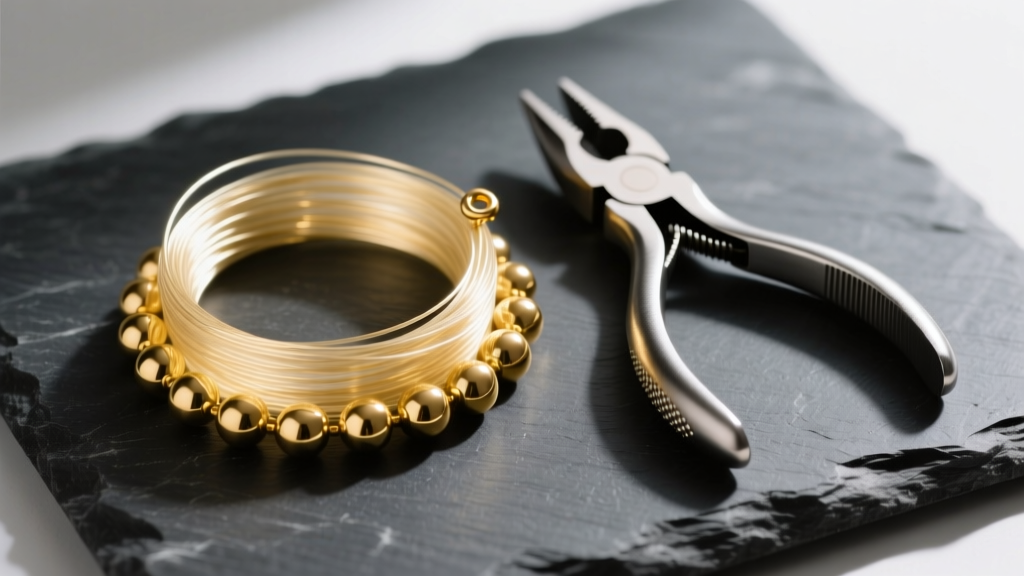
Is a Fixed Ghost Necklace Better on Bedrock Tones?
The short answer is an unequivocal yes. When clients ask our studio if a fixed ghost necklace better on bedrock tones compared to lighter or patterned fabrics, the optical physics dictate a clear winner. Dark, matte, solid colors absorb ambient light, ensuring that the only light-catching element in the visual field is the diamond, sapphire, or gold pendant itself.
Furthermore, a "fixed" pendant (secured via micro-crimps) prevents the gemstone from sliding into the hollow of the collarbone where it might get lost in fabric folds. On a structured bedrock garment—like a heavy cotton crewneck or a matte merino wool sweater—the fixed pendant rests perfectly on the sternum, maximizing visibility and maintaining the architectural integrity of the floating illusion.
| Fabric Backdrop | Wire Visibility | Pendant Impact | Styling Verdict |
|---|---|---|---|
| Matte Charcoal (Bedrock) | Zero (Invisible) | Maximum Contrast | Ideal for floating illusion |
| Ivory Silk (Reflective) | High (Catches light) | Washes out | Poor for ghost wire |
| Patterned Tweed | High (Tangles visually) | Distracted | Avoid entirely |
| Deep Navy Wool (Bedrock) | Minimal | High Contrast | Excellent for evening wear |
Step-by-Step: Fixing a Pendant on Illusion Wire
Creating a fixed ghost necklace requires precision. Unlike metal chains, synthetic wires cannot be soldered, and standard round crimp beads will slice through the polymer over time. The Gemological Institute of America frequently notes that improper setting techniques are the leading cause of gemstone loss in non-traditional mounts. Here is the professional method for securing a fixed pendant.
Step 1: Material and Gauge Selection
Select a fluorocarbon wire rather than standard nylon. Fluorocarbon is UV-resistant and will not yellow over time. For pendants under 5 carats, a 0.15mm to 0.20mm gauge is ideal. For heavier statement pieces, use a 0.30mm gauge. You will also need 1.5mm x 1.5mm tube crimps (sterling silver or gold-filled) and a dedicated micro-crimping plier.
Step 2: Threading and Positioning
Cut a length of wire roughly 24 inches long. Thread the wire through the pendant's bail. Slide the pendant to the exact dead-center of the wire. To ensure it stays fixed, you must measure the drop length (usually 16 to 18 inches for a choker or princess length) and mark the wire with a non-permanent fabric marker where the clasp will sit.
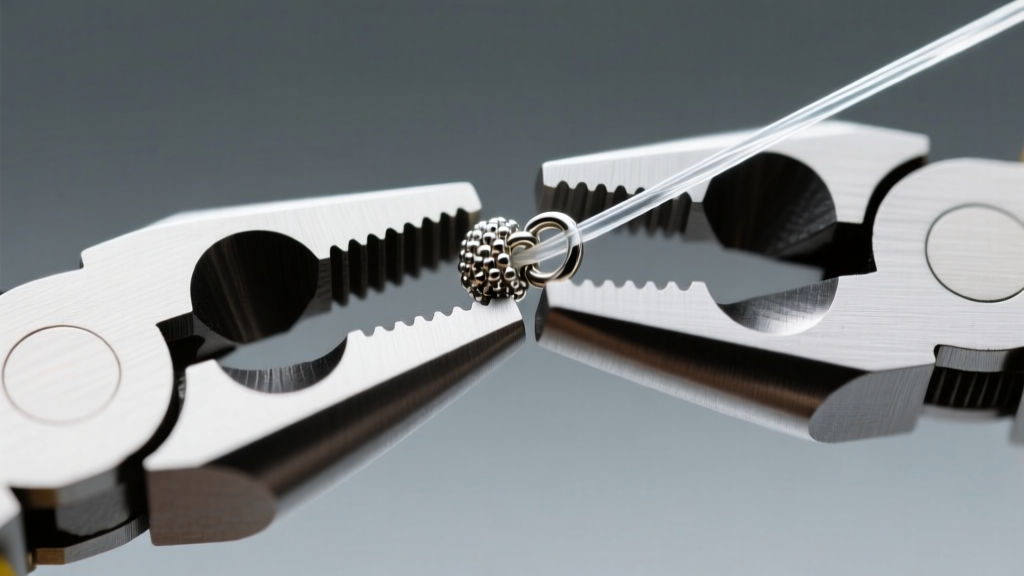
Step 3: The Tube Crimp Technique
Thread a 1.5mm tube crimp onto the wire, positioning it exactly 1 inch away from the pendant bail. This creates the "fixed" station. Pass the wire back through the crimp bead, creating a tiny loop. Use the first notch of your crimping pliers to compress the tube into a U-shape, then use the second rounded notch to fold the U into a clean bead. Never use flat-nose pliers to smash a crimp on illusion wire, as the sharp metal edges will shear the polymer.
Step 4: Securing the Knot
At the clasp end, tie a double surgeon's knot. Before pulling the knot completely tight, apply a micro-drop of G-S Hypo Cement. Avoid cyanoacrylate (Super Glue), as it dries rigid and will shatter the flexible wire upon impact. For long-term care of your finished piece, refer to the Blue Nile jewelry care archives for best practices on storing synthetic-threaded jewelry away from extreme heat.
Troubleshooting and Maintenance
Even the highest quality fluorocarbon ghost necklaces require specific maintenance. The most common failure mode is micro-abrasion at the pendant bail. If your pendant has a sharp, unpolished metal bail, it will act like a saw against the 0.2mm wire. Always ensure the bail is lined with a smooth metal sleeve or opt for a diamond-set bail that eliminates metal-on-wire friction.
Additionally, while fluorocarbon resists UV yellowing, it is susceptible to stretching if hung on a jewelry stand. Always store your fixed ghost necklace coiled loosely in a velvet pouch rather than draped over a bust. By pairing your meticulously crafted piece with the right bedrock tones and maintaining the integrity of the wire, your floating pendant will remain a breathtaking staple of your 2026 wardrobe.


