The Anatomy and Valuation of a Navajo Pearl Necklace
Explore the metallurgy, sizing metrics, and authenticity markers of a handmade Navajo pearl necklace in this expert technical guide.

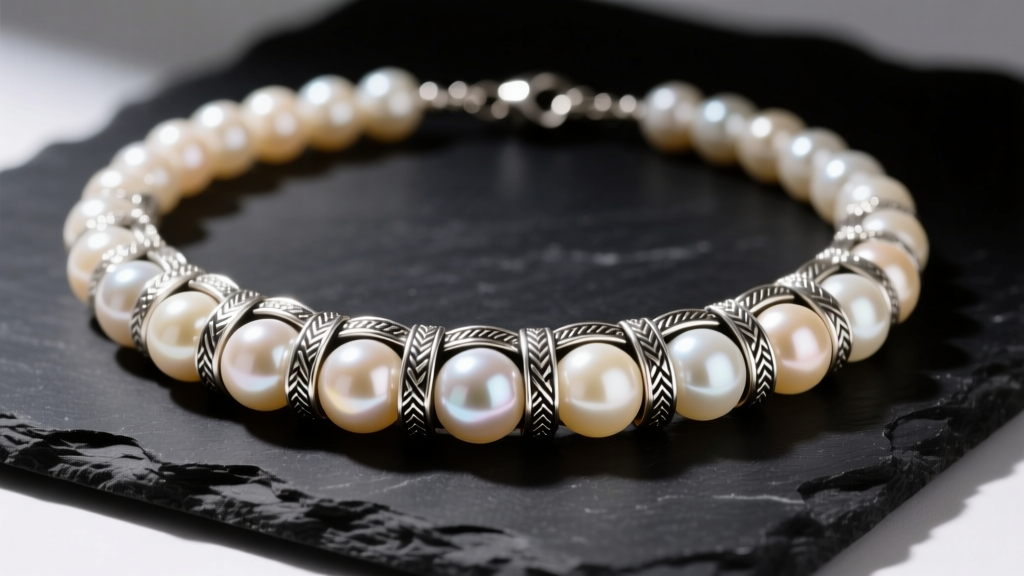
In the lexicon of Southwestern jewelry, the term 'pearl' does not refer to the organic gems harvested from oysters. Instead, a navajo pearl necklace represents a masterclass in traditional silversmithing, consisting entirely of hand-fabricated sterling silver beads. Also known as 'bench beads,' these pieces are highly coveted for their substantial weight, fluid drape, and the visible evidence of the artisan's hand. For collectors, investors, and jewelry enthusiasts, understanding the technical nuances of these necklaces is critical to distinguishing master-crafted heirlooms from mass-produced imports.
The Fabrication Process: Dapping and Soldering
Unlike cast beads, which are formed by pouring molten metal into a mold, authentic Navajo pearls are individually fabricated from flat sheets of sterling silver. The artisan uses a circular steel punch to cut flat discs, which are then placed into a dapping block—a wooden or metal block with hemispherical indentations. Using a dapping punch and a heavy mallet, the silversmith hammers the flat disc into a perfect half-sphere.
Two identical half-spheres are then aligned and soldered together using a butane or acetylene torch and silver paste solder. This meticulous process leaves a distinct equatorial seam. While some contemporary artists polish this seam to a mirror finish, traditionalists often leave it slightly visible or textured as a hallmark of hand-fabrication. The presence of a perfectly uniform, microscopic seam line, or the subtle asymmetry of hand-hammered domes, are primary indicators that you are examining a genuine navajo pearl necklace rather than a machine-cast replica.
Metallurgical Impact: Silver Purity Grades
The structural integrity of a silver bead relies heavily on its alloy composition. Because the beads in a necklace constantly strike one another during wear, the metal must possess adequate hardness to resist denting and deformation.
| Alloy Designation | Silver Content | Alloying Metal | Hardness & Durability | Common Usage |
|---|---|---|---|---|
| Sterling Silver | 92.5% | 7.5% Copper | High (Vickers ~70) | Standard for modern Navajo pearls |
| Coin Silver | 90.0% | 10.0% Copper | Very High | Vintage/Historical pieces (pre-1930s) |
| Fine Silver | 99.9% | None | Low (Vickers ~25) | Rarely used for beads; too soft |
Sterling silver (.925) is the undisputed standard for a high-quality navajo pearl necklace. The 7.5% copper content provides the necessary work-hardening properties to survive decades of wear. Fine silver (.999), while prized for its pure white luster and resistance to tarnish, is far too malleable. If fabricated into hollow beads, fine silver would dent upon minor impact. When evaluating vintage pieces, you may encounter coin silver, which was historically created by melting down US silver dollars and contains a slightly higher copper content, resulting in a warmer, darker patina over time.
Bead Sizing, Graduation, and Weight Metrics
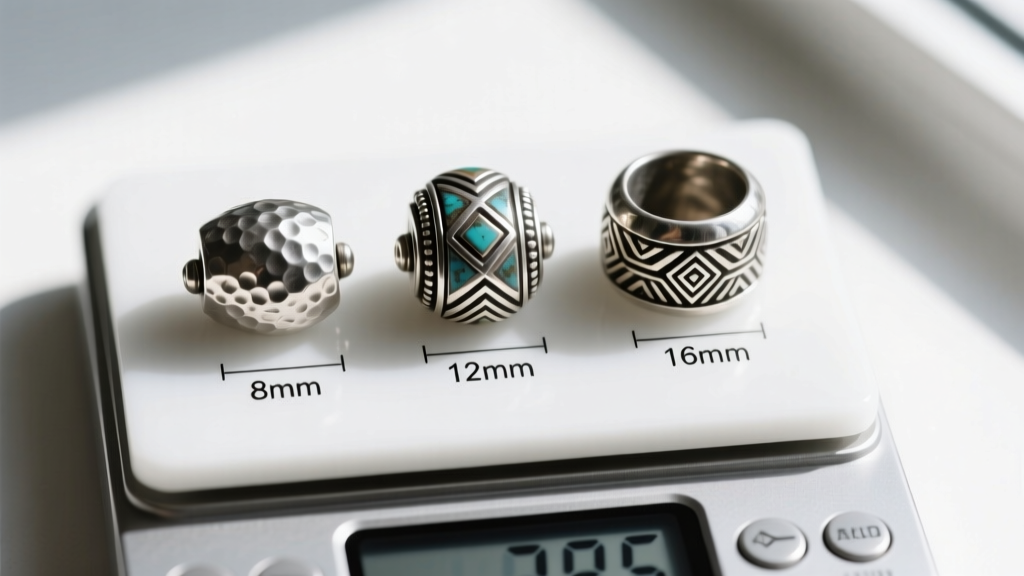
The visual impact and physical comfort of the necklace are dictated by bead diameter and strand graduation. Navajo pearls typically range from 6mm to 18mm in diameter.
- Uniform Strands: All beads are identical (e.g., entirely 10mm). A 16-inch strand of 10mm beads typically weighs between 45 and 55 grams.
- Graduated Strands: The largest bead sits at the center (e.g., 14mm), tapering down symmetrically to smaller beads (e.g., 8mm) near the clasp. This engineering reduces weight on the nape of the neck while maximizing visual presence at the décolletage.
- Heavyweight/Chunky Strands: Utilizing 16mm+ beads, these can exceed 120 grams. They require heavy-gauge wire stringing to prevent the wire from snapping under the tensile stress of the silver.
Identifying Master Artisans vs. Import Fakes
The market is saturated with overseas cast imitations designed to mimic the Southwestern aesthetic. The Indian Arts and Crafts Board strictly enforces the Indian Arts and Crafts Act of 1990, which makes it illegal to offer or display for sale any art or craft product in a manner that falsely suggests it is Indian-produced. To ensure your navajo pearl necklace is an authentic Native American creation, scrutinize the following technical markers:
1. The Clasp and Findings
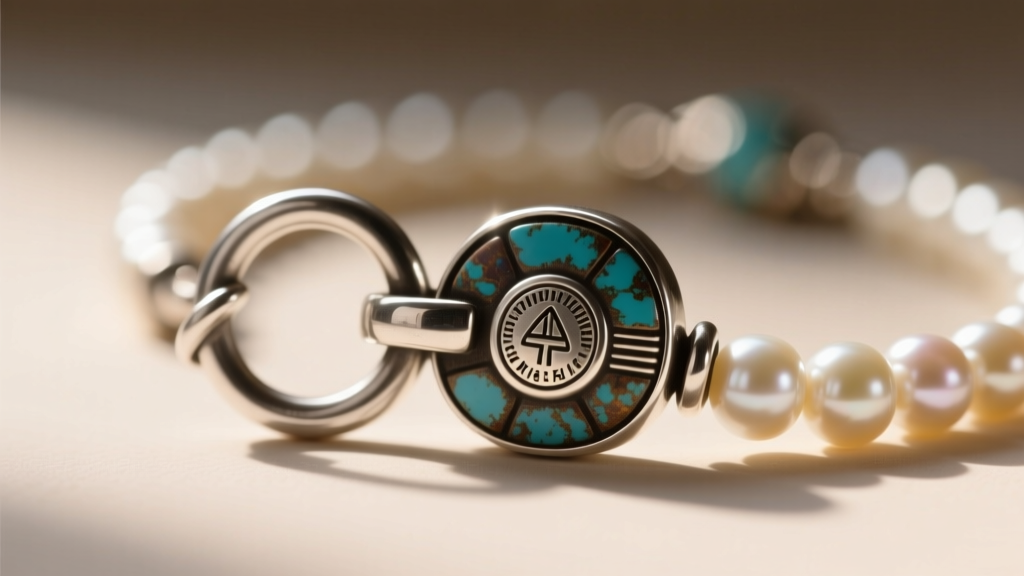
Authentic strands rarely use commercial lobster clasps or jump rings. Instead, master silversmiths fabricate custom hook-and-eye clasps from heavy-gauge sterling wire. The hook is often hand-forged, featuring a slight taper and a flattened end to prevent the eye from slipping off. Some artisans incorporate a stamped tribal motif or a twisted wire shank onto the clasp itself.
2. Hallmarks and Stamping
Look for a deeply struck artist hallmark on the eye-loop or the hook. Master silversmiths like Gary Reeves, Virginia Tahe, and Benny Tahe use distinct, deeply engraved stamps. Fakes often feature shallow, laser-etched marks or generic '.925' stamps without an accompanying artist or tribal guild mark. Note that some traditionalists do not stamp their work, relying instead on provenance and dealer authentication.
3. Internal Stringing and Knotting
High-end necklaces are strung on braided nylon or tiger-tail wire, often with small seed beads or silver heishi spacers between the main pearls to prevent metal-on-metal friction, which can cause premature wear and a dull, scratched finish on the silver.
Valuation and Market Pricing Framework
Pricing a navajo pearl necklace requires a hybrid approach that accounts for both the intrinsic melt value of the silver and the artistic premium of the maker.
The Baseline (Scrap + Labor): At a minimum, the price is dictated by the gram weight of the sterling silver multiplied by the current spot price, plus a fabrication fee. Because hand-dapping and soldering dozens of individual beads is incredibly labor-intensive, the baseline multiplier for handmade bench beads is typically 3x to 5x the raw silver value.
The Artist Premium: Necklaces crafted by renowned, award-winning Navajo silversmiths command significant premiums. A 60-gram strand by an emerging artist might retail for $400–$600, whereas a similarly weighted strand by a recognized master like Gary Reeves—known for his deep, aggressive oxidation and heavy stamping—can easily command $1,200 to $2,500 in the secondary collector's market.
Care, Polishing, and Patina Preservation
The copper content in sterling silver makes it susceptible to oxidation, particularly when exposed to sulfur compounds in the air, cosmetics, and human sweat. For a navajo pearl necklace, this tarnish is often considered a desirable feature rather than a flaw.
Managing Oxidation: Many artisans intentionally oxidize the equatorial seam and the recesses of the clasp using liver of sulfur to create high contrast. When cleaning, never use liquid silver dips or ultrasonic cleaners, as these will strip the intentional patina and leave the beads with an unnatural, flat white appearance. Instead, use a treated jeweler's polishing cloth (such as a Sunshine cloth) and gently buff only the high points of the beads. This preserves the dark, oxidized seams while restoring the mirror shine to the domes, enhancing the three-dimensional depth of the metalwork.
Storage Protocols: When not being worn, the necklace should be stored in an airtight polyethylene bag alongside 3M anti-tarnish strips. Avoid storing the piece in direct contact with rubber bands or newspaper, both of which off-gas sulfur and will cause rapid, aggressive blackening of the sterling silver.


