Summary for the Necklace by Guy de Maupassant: Material Analysis
Explore a summary for the necklace by Guy de Maupassant through a gemologist's lens, comparing 19th-century paste jewelry to genuine diamonds.

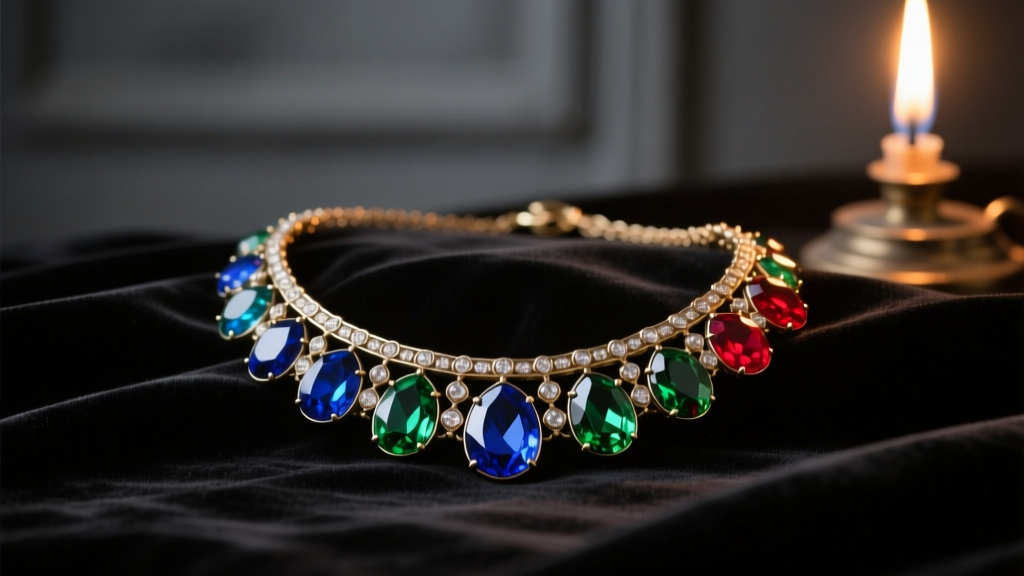
When we analyze classic literature through the lens of a gemologist, few stories offer as devastating a lesson in material science as Guy de Maupassant’s 1884 masterpiece. If you are looking for a summary for the necklace by guy de maupassant, you are likely familiar with the tragic twist. However, beneath the themes of vanity and class anxiety lies a profound commentary on the deceptive nature of jewelry materials. As modern jewelry experts, we can dissect the exact material properties that led to Mathilde Loisel’s ruin, contrasting 19th-century simulants with genuine gemstones and exploring how modern buyers can avoid the same fatal mistake.
The Core Plot: A Summary for the Necklace by Guy de Maupassant
According to the original text archived by Project Gutenberg, Mathilde Loisel is a woman born into a modest family but consumed by a desire for luxury. Invited to a prestigious ball at the Ministry of Education, she borrows what she believes to be a dazzling diamond necklace from her wealthy friend, Madame Forestier. After losing the necklace on the way home, Mathilde and her husband purchase an identical replacement from a jeweler in the Palais-Royal for 36,000 francs. They spend the next ten years in grueling poverty to pay off the debt. In the story’s famous ironic climax, Mathilde confesses the truth to Madame Forestier, only to be told: "Oh, my poor Mathilde! But mine was paste. It was worth at most five hundred francs!"
The Fatal Flaw: 19th-Century Paste vs. Genuine Diamonds
To understand how Mathilde was so easily deceived, we must examine the material properties of "paste" jewelry in the late 19th century. In gemological terms, paste refers to high-lead glass, often called strass, named after Georges Frédéric Strass, who pioneered the technique in the 1720s. By adding up to 40% lead oxide to the glass mixture, 19th-century artisans created a material with a remarkably high refractive index (RI) and dispersion, allowing it to mimic the "fire" and brilliance of a diamond under the warm, flickering light of gas lamps and candles.
Gemological Breakdown: Why Mathilde Couldn't Tell the Difference
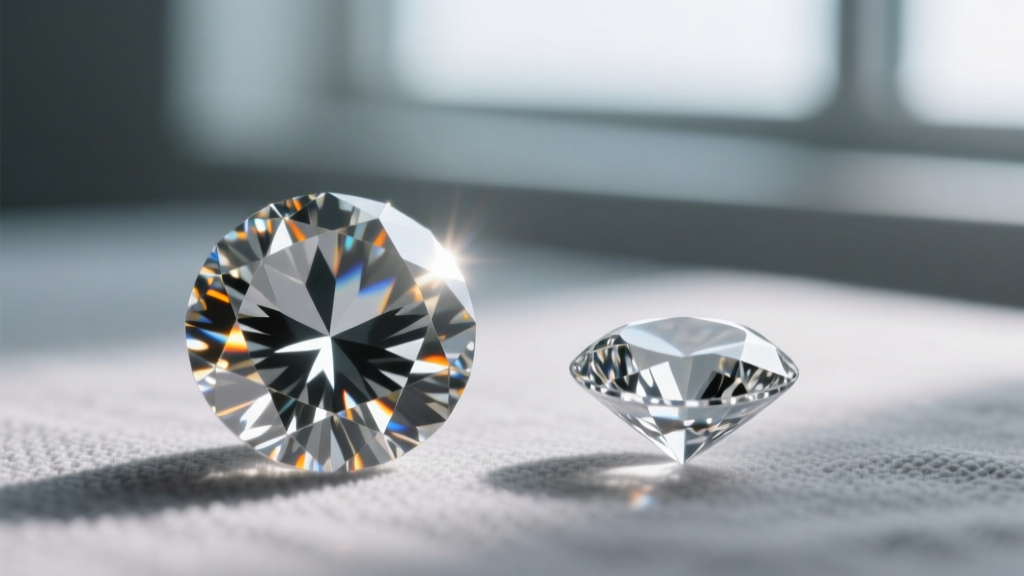
In the dimly lit ballrooms of 1880s Paris, the visual difference between a 36,000-franc diamond rivière and a 500-franc paste imitation was virtually indistinguishable to the untrained eye. However, under a modern gemological loupe, the physical properties diverge drastically.
| Property | Genuine Diamond | 19th-Century Paste (Lead Glass) | Modern Cubic Zirconia (CZ) |
|---|---|---|---|
| Refractive Index (RI) | 2.42 | 1.65 - 1.70 | 2.15 - 2.18 |
| Mohs Hardness | 10 | 5.0 - 5.5 | 8.0 - 8.5 |
| Specific Gravity (SG) | 3.52 | 3.00 - 4.00 | 5.60 - 5.90 |
| Dispersion (Fire) | 0.044 | 0.035 | 0.058 |
| Luster | Adamantine | Vitreous to Sub-Adamantine | Sub-Adamantine |
The critical failure point of paste is its Mohs hardness. At 5.5, lead glass is easily scratched by quartz dust (Mohs 7) present in everyday air. Over time, the facet junctions of a paste necklace become rounded and abraded, giving it a "sleepy" or dull appearance. A genuine diamond, ranking at a perfect 10, will maintain razor-sharp facet edges for centuries. Furthermore, the Gemological Institute of America (GIA) notes that glass simulants often contain spherical gas bubbles and flow lines, which are dead giveaways under 10x magnification.
Modern Simulants: How the "Fake" Necklace Would Fare in 2026
If Madame Forestier’s necklace were created today, it would likely not be made of lead glass. Modern jewelry manufacturing relies on far more sophisticated simulants. The two most common materials used to mimic diamonds in contemporary fashion jewelry are Cubic Zirconia (CZ) and synthetic Moissanite.
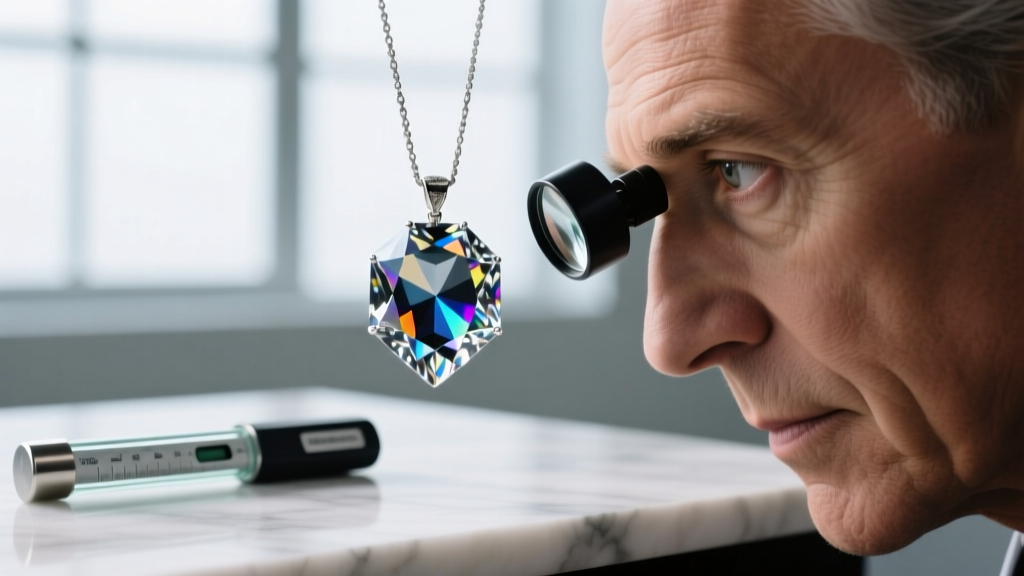
- Cubic Zirconia (CZ): With an RI of 2.15 and a Mohs hardness of 8.5, CZ is significantly more brilliant and durable than 19th-century paste. However, its high specific gravity (5.6) means a CZ necklace will feel noticeably heavier than a diamond necklace of the exact same carat weight—a tactile test Mathilde never thought to perform.
- Moissanite: Originally discovered in a meteor crater, lab-created moissanite boasts an RI of 2.65 (higher than diamond) and extreme dispersion (0.104). It exhibits a "disco-ball" effect that can sometimes give it away, but its hardness of 9.25 makes it incredibly durable.
- Lab-Grown Diamonds: Chemically, physically, and optically identical to mined diamonds. Even a master gemologist cannot distinguish a lab-grown diamond from a natural one using only a loupe; advanced spectroscopic testing is required.
The Economics of Adornment: Then vs. Now
The tragedy of Maupassant’s story is deeply rooted in the economics of jewelry. In 1884, 36,000 French francs was an astronomical sum, roughly equivalent to the cost of a grand Parisian estate. Today, the democratization of jewelry materials means that the visual gap between "real" and "fake" has closed, while the price gap has shifted. A high-quality moissanite pendant necklace might cost $800, while its natural diamond equivalent could demand $15,000. The modern consumer must decide whether they are paying for the optical properties of the stone or the geological rarity of its origin.
Lessons for Modern Jewelry Buyers
Mathilde Loisel’s downfall was rooted in a lack of material literacy and an over-reliance on visual assumptions. To avoid being deceived by modern simulants when purchasing high-value diamond necklaces, adhere to these strict gemological protocols:
- Demand Certification: Never purchase a diamond necklace over $1,000 without a grading report from a tier-one laboratory like the GIA or AGS. The certificate will explicitly state if the stone is natural, lab-grown, or a simulant.
- Use a Thermal Conductivity Tester: Diamonds are exceptional thermal conductors. A standard diamond tester will easily distinguish a diamond from glass, paste, or CZ. (Note: Moissanite also conducts heat, so dual-testers measuring electrical conductivity are required for definitive results).
- Inspect the Mounting: Genuine diamonds are almost never set in low-karat gold or silver, as the prongs would wear down too quickly to secure the valuable stone. Look for hallmarks like 14K, 18K, or PT (Platinum). If the necklace is stamped "CZ" or lacks a precious metal hallmark, the stones are almost certainly simulants.
- Check for Doubling: If you are examining a moissanite simulant, look through the crown of the stone at the pavilion facets with a 10x loupe. Moissanite is doubly refractive, meaning the bottom facet lines will appear doubled, whereas a diamond is singly refractive.
Ultimately, The Necklace serves as a timeless reminder that true value in jewelry is not just about how a material catches the light in a ballroom, but the verifiable, physical properties that define its authenticity. Whether you are buying a 5-carat natural diamond rivière or a beautifully crafted CZ pendant, understanding the science of the stones ensures you always know exactly what rests against your collarbone.


