Crystal Necklace Meaning: 2026 Occasion Gift Guide
Discover the crystal necklace meaning behind popular gemstones. Our 2026 gift guide matches healing crystals to life occasions for intentional giving.

In 2026, the art of jewelry gifting has evolved far beyond simple aesthetics. Modern consumers are deeply invested in the energetic and symbolic resonance of their accessories. When evaluating the crystal necklace meaning for a specific recipient, it is vital to cross-reference their current life chapter with the geological and metaphysical properties of the stone. A well-chosen crystal pendant is not merely a decorative item; it is a talisman, a grounding tool, and a deeply personal artifact. This comprehensive guide decodes the hidden languages of gemstones, providing you with an expert framework for matching crystal necklaces to life’s most pivotal milestones.
The Rise of Intentional Gifting and Energetic Resonance
The shift toward intentional gifting reflects a broader cultural desire for mindfulness and authenticity. According to the Gemological Institute of America (GIA), consumer interest in the provenance and symbolic heritage of colored gemstones has surged over the last decade. Gifting a crystal necklace requires an understanding of both its mineralogical reality and its historical lore. For instance, while a diamond represents enduring strength, crystalline quartz varieties represent clarity, amplification, and programmable energy. Understanding these nuances transforms a standard jewelry purchase into a profoundly meaningful gesture.
Decoding Crystal Necklace Meaning by Life Milestone
To select the perfect stone, you must first identify the energetic support the recipient requires. Below is a breakdown of major life events and their corresponding crystal matches.
Graduation and New Beginnings: Citrine and Clear Quartz
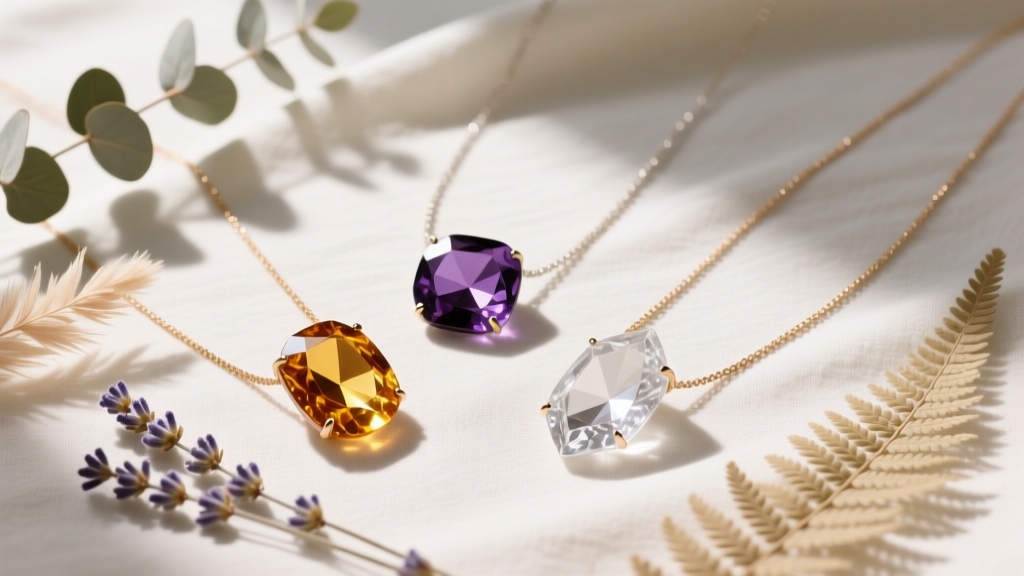
Graduations mark the transition from structured learning to uncharted territory. Citrine, a yellow variety of quartz colored by trace amounts of iron, is historically known as the "Merchant's Stone." Its crystal necklace meaning is deeply tied to manifestation, personal will, and joy. Pairing citrine with Clear Quartz (the master amplifier) creates a synergistic effect, ideal for a graduate stepping into the workforce. From a gemological standpoint, both stones rate a 7 on the Mohs hardness scale, making them highly durable for daily wear in prong or bezel settings.
Anniversaries and Deepening Bonds: Rose Quartz and Rhodonite
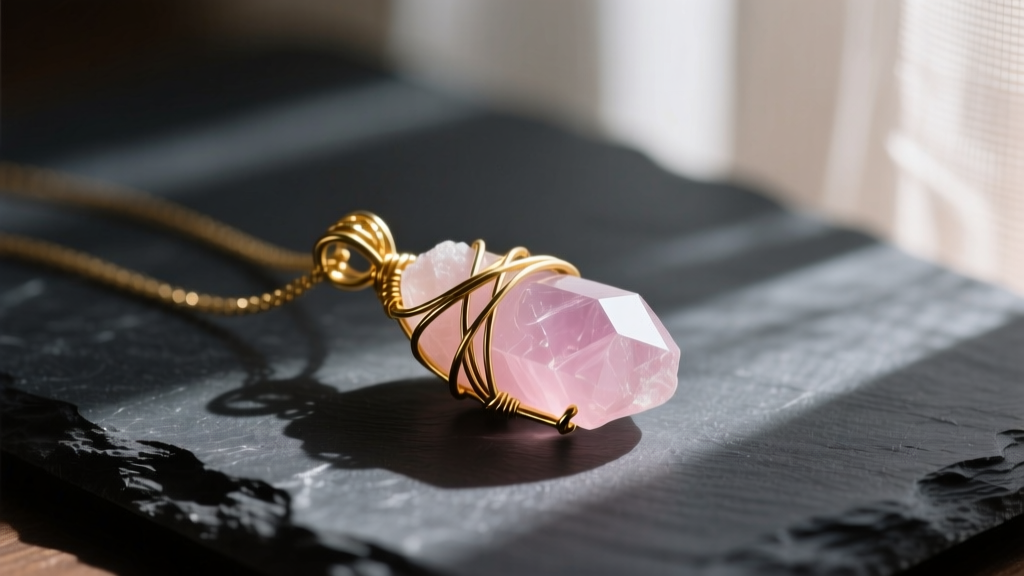
For anniversaries, the focus shifts to emotional fortification and unconditional love. Rose Quartz gets its pink hue from microscopic fibrous inclusions of dumortierite or titanium. Its meaning centers on heart-chakra healing and compassion. For a more unique, deep-cut alternative, consider Rhodonite. With its striking pink and black manganese oxide matrix, rhodonite is known as the "rescue stone" for emotional shock, making it a powerful gift for couples who have navigated and overcome significant hardships together.
Career Promotions and Wealth Building: Pyrite and Green Aventurine
Celebrating a major promotion requires stones associated with abundance and shielding. Pyrite (iron sulfide) is a metallic, reflective stone that symbolizes wealth and protection against negative workplace environments. However, pyrite is notoriously sensitive to moisture and can degrade into sulfuric acid if exposed to water and oxygen over time. Therefore, a pyrite pendant must be sealed or set in a closed-back bezel. Green Aventurine, a quartz variety containing fuchsite mica inclusions, offers a safer, more durable alternative for daily wear, carrying the meaning of luck and opportunistic growth.
The Gemologist’s Guide to Crystal Quality and Settings
Understanding the crystal necklace meaning is only half the battle; the physical construction of the jewelry dictates its longevity. A common failure mode in mass-market crystal jewelry is the mismatching of stone hardness with inappropriate metal settings.
| Crystal | Mohs Hardness | Ideal Setting Type | Failure Mode to Avoid | Avg. Price Range (USD) |
|---|---|---|---|---|
| Selenite | 2.0 | Sealed Bezel / Glass Locket | Water exposure (dissolves stone) | $45 - $90 |
| Fluorite | 4.0 | Thick Bezel / Wire Wrap | Prong settings (chips on girdle) | $60 - $150 |
| Amethyst | 7.0 | Prong / Tension | Prolonged UV exposure (fading) | $80 - $250 |
| Black Tourmaline | 7.0 - 7.5 | Bezel / Channel | Hard impacts (cleavage fracturing) | $50 - $180 |
When selecting wire-wrapped pendants, pay close attention to the wire gauge and metallurgy. A 20-gauge dead-soft copper wire will work-harden over time and can actually cut into the girdle of a softer stone like fluorite (Mohs 4). For wire wrapping, insist on 18-gauge or 20-gauge Argentium silver or 14k gold-filled wire, which offer superior tarnish resistance and structural integrity without the harsh work-hardening properties of pure copper.
Matching Chain Lengths to Energetic Centers
The length of the necklace chain determines where the crystal rests on the body, directly influencing which chakra or energetic center it interacts with. In 2026, layering multiple lengths is popular, but for a singular, meaningful gift, precision is key.
- 16-Inch Choker (Throat Chakra): Ideal for stones that promote communication and truth, such as Lapis Lazuli, Aquamarine, or Blue Lace Agate. This length rests directly on the collarbone, making it perfect for V-neck and scoop-neck attire.
- 18-Inch Princess (Heart Chakra): The most versatile and popular length. It rests on the upper chest, aligning with the heart space. Use this for Rose Quartz, Rhodonite, and Malachite to foster emotional healing and empathy.
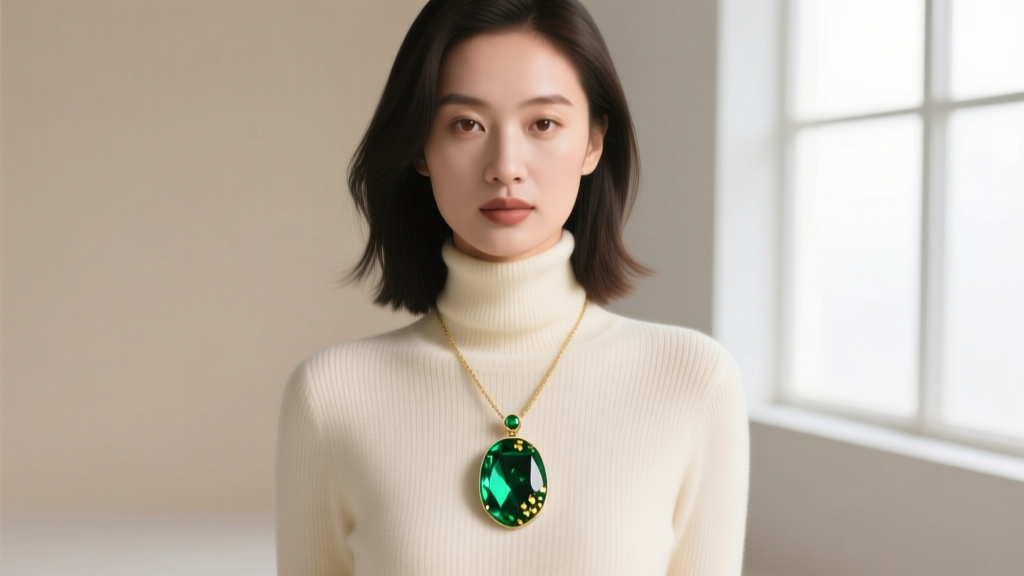
- 24-Inch Opera (Solar Plexus Chakra): Resting near the diaphragm, this length is suited for grounding and willpower stones like Tiger’s Eye, Black Tourmaline, and Citrine. It is the optimal choice for wearing over winter sweaters or high-neck blouses.
Care, Cleansing, and Avoiding Mineral Degradation
A crystal necklace is a living geological specimen. Improper care can destroy both the physical stone and its perceived energetic value. The most common mistake gift recipients make is attempting to "cleanse" their crystals in water or sunlight.
Expert Warning: Never submerge stones containing copper (like Malachite or Azurite) or iron (like Pyrite or Hematite) in water. Malachite can release toxic copper fumes when wet, and Pyrite will oxidize and crumble. Furthermore, avoid salt water cleanses entirely; salt is abrasive and will micro-scratch the polish of any quartz variety.
Instead of water, recommend dry cleansing methods. The Mindat.org mineral database confirms the chemical volatility of many popular gemstones when exposed to solvents or saline. For energetic cleansing, suggest using a 432Hz tuning fork (sound therapy), passing the pendant through the smoke of ethically sourced Palo Santo, or resting it on a bed of crushed Selenite. For stones like Amethyst and Kunzite, warn the recipient that prolonged exposure to direct ultraviolet sunlight will permanently bleach the stone's vibrant purple and pink hues, respectively.
Sourcing Ethical Crystal Jewelry in 2026
The metaphysical benefits of a crystal are heavily compromised if its mining process causes environmental degradation or human exploitation. Unlike diamonds, which are tracked via the Kimberley Process, the colored gemstone and crystal trade has historically lacked centralized regulation. When shopping for a meaningful gift, look for jewelers who provide mine-to-market transparency.
Verify if the brand is certified by the Responsible Jewellery Council (RJC) or if they partner directly with artisanal miners who adhere to fair-trade principles. Brands that disclose the exact geographic origin of their stones—such as Uruguayan Amethyst or Brazilian Citrine—demonstrate a commitment to ethical sourcing that aligns perfectly with the intentional, healing nature of the gift. By prioritizing ethical provenance, you ensure that the crystal necklace meaning remains pure, untainted by the hidden costs of opaque supply chains.


