Granddaughter Necklaces: Technical Guide to Metals & Chains
Discover the technical details behind lasting granddaughter necklaces. Compare metal grades, chain weaves, and laser engraving for heirloom gifts.

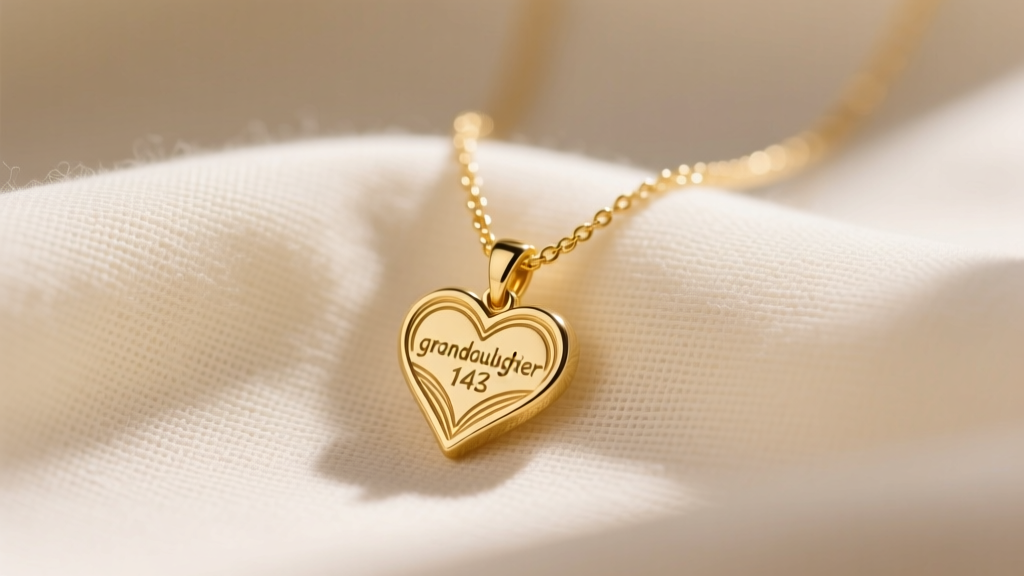
The Metallurgy of Sentiment: Choosing the Right Alloy
When selecting granddaughter necklaces intended to serve as multi-generational heirlooms, the emotional significance of the piece must be matched by its metallurgical integrity. Fast-fashion jewelry often relies on thin electroplating over base metals like brass or zinc, which will inevitably oxidize, flake, and cause contact dermatitis. To ensure a necklace survives decades of daily wear, we must examine the specific alloy compositions and bonding techniques used by master jewelers.
Solid Karat Gold vs. Gold-Filled vs. Vermeil
Understanding the legal and technical definitions of gold jewelry is critical. According to the Federal Trade Commission (FTC) Jewelry Guides, the terminology surrounding gold content is strictly regulated to protect consumers from deceptive marketing.
- Solid 14k Gold (58.5% Gold): The industry standard for heirloom granddaughter necklaces. The remaining 41.5% consists of alloying metals like copper, silver, and zinc, which provide the tensile strength necessary to prevent the chain from stretching or snapping under the weight of a pendant. While 18k gold (75% pure) offers a richer yellow hue, its higher purity makes it significantly softer and more prone to micro-scratches and structural deformation over time.
- Gold-Filled (1/20 14k GF): A mechanical bonding process where a thick layer of solid gold is heat- and pressure-bonded to a brass core. By law, the gold layer must constitute at least 5% (1/20th) of the total weight of the item. Gold-filled chains offer exceptional durability and can last decades without wearing through to the base metal, making them a highly technical and cost-effective alternative to solid gold.
- Gold Vermeil: Often confused with standard gold plating, true vermeil requires a base of 925 sterling silver plated with a minimum of 2.5 microns of gold. While superior to flash-plated brass, the 2.5-micron layer will eventually wear away at high-friction points, such as the clasp and the jump ring connecting the pendant.
| Material Grade | Gold Thickness / Purity | Base Metal | Estimated Lifespan (Daily Wear) | Relative Price Point |
|---|---|---|---|---|
| Solid 14k Gold | 100% (58.5% Pure Gold) | N/A (Alloyed) | Generational (100+ Years) | $$$$ |
| 1/20 14k Gold-Filled | ~50-100+ microns (5% weight) | Jeweler's Brass | 20 - 50 Years | $$ |
| Gold Vermeil | Minimum 2.5 microns | 925 Sterling Silver | 2 - 5 Years | $$$ |
| Gold Plated (Standard) | 0.5 - 1.0 microns | Brass / Copper / Zinc | 6 - 18 Months | $ |
Chain Weave Engineering: Durability and Tensile Strength
The chain is the structural backbone of any granddaughter necklace. The geometry of the weave dictates its tensile strength, resistance to kinking, and how it interacts with the pendant bail. A delicate-looking chain can possess immense structural integrity if engineered correctly.
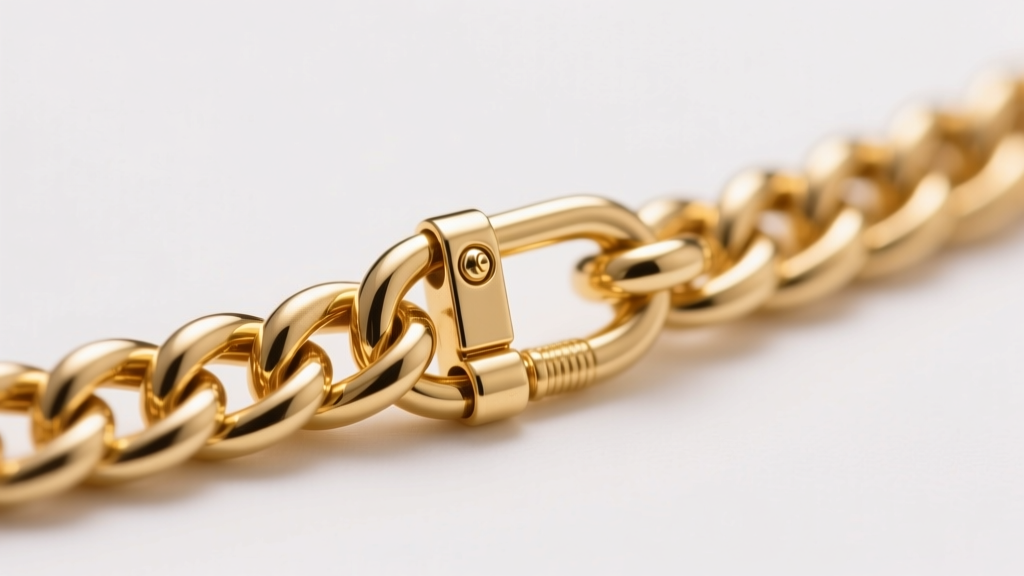
Analyzing Chain Weave Geometries
- Wheat (Spiga) Chain: Composed of four interlocking oval links twisted in the same direction. This multi-directional weave distributes kinetic stress evenly across the chain, granting it a remarkably high tensile strength relative to its thickness. A 20-inch, 18-gauge (1.0mm) solid 14k wheat chain can support pendants weighing up to 15 grams without permanent deformation.
- Cable Chain: The most traditional and common weave, consisting of uniform oval links. While aesthetically classic, cable chains are highly susceptible to kinking. Once a cable chain kinks, the structural integrity of that specific link is compromised, creating a localized failure point that will eventually snap.
- Box Chain: Constructed from square, interlocking links that create a smooth, rigid surface. Box chains are highly resistant to tangling and kinking, making them excellent for active younger wearers. However, if subjected to blunt force or crushed, the hollow links can dent and become impossible to repair.
The Critical Importance of Soldered Jump Rings
The single most common failure point in necklace engineering is the jump ring—the small circular loop that connects the pendant to the chain. Standard open jump rings are simply cut with a saw; under the lateral stress of a swinging pendant, the gap will slowly pry open, resulting in the loss of the heirloom. For granddaughter necklaces, always demand a soldered jump ring (where the seam is fused shut with laser or torch soldering) or a heavy-duty split ring (which overlaps like a miniature keyring).
Precision Engraving: Laser vs. Rotary Techniques
Personalization transforms a standard piece of jewelry into a cherished granddaughter necklace. However, the method used to inscribe names, dates, or fingerprints drastically affects the longevity and legibility of the metal.

Fiber Laser Annealing vs. Diamond Drag Engraving
Traditional rotary (diamond drag) engraving uses a hardened diamond tip to physically carve into the metal. While this creates a deep, tactile groove, it displaces and removes material. On thin-gauge lockets (e.g., 22-gauge or 0.6mm sterling silver), deep rotary engraving can compromise the structural wall, leading to warping or eventual cracking along the engraved lines.
In contrast, modern Ytterbium fiber lasers (operating at a 1064 nm wavelength) utilize a process called annealing. The laser rapidly heats the surface of the metal, causing controlled oxidation that creates a high-contrast, permanent dark mark without removing any base material. This preserves the exact structural thickness of the locket or pendant, making it the superior technical choice for delicate heirloom pieces. Furthermore, fiber lasers can achieve a resolution of up to 4000 DPI, allowing for photorealistic fingerprint or handwriting engravings that rotary machines simply cannot replicate.
Clasp Mechanics and Hypoallergenic Considerations
A necklace is only as secure as its clasp. The ubiquitous spring ring clasp relies on a tiny, easily fatigued internal steel spring. Over time, the spring loses its tension, or the soldering point at the base of the ring fails. For valuable granddaughter necklaces, upgrade to a solid cast lobster clasp. Lobster clasps feature a thicker, more robust internal spring mechanism and a wider jaw that securely locks onto the end ring.
Navigating Nickel Allergies and Metal Sensitivities
According to the Gemological Institute of America (GIA), nickel is a common alloying agent used to bleach the yellow color out of gold to create white gold. However, nickel is a potent contact allergen. If the granddaughter has sensitive skin, standard 14k white gold (which is often rhodium-plated to hide the yellowish undertone) will cause severe dermatitis once the rhodium plating wears off after 12 to 18 months.
Expert Recommendation: For hypoallergenic granddaughter necklaces, specify palladium-white gold or platinum. Palladium is a platinum-group metal that bleaches gold to a true white without the use of nickel, completely eliminating the risk of allergic contact dermatitis while providing a naturally white metal that never requires re-plating.
Sizing Proportions for Youth and Adult Wearers
Finally, the technical fit of the necklace must account for the wearer's current age and future growth. A standard 18-inch chain will sit at the collarbone of an adult woman but may act as a matinee-length drape on a 7-year-old child. For young girls (ages 5-10), a 14-inch chain with a 2-inch extender chain is the optimal engineering solution. The extender allows the necklace to be resized incrementally as the child grows, ensuring the pendant rests perfectly at the suprasternal notch (the hollow at the base of the neck) through her teenage years. Always ensure the extender chain utilizes the same gauge and metallurgical grade as the primary chain to prevent galvanic corrosion between dissimilar metals.


