Black Necklace With Heart: 2026 Budget & Value Guide
Is a black necklace with heart worth the price tag? We analyze 2026 market values, material longevity, and hidden costs of dark pendants.

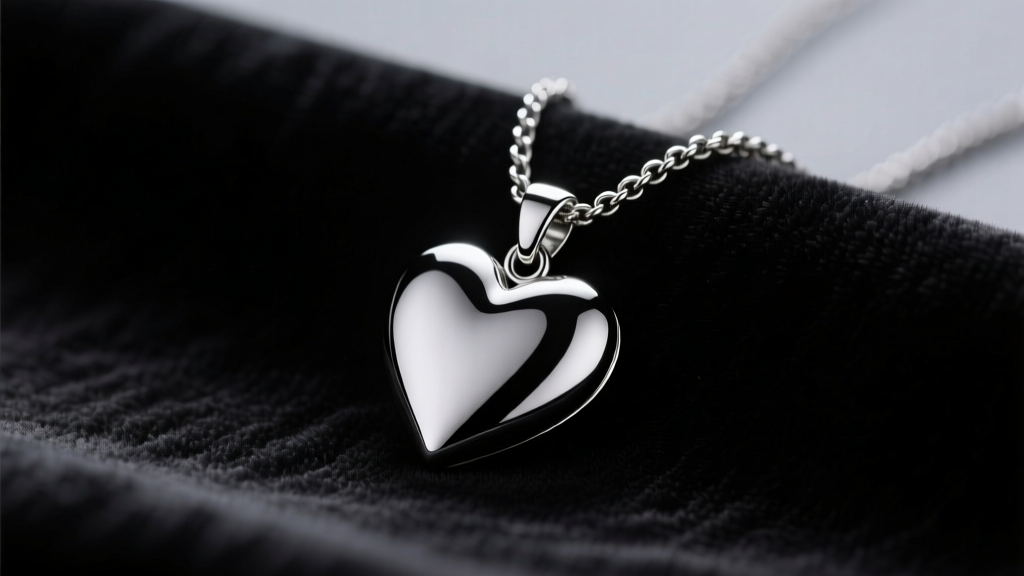
The True Cost of Dark Romance: Evaluating the Black Heart Pendant
The allure of a black necklace with heart motifs lies in its striking contrast and modern gothic elegance. However, as we navigate the 2026 jewelry market, the term 'black' encompasses a vast spectrum of materials, treatments, and structural integrities. A $40 black heart pendant and a $1,200 black diamond heart necklace may look identical in a dimly lit boutique, but their long-term value propositions, failure modes, and maintenance costs are worlds apart. As a budget and value assessor, my goal is to dissect the anatomy of these dark pendants so you can allocate your capital toward pieces that offer genuine longevity rather than fleeting, fast-fashion aesthetics.
Before making a purchase, it is critical to understand that 'black' is rarely a native state for jewelry metals. It is almost always a surface treatment, an alloy mixture, or a specific gemstone classification. Understanding how these materials interact with human skin oils, friction, and environmental factors is the key to determining true value.
Material Breakdown: Plating, Patina, and Gemstones
Black Rhodium vs. Oxidized Sterling Silver
When browsing mid-tier jewelers, you will frequently encounter black heart pendants crafted from sterling silver treated with either black rhodium plating or oxidation. Black rhodium is a platinum-group metal electroplated onto a silver or gold base. In 2026, standard black rhodium plating thickness ranges from 0.75 to 1.5 microns. While it offers a brilliant, mirror-like dark finish, it is highly susceptible to friction wear. On a necklace, the bail (the loop connecting the pendant to the chain) and the back of the heart will typically show brass or silver undertones within 8 to 14 months of daily wear. Re-plating a pendant costs between $45 and $85, significantly impacting the long-term budget.
Conversely, oxidized silver achieves its black hue through a controlled chemical reaction using sulfur compounds, creating silver sulfide on the surface. Unlike rhodium, oxidation actually settles into the crevices and textures of the heart design. While high-polish areas will naturally wear back to bright silver over time, the recessed black patina remains intact, giving the piece a dynamic, lived-in look. Furthermore, restoring oxidized silver at home using a 'liver of sulfur' solution costs less than $10, making it a vastly superior choice for budget-conscious buyers who want low-maintenance dark metals.
Black Enamel: Vitreous vs. Epoxy
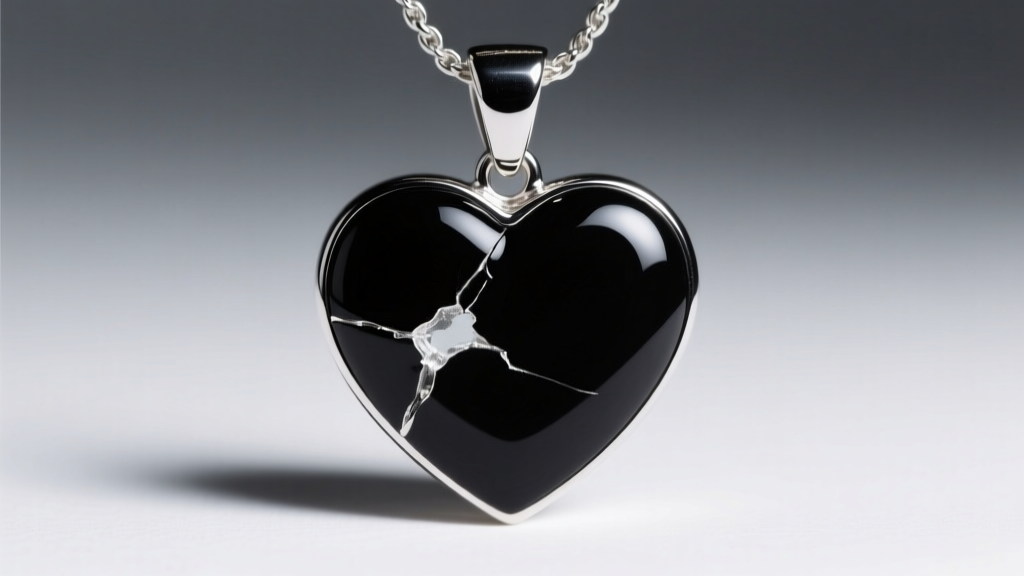
Many black heart lockets and pendants utilize enamel for a deep, opaque black finish. It is vital to distinguish between vitreous (glass-based) enamel and cold (epoxy-based) enamel. Vitreous enamel is kiln-fired at over 1,400°F, fusing the glass to the metal. It is highly resistant to UV degradation and chemicals but is brittle; a sharp impact against a marble countertop can cause micro-fractures or chipping. Cold enamel, essentially a hardened resin, is cheaper to produce and less prone to shattering. However, epoxy enamel is highly vulnerable to UV radiation and cosmetic chemicals. By year three, cold black enamel often develops a cloudy, yellowish undertone or begins to peel from the metal backing due to thermal expansion mismatches.
Black Spinel vs. Black Diamond
If your black necklace with heart features a gemstone, you are likely looking at black spinel or black diamond. According to the Gemological Institute of America (GIA), black spinel is a durable gemstone (Mohs hardness of 8.0) that offers exceptional value, typically pricing between $20 and $50 per carat. It takes a high polish and mimics the look of black diamond flawlessly for a fraction of the cost.
Black diamonds, however, command a premium. Natural fancy black diamonds are incredibly rare and porous, often riddled with inclusions that can compromise the structural integrity of a delicate heart-shaped cut. Most commercial black diamonds are actually heavily included, low-clarity white diamonds that have been subjected to irradiation or high-temperature treatments to turn them black. As noted in GIA's diamond treatment database, these treated stones are stable, but you should never pay natural fancy black diamond prices for an irradiated stone. Always demand a gemological report verifying the origin of the color.
2026 Pricing Tiers & Value Assessment Matrix
To help you benchmark the market, I have compiled a value assessment matrix based on current 2026 retail pricing and long-term maintenance projections. This table assumes a standard 15mm to 20mm heart pendant on an 18-inch chain.
| Material Composition | Base Metal | Durability & Wear Profile | 2026 Avg. Retail Price | 5-Year Maintenance Cost |
|---|---|---|---|---|
| Black Alloy / Acrylic | Zinc/Brass | Low (tarnishes, skin reactions) | $25 - $60 | $0 (Replace entirely) |
| Oxidized Silver | 925 Sterling | High (patina evolves, structurally sound) | $85 - $180 | $10 (DIY liver of sulfur) |
| Black Rhodium Plated | 925 Sterling / 10k Gold | Medium (plating wears off in 12 months) | $150 - $350 | $150+ (Professional re-plating) |
| Vitreous Black Enamel | 14k Gold / Platinum | High (UV stable, impact brittle) | $400 - $900 | $120 (Enamel repair if chipped) |
| Black Spinel Pavé | 14k White Gold | Very High (Mohs 8.0, excellent wear) | $350 - $750 | $40 (Annual prong tightening) |
| Irradiated Black Diamond | 14k / 18k Gold | Extreme (Mohs 10, porous inclusions) | $600 - $1,500 | $50 (Ultrasonic cleaning risks) |
The Hidden Costs: Chain Selection and Failure Modes
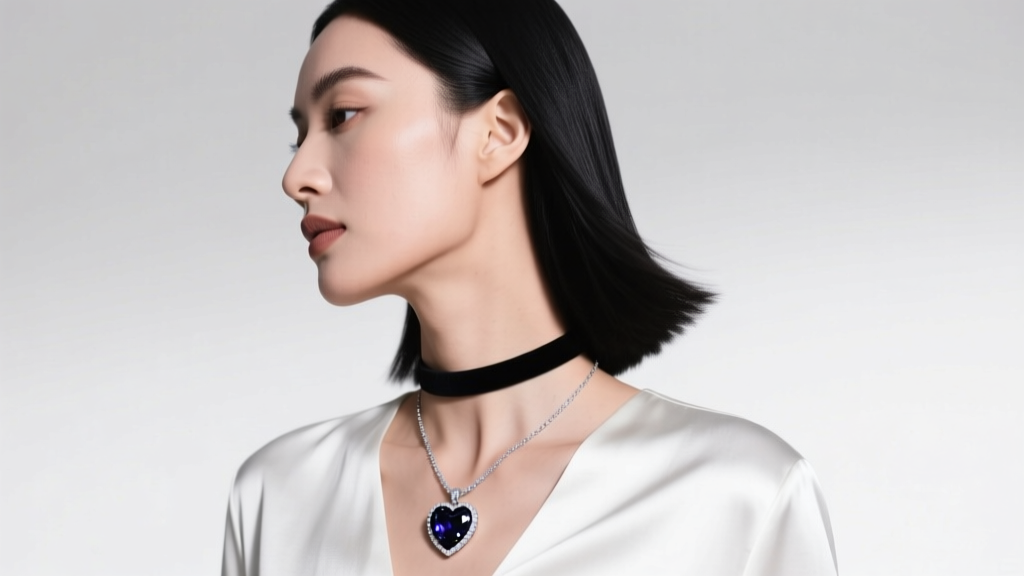
A common budgeting mistake is allocating 90% of the budget to the black heart pendant and neglecting the chain. The chain is the engine of the necklace; if it fails, the pendant is lost. When dealing with black necklaces, the chain type dramatically affects the lifespan of the dark finish.
- Box Chains: While sturdy, the flat, interlocking square links of a black box chain trap sebum, dead skin cells, and lotions. This acidic buildup accelerates the degradation of black rhodium plating in the crevices, leading to a patchy, two-tone appearance that cannot be polished out.
- Cable and Rope Chains: These offer better self-cleaning properties due to their rounded links. However, the friction points between links will slowly wear away oxidation or plating over time.
- Gauge Recommendations: For a solid silver or gold black heart pendant weighing between 5 and 15 grams, a chain gauge of 1.2mm to 1.5mm is optimal. Anything thinner (e.g., 0.9mm) risks snapping at the clasp solder ring, especially if the dark plating process has embrittled the metal links.
How to Inspect a Black Heart Pendant Before Buying
Whether you are shopping online or in a brick-and-mortar store, use this expert checklist to assess the true value and quality of the piece:
- Check the Bail Construction: Is the bail soldered shut, or is it a jump ring? A jump ring can easily pry open, losing your pendant. Furthermore, inspect the inside of the bail. If it is already showing silver or gold wear before you even purchase it, the plating batch was too thin.
- Examine the Enamel Edges: If the heart features black enamel, use a loupe to inspect the metal bezel or cloisonné wires holding the enamel. The metal should be flush or slightly higher than the enamel surface to protect it from lateral impacts.
- Verify Gemstone Treatments: If the pendant is marketed as a 'black diamond,' ask for the SKU and cross-reference it with the brand's treatment disclosures. If the price is under $400 for a multi-carat heart, it is undoubtedly irradiated or black spinel. There is nothing wrong with treated stones or spinel, provided you are paying the correct market rate.
- The Skin-Test Simulation: For base-metal or alloy black necklaces, check the interior back of the pendant. If it lacks a clear hypoallergenic coating or a stainless steel backing, the copper and nickel alloys will react with your sweat, leaving a green or black stain on your sternum within hours.
Final Verdict: Where to Allocate Your Budget
When investing in a black necklace with heart symbolism, the highest value proposition in 2026 lies in oxidized sterling silver for metal-only designs, and black spinel set in 14k white gold for gemstone pieces. Both options offer exceptional durability, bypass the inevitable re-plating costs associated with black rhodium, and provide a rich, gothic aesthetic that endures daily wear. Avoid fast-fashion alloy pendants coated in black paint or epoxy, as their structural failure rate renders them a sunk cost rather than a jewelry investment. By prioritizing material science over fleeting trends, you ensure your dark romantic aesthetic remains timeless and financially sound.


