How to Clean and Care for Women's Sterling Silver Necklaces
Discover expert cleaning methods and storage tips to prevent tarnish on women's sterling silver necklaces. Keep your 925 silver shining.

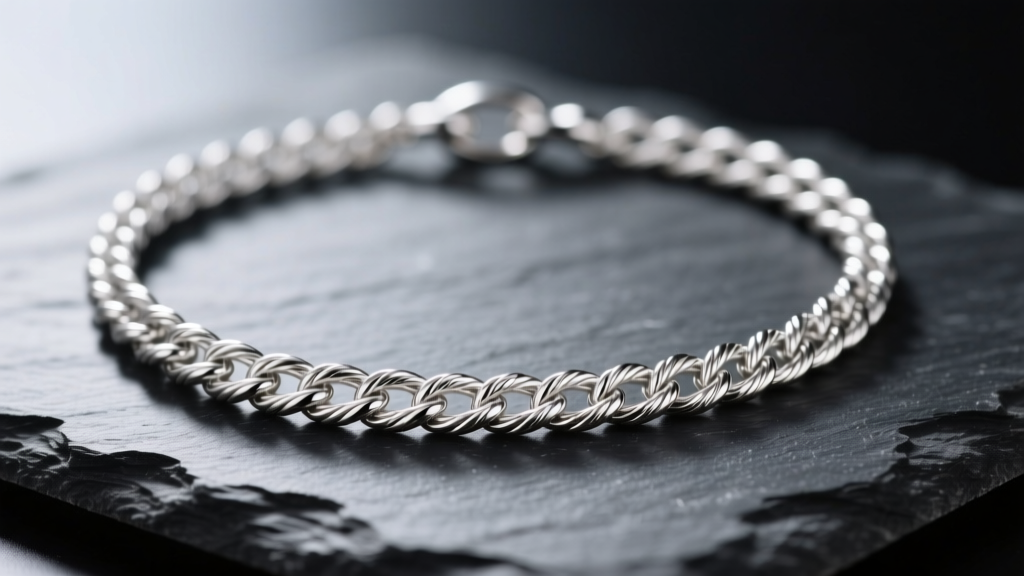
Owning a beautifully crafted piece of jewelry is an investment in both style and sentiment. However, maintaining the brilliance of women's sterling silver necklaces requires more than just occasional wiping. Silver is a reactive metal, and without a proper care regimen, even the most exquisite 925 silver chains and pendants will succumb to oxidation, micro-scratches, and structural degradation over time. In 2026, while many modern jewelers apply ultra-thin rhodium or e-coatings to delay tarnishing, bare sterling silver remains a staple for its unparalleled luster and workability. This comprehensive guide moves beyond generic advice, offering deep chemical insights, precise cleaning protocols, and professional-grade storage strategies to keep your silver necklaces in pristine condition.
The Chemistry of 925 Silver and Tarnish Formation
To properly care for your jewelry, you must first understand its metallurgical composition. Pure silver (999 fine silver) is highly resistant to tarnish but is far too soft for daily wear, ranking at just 2.5 to 3 on the Mohs hardness scale. To solve this, jewelers alloy pure silver with 7.5% copper, creating the 925 standard known as sterling silver. According to the Silver Institute, this copper addition provides the necessary tensile strength for delicate chain links and intricate pendant settings.
However, copper is the culprit behind tarnish. When exposed to atmospheric sulfur compounds, hydrogen sulfide, and high humidity, the copper and silver react to form silver sulfide ($Ag_2S$), which manifests as a dull yellow, brown, or eventually black film on the surface of the metal. Understanding this electrochemical reaction is the key to reversing it without abrading the silver underneath.
The Daily Wear Protocol: Prevention Over Cure
The most effective way to clean women's sterling silver necklaces is to prevent the tarnish from forming in the first place. Human sweat, which has an average pH ranging from 4.5 to 7.0, contains salts and urea that can accelerate the corrosion of the copper alloy. Furthermore, everyday cosmetic products are laden with reactive chemicals.
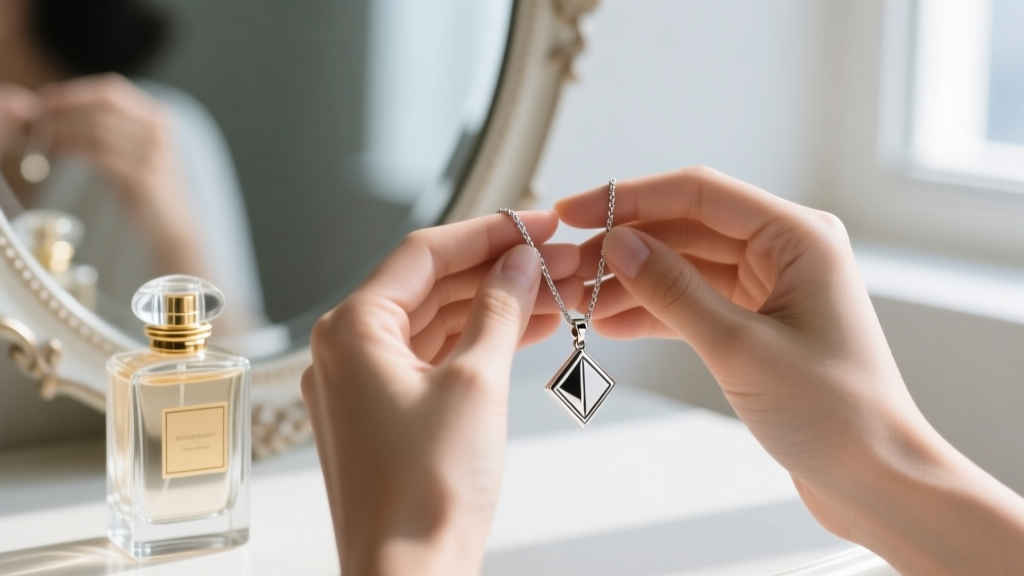
- The 'Last On, First Off' Rule: Always put your silver necklace on after applying perfumes, hairsprays, and lotions. Alcohol and volatile organic compounds (VOCs) in fragrances can strip natural oils from your skin and leave a reactive residue on the silver.
- Post-Wear Wiping: Before storing your necklace, gently wipe it with a clean, lint-free microfiber cloth. This removes the microscopic layer of sebum, sweat, and environmental pollutants accumulated throughout the day.
- Avoid High-Sulfur Environments: If you are visiting hot springs (which are rich in hydrogen sulfide) or spending time in highly polluted industrial areas, remove your silver jewelry entirely.
Safe Cleaning Solutions for Sterling Silver
When tarnish does occur, the cleaning method you choose must be tailored to the specific finish of your necklace. A technique that works wonders for a high-polish chain can ruin an antiqued pendant.
The Aluminum Foil and Baking Soda Electrochemical Bath
For standard, high-polish women's sterling silver necklaces without gemstones or intentional oxidation, an electrochemical reduction bath is the safest and most effective method. This process reverses the tarnish chemically rather than mechanically removing it, meaning zero silver is lost during cleaning.
- Line a glass or ceramic bowl with aluminum foil, shiny side up.
- Place your tarnished silver necklace in the bowl, ensuring it physically touches the aluminum foil.
- Sprinkle 1 tablespoon of baking soda (sodium bicarbonate) and 1 tablespoon of non-iodized sea salt over the jewelry.
- Pour 1 cup of boiling water into the bowl. You will immediately see bubbling and may smell a faint sulfur (rotten egg) odor as the silver sulfide is converted back into pure silver, while the sulfur bonds to the aluminum anode.
- Let it sit for 3 to 5 minutes, then remove with wooden tongs, rinse thoroughly in distilled water, and pat dry with a microfiber cloth.
Cleaning Oxidized or Antiqued Silver
Never use the aluminum foil bath on oxidized silver. The electrochemical reaction cannot distinguish between intentional black patina (antiquing) and accidental tarnish, and it will strip the dark contrast from the crevices of your pendant, leaving it looking flat and washed out.
For oxidized pieces, use a mild surfactant wash. Mix a few drops of pH-neutral, phosphate-free dish soap (like Dawn) into a bowl of lukewarm distilled water. Use an extra-soft baby toothbrush to gently agitate the dirt from the chain links, avoiding heavy scrubbing on the darkened recesses. Rinse with distilled water and air dry.
Mechanical Polishing vs. Chemical Dips
When dealing with heavy, blackened tarnish or minor surface scratches, mechanical intervention is required. However, the tools you use dictate whether you preserve or destroy the silver's finish.
Professional jewelers rely on treated polishing cloths, such as the widely respected Sunshine Polishing Cloths. These cloths are impregnated with jeweler's rouge (iron oxide) and mild micro-abrasives that gently level the silver surface and remove silver sulfide. Conversely, commercial 'silver dip' liquids often rely on thiourea, a highly toxic and corrosive acid that strips tarnish instantly but leaves the silver surface micro-pitted and highly susceptible to rapid re-tarnishing. The Gemological Institute of America (GIA) strongly advises against frequent use of harsh liquid dips, as they degrade the metal's structural integrity over time.
Destructive Agents: What to Avoid at All Costs
Many household items mistakenly recommended in DIY cleaning hacks will cause irreversible damage to 925 silver. Refer to the table below to understand the chemical impact of common abrasive agents.
| Household Agent | Active Chemical Component | Destructive Effect on 925 Silver |
|---|---|---|
| Whitening Toothpaste | Hydrated Silica / Calcium Carbonate | Acts as a harsh abrasive (Mohs 5-7), leaving deep, permanent micro-scratches that trap future tarnish. |
| Chlorine Bleach | Sodium Hypochlorite | Causes rapid, irreversible pitting and turns the silver a dull, permanent gray-black. |
| Paper Towels | Processed Wood Fibers | Wood fibers are surprisingly rigid and will inflict microscopic scratches on high-polish silver surfaces. |
| Rubber Bands | Vulcanized Rubber (Sulfur) | Off-gasses sulfur compounds, causing severe, localized black staining where the rubber touches the metal. |
Long-Term Storage and Anti-Tarnish Strategies
How you store your women's sterling silver necklaces when they are not being worn is just as critical as how you clean them. The goal of storage is to eliminate the two catalysts for tarnish: moisture and sulfur-bearing air.
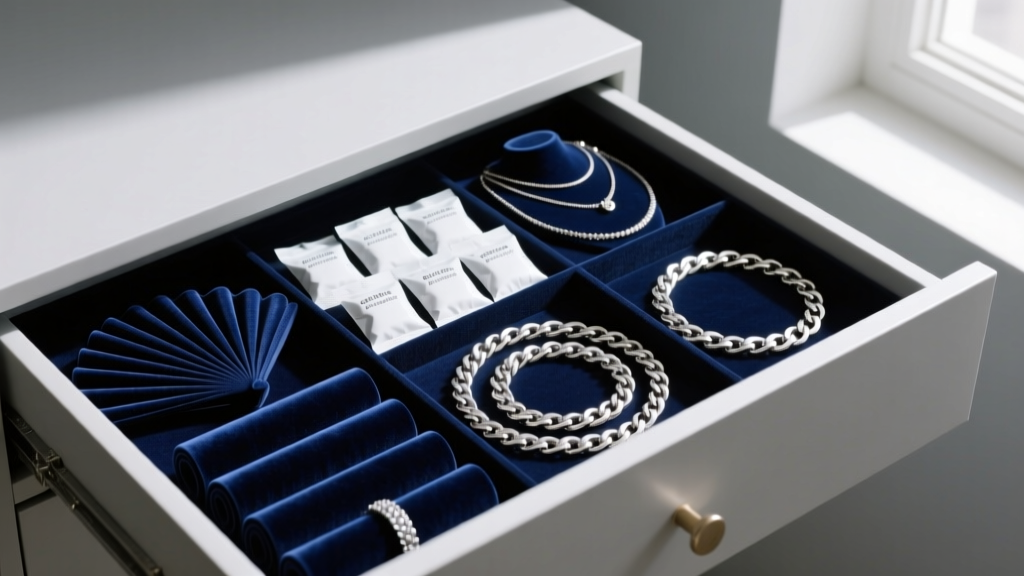
Standard plastic ziplock bags are inadequate, as they trap ambient humidity and can even off-gas polyvinyl chlorides that stain silver. Instead, utilize Pacific Silvercloth or specialized anti-tarnish flannel bags. These fabrics are embedded with microscopic silver particles that act as a sacrificial anode, intercepting and absorbing sulfur gases before they can reach your jewelry.
For optimal drawer or safe storage, follow this framework:
- Desiccants: Include small, indicating silica gel packets in your storage compartments to maintain a relative humidity below 40%.
- Chalk or Activated Charcoal: Place a piece of plain blackboard chalk or a small sachet of activated charcoal in your jewelry box to absorb ambient moisture and airborne toxins.
- Individual Isolation: Never store multiple silver necklaces tangled together. The friction of the chains rubbing against one another during movement will cause work-hardening and micro-scratches. Coil each necklace individually and secure the clasp to prevent knotting.
By respecting the metallurgy of 925 silver and adopting these precise, science-backed maintenance routines, your sterling silver necklaces will retain their heirloom quality and brilliant luster for generations to come.


